Lignosulfonate Concentrate
CN → US| HS Code | Tariff Rate | Origin | Destination | Doc |
|---|---|---|---|---|
| 3804001000 | 35.0% | CN | US | Official Doc |
| 3804005000 | 38.7% | CN | US | Official Doc |
| 3824405000 | 40.0% | CN | US | Official Doc |
| 3824999397 | 40.0% | CN | US | Official Doc |
| 3804005000 | 38.7% | CN | US | Official Doc |
Product Images

AI Analysis
💧 Lignosulfonate Concentrate (Solution)
🌐 HS Code Reference & Customs Clearance Guide | 2026 Latest Tariff Analysis | Professional-Level Strategy
📌 I. Product Definition & Classification: What Exactly is "Lignosulfonate Concentrate"?
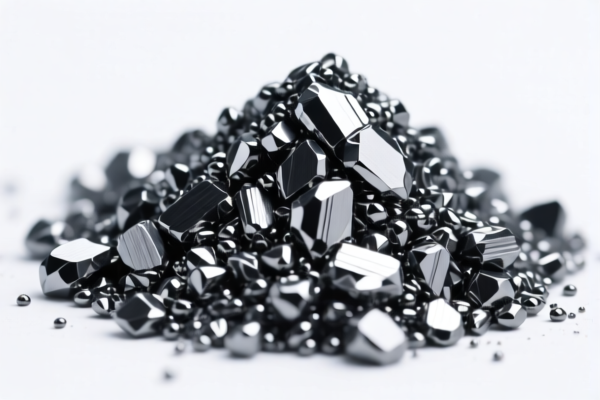
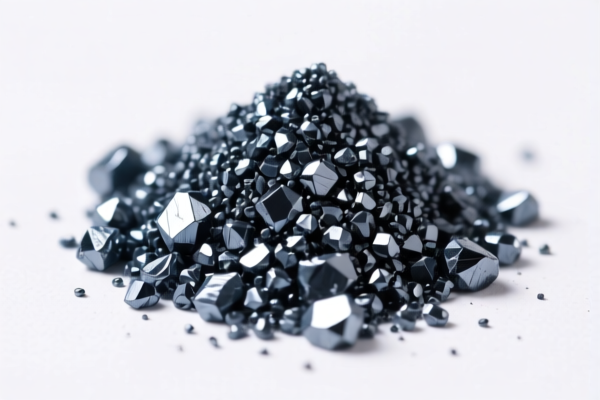
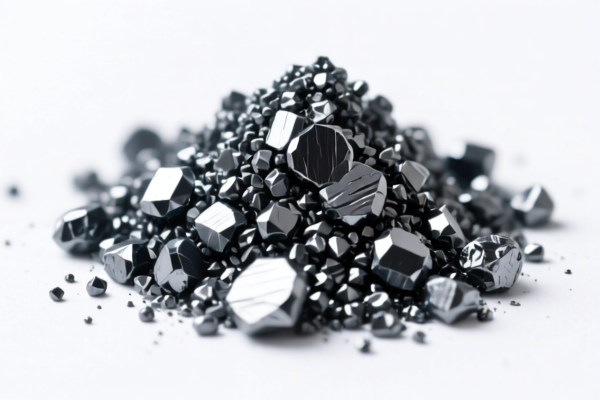
Lignosulfonate concentrate (typically in solution form) is a by-product of the sulfite wood pulping process. It is a brown powder or viscous liquid composed mainly of lignin sulfonates, with impurities such as ash and sugars. It is widely used as a: * Concrete Admixture: As a water reducer in cement and mortar. * Papermaking Chemical: Recovered from black liquor during paper manufacturing. * Industrial Binder: Used in drilling muds, pelletizing, and soil stabilization.
⚠️ Key Distinction Point:
- If the product is a pure/standard solution primarily for industrial/chemical use → Often classified under 3804.00 (Wood pulp liquor; sulfite pulp liquor; lignosulfonates).
- If the product is specifically identified as a cement/mortar additive → May fall under 3824.40 (Prepared binders for foundry molds/core).
- If it is a customized solution matching papermaking black liquor characteristics → Might align with 3804.00.50 or 3824.99.
📦 II. HS Code Classification Details (2026 Latest Tariff Authority Comparison)
| HS Code | Product Description | Applicable Scenario | Tax Rate (China-Origin to US) |
|---|---|---|---|
3804.00.10.00 |
Lignosulfonates in solution; standard chemical form; no conflict. | General industrial lignosulfonate solution. | 35.0% |
3804.00.50.00 |
Lignosulfonate solution; matches characteristics of residual alkali liquor from paper pulp manufacturing. | Paper industry by-products, customized black liquor solutions. | 38.7% |
3824.40.50.00 |
Lignosulfonate solution; classified as chemical preparation; fits attributes of cement/mortar additive. | Concrete water reducers, cement additives. | 40.0% |
3824.99.93.97 |
Lignosulfonate solution; belongs to other chemical industrial products; material and name fully compliant. | General "other" chemical preparation, non-specific industrial use. | 40.0% |
3804.00.50.00 |
Customized lignosulfonate solution; conforms to morphological characteristics of residual alkali liquor from the papermaking process. | Same as above, emphasizes customization/paper-making link. | 38.7% |
🔍 Key Reminder:
- 3804.00 covers "Lignosulfonates" directly.
- 3824.40 covers "Prepared binders for foundry molds or cores" (often used for cement/concrete applications).
- 3824.99 is a residual category for other chemical preparations not specified elsewhere.
- Customs Classification Risk: Misdeclaring a concrete additive as a generic chemical (or vice versa) can lead to significant duty differences and delays.
💰 III. 2026 Latest Tariff Rate Breakdown (Including Additional Duties & Policy Surcharges)
✅ Applicable Country: United States (US)
✅ Country of Origin: China (CN)
✅ Effective Date: From November 10, 2025 onwards (including subsequent imports)
🎯 1. 3804.00.10.00 — Lignosulfonate Solution (General Industrial)
| Item | Content |
|---|---|
| Base Tariff | 0.0% (ad valorem) |
| USITC Additional Duty | +25.0% (Under Section 301 Duties) |
| IEEPA Additional Duty | +10.0% (Targeting China/HK products, effective Nov 10, 2025) |
| Total Rate | 35.0% |
| Tax Calculation | CIF Value × 35.0% |
| De Minimis Eligibility | ❌ Not Eligible (deny_de_minimis) |
| Legal Basis Path | IEEPA:9903.01.25 → IEEPA:9903.01.24 → USITC:3804.00.10.00 |
📌 Explanation:
- The 25% USITC duty is imposed under Section 301 of the Trade Act for specific Chinese goods.
- The 10% IEEPA duty is an additional surcharge targeting Chinese-origin products.
- Total 35% is a high tariff, requiring precise declaration.
🎯 2. 3804.00.50.00 — Lignosulfonate Solution (Paper Mill By-product/Customized)
| Item | Content |
|---|---|
| Base Tariff | 3.7% |
| USITC Additional Duty | +25.0% |
| IEEPA Additional Duty | +10.0% |
| Total Rate | 38.7% |
| Tax Calculation | CIF Value × 38.7% |
| De Minimis Eligibility | ❌ Not Eligible |
| Legal Basis Path | IEEPA:9903.01.24 → USITC:3804.00.50.00 |
📌 Note:
- This classification assumes the product is specifically recognized as a residual alkali liquor from paper manufacturing.
- Even with a lower base rate (3.7%), the additional duties push the total to 38.7%.
🎯 3. 3824.40.50.00 — Lignosulfonate as Cement/Mortar Additive
| Item | Content |
|---|---|
| Base Tariff | 5.0% |
| USITC Additional Duty | +25.0% |
| IEEPA Additional Duty | +10.0% |
| Total Rate | 40.0% |
| Tax Calculation | CIF Value × 40.0% |
| De Minimis Eligibility | ❌ Not Eligible |
| Legal Basis Path | IEEPA:9903.01.24 → USITC:3824.40.50.00 |
📌 Warning:
- This is the highest base rate among the options (5.0%).
- Use this code only if the product is explicitly marketed and used as a concrete admixture. Misuse here can lead to penalties.
🎯 4. 3824.99.93.97 — Other Chemical Industrial Products
| Item | Content |
|---|---|
| Base Tariff | 5.0% |
| USITC Additional Duty | +25.0% |
| IEEPA Additional Duty | +10.0% |
| Total Rate | 40.0% |
| Tax Calculation | CIF Value × 40.0% |
| De Minimis Eligibility | ❌ Not Eligible |
| Legal Basis Path | IEEPA:9903.01.24 → USITC:3824.99.93.97 |
📌 Caution:
- This is a "catch-all" category.
- While it matches "material and name fully," it lacks the specificity of 3804.00.
- Customs may request extensive proof of composition to justify this classification.
🛠️ IV. Customs Clearance Practical Advice (Battle-Tested Pitfall Avoidance)
✅ 1. Required Documentation Checklist (All Mandatory)
| Document | Must Provide | Description |
|---|---|---|
| ✅ Product Specification Sheet | ✔️ | Details: Concentration, viscosity, pH, primary use (concrete vs. paper), and chemical composition. |
| ✅ MSDS (Material Safety Data Sheet) | ✔️ | Crucial for liquid/chemical imports. Must match HS Code description. |
| ✅ Product Photos (with Label) | ✔️ | Clear image of container, label, product state (solution/powder), and lot number. |
| ✅ Commercial Invoice | ✔️ | Must explicitly state: "Lignosulfonate Solution," HS Code, and Country of Origin (China). |
| ✅ Packing List | ✔️ | Detail net/gross weight, volume, and packaging type (drums/totes). |
| ✅ Certificate of Origin (CO) | ✔️ | Required for tariff calculation and verification. |
| ✅ Third-Party Test Report | ✔️ | Optional but recommended: Proof of lignin content to support classification under 3804 vs 3824. |
✅ 2. Declaration Tips (Key Mnemonic)
🔥 "Specify the Use, Choose the Code, Base Rate Varies, Total Tax is Fixed!"
| Scenario | Correct Declaration | Wrong Practice |
|---|---|---|
| General Industrial Lignosulfonate | 3804.00.10.00 (0% base + 35% total) |
Using 3824 codes unnecessarily → 40% total |
| Paper Mill Black Liquor | 3804.00.50.00 (3.7% base + 35% total) |
Mislabeling as generic chemical → Risk of audit |
| Concrete Admixture | 3824.40.50.00 (5% base + 35% total) |
Declaring as 3804 to save base rate → High risk of penalty |
| "Other" Chemical Use | 3824.99.93.97 (5% base + 35% total) |
Ambiguous description → Customs delay |
📌 Critical Note:
- Although3804.00.10.00has a 0% base rate, the total duty is 35%.
-3824codes have a 5% base rate, but the total duty is 40%.
- Savings Strategy: If your product is clearly lignosulfonates,3804.00.10.00is the most cost-effective at 35% total, compared to 40% for 3824 codes.
- However, if you can prove it is specifically paper mill black liquor,3804.00.50.00has a 3.7% base, but still totals 38.7%.
- Conclusion:3804.00.10.00is the cheapest at 35%.
✅ 3. Special Circumstances Handling
| Situation | Handling Advice |
|---|---|
| Liquid vs. Powder | Ensure the HS Code matches the physical state. "Solution" implies liquid. If shipped as powder, reclassify. |
| Blended Products | If mixed with other chemicals, provide a detailed composition analysis. Customs may reclassify based on the dominant function. |
| Sample Shipments | Even samples are subject to full duties. Do not declare as "No Value" to avoid scrutiny. |
| OEM Customization | Provide customer specifications showing the product is tailored for a specific industry (e.g., paper vs. concrete) to support the chosen HS Code. |
🌍 V. Global Market Customs Comparison (2026 Latest)
| Country/Region | Recommended HS Code | Tariff (China-Origin) | Certification | Remarks |
|---|---|---|---|---|
| 🇺🇸 USA | 3804.00.10.00 |
35.0% (Total) | SDS, CO | Highest total duty due to Section 301 + IEEPA |
| 🇨🇳 China | 3804.00.10.00 |
Low (~5-10%) | None | No additional duties |
| 🇪🇺 EU | 3824.40.50 |
0-6.5% | REACH | Varies by member state; REACH registration required |
| 🇦🇺 Australia | 3824.99.93 |
5% | None | Standard MFN rate |
| 🇯🇵 Japan | 3824.99.93 |
6-7% | None | Standard rate |
📌 Conclusion:
- USA is the most expensive market due to additional duties.
- Total duty ranges from 35% to 40% depending on precise classification.
- EU/Australia/Japan do not apply the same Section 301/IEEPA surcharges, making them more cost-effective.
📌 VI. Common Errors & Pitfalls (Lessons Learned)
❌ Error 1: Declaring Lignosulfonate as "Fertilizer" to avoid duties
👉 Consequence: False declaration → Seizure + Fines
❌ Error 2: Using 3824 codes for standard lignosulfonates without proof of "prepared binder" function
👉 Consequence: Higher duty (40% vs 35%) + Customs Audit
❌ Error 3: Omitting "Solution" or "Concentrate" from the description
👉 Consequence: Mismatch with MSDS → Hold at Port
❌ Error 4: Assuming "De Minimis" applies to small shipments
👉 Consequence: No exemption for Chinese goods under Section 301/IEEPA → Full Tax Due
✅ Correct Practice:
"Lignosulfonate Solution, 50% Concentration, for Use as Concrete Admixture, HS Code 3824.40.50.00, Made in China"
OR
"Lignosulfonate Solution, Industrial Grade, HS Code 3804.00.10.00, Made in China"
🎯 VII. Conclusion: Precise Classification Saves Money!
🎯 Remember the Mnemonic:
🔹 "3804.10 is 35%, 3804.50 is 38.7%, 3824 is 40%. Pick the lowest!"
🔹 "Base rate hides the trap, total duty tells the truth, declare accurately, save cash!"
📌 Tips:
- If your product is clearly lignosulfonate, use 3804.00.10.00 for the lowest total duty (35%).
- If it is specifically paper mill black liquor, use 3804.00.50.00 (38.7%), but only if you can prove the source.
- If it is concrete additive, you must use 3824.40.50.00 (40%) to comply with usage-based classification, even though it's more expensive.
- Always provide MSDS and detailed specifications to avoid misclassification.
📣 Immediate Action:
📞 Consult with a customs broker + Provide Product Specs + Apply for Advance Ruling if unsure
🚀 Ensure your Lignosulfonate clears customs smoothly, efficiently, and at the lowest possible cost!
✨ Professional Clearance Starts with Accurate Classification!
💼 Every Percent Counts in International Trade!
Customer Reviews
About HS Code Classification
The Harmonized System (HS) is an internationally standardized nomenclature developed by the World Customs Organization (WCO) to classify traded products. Over 200 countries use the HS system as the basis for customs tariffs, trade statistics, and import/export regulations.
Each HS code follows a hierarchical structure:
- Chapter (2 digits) — Broad category of goods (e.g., Chapter 84: Machinery and Mechanical Appliances)
- Heading (4 digits) — More specific grouping within the chapter
- Subheading (6 digits) — Internationally standardized breakdown, used by all WCO member countries
- National subdivisions (8-10 digits) — Country-specific extensions for further classification, such as US HTSUS 10-digit codes
Correct HS code classification is essential for smooth customs clearance, accurate duty payment, and compliance with trade regulations. Misclassification can lead to customs delays, overpayment of duties, or penalties.
When importing from CN to US, the applicable tariff rates may include:
- Most-Favored-Nation (MFN) rate — The standard duty rate applied to WTO members
- General rate — Applied to countries without trade agreements
- Trade remedy duties — Additional tariffs such as Section 301 (anti-dumping), Section 232 (national security), or countervailing duties
The information provided on this page is for reference purposes only. For official classification, please consult with your local customs authority or a licensed customs broker.