Lignosulfonate Concrete Admixture
CN → US| HS Code | Tariff Rate | Origin | Destination | Doc |
|---|---|---|---|---|
| 3824405000 | 40.0% | CN | US | Official Doc |
| 3824997550 | 38.7% | CN | US | Official Doc |
| 3804001000 | 35.0% | CN | US | Official Doc |
| 3804005000 | 38.7% | CN | US | Official Doc |
| 3824405000 | 40.0% | CN | US | Official Doc |
Product Images
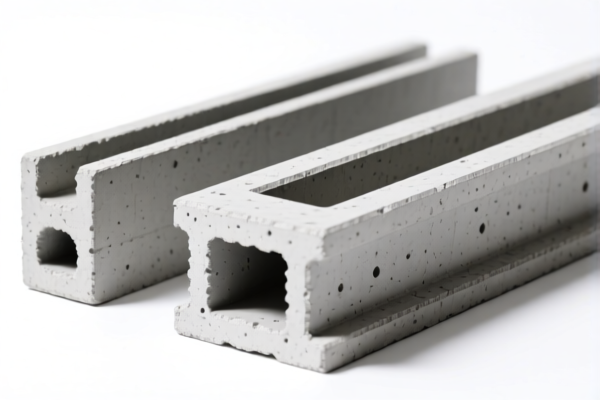
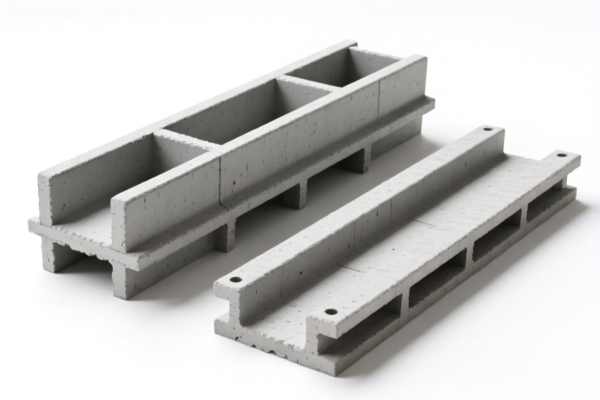
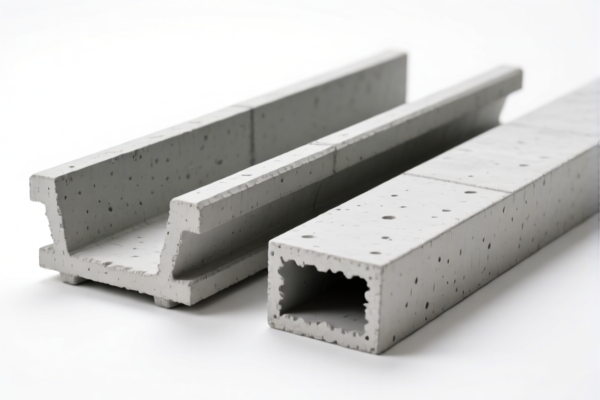
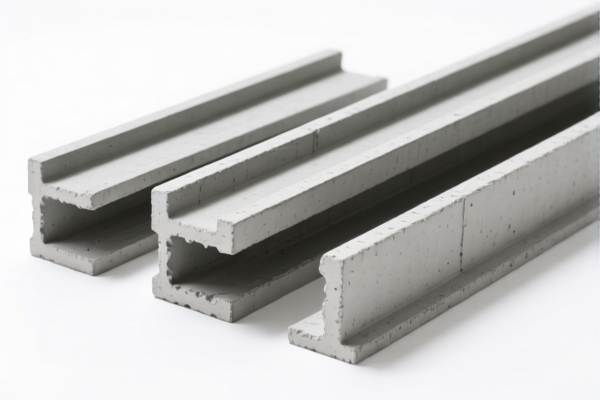
AI Analysis
🧱 Lignosulfonate Concrete Admixture (木质素磺酸盐混凝土外加剂)
🌐 HS Code Reference & Customs Clearance Guide | 2026 Latest Tariff Analysis | Professional Clearance Strategy
📌 1. Product Definition & Classification: What Exactly is "Lignosulfonate"?
Lignosulfonates are by-products of the sulfite pulp and paper industry, derived from lignin (a natural polymer in wood). In construction, they are widely used as water reducers (plasticizers) or set retarders in concrete and cement mortar to improve workability and reduce water content.
In international trade, classification depends on physical form (solid/powder vs. liquid/solution) and specific application intent (general chemical vs. specific concrete additive).
⚠️ Key Classification Distinction:
- If classified as a concrete additive (Chapter 38.24) → Higher base tariff (5%) but specific technical description.
- If classified as a chemical residue/liquid (Chapter 38.04) → Lower base tariff (0-3.7%) but must prove it fits "waste from chemical/mechanical pulp" logic.
- All US-bound goods from China are subject to heavy additional tariffs (35%-40%).
📦 2. HS Code Classification Details (2026 Latest Tariff Authority对照)
| HS Code | Product Description | Application Scenario | Base Tariff | Additional Tariffs (US/CN) | Total Tax |
|---|---|---|---|---|---|
3824.40.50.00 |
Concrete Admixtures Prepared for Use with Concrete or Mortar | Specific Additive: Sold explicitly as a concrete admixture. | 5.0% | +25% (Section 301) + 10% (IEEPA) | 40.0% |
3824.99.75.50 |
Other Chemical Products & Preparations (incl. sulfonic derivatives) | Derivative Classification: Classified as a sulfonic acid derivative under "other chemicals." | 3.7% | +25% (Section 301) + 10% (IEEPA) | 38.7% |
3804.00.10.00 |
Lignosulfonate Solutions (Residual Alkali Liquids) | Liquid Form: Matches the profile of residual alkali liquid from paper manufacturing. | 0.0% | +25% (Section 301) + 10% (IEEPA) | 35.0% |
3804.00.50.00 |
Lignosulfonate Solutions (Paper Mill Waste) | Paper Residue: Explicitly characterized as remaining alkaline liquid from pulp/paper making. | 3.7% | +25% (Section 301) + 10% (IEEPA) | 38.7% |
🔍 Critical Note:
- HS 3824.40.50.00 is the most "direct" fit for commercially packaged concrete admixtures.
- HS 3804.00.10.00 offers the lowest total tax (35%) but requires proving the product is a liquid residue from paper processes, not a formulated concrete additive.
- HS 3824.99.75.50 is a fallback for solid powders if 3824.40 is contested, but still carries high tariffs.
💰 3. 2026 Latest Tariff Rate Breakdown (Including Surtaxes & Policy Surcharges)
✅ Applicable Country: USA (US)
✅ Origin: China (CN)
✅ Effective Date: From November 10, 2025 (and subsequent imports)
🎯 1. 3824.40.50.00 — Concrete Admixtures
| Item | Content |
|---|---|
| Base Duty | 5.0% |
| Section 301 Surcharge | +25.0% |
| IEEPA Surcharge | +10.0% |
| Total Rate | 40.0% |
| Calculation | CIF Value × 40% |
| De Minimis Exemption? | ❌ NO (deny_de_minimis) |
| Legal Basis Path | USITC:3824.40.50.00 → 301:Footnote_3824.40 → IEEPA:9903.01.24 |
📌 Explanation:
- The 5% base duty applies to "prepared concrete admixtures."
- The 25% is from Section 301 tariffs (List 3/4A).
- The 10% is the IEEPA surcharge on Chinese goods.
- Total 40% is unavoidable for this classification.
🎯 2. 3824.99.75.50 — Other Chemical Preparations
| Item | Content |
|---|---|
| Base Duty | 3.7% |
| Section 301 Surcharge | +25.0% |
| IEEPA Surcharge | +10.0% |
| Total Rate | 38.7% |
| Calculation | CIF Value × 38.7% |
| De Minimis Exemption? | ❌ NO |
| Legal Basis Path | USITC:3824.99.75.50 → 301:Footnote_3824.99 → IEEPA:9903.01.24 |
📌 Note:
- Slightly cheaper than 3824.40 due to a lower base rate (3.7% vs 5%).
- Requires classification as a "sulfonic acid derivative" rather than a specific concrete additive.
🎯 3. 3804.00.10.00 & 3804.00.50.00 — Lignosulfonate Solutions
| Item | Content |
|---|---|
| Base Duty | 0.0% (for .10) or 3.7% (for .50) |
| Section 301 Surcharge | +25.0% |
| IEEPA Surcharge | +10.0% |
| Total Rate | 35.0% (for .10) / 38.7% (for .50) |
| Calculation | CIF Value × Total Rate |
| De Minimis Exemption? | ❌ NO |
| Legal Basis Path | USITC:3804.00.10.00 → 301:Footnote_3804.00 → IEEPA:9903.01.24 |
📌 Strategy:
- 35.0% is the lowest possible tax for lignosulfonates entering the US from China.
- Condition: The product MUST be a liquid solution and described as a paper mill by-product/residue, not a formulated construction chemical. If it’s a dry powder or labeled "Concrete Admixture," this code may be rejected by CBP.
🛠️ 4. Customs Clearance Practical Advice (Avoiding Pitfalls)
✅ 1. Documentation Checklist (Mandatory)
| Document | Required? | Explanation |
|---|---|---|
| ✅ Product Specification Sheet | ✔️ | Must state: Physical form (liquid/powder), active ingredient (%), intended use. |
| ✅ Certificate of Origin (CO) | ✔️ | To prove Chinese origin (triggering tariffs). |
| ✅ Safety Data Sheet (SDS) | ✔️ | Critical for liquid chemicals; helps classify as "residue" vs. "formulated." |
| ✅ Commercial Invoice | ✔️ | Must match HS Code description exactly (e.g., "Lignosulfonate Solution" vs. "Concrete Admixture"). |
| ✅ Bill of Lading (B/L) | ✔️ | Shows weight/volume for CIF calculation. |
| ✅ Manufacturing Process Description | ✔️ | If using HS 3804, prove it comes from sulfite paper pulping. |
✅ 2. Declaration Strategy (Key Tips)
🔥 "Liquid Residue = 35%, Solid Admixture = 40%!"
| Scenario | Recommended HS Code | Reason |
|---|---|---|
| Liquid Lignosulfonate from paper mill | 3804.00.10.00 |
Lowest tax (35%). Declare as "Lignosulfonate Solution, by-product of paper making." |
| Powder/Solid Lignosulfonate | 3824.40.50.00 or 3824.99.75.50 |
Must declare as "Concrete Admixture" or "Chemical Product." |
| Pre-mixed Concrete Additive (with other chemicals) | 3824.40.50.00 |
Explicitly for concrete use. |
| Pure Lignosulfonate Powder | 3824.99.75.50 |
If not explicitly formulated for concrete, use "other chemical." |
✅ 3. Special Cases & Risk Management
| Situation | Advice |
|---|---|
| Liquid vs. Powder | If you can supply liquid, use 3804.00.10.00 to save 5% vs. powder (3824.40.50.00). But ensure it’s not "formulated." |
| Labeling | Avoid words like "Concrete Additive" if using HS 3804. Use "Industrial Chemical Residue" or "Paper Mill By-product." |
| Pre-Ruling | Highly recommended for high-value shipments. Request an Advance Ruling from CBP to confirm HS 3804 eligibility. |
| Supply Chain | If shipped from Vietnam/Mexico, IEEPA 10% may not apply. Check origin rules. |
🌍 5. Global Market Comparison (2026)
| Country/Region | Recommended HS Code | Total Tax (CN Origin) | Certification | Notes |
|---|---|---|---|---|
| 🇺🇸 USA | 3804.00.10.00 (Liquid) |
35.0% | SDS, EPA Compliance | Highest tariff risk. |
| 🇺🇸 USA | 3824.40.50.00 (Solid) |
40.0% | SDS, EPA Compliance | Safer for "admixtures." |
| 🇨🇳 China | 3824.40.50.00 |
5.0% | None | No additional surtaxes. |
| 🇪🇺 EU | 3824.40.00 |
~6.5% | REACH Registration | No 25%/10% surtaxes. |
| 🇯🇵 Japan | 3824.40.90 |
~6.0% | JIS Standards | Moderate tariff. |
📌 Conclusion:
- USA is the most expensive market due to Section 301 + IEEPA tariffs.
- Liquid classification (HS 3804) saves 5% compared to solid/admixture (HS 3824).
- Non-US markets (EU, Japan) offer significantly lower tariffs (~6%).
📌 6. Common Mistakes & Pitfalls (Lessons Learned)
❌ Mistake 1: Declaring Powder as 3804.00.10.00
👉 Result: CBP rejects, reclassifies to 3824.40.50.00, adds 5% retroactively + penalties.
❌ Mistake 2: Calling it "Concrete Admixture" while using HS 3804.00.10.00
👉 Result: Contradictory declaration. CBP suspects fraud. Use generic "Chemical Solution" if using 3804.
❌ Mistake 3: Ignoring IEEPA 10% surcharge
👉 Result: Underpayment by 10%. CBP audits will catch this. Total tax is Base + 25% + 10%.
❌ Mistake 4: Splitting shipment into <800 USD to use De Minimis
👉 Result: Illegal. Lignosulfonates are explicitly excluded from de minimis (Section 321). All shipments face full tariff.
✅ Correct Declaration Example:
"Lignosulfonate Solution, Liquid, By-product of Sulfite Paper Pulping, Not Formulated for Specific Construction Use, HS 3804.00.10.00"
🎯 7. Conclusion: Professional Clearance, Cost Optimization!
🎯 Key Takeaway:
🔹 "Liquid = 35%, Solid = 40%."
🔹 "Label it as Paper Residue for 35%, as Admixture for 40%."
🔹 "No De Minimis for Chemicals from China!"📌 Pro Tip:
If your product is liquid, insist on HS 3804.00.10.00 to save 5%. Provide SDS and Mill Process Docs to prove it’s a residue, not a formulated chemical.
For solids, accept HS 3824.40.50.00 (40%) as it’s the standard for admixtures.
📣 Immediate Action:
📞 Contact your customs broker with SDS and Product Specs.
🚀 Apply for a Pre-Ruling if importing large volumes of liquid lignosulfonates.
💼 Optimize Labeling to match HS Code (e.g., avoid "Concrete" in name if using HS 3804).
✨ Accurate Classification Saves 5% + Avoids Delays!
💼 Every Dollar Counts in Cross-Border Trade!
Customer Reviews
About HS Code Classification
The Harmonized System (HS) is an internationally standardized nomenclature developed by the World Customs Organization (WCO) to classify traded products. Over 200 countries use the HS system as the basis for customs tariffs, trade statistics, and import/export regulations.
Each HS code follows a hierarchical structure:
- Chapter (2 digits) — Broad category of goods (e.g., Chapter 84: Machinery and Mechanical Appliances)
- Heading (4 digits) — More specific grouping within the chapter
- Subheading (6 digits) — Internationally standardized breakdown, used by all WCO member countries
- National subdivisions (8-10 digits) — Country-specific extensions for further classification, such as US HTSUS 10-digit codes
Correct HS code classification is essential for smooth customs clearance, accurate duty payment, and compliance with trade regulations. Misclassification can lead to customs delays, overpayment of duties, or penalties.
When importing from CN to US, the applicable tariff rates may include:
- Most-Favored-Nation (MFN) rate — The standard duty rate applied to WTO members
- General rate — Applied to countries without trade agreements
- Trade remedy duties — Additional tariffs such as Section 301 (anti-dumping), Section 232 (national security), or countervailing duties
The information provided on this page is for reference purposes only. For official classification, please consult with your local customs authority or a licensed customs broker.