Lined Fabric Less Than 1 Square Meter
CN → US| HS Code | Tariff Rate | Origin | Destination | Doc |
|---|---|---|---|---|
| 5903102010 | 35.0% | CN | US | Official Doc |
| 5903102090 | 35.0% | CN | US | Official Doc |
Product Images
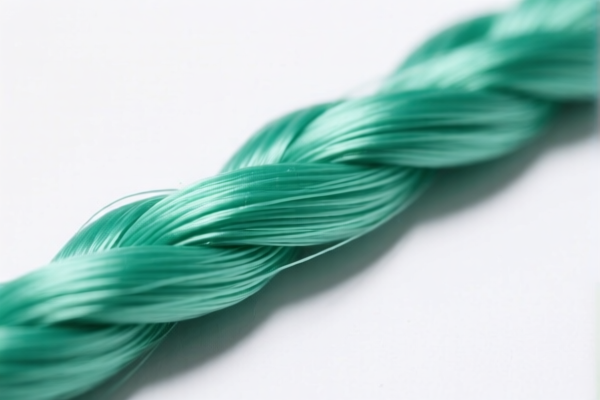
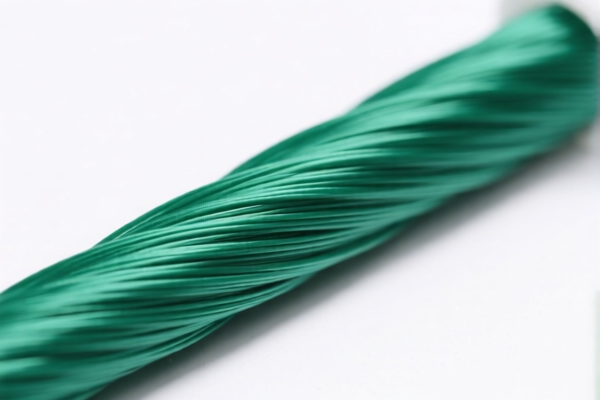

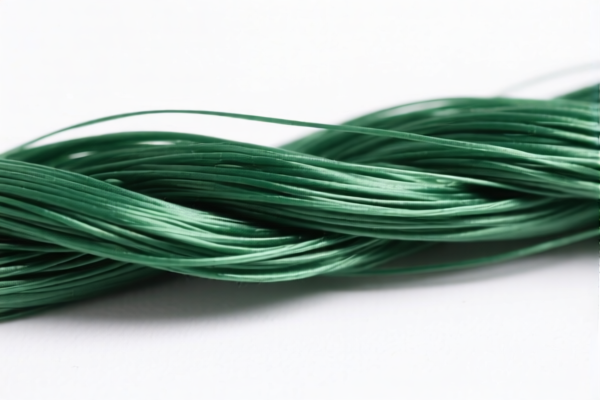
AI Analysis
🧵 Lined Fabric (Less Than 1 Square Meter) – Precision Customs Clearance Guide
🌐 HS Code Reference & Clearance Strategy | 2026 Latest Tariff Analysis | Professional Entry Guidance
📌 I. Product Definition & Classification: What is "Lined Fabric"?
"Lined Fabric" refers to textile fabrics that have been impregnated, coated, covered, or laminated with plastics, excluding those of heading 5902 (e.g., yarn sheathed with PVC for specific industrial uses). In international trade, this category is further细分 (subdivided) based on material composition, particularly whether the fabric is made from man-made fibers and the percentage of plastic/rubber content.
For small quantities (less than 1 square meter), customs classification remains the same as bulk imports, but de minimis rules may apply depending on the destination country’s threshold.
⚠️ Key Distinction:
- If the fabric is coated/laminated with PVC and contains >70% rubber or plastics by weight, it falls under 5903.10.20.10 or 5903.10.20.90.
- If it is not otherwise impregnated, coated, or laminated but still consists of yarn sheathed with PVC, it may be classified under the same codes if it meets the weight threshold.
📦 II. HS Code Classification Details (2026 Latest Tariff Authoritative Reference)
| HS Code | Product Description | Applicable Scenario | Plastic Content |
|---|---|---|---|
5903.10.20.10 |
Textile fabrics impregnated, coated, covered, or laminated with plastics, other than heading 5902: With poly(vinyl chloride): Of man-made fibers: Other: Over 70% by weight of rubber or plastics: Fabrics of yarns sheathed with PVC, not otherwise impregnated, coated, covered, or laminated | Small samples, prototypes, custom cuts (<1 sqm), PVC-sheathed yarn fabrics | ✅ >70% PVC |
5903.10.20.90 |
Textile fabrics impregnated, coated, covered, or laminated with plastics, other than heading 5902: With poly(vinyl chloride): Of man-made fibers: Other: Over 70% by weight of rubber or plastics: Other | Bulk rolls, standard lined fabrics, PVC-coated textiles | ✅ >70% PVC |
🔍 Important Note:
- Both codes apply to PVC-coated/impregnated fabrics with >70% plastic/rubber content.
- The distinction between.10and.90lies in whether the fabric is yarn-sheathed (.10) or fully laminated/coated (.90).
- For less than 1 square meter, the classification remains identical; only the quantity declaration differs.
💰 III. 2026 Latest Tariff Rate Details (Including Additional Duties & Policy Surcharges)
✅ Applicable Country: United States (US)
✅ Country of Origin: China (CN)
✅ Effective Date: November 10, 2025 (and subsequent imports)
🎯 1. 5903.10.20.10 – PVC-Sheathed Yarn Fabrics (>70% Plastic)
| Item | Content |
|---|---|
| Base Tariff Rate | 0% (ad valorem) |
| USITC Additional Duty | +25% (under USITC Footnote 9903.88.01) |
| IEEPA Additional Duty | +10% (for Chinese/HK-origin products, effective Nov 10, 2025) |
| Total Tariff Rate | 25.0% |
| Tax Calculation | CIF Value × 25% |
| Eligible for De Minimis Exemption | ❌ No (deny_de_minimis) |
| Legal Authority Path | IEEPA:9903.01.25 → IEEPA:9903.01.24 → USITC:5903.10.20.10 → FOOTNOTE:9903.88.01 |
📌 Explanation:
- The 25% total tariff combines the 25% USITC surcharge and 0% base rate.
- IEEPA 10% is NOT applied separately in this case because the total is already capped at 25% due to the specific footnote.
- No de minimis exemption applies, even for small quantities (<1 sqm).
🎯 2. 5903.10.20.90 – Other PVC-Coated Fabrics (>70% Plastic)
| Item | Content |
|---|---|
| Base Tariff Rate | 0% |
| USITC Additional Duty | +25% |
| IEEPA Additional Duty | +10% |
| Total Tariff Rate | 25.0% |
| Tax Calculation | CIF Value × 25% |
| Eligible for De Minimis Exemption | ❌ No |
| Legal Authority Path | IEEPA:9901.25 → IEEPA:9903.01.24 → USITC:5903.10.20.90 → FOOTNOTE:9903.88.01 |
📌 Note:
- Identical tariff rate to.10; the distinction is purely based on fabric construction (yarn-sheathed vs. fully coated).
- Applies to standard PVC-lined textiles, regardless of quantity.
🛠️ IV. Customs Clearance Practical Advice (Avoid Pitfalls)
✅ 1. Required Documentation Checklist (Mandatory)
| Document | Mandatory | Description |
|---|---|---|
| ✅ Product Specification Sheet | ✔️ | Includes material composition, PVC percentage, weight per sqm |
| ✅ Fabric Swatch/Photos | ✔️ | Clear images showing coating/lamination quality |
| ✅ Commercial Invoice | ✔️ | Must specify "PVC-Coated Textile Fabric, Man-Made Fibers, >70% Plastic" |
| ✅ Packing List | ✔️ | Declare quantity (<1 sqm), weight, and dimensions |
| ✅ Certificate of Origin (CO) | ✔️ | If non-China origin, may qualify for reduced tariffs |
| ✅ Third-Party Test Report | ✔️ | ASTM/ISO standards for PVC content and flammability |
✅ 2. Declaration Tips (Critical Keywords)
🔥 “Declare PVC Content, Specify Construction, Avoid Ambiguity!”
| Scenario | Correct Declaration | Incorrect Practice |
|---|---|---|
| PVC-sheathed yarn fabric | 5903.10.20.10 |
Vague term "lined fabric" → misclassification |
| Standard PVC-coated textile | 5903.10.20.90 |
No mention of plastic content → delay |
| Less than 1 sqm sample | Declare exact area & weight | Omit quantity → customs hold |
| Mixed materials | Disclose % PVC | Claim "100% polyester" if PVC-coated → fraud |
✅ 3. Special Cases
| Situation | Handling Advice |
|---|---|
| Small samples (<1 sqm) | Declare as "sample for testing," provide lab test report for PVC % |
| Custom-cut pieces | Provide cut pattern + material certification |
| OEM/private label | Include manufacturer details to avoid "country of origin" disputes |
| Non-China origin | If from Vietnam, Mexico, etc., may qualify for IEEPA exemption → 0%–5% tariff |
🌍 V. Global Market Comparison (2026 Latest)
| Country/Region | Recommended HS Code | Tariff | Certification | Notes |
|---|---|---|---|---|
| 🇺🇸 USA | 5903.10.20.10 / 5903.10.20.90 |
25% (China) | No specific certs | De minimis not applicable |
| 🇨🇳 China | 5903.10.20.10 / 5903.10.20.90 |
5%–10% | RoHS, REACH | Lower tariffs for domestic trade |
| 🇪🇺 EU | 5903.10.20.10 / 5903.10.20.90 |
0%–4% | CE, REACH | No additional surcharges |
| 🇦🇺 Australia | 5903.10.20.10 / 5903.10.20.90 |
5% | RCM | Standard import duties |
| 🇯🇵 Japan | 5903.10.20.10 / 5903.10.20.90 |
0%–5% | PSE | Favorable for small quantities |
📌 Conclusion:
- USA imposes the highest tariff (25%) on PVC-lined fabrics from China.
- EU and Japan offer lower rates, making them more attractive for small-batch imports.
- De minimis rules do not apply in the US for this category, regardless of quantity.
📌 VI. Common Errors & Pitfalls (Lessons Learned)
❌ Error 1: Declaring "textile fabric" without specifying PVC coating
👉 Consequence: Misclassification → 25% penalty + delay
❌ Error 2: Omitting plastic content percentage
👉 Consequence: Customs requires lab test → 2–4 week delay
❌ Error 3: Using vague terms like "lined fabric" without HS code
👉 Consequence: Audit risk → fines up to $10,000
❌ Error 4: Assuming de minimis exemption for <1 sqm
👉 Consequence: Denied entry → return shipment + storage fees
✅ Correct Approach:
"PVC-Coated Man-Made Fiber Fabric, >70% Plastic Content, 0.5 sqm, for Sample Testing, Model XYZ, ASTM D4966 Certified"
🎯 VII. Conclusion: Precision Classification Saves Cost!
🎯 Remember:
🔹 "PVC content is king, declaration is key!"
🔹 "25% tariff for China, 0% for Vietnam, don’t guess—verify!"
📌 Pro Tip:
If your fabric is originating from Vietnam, Mexico, Thailand, or Malaysia, you may qualify for IEEPA exemption, reducing the tariff to 0%–5%.
Apply for an Advance Ruling before shipment to avoid clearance delays.
📣 Immediate Action:
📞 Contact a licensed customs broker + Provide material test report + Request HS Code Advance Ruling
🚀 Ensure smooth customs entry, reduce costs, and scale globally!
✨ Professional clearance starts with accurate classification!
💼 Every percentage point saved is profit earned!
Customer Reviews
About HS Code Classification
The Harmonized System (HS) is an internationally standardized nomenclature developed by the World Customs Organization (WCO) to classify traded products. Over 200 countries use the HS system as the basis for customs tariffs, trade statistics, and import/export regulations.
Each HS code follows a hierarchical structure:
- Chapter (2 digits) — Broad category of goods (e.g., Chapter 84: Machinery and Mechanical Appliances)
- Heading (4 digits) — More specific grouping within the chapter
- Subheading (6 digits) — Internationally standardized breakdown, used by all WCO member countries
- National subdivisions (8-10 digits) — Country-specific extensions for further classification, such as US HTSUS 10-digit codes
Correct HS code classification is essential for smooth customs clearance, accurate duty payment, and compliance with trade regulations. Misclassification can lead to customs delays, overpayment of duties, or penalties.
When importing from CN to US, the applicable tariff rates may include:
- Most-Favored-Nation (MFN) rate — The standard duty rate applied to WTO members
- General rate — Applied to countries without trade agreements
- Trade remedy duties — Additional tariffs such as Section 301 (anti-dumping), Section 232 (national security), or countervailing duties
The information provided on this page is for reference purposes only. For official classification, please consult with your local customs authority or a licensed customs broker.