Lined Synthetic Leather Gloves
CN → US| HS Code | Tariff Rate | Origin | Destination | Doc |
|---|---|---|---|---|
| 6216001900 | 0.0% | CN | US | Official Doc |
| 6216002930 | 30.5% | CN | US | Official Doc |
| 4203294000 | 47.6% | CN | US | Official Doc |
| 4203295000 | 47.6% | CN | US | Official Doc |
| 6116109500 | 24.5% | CN | US | Official Doc |
Product Images
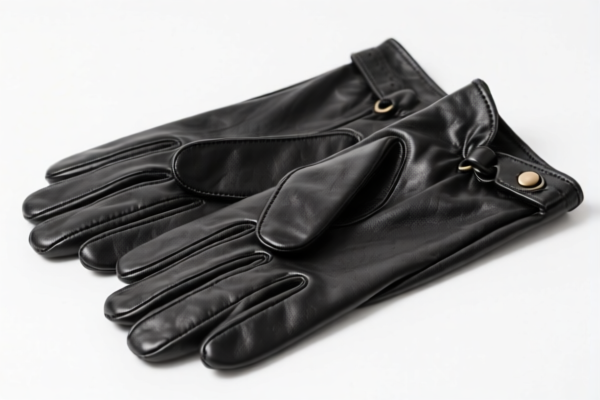
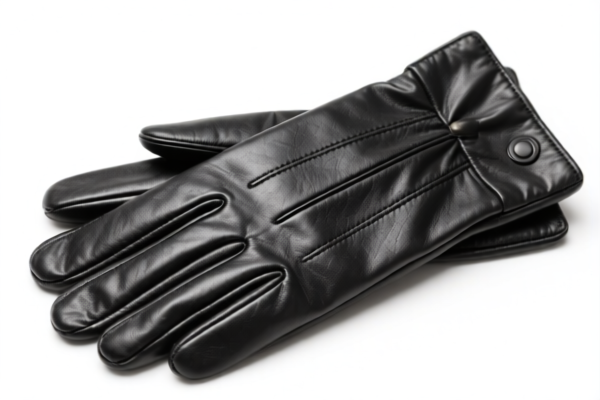
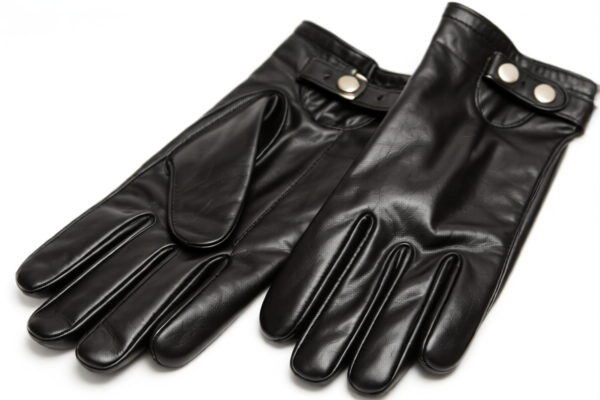
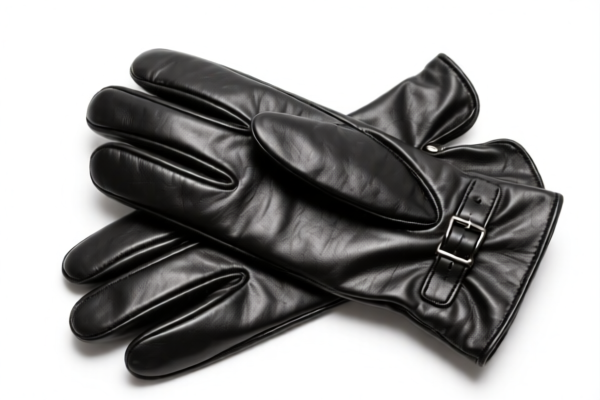
AI Analysis
🧤 Lined Synthetic Leather Gloves
🌐 HS Code Reference & Customs Clearance Guide | 2026 Latest Tariff Analysis | Professional Compliance Strategy
📌 1. Product Definition: Are "Lined Synthetic Leather Gloves" Actually One Simple Item?
Synthetic leather gloves (often referred to as "faux leather," "PU leather," or "genuine split leather" depending on the exact material composition) are versatile accessories. However, customs classification hinges on three critical factors: 1. Material Composition: Is it plastic/rubber impregnated/coated, or is it a textile base? 2. Construction: Is it knitted/crocheted or non-knitted (sewn)? 3. Lining: The presence of a "lining" (especially for "winter" use) significantly impacts the duty rate and applicable footnote.
⚠️ Critical Distinction:
- "Synthetic Leather" (Artificial): Often treated as plastic/rubber coated textiles or chemically treated hides. This pushes classification towards Chapter 62 (Non-knitted) or Chapter 42 (Articles of leather).
- "Knitted" vs. "Non-Knitted": If the gloves are knitted from synthetic fiber fabric, they go to Chapter 61. If they are sewn from non-knitted synthetic leather sheets, they go to Chapter 62.
- "Lined" Implication: Gloves with linings (for warmth) are often subject to higher duties in specific subheadings compared to unlined work gloves.
📦 2. HS Code Classification Matrix (Based on Provided Data)
| HS Code | Product Description & Logic | Tax Rate (Total) | Key Justification |
|---|---|---|---|
| 6216.00.19.00 | Artificial Leather Gloves (General/Other) | 11.1¢/kg + 5.5% + 7.5% + 10% | Fits the logic of "impregnated, coated, covered" gloves. Lowest base duty but includes a specific weight-based charge. |
| 6216.00.29.30 | Synthetic Material Gloves (Plastic/Rubber Coated) | 30.5% | Classifies as gloves impregnated/coated with plastic/rubber. Higher base duty (13%) but no weight-based fee. |
| 4203.29.40.00 | Other Leather Articles (兜底/Fallback) | 47.6% | Fallback category for leather-like articles not specifically provided for. High penalty rate. |
| 4203.29.50.00 | Other Leather Articles (Lined/Winter) | 47.6% | Specifically targets lined gloves under the leather chapter. High penalty rate due to "122 Clause" and Section 301. |
| 6116.10.95.00 | Knitted/Crocheted Gloves (Plastic/Rubber Coated) | 24.5% | If the glove structure is knitted (fabric-based) before coating, it falls here. Lower base duty (7%) than non-knitted. |
🔍 Important Note:
- 6216.00.19.00 is often the most cost-effective if the product clearly fits "impregnated/coated" rather than "plastic/rubber covered" in a way that triggers higher brackets.
- 4203 codes are generally avoided unless the material is genuine leather or strictly defined as such, due to the 25% Section 301 tariff and 10% IEEPA tariff.
- 6116.10.95.00 is the best option if the gloves are knitted (e.g., synthetic fiber fabric coated with PU).
💰 3. Detailed Tariff Breakdown (2026 US Import)
✅ Applicable Country: United States (US)
✅ Origin: China (CN) (Note: Data reflects China-specific surcharges)
✅ Effective Date: Post-2025 Policies (Section 301 + IEEPA 122)
🎯 A. 6216.00.19.00 – Artificial Leather Gloves (Other)
| Item | Detail |
|---|---|
| Base Duty | 11.1 cents/kg + 5.5% ad valorem |
| Section 301 Surcharge | +7.5% |
| IEEPA Section 122 Surcharge | +10% |
| Total Effective Rate | Complex (Weight + %) |
| Legal Path | USITC:6216.00.19.00 → FOOTNOTE:301 → IEEPA:122 |
📌 Explanation:
This is a hybrid duty. You pay a specific duty per kilogram plus an ad valorem percentage on the value.
- 5.5% is the standard base.
- 7.5% is the Section 301 tariff on Chinese goods.
- 10% is the IEEPA 122 tariff (additional surcharge on certain Chinese imports).
Total Tax Burden: High for heavy gloves due to weight component; moderate for light gloves.
🎯 B. 6216.00.29.30 – Plastic/Rubber Coated Synthetic Gloves
| Item | Detail |
|---|---|
| Base Duty | 13.0% |
| Section 301 Surcharge | +7.5% |
| IEEPA Section 122 Surcharge | +10% |
| Total Effective Rate | 30.5% |
| Legal Path | USITC:6216.00.29.30 → FOOTNOTE:301 → IEEPA:122 |
📌 Explanation:
This category is stricter on material definition ("impregnated with plastic or rubber").
- No weight-based duty, purely ad valorem.
- 30.5% is significantly higher than the percentage portion of 6216.00.19.00 but may be lower for very heavy gloves.
🎯 C. 4203.29.40.00 / 4203.29.50.00 – Other Leather Articles (Fallback)
| Item | Detail |
|---|---|
| Base Duty | 12.6% |
| Section 301 Surcharge | +25.0% |
| IEEPA Section 122 Surcharge | +10% |
| Total Effective Rate | 47.6% |
| Legal Path | USITC:4203.29.40.00 / 4203.29.50.00 → FOOTNOTE:301 → IEEPA:122 |
⚠️ Warning:
- These codes carry the highest tariffs (47.6%).
- The 25% Section 301 tariff is applied here, unlike the 7.5% in Chapter 62 (which may have different footnote applications).
- Only use if explicitly required by material definition (e.g., genuine leather or specific treated hides not covered in Ch. 62). Misclassification here leads to massive overpayment.
🎯 D. 6116.10.95.00 – Knitted Gloves (Coated)
| Item | Detail |
|---|---|
| Base Duty | 7.0% |
| Section 301 Surcharge | +7.5% |
| IEEPA Section 122 Surcharge | +10% |
| Total Effective Rate | 24.5% |
| Legal Path | USITC:6116.10.95.00 → FOOTNOTE:301 → IEEPA:122 |
📌 Explanation:
- If your "synthetic leather" gloves are made from knitted fabric that is then coated with PU/synthetic leather material, this is the most tax-efficient code (24.5%).
- Base duty is only 7%.
- Crucial: Must be provably knitted/crocheted.
🛠️ 4. Customs Clearance & Compliance Advice
✅ 1. Documentation Checklist (Mandatory)
| Document | Requirement | Why It Matters |
|---|---|---|
| Product Specification Sheet | Must detail: Material (PU/PE/PVC), Lining Material (Polyester/Fleece), Construction (Knitted/Non-knitted) | Determines Chapter 61 vs. 62 vs. 42. |
| Material Test Report | Third-party lab report confirming "Synthetic Leather" vs. "Genuine Leather" | Avoids Chapter 42 penalty (47.6%) if misidentified as leather. |
| Photos (Clear & Detailed) | Show cross-section (if possible) or stitching. Show lining if present. | CBP may request proof of "knitted" vs. "sewn" construction. |
| Commercial Invoice | Clearly state: "Lined Synthetic Leather Gloves, Not Genuine Leather" | Prevents misdeclaration of value or origin. |
| Labeling | "Made in China" + Fiber Content (e.g., "100% Polyurethane Shell, Polyester Lining") | FTZ and IEEPA compliance requires clear origin and material. |
✅ 2. Classification Strategy (The "Golden Rule")
🔥 "Knitted = Ch61 (Cheaper); Coated Non-Knitted = Ch62; Fallback Leather = Ch42 (Avoid!)"
| Scenario | Recommended HS Code | Tax Rate | Action |
|---|---|---|---|
| Gloves are knitted fabric coated with synthetic leather | 6116.10.95.00 |
24.5% | BEST OPTION. Prove knitted construction. |
| Gloves are sewn from synthetic leather sheets (non-knitted) | 6216.00.19.00 |
11.1¢/kg + 15.5% | Good for light gloves. Check weight vs. % trade-off. |
| Gloves are sewn and heavily plastic/rubber coated | 6216.00.29.30 |
30.5% | Acceptable if 6216.00.19.00 is rejected. |
| Gloves are genuine leather or unclear material | 4203.29.50.00 |
47.6% | AVOID. Only use if legally required. High risk. |
✅ 3. Common Pitfalls & How to Avoid Them
| Mistake | Consequence | Solution |
|---|---|---|
| Mislabeling as "Leather" | Triggers 47.6% tax | Use "Synthetic Leather," "PU Leather," "Faux Leather" in all docs. |
| Ignoring "Lined" Status | May trigger higher subheading in Ch42 | Clearly declare lining material to justify Ch62 (if non-knitted) or Ch61. |
| Confusing Knitted vs. Woven | Wrong Chapter assignment | If the base fabric is knitted (looped), insist on Ch61. If woven/sewn, Ch62. |
| Under-declaring Value | Seizure, fines, IEEPA penalties | Declare full CIF value. IEEPA 10% applies to the entire value. |
🌍 5. Global Market Comparison (2026 Context)
| Country/Region | Likely HS Code | Est. Duty (China Origin) | Key Requirement |
|---|---|---|---|
| 🇺🇸 USA | 6116.10.95.00 or 6216.00.19.00 |
24.5% - 30.5% | IEEPA 10% + Section 301 apply. |
| 🇪🇺 EU | 4203.29.30 or 6116.10.90 |
4% - 12% | No Section 301. Lower base duties. CE marking may apply for PPE. |
| 🇨🇦 Canada | 6216.00.90 |
15% - 20% | CUSMA rules may apply if originating in NA. |
| 🇬🇧 UK | 4203.29.90 |
6.5% - 12% | Post-Brexit tariffs. No US-style surcharges. |
📌 Insight:
- The US market is significantly more expensive due to political tariffs (Section 301 + IEEPA).
- EU/UK tariffs are lower but may require stricter material safety compliance (REACH, etc.).
📌 6. Final Recommendation & Action Plan
🎯 Step 1: Determine Construction
- Is it knitted? → File under 6116.10.95.00 (24.5%).
- Is it sewn/non-knitted? → File under 6216.00.19.00 (11.1¢/kg + 15.5%).
🎯 Step 2: Prepare Documentation
- Explicitly state "Synthetic Leather", "Not Genuine Leather".
- Include material breakdown (Shell: 100% PU; Lining: 100% Polyester).
- Attach photos showing the synthetic texture and lining.
🎯 Step 3: Calculate Landed Cost
- For Knitted: CIF Value × 24.5% + Duties.
- For Sewn: CIF Value × 15.5% + (Weight in kg × $0.111) + Duties.
- Compare these two. If gloves are heavy, 6216.00.19.00 may become more expensive than 6116.10.95.00 due to the weight fee.
✅ Pro Tip:
Always apply for a Binding Ruling from US Customs (CBP) if the volume is high. The cost of a ruling ($$$) is negligible compared to the risk of a 47.6% misclassification penalty.
✨ Professional Clearance, From Accurate Classification Starts!
💼 Your every dollar saved is a dollar earned!
Customer Reviews
About HS Code Classification
The Harmonized System (HS) is an internationally standardized nomenclature developed by the World Customs Organization (WCO) to classify traded products. Over 200 countries use the HS system as the basis for customs tariffs, trade statistics, and import/export regulations.
Each HS code follows a hierarchical structure:
- Chapter (2 digits) — Broad category of goods (e.g., Chapter 84: Machinery and Mechanical Appliances)
- Heading (4 digits) — More specific grouping within the chapter
- Subheading (6 digits) — Internationally standardized breakdown, used by all WCO member countries
- National subdivisions (8-10 digits) — Country-specific extensions for further classification, such as US HTSUS 10-digit codes
Correct HS code classification is essential for smooth customs clearance, accurate duty payment, and compliance with trade regulations. Misclassification can lead to customs delays, overpayment of duties, or penalties.
When importing from CN to US, the applicable tariff rates may include:
- Most-Favored-Nation (MFN) rate — The standard duty rate applied to WTO members
- General rate — Applied to countries without trade agreements
- Trade remedy duties — Additional tariffs such as Section 301 (anti-dumping), Section 232 (national security), or countervailing duties
The information provided on this page is for reference purposes only. For official classification, please consult with your local customs authority or a licensed customs broker.