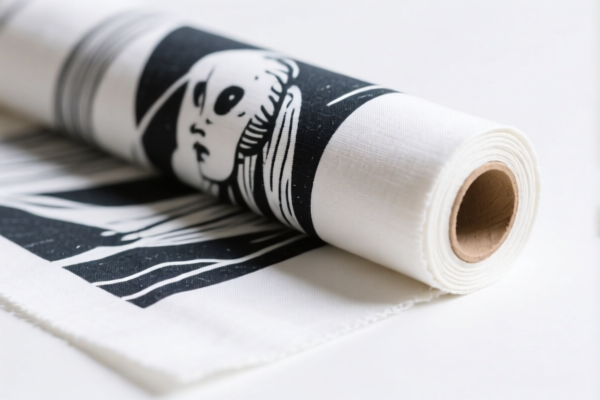
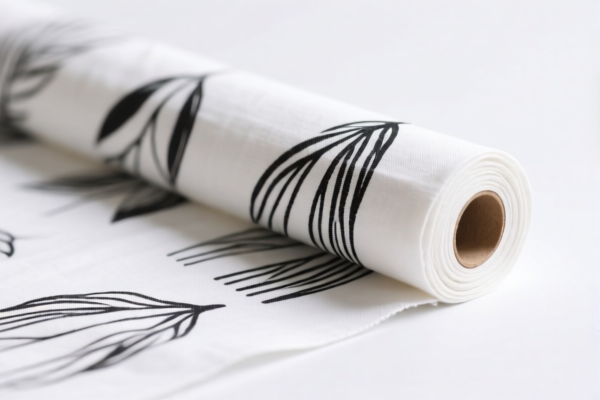
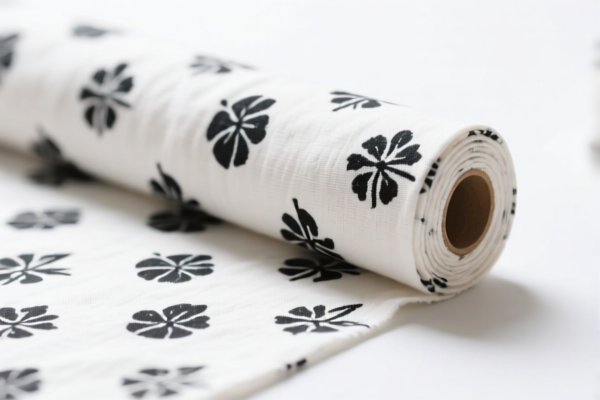
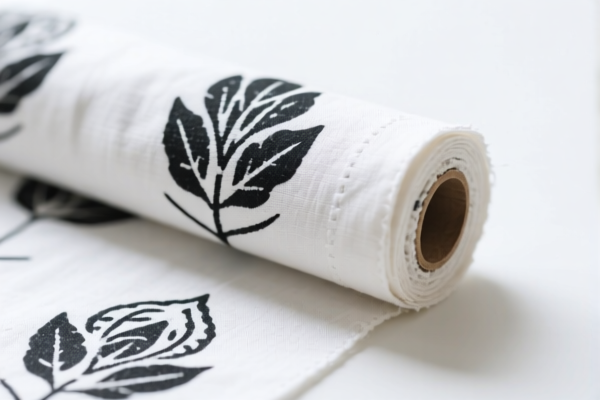
Linen Appearance Fabric Roll
CN → US| HS Code | Tariff Rate | Origin | Destination | Doc |
|---|---|---|---|---|
| 5609003000 | 39.5% | CN | US | Official Doc |
| 5806393080 | 35.0% | CN | US | Official Doc |
| 3926905700 | 41.5% | CN | US | Official Doc |
| 5609004000 | 38.9% | CN | US | Official Doc |
| 5806322000 | 41.2% | CN | US | Official Doc |
Product Images
AI Analysis
🧵 Linen Appearance Fabric Roll (Linen-look Textile Rolls)
🌐 HS Code Reference & Customs Clearance Guide | 2026 Latest Tariff Analysis | Professional Entry Strategy
📌 1. Product Definition & Classification: What Exactly is "Linen Appearance Fabric"?
"Linen Appearance Fabric Roll" refers to textile materials (woven or non-woven) that visually mimic the texture, weave, or finish of natural flax linen but are primarily composed of synthetic or man-made fibers (e.g., polyester, rayon, viscose, nylon).
In international trade, misclassification is common because the visual appeal suggests natural fibers, but customs classification is driven by material composition and manufacturing process.
⚠️ Key Distinction:
- If the fabric is primarily Synthetic/Man-made fibers → It falls under Chapter 56, 58, or 39 (depending on form and processing), NOT Chapter 53 (Natural Linen).
- If it contains >85% natural flax → It would be Chapter 53 (not applicable in our dataset).
- Crucial Note: Our dataset focuses on synthetic/man-made alternatives labeled as "Linen Appearance."
📦 2. HS Code Classification Details (Based on Provided Data)
The following HS Codes are derived from the specific characteristics of "Linen Appearance Fabric Rolls" as defined in your dataset. Each code reflects a different form (ribbon, tape, belt, etc.) and material (synthetic, man-made, fiber-based).
| HS Code | Product Description (Summary) | Material Composition | Form/Structure | Key Classification Logic |
|---|---|---|---|---|
| 5609.00.30.00 | Linen-look woven band | Synthetic/Man-made fiber | Woven Band/Ribbon | Classified as "Other made-up articles of yarn, strip or the like" (Ch 56). Focuses on the finished article nature rather than raw fabric. |
| 5806.39.30.80 | Linen-look woven tape | Non-silk, non-metalized textile material | Woven Tape/Belt | Classified under "Woven fabrics other than goods of heading 5807." Specific to non-silk tapes with linen-like appearance. |
| 3926.90.57.00 | Linen-look woven belt | Synthetic/Man-made fiber | Woven Belt | Classified as "Other articles of plastics" or textile-plastic hybrid? Note: Ch 39 usually implies plastic content or specific processing. This code applies to specific synthetic belts. |
| 5609.00.40.00 | Linen-look woven tape | Fiber/Yarn based product | Woven Tape | Another "Made-up article" classification. Focuses on the fiber/yarn construction without specific weaving structure detailed in Ch 58. |
| 5806.32.20.00 | Linen-look woven tape | Man-made (e.g., Polyester/Rayon) | Woven Tape | Specific to "Woven tapes of man-made fibers." Often used for high-density synthetic linen-look tapes. |
🔍 Critical Analysis:
- Chapter 56 vs. Chapter 58:
- 5609 covers "Made-up articles" (like finished belts, bands, tassels) that are not specifically woven tapes under 5806.
- 5806 covers "Woven tapes" specifically.
- 3926 is an outlier, suggesting a specific plastic-composite or coated synthetic belt application.
- Material Matters: The distinction between "Synthetic" (5609.30, 3926) and "Man-made" (5806.32) is critical for duty rates.
💰 3. 2026 Latest Tariff Rate Breakdown (Including Additional Duties)
✅ Applicable Country: United States (US)
✅ Origin: China (CN)
✅ Effective Date: As per current IEEPA/USITC rules (2025-2026)
🎯 1. 5609.00.30.00 – Linen-look Woven Band (Synthetic/Man-made)
| Item | Detail |
|---|---|
| Base Duty Rate | 4.5% (ad valorem) |
| USITC Additional Duty (Section 301) | +25.0% |
| IEEPA Additional Duty | +10.0% |
| Total Effective Duty | 39.5% |
| De Minimis Exemption? | ❌ No (Deny De Minimis for China under Section 321) |
| Legal Basis Path | HTSUS:5609.00.30 → USITC:Footnote 9903.88.01 → IEEPA:9903.01.25 |
📌 Explanation:
- The 4.5% base rate applies to "Other made-up articles of yarn."
- The 35% total additional duty (25% + 10%) is unavoidable for Chinese origin goods.
- Cost Impact: High. Importers must budget for nearly 40% duty on CIF value.
🎯 2. 5806.39.30.80 – Linen-look Woven Tape (Non-silk, Non-metalized)
| Item | Detail |
|---|---|
| Base Duty Rate | 0.0% (ad valorem) |
| USITC Additional Duty (Section 301) | +25.0% |
| IEEPA Additional Duty | +10.0% |
| Total Effective Duty | 35.0% |
| De Minimis Exemption? | ❌ No |
| Legal Basis Path | HTSUS:5806.39.30 → USITC:Footnote 9903.88.01 → IEEPA:9903.01.24 |
📌 Explanation:
- This is the most favorable option in the dataset due to the 0% base rate.
- However, the 35% additional duty still makes it expensive.
- Why 0% Base? Woven tapes of certain non-silk materials have lower base duties under US tariff schedules.
🎯 3. 3926.90.57.00 – Linen-look Woven Belt (Synthetic/Man-made)
| Item | Detail |
|---|---|
| Base Duty Rate | 6.5% (ad valorem) |
| USITC Additional Duty (Section 301) | +25.0% |
| IEEPA Additional Duty | +10.0% |
| Total Effective Duty | 41.5% |
| De Minimis Exemption? | ❌ No |
| Legal Basis Path | HTSUS:3926.90.57 → USITC:Footnote 9903.88.01 → IEEPA:9903.01.25 |
📌 Explanation:
- Highest duty rate (41.5%) in the dataset.
- Classification under Chapter 39 suggests this may be a plastic-coated or composite belt, not pure textile.
- Warning: Ensure the product is truly a "woven belt" and not a misclassified textile, or consider if a different HS code (like 5806) is more accurate.
🎯 4. 5609.00.40.00 – Linen-look Woven Tape (Fiber/Yarn Based)
| Item | Detail |
|---|---|
| Base Duty Rate | 3.9% (ad valorem) |
| USITC Additional Duty (Section 301) | +25.0% |
| > IEEPA Additional Duty | +10.0% |
| Total Effective Duty | 38.9% |
| De Minimis Exemption? | ❌ No |
| Legal Basis Path | HTSUS:5609.00.40 → USITC:Footnote 9903.88.01 → IEEPA:9903.01.24 |
📌 Explanation:
- Slightly better than 3926.90.57.00 but worse than 5806.39.30.80.
- The 3.9% base rate is specific to "Other made-up articles of yarn."
🎯 5. 5806.32.20.00 – Linen-look Woven Tape (Man-made Fiber)
| Item | Detail |
|---|---|
| Base Duty Rate | 6.2% (ad valorem) |
| USITC Additional Duty (Section 301) | +25.0% |
| > IEEPA Additional Duty | +10.0% |
| Total Effective Duty | 41.2% |
| De Minimis Exemption? | ❌ No |
| Legal Basis Path | HTSUS:5806.32.20 → USITC:Footnote 9903.88.01 → IEEPA:9903.01.25 |
📌 Explanation:
- Specific to man-made fibers (e.g., polyester, rayon).
- Base rate of 6.2% is higher than the "non-silk" general category (0%).
- Recommendation: If possible, classify under 5806.39.30.80 (0% base) instead, if the material qualifies.
🛠️ 4. Customs Clearance Practical Advice (Avoid Pitfalls)
✅ 1. Documentation Checklist (Mandatory)
| Document | Required? | Purpose |
|---|---|---|
| ✅ Product Specification Sheet | ✔️ | Must detail: Fiber content (% synthetic vs. man-made), width, thickness, weave pattern. |
| ✅ Material Composition Label | ✔️ | Clearly state "100% Polyester" or "80% Viscose, 20% Nylon" – NOT just "Linen Look." |
| ✅ Commercial Invoice | ✔️ | Must describe as "Woven Tape" or "Made-up Article of Yarn," NOT "Linen Fabric" (which implies Ch 53). |
| ✅ Origin Certificate (CO) | ✔️ | To prove Chinese origin for additional duty assessment. |
| ✅ Photos of Product | ✔️ | Show weave structure, edges, and any coatings (to rule out Ch 59 or Ch 39 misclassification). |
✅ 2. Declaration Tips (Golden Rules)
🔥 "Describe by Material, Not by Look!"
| Scenario | Correct Declaration | Incorrect Declaration |
|---|---|---|
| Synthetic Ribbon | 5609.00.30.00 - "Woven Band of Polyester" |
"Linen Fabric Roll" → ❌ Misclassification |
| Man-made Tape | 5806.39.30.80 - "Woven Tape of Non-silk Material" |
"Linen Tape" → ❌ Vague |
| Composite Belt | 3926.90.57.00 - "Plastic-coated Woven Belt" |
"Fabric Belt" → ❌ Risk of Ch 58 classification |
📌 Why This Matters:
- Linen (Ch 53) has 0% base duty and often lower or no additional duties (depending on current policy).
- Synthetic/Man-made (Ch 56/58/39) incurs high base + 35% additional duties.
- Do NOT declare as "Linen" if it is synthetic. This is fraud and leads to seizures, fines, and back taxes.
✅ 3. Special Cases & Optimization
| Situation | Strategy |
|---|---|
| If Fiber Content is Mixed | Ensure the principal material determines the HS Code. If >50% is synthetic, Ch 54/55/56 applies. |
| If Product is Unfinished Fabric | If it’s just a "roll of fabric" (not a "made-up article" like a tape/band), it might fall under Ch 54 (Synthetic Filament) or Ch 55 (Staple Fibers), which have different duty rates (not in this dataset but potentially lower). Consult a customs broker to see if Ch 54/55 is more accurate. |
| If Plastic-Coated | If the "linen look" is due to a plastic coating, Ch 39 (3926.90.57.00) may be correct, but consider if Ch 59 (Impregnated Textiles) applies, which has different duties. |
🌍 5. Global Market Comparison (2026)
| Market | Recommended HS Code | Est. Duty (China Origin) | Key Requirement |
|---|---|---|---|
| 🇺🇸 USA | 5806.39.30.80 |
35% (0% base + 35% add'l) | Section 301 & IEEPA duties apply. |
| 🇨🇳 China | 5806.39.30.80 |
6-8% (Import Duty) | No additional tariffs for import into China. |
| 🇪🇺 EU | 5806.32.00 |
4-6% | No additional tariffs unless CVD applies. |
| 🇬🇧 UK | 5806.32.00 |
4-6% | Post-Brexit UK TARIC rates apply. |
📌 Conclusion:
- USA is the most expensive market due to political tariffs.
- Optimization Tip: If your product is unfinished fabric rolls (not woven tapes/belts), consider reclassifying under Ch 54 or Ch 55 (if applicable) to potentially avoid the "made-up article" duty structure and qualify for lower base rates.
📌 6. Common Mistakes & Pitfalls (Learn from Others)
❌ Mistake 1: Declaring as "Linen Fabric" when it is synthetic.
👉 Consequence: Customs will reclassify to Ch 54/55/56/58 + apply additional duties + penalties.
👉 Correct: Declare as "Synthetic Woven Tape" or "Man-made Fiber Band."
❌ Mistake 2: Using HS Code 5609.00.30.00 for a wide fabric roll (not a narrow tape/band).
👉 Consequence: 5609 is for "made-up articles" (narrow items). Wide fabric rolls should be Ch 54/55/58.
👉 Correct: Check width and end-use. If it’s a general-purpose fabric roll, Ch 58 or Ch 55 may be better.
❌ Mistake 3: Ignoring IEEPA 10% and Section 301 25%.
👉 Consequence: Underpayment of duties, audits, and back taxes with interest.
👉 Correct: Always calculate Total Duty = Base + 25% + 10% for China-origin goods.
🎯 7. Conclusion: Strategic Customs Planning
🎯 Key Takeaway:
"Linen Appearance" is a visual description, not a tariff classification. Always classify by material and form.
- Best Rate Option:
5806.39.30.80(35% total) - Worst Rate Option:
3926.90.57.00(41.5% total) - Critical Action: Verify if your product is a "Woven Tape" (Ch 58) or a "Made-up Article" (Ch 56) or a "Plastic Composite" (Ch 39). Misclassification leads to high costs.
📌 Pro Tip:
If you are importing wide fabric rolls (not narrow tapes), consider reclassifying under Chapter 54 (Synthetic Filament Yarn) or Chapter 55 (Man-made Staple Fibers) if the product is not yet "made-up." This may result in lower base duties (often 0-6%) and avoid the 35% additional duty if properly classified as raw material rather than an article.
📞 Contact a Customs Broker to review your product’s width, weave, and end-use to ensure you are using the most favorable HS Code.
✨ Smart Classification, Smarter Profits!
💼 Your Duty Savings Start with Accurate Data!
Customer Reviews
About HS Code Classification
The Harmonized System (HS) is an internationally standardized nomenclature developed by the World Customs Organization (WCO) to classify traded products. Over 200 countries use the HS system as the basis for customs tariffs, trade statistics, and import/export regulations.
Each HS code follows a hierarchical structure:
- Chapter (2 digits) — Broad category of goods (e.g., Chapter 84: Machinery and Mechanical Appliances)
- Heading (4 digits) — More specific grouping within the chapter
- Subheading (6 digits) — Internationally standardized breakdown, used by all WCO member countries
- National subdivisions (8-10 digits) — Country-specific extensions for further classification, such as US HTSUS 10-digit codes
Correct HS code classification is essential for smooth customs clearance, accurate duty payment, and compliance with trade regulations. Misclassification can lead to customs delays, overpayment of duties, or penalties.
When importing from CN to US, the applicable tariff rates may include:
- Most-Favored-Nation (MFN) rate — The standard duty rate applied to WTO members
- General rate — Applied to countries without trade agreements
- Trade remedy duties — Additional tariffs such as Section 301 (anti-dumping), Section 232 (national security), or countervailing duties
The information provided on this page is for reference purposes only. For official classification, please consult with your local customs authority or a licensed customs broker.