Lip Stud
CN → US| HS Code | Tariff Rate | Origin | Destination | Doc |
|---|---|---|---|---|
| 8214906000 | 0.0% | CN | US | Official Doc |
| 7117110000 | 25.5% | CN | US | Official Doc |
| 8214909000 | 0.0% | CN | US | Official Doc |
Product Images
AI Analysis
💍 Lip Studs: The Ultimate HS Code & Tariff Classification Guide (2026 Edition)
🚀 Professional Customs Clearance Strategy | Tax Optimization | Avoiding Border Delays
🌐 What is a "Lip Stud"? Understanding the Product
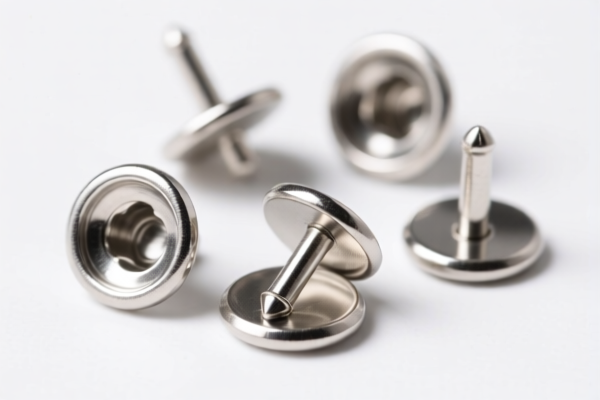
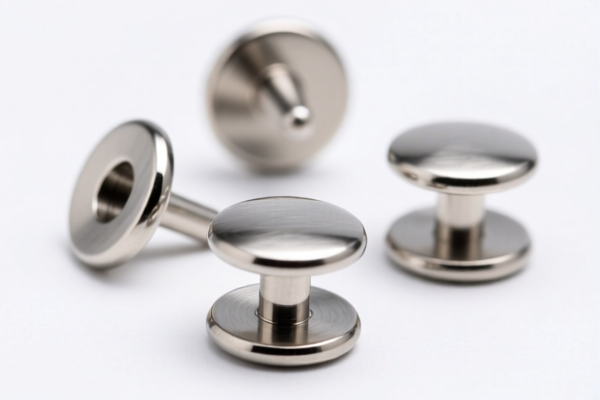
Lip Studs (often called "fake lip piercings" or "magnetic lip jewelry") are decorative items designed to mimic the appearance of a pierced lip without actual piercing. They typically consist of a decorative front piece and a magnetic backing.
Key Characteristics:
- Material: Often Stainless Steel, Aluminum, or合金 (Alloy).
- Function: Purely decorative/ornamental.
- Classification Dilemma: Are they tools (simulating a piercing tool)? Are they imitation jewelry (fake jewelry)? Or are they miscellaneous accessories?
- Market Context: Widely used in fashion, cosplay, and temporary body art.
⚠️ Critical Warning: The classification of "Lip Studs" depends heavily on intent, construction, and marketing. Misclassification can lead to tariff shock (from 0.2% to 25.5%!) or customs seizure.
📦 Part I: HS Code Classification Options (2026 Analysis)
Based on the data provided, there are three primary HS Codes for Stainless Steel Lip Studs. Each carries a drastically different tax burden.
| HS Code | Product Description | Classification Logic | Total Tax Rate (US) | Risk Level |
|---|---|---|---|---|
| 8214.90.60.00 | Stainless Steel Lip Studs (Cutting/Trimming Tools - Miscellaneous) |
Classified as a "similar article of a kind used for cutting or trimming," specifically for modifying appearance. | 3.1% + 10% (Section 232) (Base: 0.2¢/each + 3.1%) |
🟢 Low |
| 7117.11.00.00 | Stainless Steel Lip Studs (Imitation Jewelry - Base Metal) |
Classified as "Imitation Jewelry" made of base metal (stainless steel). Fits the "fake jewelry" logic. | 8.0% + 7.5% + 10% = 25.5% | 🔴 High |
| 8214.90.90.00 | Stainless Steel Lip Studs (Miscellaneous Tools/Decorative) |
Treated as a "tool/decoration" not specifically listed elsewhere, often linked to knife/cutlery categories. | 3.2% + 10% (Section 232) (Base: 1.4¢/each + 3.2%) |
🟢 Low |
🧠 Why These Three Codes?
- 8214.90.60.00 (Tools Category): U.S. Customs may view the "magnetic snap" or "clip" mechanism as a tool for temporary modification, similar to a cosmetic tool.
- 7117.11.00.00 (Jewelry Category): This is the most natural fit for "jewelry," but it triggers the highest tariffs (25.5%) due to Section 301 and Section 232 duties on base metal jewelry.
- 8214.90.90.00 (Miscellaneous Tools): A fallback category for tools not specifically named, often used for decorative "gadgets."
💰 Part II: Detailed Tax Breakdown & Legal Basis
🎯 Option 1: 8214.90.60.00 (The "Tool" Route - Best Value)
Scenario: The importer argues the item is a "tool" for cosmetic application (like a cosmetic applicator).
| Tax Component | Rate | Legal Basis / Footnote | Explanation |
|---|---|---|---|
| Base Tariff (MFN) | 3.1% | HTSUS 8214.90.60.00 | Standard duty for "other articles of cutlery." |
| Countervailing Duty | 0.0% | N/A | No specific countervailing duty applies. |
| Section 232 (Steel) | 10% | 19 CFR § 370.1 / IEEPA | Mandatory 10% surcharge on steel products due to national security concerns. |
| Per Unit Fee | 0.2¢ each | HTSUS Specific | A small specific duty per unit. |
| Total Effective Rate | 3.1% + 10% (approx) | Lowest tax burden. |
✅ Strategy: Argue that the product is a "cosmetic tool" rather than jewelry to avoid the 25.5% jewelry tax.
🎯 Option 2: 7117.11.00.00 (The "Jewelry" Route - High Tax)
Scenario: The product is marketed explicitly as "Fashion Jewelry," "Fake Piercing Jewelry," or "Ornament."
| Tax Component | Rate | Legal Basis / Footnote | Explanation |
|---|---|---|---|
| Base Tariff (MFN) | 8.0% | HTSUS 7117.11.00.00 | Standard duty for "Imitation Jewelry of Base Metal." |
| Section 301 (China) | 7.5% | HTSUS 9903.88.01 | Section 301 Tariff on specific Chinese consumer goods. |
| Section 232 (Steel) | 10% | 19 CFR § 370.1 | Mandatory 10% surcharge on steel content. |
| Total Effective Rate | 25.5% | Highest tax burden. |
⚠️ Warning: If you declare "Lip Studs" as "Jewelry" under 7117, you will pay 25.5% on top of the product cost. This is a massive margin killer for low-cost fashion items.
🎯 Option 3: 8214.90.90.00 (The "Miscellaneous Tool" Route)
Scenario: The product is a "decorative clip" not covered by specific jewelry or cutlery definitions.
| Tax Component | Rate | Legal Basis / Footnote | Explanation |
|---|---|---|---|
| Base Tariff (MFN) | 3.2% | HTSUS 8214.90.90.00 | Standard duty for "Other articles of cutlery." |
| Countervailing Duty | 0.0% | N/A | None. |
| Section 232 (Steel) | 10% | 19 CFR § 370.1 | Mandatory 10% surcharge on steel content. |
| Per Unit Fee | 1.4¢ each | HTSUS Specific | Small specific duty per unit. |
| Total Effective Rate | 3.2% + 10% (approx) | Similar to Option 1, slightly higher base. |
🛠️ Part III: Customs Clearance Strategy & Recommendations
✅ 1. Classification Strategy (The "Tool" vs. "Jewelry" Battle)
Goal: Avoid 7117.11.00.00 (25.5%) and aim for 8214.90.60.00 or 8214.90.90.00 (~3-4% + 10%).
| Action | Recommendation | Why? |
|---|---|---|
| Product Description | DO NOT use "Jewelry," "Ornament," or "Piercing." | These keywords trigger the 7117 classification. |
| Use Keywords | Use "Cosmetic Tool," "Lip Clip," "Temporary Adhesive Lip Ornament," or "Magnetic Lip Tool." | Frames the product as a tool/application device, not jewelry. |
| Material Declaration | Highlight "Stainless Steel" but emphasize function over form. | Helps justify the 8214 classification (steel tools) rather than 7117 (steel jewelry). |
| Packaging | Avoid "Gift Set," "Fashion Jewelry Collection." | Prevents the "jewelry" perception. |
✅ 2. Required Documentation for "Tool" Classification
To support the 8214 classification, you must prove the item is a tool or device, not just an ornament.
| Document | Requirement | Purpose |
|---|---|---|
| Product Function Sheet | Explain how the "clip" works as a tool for temporary lip modification. | Proves "tool" intent, not jewelry. |
| Marketing Materials | Show packaging that describes it as a "Cosmetic Tool" or "Magnetic Lip Clip." | Supports the "non-jewelry" argument. |
| Material Breakdown | Detailed specs: Stainless Steel grade, magnet type, dimensions. | Confirms "steel" content for Section 232. |
| Usage Photos | Show the item being applied to the lip (like an applicator). | Visual proof of "tool" function. |
✅ 3. Special Tariff Notes (Section 232 & 301)
- Section 232 (Steel): 10% is mandatory for all stainless steel products, regardless of HS Code. It applies to all three options above.
- Section 301 (China): Applies only if the product is classified as Imitation Jewelry (7117).
- If 8214: Only 10% (Steel) + Base (3-4%).
- If 7117: 10% (Steel) + 7.5% (301) + 8% (Base) = 25.5%.
🚨 Critical Takeaway:
Avoid 7117.11.00.00 at all costs! The 7.5% Section 301 tax is the biggest differentiator. By classifying as a "Tool" (8214), you save 15.4% in tariffs compared to "Jewelry."
✅ 4. Clearance Checklist (Step-by-Step)
- Review Product Name: Change "Lip Stud" to "Lip Clip Tool" or "Magnetic Lip Ornament Tool."
- Prepare Explanatory Note: Draft a 1-page memo explaining why the item is a "cosmetic tool" and not "jewelry."
- File Ruling Request (Optional but Recommended): Submit a Binding Ruling Request to U.S. Customs to confirm the 8214 classification.
- Verify Material: Ensure the stainless steel content is declared correctly to avoid Section 232 penalties.
- Calculate Landed Cost:
- Jewelry Route: Cost × 1.255
- Tool Route: Cost × 1.135 (approx)
🌍 Global Market Context (2026)
| Market | Primary Risk | Strategy |
|---|---|---|
| 🇺🇸 USA | High Section 301/232 taxes on jewelry. | Use 8214 classification; avoid "jewelry" keywords. |
| 🇪🇺 EU | Low tariff for jewelry (usually 0-4%). | Can use 7117 classification; lower risk. |
| 🇨🇳 China | Export restrictions on steel products. | Ensure proper origin certification. |
📌 Final Verdict: The "Lip Stud" Tax Survival Guide
🔥 The Golden Rule:
"Don't call it jewelry; call it a tool."
- 8214.90.60.00 / 8214.90.90.00: ~13.5% Total Tax (3.1-3.2% + 10% Steel).
- 7117.11.00.00: 25.5% Total Tax (8% + 7.5% + 10% Steel).
Result: A 12% savings by changing the classification logic!
✅ Action Plan:
1. Rebrand: Change "Lip Stud" to "Cosmetic Lip Tool" in all shipping docs.
2. Document: Provide a "Tool Function Statement" to Customs.
3. Verify: Double-check that the item is not marketed as "Jewelry" on Amazon/Shopify.
🚀 Pro Tip: If you are unsure, file a Binding Ruling Request with U.S. Customs before shipping. It costs ~$100 but saves thousands in potential tariffs!
🎯 Conclusion
The "Lip Stud" is a classic example of how nomenclature dictates taxation. By understanding the nuance between "Tool" (8214) and "Jewelry" (7117), importers can slash their tax bill from 25.5% to ~13.5%.
💡 Final Advice:
"Know your HS Code, Know your Tax, Know your Margin!"
Don't let a simple "Stud" cost you a fortune. Optimize your classification today!
✨ Clearance Success Starts with Precision!
📞 Contact your broker today to review your "Lip Stud" documentation!
Customer Reviews
About HS Code Classification
The Harmonized System (HS) is an internationally standardized nomenclature developed by the World Customs Organization (WCO) to classify traded products. Over 200 countries use the HS system as the basis for customs tariffs, trade statistics, and import/export regulations.
Each HS code follows a hierarchical structure:
- Chapter (2 digits) — Broad category of goods (e.g., Chapter 84: Machinery and Mechanical Appliances)
- Heading (4 digits) — More specific grouping within the chapter
- Subheading (6 digits) — Internationally standardized breakdown, used by all WCO member countries
- National subdivisions (8-10 digits) — Country-specific extensions for further classification, such as US HTSUS 10-digit codes
Correct HS code classification is essential for smooth customs clearance, accurate duty payment, and compliance with trade regulations. Misclassification can lead to customs delays, overpayment of duties, or penalties.
When importing from CN to US, the applicable tariff rates may include:
- Most-Favored-Nation (MFN) rate — The standard duty rate applied to WTO members
- General rate — Applied to countries without trade agreements
- Trade remedy duties — Additional tariffs such as Section 301 (anti-dumping), Section 232 (national security), or countervailing duties
The information provided on this page is for reference purposes only. For official classification, please consult with your local customs authority or a licensed customs broker.