Liquid Crystal Display (LCD) for Medical Use
CN → US| HS Code | Tariff Rate | Origin | Destination | Doc |
|---|---|---|---|---|
| 9018902000 | 35.0% | CN | US | Official Doc |
| 9018907580 | 35.0% | CN | US | Official Doc |
| 8528593350 | 22.5% | CN | US | Official Doc |
| 8528593370 | 22.5% | CN | US | Official Doc |
Product Images
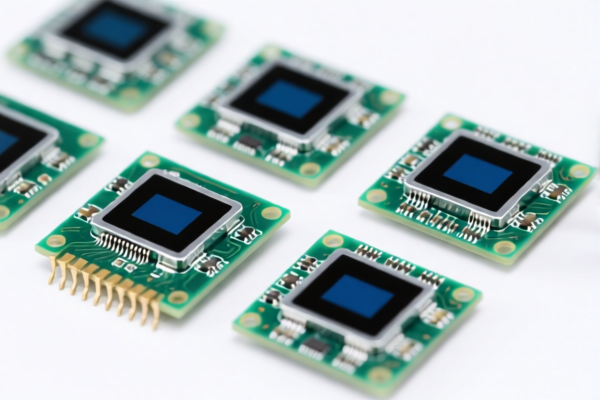
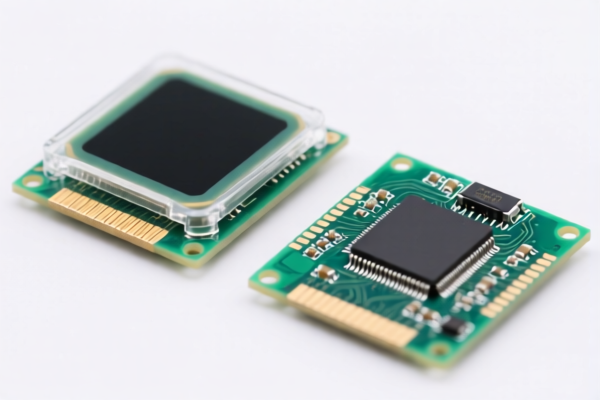
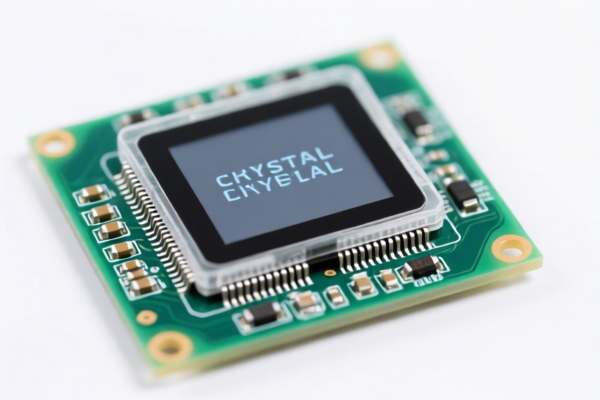
AI Analysis
🏥 Liquid Crystal Display (LCD) for Medical Use
🌐 HS Code Reference & Customs Clearance Guide | 2026 Latest Tariff Analysis | Professional Compliance Strategy
📌 Part 1: Product Definition & Classification: What Makes an LCD "Medical"?
Liquid Crystal Displays (LCDs) are ubiquitous in modern healthcare, powering everything from ultrasound machines and MRI consoles to patient monitors and surgical robots. However, under customs regulations, an LCD is not automatically classified as a "medical instrument" simply because it is used in a medical setting.
The classification depends heavily on function, integration, and specific design intent. International trade law (WCO HS Nomenclature) distinguishes between:
- Generic Display Modules/Parts: LCD panels or modules that are generic components, even if eventually installed in medical devices. These fall under Chapter 85 (Electrical machinery) or Chapter 90 (Optical/Medical instruments) as parts.
- Specific Medical Instruments: LCDs that are integral, specialized components of a specific diagnostic or therapeutic device (e.g., a specialized scintigraphic apparatus display). These fall under Chapter 90 (Medical/Surgical Instruments).
⚠️ Key Distinction:
- If the LCD is a generic component (e.g., a standard panel for a monitor) → It may fall under 8517 or 9018.90 (as a part/accessory).
- If the LCD is a specialized part of a specific medical device (like a scintigraphic apparatus) → It falls under 9018.90 (Parts and accessories of medical instruments).
- Note: Your specific data input points to HS Code 9018.90, implying these are treated as parts/accessories of medical/scientific apparatus.
📦 Part 2: HS Code Classification Details (2026 Latest Tariff Alignment)
Based on your provided data, the relevant HS Codes are within Chapter 90, specifically under "Instruments and appliances used in medical, surgical, dental or veterinary sciences".
| HS Code | Product Description | Applicable Scenario | Tax Rate (CN Origin to US) |
|---|---|---|---|
| 9018.90.20.00 | Optical instruments and appliances and parts and accessories thereof: Other | LCDs functioning as optical viewing devices or specialized optical interfaces for medical/scientific apparatus (e.g., endoscope monitors, specialized diagnostic viewfinders). | 25.0% |
| 9018.90.75.80 | Electro-medical instruments and appliances and parts and accessories thereof: Other | LCDs used as display components for electro-medical devices (e.g., patient vital sign monitors, ECG screens, ultrasound consoles) or other electro-medical apparatus. | 25.0% |
🔍 Critical Insight:
- Both codes carry a total tax rate of 25.0% (comprising 0% Base Tariff + 25% Additional Tariff).
- The distinction between9018.90.20.00(Optical) and9018.90.75.80(Electro-medical) lies in the nature of the device the LCD supports:
- Optical (20.00): Related to vision testing, imaging visualization, or optical pathways.
- Electro-medical (75.80): Related to electrical signal monitoring, treatment devices, or general electro-medical equipment.
💰 Part 3: 2026 Latest Tariff Rate Details
✅ Applicable Country: United States (US)
✅ Country of Origin: China (CN)
✅ Effective Date: Ongoing (under Section 301 Tariffs)
🎯 1. 9018.90.20.00 — Optical Instruments & Parts
| Item | Detail |
|---|---|
| Base Tariff | 0.0% (Ad Valorem) |
| Additional Tariff (Section 301) | +25.0% |
| Total Tariff Rate | 25.0% |
| Tax Calculation | CIF Value × 25% |
| De Minimis Exemption | ❌ Not Applicable (High-value medical equipment/components usually do not qualify for de minimis if classified under specific medical codes, though this depends on carrier and value thresholds; however, for general B2B imports, full duty applies). |
| Legal Basis | HTSUS 9018.90.20.00 |
🎯 2. 9018.90.75.80 — Electro-medical Instruments & Parts
| Item | Detail |
|---|---|
| Base Tariff | 0.0% (Ad Valorem) |
| Additional Tariff (Section 301) | +25.0% |
| Total Tariff Rate | 25.0% |
| Tax Calculation | CIF Value × 25% |
| De Minimis Exemption | ❌ Not Applicable |
| Legal Basis | HTSUS 9018.90.75.80 |
📌 Explanation:
- The 25% additional tariff is imposed under Section 301 of the Trade Act of 1974 against imports from China.
- There is no base tariff (0%) for these specific subheadings, meaning the entire 25% is the additional duty.
- Medical instruments often have base duty exemptions or reductions, but the Section 301 penalty still applies unless an exclusion is granted (which are rare and temporary for electronic components).
🛠️ Part 4: Customs Clearance Practical Advice
✅ 1. Documentation Checklist (Mandatory)
| Document | Required? | Purpose |
|---|---|---|
| ✅ Product Specifications | ✔️ | Detail the LCD’s resolution, interface, voltage, and specific medical application (e.g., "For use in Model X Ultrasound Machine"). |
| ✅ Technical Diagrams | ✔️ | Show that the LCD is a part/accessory of a larger medical device, not a standalone consumer monitor. |
| ✅ Letter of Guarantee | ✔️ | From the manufacturer confirming the product is not for general consumer use but for medical/scientific apparatus. |
| ✅ Commercial Invoice | ✔️ | Must clearly state "LCD Panel for Medical Device" and list the HS Code. |
| ✅ FCC/CE Certifications | ✔️ | Required for electromagnetic compatibility in the US (FCC) and Europe (CE). |
| ✅ FDA Registration (if applicable) | ✔️ | If the LCD is part of a regulated medical device, the end-device must be FDA-registered. |
✅ 2. Declaration Strategy (Key Tips)
🔥 "Don’t Call it a Monitor, Call it a Part!"
- Incorrect Declaration: "LCD Monitor for Hospital" → May be misclassified under 8528 (Computer Monitors) → Subject to different tariffs and potential FDA/medical device regulations as a standalone unit.
- Correct Declaration: "LCD Display Module, Part No. XYZ, for use in [Specific Medical Device Name]" → Classified under 9018.90 → Correctly identified as a part/accessory.
| Scenario | Recommended HS Code | Why? |
|---|---|---|
| LCD inside an Ultrasound Machine | 9018.90.75.80 |
It’s an electro-medical instrument part. |
| LCD in an Eye-Testing Chart Device | 9018.90.20.00 |
It’s an optical/instruments part. |
| Generic LCD used in any medical machine | 9018.90.75.80 |
Default to electro-medical unless specifically optical. |
✅ 3. Special Considerations
| Issue | Handling Advice |
|---|---|
| FDA Regulation | Even if classified under 9018, the final medical device must be FDA-cleared. Ensure your supplier provides evidence that the component is for a cleared device. |
| Packaging | Clearly label packages as "Part for Medical Equipment" to avoid customs confusion with consumer electronics. |
| Value Adjustment | The 25% tax is on the CIF Value (Cost + Insurance + Freight). Ensure freight costs are accurately declared to avoid under-valuation penalties. |
🌍 Part 5: Global Market Comparison (2026)
| Country/Region | Recommended HS Code | Total Tariff (CN Origin) | Key Requirements |
|---|---|---|---|
| 🇺🇸 USA | 9018.90.20.00 / .75.80 |
25% (Additional) | FCC Certification, FDA Compliance (for end-device) |
| 🇨🇳 China | 9018.90.75.80 |
0%~5% | CCC Certification (if applicable) |
| 🇪🇺 EU | 9018.90.75.80 |
0% (General Rate) | CE Marking, MDR/IVDR Compliance |
| 🇬🇧 UK | 9018.90.75.80 |
0% | UKCA Marking |
| 🇯🇵 Japan | 9018.90.75.80 |
0% | PSE Marking |
📌 Conclusion:
- The USA is the only major market imposing the 25% additional tariff on these medical instrument parts.
- Other markets (EU, UK, Japan, China) generally have 0% or low base tariffs for medical instruments, making them more cost-effective for non-US exports.
📌 Part 6: Common Mistakes & Pitfalls (Learn from Others)
❌ Mistake 1: Classifying medical LCDs under 8528 (Computer Monitors)
👉 Consequence: Incorrect HS code may lead to lower declared tariffs but triggers FDA scrutiny as a standalone medical device, causing delays, fines, or seizure.
✅ Fix: Always declare as part/accessory of medical instrument (9018).
❌ Mistake 2: Ignoring the 25% Section 301 Tariff
👉 Consequence: Unexpected customs bills of 25% on top of any base duty, damaging profit margins.
✅ Fix: Factor 25% into your cost calculation from day one.
❌ Mistake 3: Failing to Provide Technical Documentation
👉 Consequence: Customs may classify the item as "generic LCD" under a different, potentially higher-tariff code, or demand extensive clarification, delaying clearance by weeks.
✅ Fix: Submit technical specs and application letters upfront.
🎯 Part 7: Conclusion: Precision in Classification, Savings in Customs
🎯 Remember:
🔹 "Medical Purpose, Not Just Form: 9018 is Your Friend."
🔹 "25% Tax is Real: Plan Your Budget Accordingly."
🔹 "Documentation is Key: Avoid Delays with Clear Specs."
📌 Pro Tip:
If you are exporting to the USA, consider whether your product qualifies for any specific exclusions under Section 301 (though rare for electronic components). For non-US markets, leverage the 0% tariff advantage by ensuring proper CE/UKCA/FDA compliance.
📣 Next Steps:
📞 Consult a Customs Broker: To verify the exact HS code for your specific LCD model.
📄 Prepare Technical Files: Specs, diagrams, and intended use statements.
🚀 Optimize Supply Chain: Consider tariff engineering or alternative sourcing if the 25% US tariff is prohibitive.
✨ Professional Clearance, Starts with Accurate Classification!
💼 Every Percent Saved is Pure Profit!
Customer Reviews
About HS Code Classification
The Harmonized System (HS) is an internationally standardized nomenclature developed by the World Customs Organization (WCO) to classify traded products. Over 200 countries use the HS system as the basis for customs tariffs, trade statistics, and import/export regulations.
Each HS code follows a hierarchical structure:
- Chapter (2 digits) — Broad category of goods (e.g., Chapter 84: Machinery and Mechanical Appliances)
- Heading (4 digits) — More specific grouping within the chapter
- Subheading (6 digits) — Internationally standardized breakdown, used by all WCO member countries
- National subdivisions (8-10 digits) — Country-specific extensions for further classification, such as US HTSUS 10-digit codes
Correct HS code classification is essential for smooth customs clearance, accurate duty payment, and compliance with trade regulations. Misclassification can lead to customs delays, overpayment of duties, or penalties.
When importing from CN to US, the applicable tariff rates may include:
- Most-Favored-Nation (MFN) rate — The standard duty rate applied to WTO members
- General rate — Applied to countries without trade agreements
- Trade remedy duties — Additional tariffs such as Section 301 (anti-dumping), Section 232 (national security), or countervailing duties
The information provided on this page is for reference purposes only. For official classification, please consult with your local customs authority or a licensed customs broker.