Liquid glucose syrup
CN → US| HS Code | Tariff Rate | Origin | Destination | Doc |
|---|---|---|---|---|
| 1702302200 | 23.5% | CN | US | Official Doc |
| 1702302400 | 10.0% | CN | US | Official Doc |
Product Images

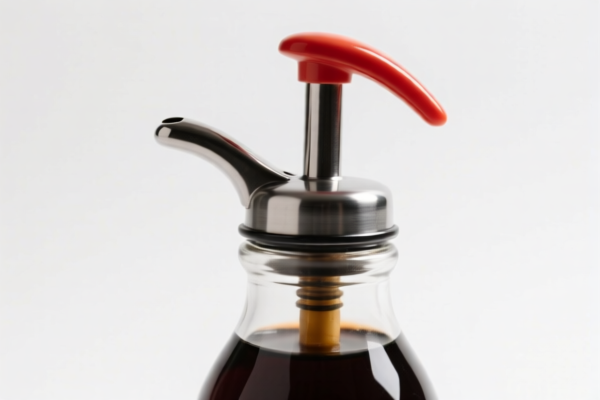
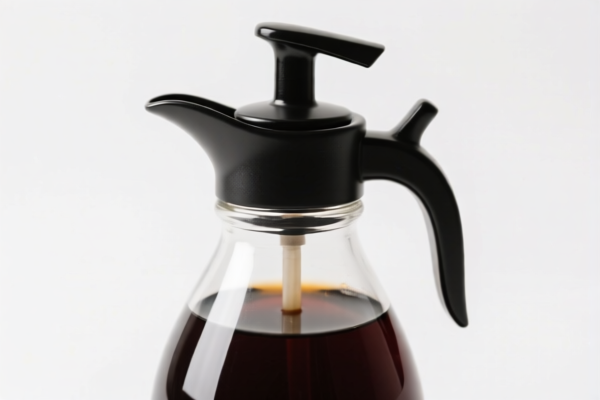

AI Analysis
🍯 Liquid Glucose Syrup (Glucose & Glucose Syrup)
🌐 HS Code Reference & Customs Clearance Guide | 2026 Latest Tariff Analysis | Professional Clearance Strategy
📌 I. Product Definition & Classification: Do You Really Understand "Glucose Syrup"?
Glucose syrup, also known as corn syrup, is a sweetener derived from the hydrolysis of starch (typically corn, wheat, or potato). In international trade, the classification of glucose syrup depends heavily on its fructose content and physical state.
According to the provided <DATA>, the specific HS Codes identified for this product fall under Chapter 17 (Sugar and Sugar Confectionery), specifically Heading 1702.
⚠️ Key Distinction:
- The data specifies "Blended syrups described in additional U.S. note 4 to chapter 17".
- These syrups must have a fructose content of less than 20% by weight in the dry state (or contain no fructose).
- If the product is "Chemically Pure Fructose" or High-Fructose Corn Syrup (HFCS with >20% fructose), these specific HS codes do not apply.
📦 II. HS Code Classification Details (Based on Provided Data)
| HS Code | Product Description | Application Scenario | Fructose Content Limit |
|---|---|---|---|
1702.30.22.00 |
Blended syrups described in additional U.S. note 4 to chapter 17; Described in general note 15 of the tariff schedule and entered pursuant to its provisions | Industrial blended glucose syrups, specific regulated mixtures | < 20% (Dry Basis) |
1702.30.24.00 |
Blended syrups described in additional U.S. note 4 to chapter 17; Described in additional U.S. note 9 to this chapter and entered pursuant to its provisions | Specific regulated blended syrups, note 9 entries | < 20% (Dry Basis) |
🔍 Key Reminder:
- Both HS Codes explicitly refer to "Blended syrups" subject to Additional U.S. Note 4 to Chapter 17.
- These are not simple, unblended glucose syrups (which might fall under1702.30.40or other subheadings). They are specifically regulated blends.
- The fructose threshold is critical: < 20% by weight in the dry state.
💰 III. 2026 Latest Tariff Rate Details (Including Surtaxes)
✅ Applicable Country: United States (US)
✅ Origin: Not explicitly stated, but tax data implies standard application
✅ Effective Time: Current as per provided data
🎯 1. 1702.30.22.00 —— Blended Syrups (General Note 15)
| Item | Content |
|---|---|
| Base Tariff Rate | 0.0% |
| Surtax Rate (Section 301/IEEPA) | 0.0% |
| Total Tax Rate | 0.0% |
| Tax Calculation | CIF Value × 0% = $0 |
| De Minimis Eligibility | N/A (Tariff is 0%) |
| Legal Basis | 1702.30.22.00 → Additional U.S. Note 4 → General Note 15 |
📌 Explanation:
- According to the provided<DATA>, these specific blended syrups attract no duty.
- This is likely due to specific trade provisions or exclusions applied to these regulated blend categories under Notes 4 and 15.
🎯 2. 1702.30.24.00 —— Blended Syrups (Additional Note 9)
| Item | Content |
|---|---|
| Base Tariff Rate | 0.0% |
| Surtax Rate (Section 301/IEEPA) | 0.0% |
| Total Tax Rate | 0.0% |
| Tax Calculation | CIF Value × 0% = $0 |
| De Minimis Eligibility | N/A (Tariff is 0%) |
| Legal Basis | 1702.30.24.00 → Additional U.S. Note 4 → Additional Note 9 |
📌 Note:
- Identical tax treatment to1702.30.22.00.
- The distinction lies in the regulatory entry requirement (Note 9 vs. General Note 15).
🛠️ IV. Customs Clearance Practical Advice (Pitfall Avoidance Guide)
✅ 1. Documentation Checklist (Essential)
| Document | Required | Description |
|---|---|---|
| ✅ Certificate of Origin (CO) | ✔️ | Proves country of manufacture. |
| ✅ Product Specification Sheet | ✔️ | Must explicitly state Fructose Content (e.g., "< 20% dry basis"). |
| ✅ Formula/Blend Ratio | ✔️ | Since these are "Blended Syrups," you must provide the composition to prove they fit Note 4 criteria. |
| ✅ Commercial Invoice | ✔️ | Must clearly describe as "Blended Glucose Syrup, Fructose < 20%." |
| ✅ U.S. Note 4 & 9 Compliance Statement | ✔️ | Explicitly declare compliance with Additional U.S. Notes 4, 9, and General Note 15. |
| ✅ FDA Prior Notice | ✔️ | Required for all food ingredients imported into the US. |
| ✅ FDA Registration | ✔️ | Facility must be FDA registered. |
✅ 2. Declaration Techniques (Key Mantra)
🔥 “Specify Fructose %, Declare Blend, Note 4 is Key!”
| Scenario | Correct Declaration | Incorrect Practice |
|---|---|---|
| Blended Syrup, Fructose < 20% | HS 1702.30.22.00 or 1702.30.24.00 |
Misdeclare as 1702.30.40.00 (Simple Glucose) |
| High-Fructose Corn Syrup (HFCS >20%) | Wrong HS Code (May be 1702.30.50 or 1702.40) |
Force into 1702.30.22.00 → Customs Rejection |
| Unblended Glucose Syrup | Wrong HS Code (Likely 1702.30.40) |
Use 1702.30.22.00 → Regulatory Non-Compliance |
📌 Critical Point:
- You cannot use these HS codes for pure glucose syrup or HFCS. They are strictly for blended syrups meeting the specific U.S. Notes.
- The Fructose Content must be lab-tested or certified by the manufacturer to be < 20% in dry weight.
✅ 3. Special Case Handling
| Situation | Handling Advice |
|---|---|
| Customs Inquiry on "Blend" | Provide a detailed breakdown of the blend components and their percentages. |
| Fructose Content Borderline (e.g., 19.5%) | Provide third-party lab test results confirming the < 20% threshold. |
| Change in Blend Formula | Re-evaluate HS Code. If fructose exceeds 20%, you may need a different HS code with potentially different duties. |
| Food Safety Compliance | Ensure the syrup meets FDA food additive regulations (21 CFR). |
🌍 V. Global Market Comparison (2026 Latest)
| Country/Region | Recommended HS Code | Tariff (China Origin) | Certification Requirements | Notes |
|---|---|---|---|---|
| 🇺🇸 USA | 1702.30.22.00 / 1702.30.24.00 |
0% | FDA Registration, Prior Notice | Strict Note 4/9 compliance required. |
| 🇨🇳 China | 1702.30.90.00 (Typical) |
~5-10% | GB Standards (GB 15203) | Different classification system. |
| 🇪🇺 EU | 1702.30.50 (Glucose Syrup) |
~10-15% | EU Food Safety Standards | HFCS has different duties. |
| 🇬🇧 UK | 1702.30.90.00 |
~10-15% | UK Food Standards Agency | Post-Brexit rules apply. |
📌 Conclusion:
- The USA offers 0% duty for these specific blended syrups, but the regulatory barrier (Notes 4, 9, 15) is higher than simple duty payment.
- Accuracy is crucial: Misclassification can lead to delays, fines, or back-payment of duties if the product is found to be simple glucose syrup (which might have different tariff treatments under other subheadings).
📌 VI. Common Errors & Pitfall Guide (Lessons Learned)
❌ Error 1: Declaring "Glucose Syrup" without specifying it is a "Blended Syrup" under Note 4.
👉 Consequence: Customs may reclassify to 1702.30.40 or other headings, potentially applying different tariffs or additional regulatory scrutiny.
❌ Error 2: Failing to prove Fructose Content < 20%.
👉 Consequence: If lab tests show > 20% fructose, the HS Code is invalid. Risk of duty evasion claims.
❌ Error 3: Using 1702.30.22.00 for HFCS (High-Fructose Corn Syrup).
👉 Consequence: HFCS is heavily regulated and taxed differently. This is a serious classification error.
❌ Error 4: Ignoring FDA Prior Notice.
👉 Consequence: The shipment will be refused entry into the US, regardless of HS Code.
✅ Correct Practice:
"Blended Glucose Syrup, Fructose Content: 15% (Dry Basis), Compliant with Additional U.S. Note 4 to Chapter 17, FDA Prior Notice Filed."
🎯 VII. Conclusion: Precision Declaration for Zero Duty!
🎯 Remember the Mantra:
🔹 "Blend Meets Note 4, Fructose Under Twenty Percent!"
🔹 "0% Duty, But High Compliance Cost! Get Notes Right!"
📌 Pro Tip:
- If your glucose syrup is not a blend (i.e., it is pure glucose syrup), do not use 1702.30.22.00 or 1702.30.24.00. Check for 1702.30.40.00 or other appropriate subheadings.
- Always request a Certificate of Analysis (COA) from your supplier that explicitly states the Fructose Percentage.
📣 Immediate Action:
📞 Contact your Customs Broker: Verify if your product qualifies as a "Blended Syrup" under Note 4.
📋 Prepare Documentation: FDA Prior Notice, COA with Fructose % details, and precise commercial invoice description.
🚀 Ensure Smooth Clearance: Your 0% duty benefit depends entirely on regulatory compliance, not just the tariff rate!
✨ Professional Clearance Starts with Precise Classification!
💼 Your Every Cent Saved is Precisely Calculated!
Customer Reviews
About HS Code Classification
The Harmonized System (HS) is an internationally standardized nomenclature developed by the World Customs Organization (WCO) to classify traded products. Over 200 countries use the HS system as the basis for customs tariffs, trade statistics, and import/export regulations.
Each HS code follows a hierarchical structure:
- Chapter (2 digits) — Broad category of goods (e.g., Chapter 84: Machinery and Mechanical Appliances)
- Heading (4 digits) — More specific grouping within the chapter
- Subheading (6 digits) — Internationally standardized breakdown, used by all WCO member countries
- National subdivisions (8-10 digits) — Country-specific extensions for further classification, such as US HTSUS 10-digit codes
Correct HS code classification is essential for smooth customs clearance, accurate duty payment, and compliance with trade regulations. Misclassification can lead to customs delays, overpayment of duties, or penalties.
When importing from CN to US, the applicable tariff rates may include:
- Most-Favored-Nation (MFN) rate — The standard duty rate applied to WTO members
- General rate — Applied to countries without trade agreements
- Trade remedy duties — Additional tariffs such as Section 301 (anti-dumping), Section 232 (national security), or countervailing duties
The information provided on this page is for reference purposes only. For official classification, please consult with your local customs authority or a licensed customs broker.