Lithium Battery Oil Proof Label
CN → US| HS Code | Tariff Rate | Origin | Destination | Doc |
|---|---|---|---|---|
| 3919905060 | 40.8% | CN | US | Official Doc |
| 4823908000 | 35.0% | CN | US | Official Doc |
| 4823908680 | 35.0% | CN | US | Official Doc |
Product Images
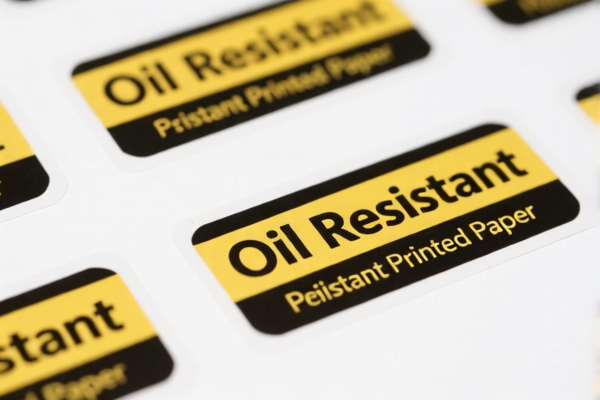
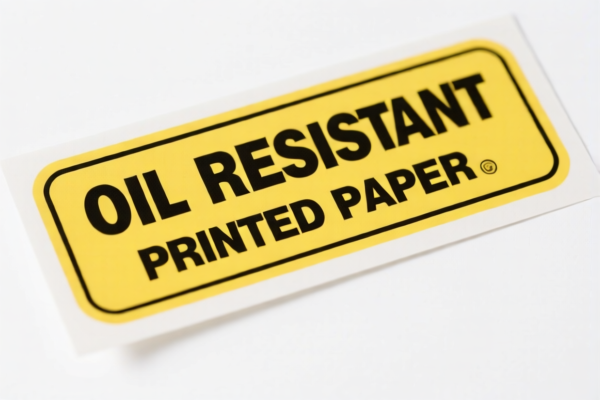
AI Analysis
🏷️ Lithium Battery Oil-Proof Labels: HS Code Classification & Clearance Strategy (US Import)
🌐 HS Code Reference & Customs Clearance Guide | 2026 Latest Tariff Analysis | Professional-Level Entry Strategy
📌 I. Product Definition & Classification: Do You Really Understand "Oil-Proof Labels" for Lithium Batteries?
Lithium battery oil-proof labels are functional adhesive products designed to protect battery surfaces from oil, moisture, and chemical corrosion. In international trade, their classification depends primarily on material composition (plastic vs. paper) and functional attributes (self-adhesive, flat, protective).
Based on the provided data, these labels fall into three main categories depending on the substrate material:
⚠️ Key Distinction Points: - If made of Plastic Film/PVC/PET → Classified as Plastic Self-Adhesive Products (
3919.90.50.60) - If made of Paper/Cellophane/Cellulose → Classified as Paper/Printed Materials (4823.90.80.00or4823.90.86.80)
📦 II. HS Code Classification Details (2026 Latest Tariff Authority Cross-Reference)
| HS Code | Product Description | Applicable Scenario | Material Basis |
|---|---|---|---|
3919.90.50.60 |
Plastic self-adhesive plates, sheets, film, foil, strip and other flat shapes | Plastic film-based labels, PVC/PET self-adhesive labels for battery protection | ✅ Plastic/Polymer |
4823.90.80.00 |
Other articles of paper, paperboard, cellulose wadding or webs of cellulose fibers | Paper-based protective labels, non-specific sealing/protection items | ✅ Paper/Cellulose |
4823.90.86.80 |
Other paper articles, not classified elsewhere (non-slipper types) | Miscellaneous paper labels, specialized packaging/label applications | ✅ Paper/Film Composite |
🔍 Important Reminder:
- Plastic-based labels are subject to a higher base tariff (5.8%) compared to paper-based ones (0%).
- However, both categories are subject to the same additional tariffs: 25% (Section 301) + 10% (Section 122/IEEPA).
- Total Tariff Difference: Plastic labels face a 40.8% total rate, while paper labels face a 35.0% total rate.
- Choose wisely: Material declaration must match physical product. Misclassification leads to penalties.
💰 III. 2026 Latest Tariff Rate Breakdown (Including Surtaxes & Policy Surcharges)
✅ Applicable Country: United States (US)
✅ Country of Origin: China (CN)
✅ Effective Date: November 10, 2025 (and subsequent imports)
🎯 1. 3919.90.50.60 —— Plastic Self-Adhesive Products (Plastic Labels)
| Item | Content |
|---|---|
| Base Tariff | 5.8% (ad valorem) |
| Section 301 Surtax | +25% (USITC Footnote 9903.39.90) |
| IEEPA/Section 122 Surtax | +10% (Targeting China/HK products, effective Nov 10, 2025) |
| Total Tax Rate | 40.8% |
| Tax Calculation | CIF Value × 40.8% |
| De Minimis Eligibility | ❌ Not Eligible (deny_de_minimis) |
| Legal Basis Path | IEEPA:9903.01.25 → IEEPA:9903.01.24 → USITC:3919.90.50.60 → FOOTNOTE:9903.39.90 |
📌 Explanation:
- The 25% Section 301 tariff is levied under the US Trade Act, targeting specific plastic products.
- The 10% IEEPA tariff is an additional surcharge under the International Emergency Economic Powers Act, specifically targeting Chinese goods.
- Total 40.8% is extremely high. Cost structure must account for this significantly.
🎯 2. 4823.90.80.00 —— Other Paper Articles (Paper Labels)
| Item | Content |
|---|---|
| Base Tariff | 0.0% (ad valorem) |
| Section 301 Surtax | +25% |
| IEEPA/Section 122 Surtax | +10% |
| Total Tax Rate | 35.0% |
| Tax Calculation | CIF Value × 35.0% |
| De Minimis Eligibility | ❌ Not Eligible (deny_de_minimis) |
| Legal Basis Path | IEEPA:9901.25 → IEEPA:9903.01.24 → USITC:4823.90.80.00 → FOOTNOTE:9903.39.90 |
📌 Note:
- Even though the base tariff is 0%, the 35% total rate is still significant.
- Applies to paper, cellulose, or composite paper labels.
- Do not assume "paper = cheap." The surtaxes eliminate the base tariff advantage.
🎯 3. 4823.90.86.80 —— Other Miscellaneous Paper Articles
| Item | Content |
|---|---|
| Base Tariff | 0.0% (ad valorem) |
| Section 301 Surtax | +25% |
| IEEPA/Section 122 Surtax | +10% |
| Total Tax Rate | 35.0% |
| Tax Calculation | CIF Value × 35.0% |
| De Minimis Eligibility | ❌ Not Eligible (deny_de_minimis) |
| Legal Basis Path | IEEPA:9901.25 → IEEPA:9903.01.24 → USITC:4823.90.86.80 → FOOTNOTE:9903.39.90 |
📌 Note:
- Similar to4823.90.80.00, this code captures non-specific paper products.
- Use only if the label does not fit neatly into4823.90.80.00(e.g., complex composite or specialized non-standard paper label).
- Rate remains 35%.
🛠️ IV. Customs Clearance Practical Advice (Battle-Tested Pitfall Avoidance Guide)
✅ 1. Document Checklist (Mandatory, No Exceptions)
| Document | Required | Explanation |
|---|---|---|
| ✅ Product Specification Sheet | ✔️ | Must specify material (Plastic/Paper), dimensions, adhesive type, oil-proof rating |
| ✅ Material Composition Report | ✔️ | Critical for HS Code determination. Must prove if it's PVC, PET, Paper, or Composite |
| ✅ Product Photos (Labeled) | ✔️ | Show roll, individual labels, adhesive side, and printed content |
| ✅ Commercial Invoice | ✔️ | Must state: "Oil-Proof Self-Adhesive Labels for Lithium Batteries" + HS Code |
| ✅ Packing List | ✔️ | Clearly separate labels from batteries (labels are not hazardous goods) |
| ✅ Origin Certificate (CO) | ✔️ | If not China-origin, may qualify for lower tariffs. Must specify CN if applicable |
| ✅ Test Report (Oil Resistance) | ✔️ | Optional but recommended to justify "functional" claim if audited |
✅ 2. Declaration Strategy (Critical Tips)
🔥 "Material Dictates Code, Surcharge Dictates Cost!"
| Scenario | Correct Declaration | Wrong Practice |
|---|---|---|
| Plastic Film Label | 3919.90.50.60 |
Misdeclare as paper → Penalty for misclassification |
| Paper Label | 4823.90.80.00 |
Misdeclare as plastic → Higher base tax (5.8% vs 0%) |
| Composite Label (Paper+Plastic) | Determine primary material | Vague description → Customs holds shipment for inspection |
| Label Roll | Declare as "Labels," not "Plastic Rolls" | Vague description → Customs reclassifies as raw material |
✅ 3. Special Case Handling
| Scenario | Handling Advice |
|---|---|
| OEM Custom Labels | Provide customer PO + design specs. Avoid generic descriptions like "stickers." |
| Battery + Labels in Same Shipment | Declare separately. Labels are non-HGD (Non-Hazardous Goods). Batteries require UN38.3, MSDS, etc. Mixing causes delays. |
| Pre-Printed vs. Blank Labels | Both fall under the same HS codes if functional purpose is same. Pre-printing doesn't change code. |
| Samples/Small Qty | No De Minimis Exemption. Even low-value shipments face 35-40.8% tax. Factor into cost. |
🌍 V. Global Market Comparison (2026 Latest)
| Country/Region | Recommended HS Code | Tariff (China Origin) | Certification Requirement | Notes |
|---|---|---|---|---|
| 🇺🇸 USA | 3919.90.50.60 (Plastic) or 4823.90.80.00 (Paper) |
40.8% (Plastic) / 35.0% (Paper) | None specific for labels | High surtaxes apply. No de minimis. |
| 🇨🇳 China | 3919.90.50.60 or 4823.90.80.00 |
5.8% / 0% | None | No additional surtaxes. |
| 🇪🇺 EU | 3919.90.50.60 or 4823.90.80.00 |
6.5% / 4.5% | REACH (if chemical adhesive) | No Section 301/IEEPA surtaxes. |
| 🇬🇧 UK | 3919.90.50.60 or 4823.90.80.00 |
6.5% / 4.5% | UKCA (if applicable) | Post-Brexit rules apply. |
| 🇦🇺 Australia | 3919.90.50.60 or 4823.90.80.00 |
5.0% / 5.0% | None | Competitive tariff rate. |
📌 Conclusion:
- USA is the most expensive market for lithium battery oil-proof labels due to 25% + 10% surtaxes.
- Paper-based labels save 5.8% in base tariff but still face 35% total.
- Consider sourcing from non-China origins (Vietnam, Thailand, Mexico) to potentially avoid IEEPA surtaxes, but verify Country of Origin rules carefully.
📌 VI. Common Mistakes & Pitfall Guide (Blood-Taught Lessons)
❌ Mistake 1: Declaring as "Plastic Film" without specifying "Self-Adhesive"
👉 Consequence: Misclassification → Potential duty adjustment + penalties.
❌ Mistake 2: Using "Stickers" as generic description
👉 Consequence: Customs may classify under wrong heading (e.g., 3920 or 4821) → Delays.
❌ Mistake 3: Assuming small shipments avoid taxes
👉 Consequence: No De Minimis. Even $100 shipment pays $35-$40 in taxes.
❌ Mistake 4: Mixing labels with lithium batteries in one HS Code
👉 Consequence: Label shipment flagged as hazardous → Rejection, return, or destruction.
✅ Correct Practice:
"Self-Adhesive Oil-Proof Labels, Plastic/Paper, for Lithium Battery Packaging, Model XYZ, Roll Format"
🎯 VII. Conclusion: Professional Classification, Save Time, Cut Costs!
🎯 Remember the Golden Rules:
🔹 "Plastic pays 40.8%, Paper pays 35.0% – Material matters!"
🔹 "No De Minimis for China-origin labels – Budget for 35-40% tax!"
🔹 "Declare separately from batteries – Avoid HGD confusion!"
📌 Pro Tip:
If your labels are manufactured in Vietnam, Mexico, or Thailand, you may avoid the 10% IEEPA surtax, reducing total tariff to ~25% (for plastic) or ~25% (for paper).
✅ Recommendation: Apply for Advance Ruling before shipment to confirm HS Code and tax liability.
📣 Immediate Action Required:
📞 Contact professional customs broker + Provide material specs + Request HS Code Advance Ruling
🚀 Ensure smooth customs clearance, minimize tax burden, and maximize profit margins!
✨ Professional customs clearance starts with accurate classification!
💼 Every percentage point of tariff affects your bottom line!
Customer Reviews
About HS Code Classification
The Harmonized System (HS) is an internationally standardized nomenclature developed by the World Customs Organization (WCO) to classify traded products. Over 200 countries use the HS system as the basis for customs tariffs, trade statistics, and import/export regulations.
Each HS code follows a hierarchical structure:
- Chapter (2 digits) — Broad category of goods (e.g., Chapter 84: Machinery and Mechanical Appliances)
- Heading (4 digits) — More specific grouping within the chapter
- Subheading (6 digits) — Internationally standardized breakdown, used by all WCO member countries
- National subdivisions (8-10 digits) — Country-specific extensions for further classification, such as US HTSUS 10-digit codes
Correct HS code classification is essential for smooth customs clearance, accurate duty payment, and compliance with trade regulations. Misclassification can lead to customs delays, overpayment of duties, or penalties.
When importing from CN to US, the applicable tariff rates may include:
- Most-Favored-Nation (MFN) rate — The standard duty rate applied to WTO members
- General rate — Applied to countries without trade agreements
- Trade remedy duties — Additional tariffs such as Section 301 (anti-dumping), Section 232 (national security), or countervailing duties
The information provided on this page is for reference purposes only. For official classification, please consult with your local customs authority or a licensed customs broker.