Lithium Battery Printed Inventory Label
CN → US| HS Code | Tariff Rate | Origin | Destination | Doc |
|---|---|---|---|---|
| 4821104000 | 35.0% | CN | US | Official Doc |
| 4823908680 | 35.0% | CN | US | Official Doc |
| 4823901000 | 35.0% | CN | US | Official Doc |
| 4821102000 | 35.0% | CN | US | Official Doc |
Product Images
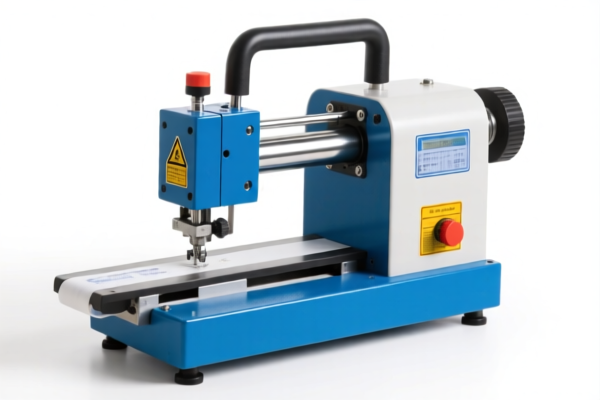
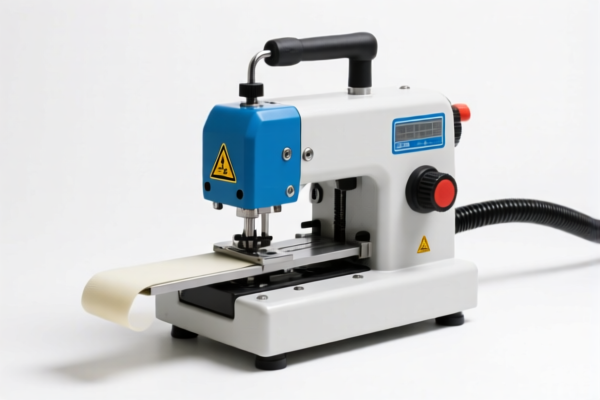


AI Analysis
🏷️ Lithium Battery Printed Inventory Label
🌐 HS Code Reference & Customs Clearance Guide | 2026 Latest Tariff Analysis | Professional Clearance Strategy
📌 Part I: Product Definition & Classification: Do You Really Understand "Labels"?
"Printed Inventory Labels" are small-sized adhesive or paper-based tags used for asset tracking, warehouse management, and inventory control. In international trade, particularly when associated with "Lithium" (often implying packaging or marking on lithium battery containers), these labels are primarily classified based on their material (paper/paperboard) and form (printed, cut to size).
Crucial Distinction:
- If the label is merely a printed design on paper/paperboard without complex electronic components → Classified under Chapter 48 (Paper/Paperboard);
- If the label contains electronic chips (RFID) or batteries itself → Different chapters apply (e.g., Chapter 85).
⚠️ Key Insight from Data: The term "Lithium" in the product name typically refers to the application (label for lithium batteries) or a printing brand/type, not the material composition of the label itself. The summary explicitly infers the material as "paper and paperboard".
📦 Part II: HS Code Classification Details (2026 Latest Tariff Authority Cross-Reference)
Based on the provided data, four potential HS Codes are identified. All share the same tax structure but differ in specificity.
| HS Code | Product Description | Applicability Scenario | Key Classification Logic |
|---|---|---|---|
4821.10.20.00 |
Paper labels, printed, self-adhesive or not | Specific for Labels: Explicitly matches "labels" in name; "printed" matches "printed". | ✅ Best Match: Directly addresses "Paper Labels". |
4821.10.40.00 |
Other printed labels on paper/paperboard | General Paper Labels: Fits "labels" form; "lithium" inferred as paper material. | ✅ Strong Match: "Other" category for labels. |
4823.90.10.00 |
Other paper制品 (cut to size/shape), not specified elsewhere | General Paper Products: If not strictly a "label" but a cut paper form for inventory. | ⚠️ Fallback: Used if "label" status is disputed. |
4823.90.86.80 |
Other paper articles, not elsewhere specified | General Paper Articles: Broad category for paper products not fitting specific subheadings. | ⚠️ Broad Fallback: When product doesn't fit precise label definitions. |
🔍 Critical Clarification:
- All four HS Codes fall under Chapter 48 (Paper and Paperboard).
- The "Lithium" in the name does not trigger Chapter 85 (Batteries) classification because the item is a label, not a battery.
- The summary explicitly states: "Material inferred as paper/paperboard, consistent with 'paper and paperboard'."
💰 Part III: 2026 Latest Tariff Rate Breakdown (Including Surtaxes & Policy Add-ons)
✅ Applicable Country: United States (US)
✅ Country of Origin: China (CN)
✅ Effective Time: Current regulations apply (as per data context)
🎯 Tax Structure for All Proposed HS Codes (4821.10.20.00, 4821.10.40.00, 4823.90.10.00, 4823.90.86.80)
| Item | Content |
|---|---|
| Base Tariff Rate | 0.0% (Ad Valorem) |
| Section 301 Surtax | +25.0% (USITC Footnote 9903.88.01 or similar) |
| Section 122 Tariff | +10.0% (Specific provision for certain Chinese goods) |
| Total Tax Rate | 35.0% |
| Tax Calculation | CIF Value × 35% |
| De Minimis Exemption Eligibility | ❌ No (Highly likely denied due to Section 301/122) |
| Legal Basis Path | USITC:4821.10/4823.90 → Section 301: +25% → Section 122: +10% |
📌 Explanation:
- "Base Tariff 0%": Standard MFN rate for paper products.
- "Section 301 Surtax 25%": Applied to goods from China under US Trade Act Section 301.
- "Section 122 Tariff 10%": An additional surtax often applied to specific categories of Chinese imports (note: Section 122 is less common than 301, but explicitly stated in the data).
- Total 35%: This is a significant cost that must be factored into pricing.
- No De Minimis: Section 301 goods are generally excluded from the $800 de minimis exemption. Small shipments do not avoid these taxes.
🛠️ Part IV: Customs Clearance Practical Advice (Real-World Pitfall Avoidance Guide)
✅ 1. Document Checklist (Non-negotiable)
| Document | Required | Notes |
|---|---|---|
| ✅ Product Description | ✔️ | Must explicitly state: "Paper Inventory Labels, Printed, No Electronic Components" |
| ✅ Composition Sheet | ✔️ | Confirm material is 100% paper/paperboard. No plastic films if claiming pure paper classification. |
| ✅ Photographs | ✔️ | Show label, packaging, and any "Lithium" warning text on the container (not the label itself being a battery). |
| ✅ Commercial Invoice | ✔️ | Clearly describe as "Inventory Labels" or "Paper Labels", NOT "Lithium Battery Components". |
| ✅ Packing List | ✔️ | Detail quantity and weight. Avoid mentioning "batteries" in the product name field. |
✅ 2. Declaration Strategy (Key Mnemonic)
🔥 "Material is Paper, Not Battery; Name it Clearly, Avoid Conflict!"
| Scenario | Correct Declaration | Incorrect Practice |
|---|---|---|
| Labels for Lithium Battery Packaging | 4821.10.20.00 (Paper Labels) |
Declaring as "Battery Accessories" → Higher scrutiny |
| Labels with Lithium Logo/Text | 4821.10.40.00 (Other Paper Labels) |
Declaring as "Dangerous Goods" → Unnecessary |
| Rolls of Paper Labels | 4823.90.10.00 or 4823.90.86.80 |
Declaring as "Raw Paper" → Wrong classification |
| Labels with RFID Chips | ❌ Wrong HS Code | Using Paper HS Codes → Customs Seizure |
📌 Important:
- If the label contains an RFID chip or antenna, it is NOT classified under Chapter 48. It would fall under 8543 or 8517. The provided data assumes no electronic components.
- Ensure the name "Lithium Battery Printed Inventory Label" is clarified in the description as "Labels FOR Lithium Battery Packaging", not labels CONTAINING lithium.
✅ 3. Special Cases Handling
| Scenario | Handling Advice |
|---|---|
| OEM Custom Labels | Provide design files showing paper substrate. |
| Adhesive Labels | Specify "Pressure-sensitive adhesive" if applicable, still Class 48. |
| High-Volume Small Packages | Do not rely on De Minimis. 35% tax applies regardless of package value. |
| Mixed Shipments (Labels + Batteries) | Separate Declarations! Batteries go to Chapter 85; Labels to Chapter 48. Mixing causes major delays. |
🌍 Part V: Global Market Comparison (2026 Latest)
| Country/Region | Recommended HS Code | Tariff Rate | Certification Req. | Notes |
|---|---|---|---|---|
| 🇺🇸 USA | 4821.10.20.00 |
35% | None (for paper) | Section 301 + 122 applies. High cost. |
| 🇨🇳 China | 4821.10.20.00 |
0-5% | None | Low tariff, easy clearance. |
| 🇪🇺 EU | 4821.10.20.00 |
0% | None | No additional surtaxes. |
| 🇨🇦 Canada | 4821.10.20.00 |
0% | None | FTA benefits may apply. |
| 🇬🇧 UK | 4821.10.20.00 |
0% | None | Post-Brexit tariff structure favorable. |
📌 Conclusion:
- USA is the only major market with high surtaxes (35%) for this product from China.
- EU, UK, Canada offer 0% tariff, making them more cost-effective for imports if supply chain allows.
- Strategy: If exporting to the US, factor in 35% cost or consider transshipment/assembly in non-target countries to mitigate Section 301/122 risks (subject to strict rules of origin).
📌 Part VI: Common Errors & Pitfall Guide (Lessons Learned)
❌ Error 1: Using "Lithium Battery Label" as the sole description, implying dangerous goods.
👉 Consequence: Customs delays for Hazmat inspection.
👉 Solution: Use "Paper Inventory Label" as primary description, add "For use on Lithium Battery packaging" in remarks.
❌ Error 2: Claiming De Minimis exemption for small shipments.
👉 Consequence: Goods held, taxes assessed + penalties. Section 301 goods are excluded from $800 exemption.
👉 Solution: Prepare full tariff payment for all US shipments.
❌ Error 3: Misclassifying as "Paper Plates" or "Writing Paper" (4823).
👉 Consequence: Wrong HS Code, potential audit.
👉 Solution: Use 4821.10 (Labels) as primary choice.
✅ Correct Description Example:
"Paper Inventory Labels, Printed, Pressure-Sensitive Adhesive, For Use on Lithium Battery Packaging, HS Code 4821.10.20.00"
🎯 Part VII: Conclusion: Precise Classification Saves Cost!
🎯 Key Takeaways:
🔹 Material is Paper, Not Battery → Classify under Chapter 48.
🔹 US Tariff is 35% (0% Base + 25% Section 301 + 10% Section 122).
🔹 No De Minimis Exemption for US shipments from China.
🔹 Best HS Code:4821.10.20.00(Specific for Labels).
📌 Pro Tip:
If you are importing into the US, consider Advance Rulings with CBP to confirm the classification and tariff liability before shipment. This prevents unexpected costs and delays.
📣 Immediate Action:
📞 Contact a Customs Broker: Provide product images and confirm no electronic components.
📝 Prepare Documents: Clearly describe as "Paper Labels" in all commercial documents.
💡 Cost Planning: Budget for 35% tariff on all US-bound shipments.
✨ Professional Clearance Starts with Accurate Classification!
💼 Your profit margin depends on understanding the 35% difference!
Customer Reviews
About HS Code Classification
The Harmonized System (HS) is an internationally standardized nomenclature developed by the World Customs Organization (WCO) to classify traded products. Over 200 countries use the HS system as the basis for customs tariffs, trade statistics, and import/export regulations.
Each HS code follows a hierarchical structure:
- Chapter (2 digits) — Broad category of goods (e.g., Chapter 84: Machinery and Mechanical Appliances)
- Heading (4 digits) — More specific grouping within the chapter
- Subheading (6 digits) — Internationally standardized breakdown, used by all WCO member countries
- National subdivisions (8-10 digits) — Country-specific extensions for further classification, such as US HTSUS 10-digit codes
Correct HS code classification is essential for smooth customs clearance, accurate duty payment, and compliance with trade regulations. Misclassification can lead to customs delays, overpayment of duties, or penalties.
When importing from CN to US, the applicable tariff rates may include:
- Most-Favored-Nation (MFN) rate — The standard duty rate applied to WTO members
- General rate — Applied to countries without trade agreements
- Trade remedy duties — Additional tariffs such as Section 301 (anti-dumping), Section 232 (national security), or countervailing duties
The information provided on this page is for reference purposes only. For official classification, please consult with your local customs authority or a licensed customs broker.