Lithium Battery Tool
CN → US| HS Code | Tariff Rate | Origin | Destination | Doc |
|---|---|---|---|---|
| 8543709860 | 37.6% | CN | US | Official Doc |
| 8543706000 | 35.0% | CN | US | Official Doc |
| 8504407007 | 35.0% | CN | US | Official Doc |
| 8504409540 | 35.0% | CN | US | Official Doc |
Product Images
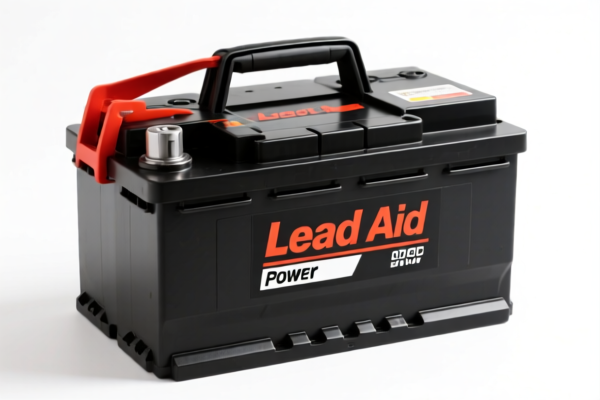
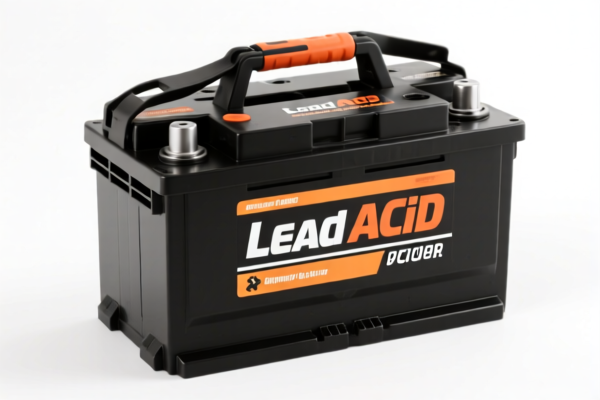
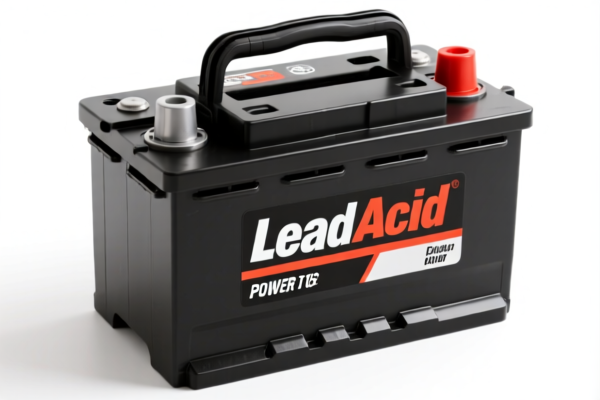
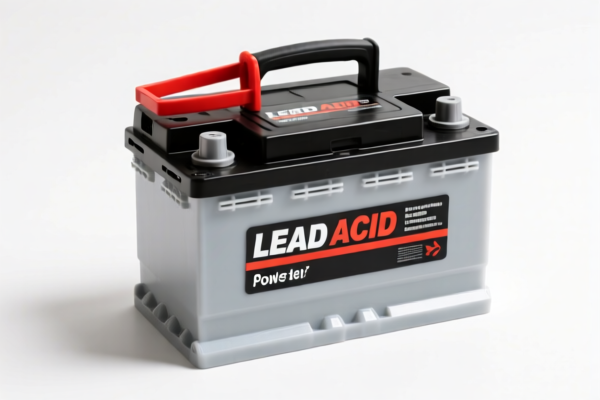
AI Analysis
🔋 Lithium-Powered Power Tools & Accessories
🌐 HS Code Reference & Clearance Guide | 2026 Latest Tariff Analysis | Professional Entry Strategy
📌 One, Product Definition & Classification: What Exactly Is a "Lithium Tool"?
In international trade, "Lithium Tools" is not a single legal entity but a broad category covering power tools, their battery systems, and charging infrastructure. To achieve precise customs classification (HS Code) and avoid excessive tariffs, you must differentiate between:
- The Tool Itself: Cordless drills, saws, grenders, etc., powered by internal or detachable lithium batteries.
- The Charging Equipment: Stand-alone chargers for lithium batteries (often confused with tool parts).
- The Converter/Adapter: Devices that convert AC mains power to DC for charging, classified as static converters.
⚠ Critical Distinction:
- If the device is analyzer, meter, or controller with independent function → May fall under 8543.
- If the device is strictly a charger connected to the power grid → May fall under 8504.
- Warning: Many importers mistakenly classify chargers as "parts of tools," leading to misdeclaration. The data provided focuses on Charging Equipment/Converters associated with these tools.
📦 Two, Detailed Breakdown of HSCodes in
Based on the provided dataset, all entries relate to Lithium Device Charging Equipment or Power Conversion Devices, not the hand tools themselves. Below is the authoritative mapping for 2026:
| 🏷 HS Code | 📝 Summary Description | 🛠 Classification Logic |
|---|---|---|
8543.70.98.60 |
Lithium Charging Equipment: Classified as an electrical apparatus with independent function. Falls under the "Other machines and apparatus" category. | Used when the charger has specific electronic control features distinct from a simple rectifier. |
8543.70.60.00 |
Lithium Charging Equipment: Designed to connect to the electric network or electronic devices. Fits the characteristics of functional electrical apparatus. | Standard classification for general-purpose lithium battery chargers plugged into wall outlets. |
8504.40.70.07 |
Static Converter: Categorized under Static Converters. Falls under the general "Other" bucket for converters. | Applies if the device is functionally defined primarily as a static converter (AC/DC) rather than a specialized "charger." |
8504.40.95.40 |
Power Supply Unit: Categorized under Other in the power supply section. Fits the usage description for Rectifiers and Rectifying Equipment. | Used for general-purpose rectifying equipment that serves as a battery charger but lacks specific "tool-part" designation. |
🔍 Key Insight:
All four codes in the set pertain to the charging infrastructure or power conversion aspect, likely because the tool's battery is considered a separate component, or the device is being imported as a standalone charger. Do not use these codes for the actual cordless drills/saws. Those would typically fall under 8207 (interchangeable tools) or 8467 (power-operated hand tools).
💰 Three, 2026 Tariff Rate Analysis (Detailed Breakdown)
✅ Applicable Country: United States (US)
✅ Origin: China (CN)
✅ Effective Time: Post-2025 Policies (Section 301 & 122)
🎯 1. 8543.70.98.60 —— Independent Electrical Apparatus (Charger)
| Item | Detail |
|---|---|
| Base Duty Rate | 2.6% |
| Section 301 Additional Duty | +25.0% |
| Section 122 Duty | +10.0% |
| Total Effective Rate | 37.6% |
| Calculation Basis | CIF Value × 37.6% |
| De Minimis Exempt? | ❌ NO (Value > $800 threshold applies; strict scrutiny on Section 301/122 items) |
| Legal Pathway | USITC:8543.70.98.60 → FTC301:25% → Section122:10% |
📌 Explanation:
- This code attracts the highest total tax in the dataset (37.6%).
- The "Base Tariff" is low (2.6%) due to its classification as a sophisticated electrical apparatus, but the trade war surcharges (35% combined) make it expensive.
🎯 2. 8543.70.60.00 —— Functional Electrical Apparatus (Grid-Connected Charger)
| Item | Detail |
|---|---|
| Base Duty Rate | 0.0% |
| Section 301 Additional Duty | +25.0% |
| Section 122 Duty | +10.0% |
| Total Effective Rate | 35.0% |
| Calculation Basis | CIF Value × 35.0% |
| De Minimis Exempt? | ❌ NO |
| Legal Pathway | USITC:8543.70.60.00 → FTC301:25% → Section122:10% |
📌 Note:
- Slightly cheaper than8543.70.98.60due to a 0% base duty.
- Still subject to the full 35% punitive tariffs.
- Recommended if the device is a standard wall-plugin lithium charger without complex independent diagnostic functions.
🎯 3. 8504.40.70.07 —— Static Converter
| Item | Detail |
|---|---|
| Base Duty Rate | 0.0% |
| Section 301 Additional Duty | +25.0% |
| Section 122 Duty | +10.0% |
| Total Effective Rate | 35.0% |
| Calculation Basis | CIF Value × 35.0% |
| De Minimis Exempt? | ❌ NO |
| Legal Pathway | USITC:8504.40.70.07 → FTC301:25% → Section122:10% |
📌 Note:
- Classified as a Static Converter.
- Often used if the charger is viewed primarily as an AC/DC conversion unit rather than a "battery charger" per se.
- Tax identical to8543.70.60.00.
🎯 4. 8504.40.95.40 —— Rectifier & Power Supply
| Item | Detail |
|---|---|
| Base Duty Rate | 0.0% |
| Section 301 Additional Duty | +25.0% |
| Section 122 Duty | +10.0% |
| Total Effective Rate | 35.0% |
| Calculation Basis | CIF Value × 35.0% |
| De Minimis Exempt? | ❌ NO |
| Legal Pathway | USITC:8504.40.95.40 → FTC301:25% → Section122:10% |
📌 Note:
- Falls under "Other" for rectifiers.
- Often the "catch-all" for power supplies if they don't fit specific converter subheadings.
- Tax identical to8543.70.60.00and8504.40.70.07.
🛠 Four, Clearance Practical Advice (Avoid Pitfall Guide)
✅ 1. Document Preparation Checklist
| Document | Mandatory? | Notes |
|---|---|---|
| Product Specifications | ✔ | Must detail input/output voltage, current, and battery type (Li-ion/LiFePO4). |
| Circuit Diagram | ✔ | Crucial for distinguishing between 8543 (Control/Electrical Apparatus) and 8504 (Converter). |
| Product Photos | ✔ | Clear images of the label, ports, and branding. |
| Third-Party Certs | ✔ | FCC (required for electronic devices), UL/ETL (safety). |
| Commercial Invoice | ✔ | Must clearly state "Lithium Ion Charger" or "Static Converter," NOT "Power Tool." |
| Country of Origin | ✔ | CN declaration is critical for Section 301/122 assessment. |
✅ 2. Declaration Strategy (Golden Rules)
🔥 "Don't Mix Tools and Chargers!"
| Scenario | Correct Code | Wrong Code | Consequence |
|---|---|---|---|
| Importing ONLY the Charger | 8543.70.60.00 or 8504.40.95.40 |
8467.29 (Parts of Tools) |
Penalty for misclassification + Back Taxes |
| Importing ONLY the Drill | 8467.29.20.00 (Power Tools) |
8543.70.98.60 |
High Duty Error (Drills may have lower duties than chargers depending on specific subhead) |
| Importing Drill + Charger Kit | Split Declaration | Single Line Item | Customs may reclassify whole kit to highest duty item |
📌 Key Tip:
- If importing Cordless Power Tools (drills, impact drivers), check Chapter 84 (8467). The duty rates for 8467 are often lower or different from the 35% surcharge on charging accessories.
- The provided only covers chargers/converters. If you are shipping the actual tools, these codes are incorrect.
✅ 3. Special Cases
| Situation | Recommendation |
|---|---|
| OEM Chargers | Provide client agreement. Ensure label matches invoice description exactly. |
| Charger with Multiple Ports | Classify based on primary function. If it charges phones AND tools, 8543.70.60.00 is safest. |
| Solar Chargers | May qualify for different subheadings under 8543 or 8504. Requires technical clarification. |
| High-Value Industrial Chargers | Consider Advance Ruling to lock in the 35% rate and avoid unexpected 37.6% or higher scrutiny. |
🌍 Five, Global Market Comparison (2026)
| Region | Recommended Approach | Estimated Duty (CN Origin) | Notes |
|---|---|---|---|
| 🇺🇸 USA | 8543.70.60.00 / 8504.40.95.40 |
35.0% (Base 0% + 301 25% + 122 10%) | Strict enforcement. Section 122 adds 10% on top of 301. |
| 🇨🇳 China | Same HSCodes | ~10-14% | No Section 301/122. Lower cost for re-export. |
| 🇪🇺 EU | 8504.40 / 8543.70 |
0-4% | No Section 301. Standard MFN rates apply. CE Marking required. |
| 🇨🇦 Canada | 8504.40 / 8543.70 |
0% (Under CUSMA if Canadian/Mexican origin) | USMCA/CUSMA benefits may apply if origin criteria met. |
📌 Conclusion:
- USA is the most expensive market for Chinese lithium charging equipment due to Section 301 (25%) and Section 122 (10%).
- EU and Canada are significantly more favorable for duty purposes.
- Profit Margin Alert: A 35% duty burden can erase margins for low-cost accessories. Consider pricing strategies or supply chain diversification.
📌 Six, Common Mistakes & Pitfall Guide (Blood & Tears Lessons)
❌ Mistake 1: Classifying a Cordless Drill as 8543.70.98.60 (Charger)
👉 Result: Customs rejects because it's not a charger. Delay + Inspection Fees.
❌ Mistake 2: Using 8543.70.98.60 (37.6%) when 8543.70.60.00 (35.0%) is applicable
👉 Result: Overpaying 2.6% unnecessarily on every unit.
👉 Fix: If the device is a standard grid-connected charger, use 8543.70.60.00.
❌ Mistake 3: Omitting "Section 122" in internal cost calculations
👉 Result: Profit margin miscalculation. Section 122 is a new/additional layer on top of Section 301.
👉 Fix: Always add 10% + 25% + Base Rate for US imports from China.
❌ Mistake 4: Confusing Battery with Charger
👉 Result: Batteries often have different codes (e.g., 8507.60). Mixing them up causes compliance failures.
👉 Fix: Declare batteries and chargers separately if shipped together.
✅ Best Practice:
"Lithium Ion Charger, 20V Max, Input: 100-240V AC, Output: 20V DC, Model XYZ, FCC Certified"
🎯 Summary & Action Plan
🎯 Key Takeaway:
For Lithium Tool Chargers/Converters from China to the US, expect a minimum of 35% total duty.
- Best Code: 8543.70.60.00 or 8504.40.95.40 (35.0%)
- Worst Code: 8543.70.98.60 (37.6%)
📌 Immediate Actions:
1. Confirm Product Type: Are you shipping the tool or the charger?
- Tool: Look at Chapter 84 (8467).
- Charger: Use codes from .
2. Select Lowest Duty Code: Prefer 8543.70.60.00 or 8504.40.95.40 over 8543.70.98.60.
3. Prepare Tech Docs: Have circuit diagrams ready to prove it's a converter/charger.
4. Calculate Landed Cost: Include 35% duty + Freight + Insurance + Customs Brokerage.
📣 Pro Tip:
If your volume is high, apply for a Section 301 Exclusion if available, or consider Third-Country Transshipment (e.g., Vietnam/Mexico) to avoid the 35% surcharge, ensuring strict compliance with Rules of Origin.
✨ Precision Classification Saves Money!
💼 Don't let 2.6% base duty differences cost you millions.
🚀 Clear Customs, Clear Profits!
Customer Reviews
About HS Code Classification
The Harmonized System (HS) is an internationally standardized nomenclature developed by the World Customs Organization (WCO) to classify traded products. Over 200 countries use the HS system as the basis for customs tariffs, trade statistics, and import/export regulations.
Each HS code follows a hierarchical structure:
- Chapter (2 digits) — Broad category of goods (e.g., Chapter 84: Machinery and Mechanical Appliances)
- Heading (4 digits) — More specific grouping within the chapter
- Subheading (6 digits) — Internationally standardized breakdown, used by all WCO member countries
- National subdivisions (8-10 digits) — Country-specific extensions for further classification, such as US HTSUS 10-digit codes
Correct HS code classification is essential for smooth customs clearance, accurate duty payment, and compliance with trade regulations. Misclassification can lead to customs delays, overpayment of duties, or penalties.
When importing from CN to US, the applicable tariff rates may include:
- Most-Favored-Nation (MFN) rate — The standard duty rate applied to WTO members
- General rate — Applied to countries without trade agreements
- Trade remedy duties — Additional tariffs such as Section 301 (anti-dumping), Section 232 (national security), or countervailing duties
The information provided on this page is for reference purposes only. For official classification, please consult with your local customs authority or a licensed customs broker.