Lithium Print Foldable Label
CN → US| HS Code | Tariff Rate | Origin | Destination | Doc |
|---|---|---|---|---|
| 4821102000 | 35.0% | CN | US | Official Doc |
| 4821902000 | 35.0% | CN | US | Official Doc |
| 3919102055 | 40.8% | CN | US | Official Doc |
| 3919905060 | 40.8% | CN | US | Official Doc |
Product Images
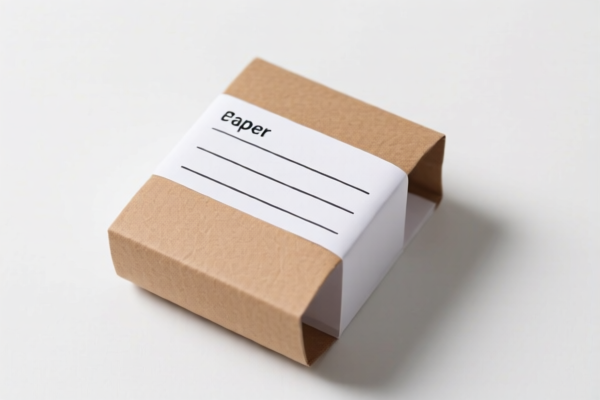
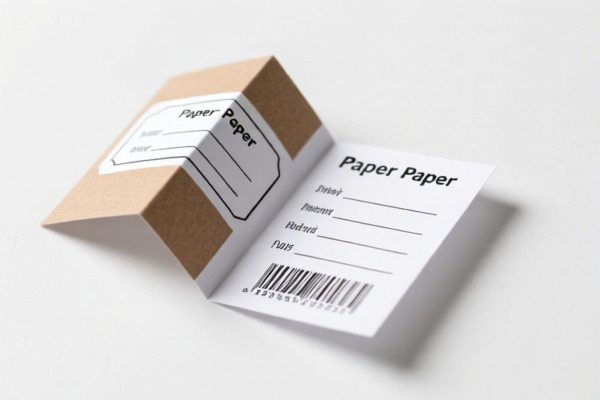
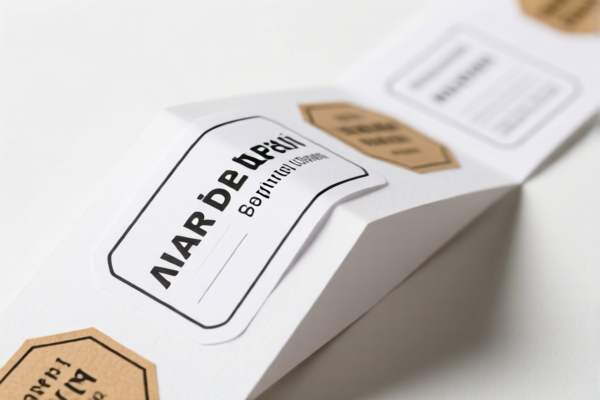
AI Analysis
🏷️ Lithium Print Foldable Label (Paper & Plastic Self-Adhesive Labels)
🌐 HS Code Reference & Customs Clearance Guide | 2026 Latest Tariff Analysis | Professional Clearance Strategy
📌 1. Product Definition & Classification: Do You Really Understand "Foldable Labels"?
"Lithium Print Foldable Label" typically refers to self-adhesive labels made of paper or plastic films, which are printed (often using high-quality lithographic processes) and designed to be folded or die-cut for specific packaging applications. The term "Lithium" here likely refers to the printing method (Lithography) or potentially Lithium-ion battery labeling requirements, rather than the material itself. In international trade, these are classified based on their material composition (Paper vs. Plastic) and adhesive properties.
⚠️ Key Distinction:
- If the base material is Paper → Classified under Chapter 48 (Paper/Paperboard).
- If the base material is Plastic (PET, PVC, PP, etc.) → Classified under Chapter 39 (Plastics).
- Critical Factor: The presence of an adhesive layer (self-adhesive) vs. non-adhesive. Most modern "foldable labels" are self-adhesive.
📦 2. HS Code Classification Details (2026 Latest Tariff Authority Comparison)
Based on the provided , here are the applicable HS Codes for paper and plastic self-adhesive labels:
| HS Code | Product Description | Material Type | Application Scenario | Tax Rate (Total) |
|---|---|---|---|---|
4821.10.20.00 |
Paper and paperboard labels of all kinds, whether or not printed: Printed in whole or in part by a lithographic process | Paper | Paper-based labels, cartons, packaging labels printed via offset/lithography | 25.0% |
4821.90.20.00 |
Paper and paperboard labels of all kinds, whether or not printed: Other: Self-adhesive | Paper | Self-adhesive paper labels (non-lithographic or other printed types) | 25.0% |
3919.10.20.55 |
Self-adhesive plates, sheets, film, foil, tape... of plastics: In rolls of width ≤ 20 cm: Other | Plastic | Narrow plastic self-adhesive tapes/labels (≤20cm width) | 30.8% |
3919.90.50.60 |
Self-adhesive plates, sheets, film, foil, tape... of plastics: Other: Other | Plastic | Plastic self-adhesive labels/tapes (Width > 20cm or other forms) | 0.0% |
🔍 Key Alert:
- Paper Labels (4821): All variants carry a 25% Total Tax (Base 0% + Additional 25%).
- Plastic Labels (3919):
- Narrow rolls (≤20cm): 30.8% (Base 5.8% + Additional 25%).
- Standard/Other Plastic: 0.0% (Base 0% + Additional 0%). This is the most tax-efficient classification for plastic labels!
💰 3. 2026 Latest Tariff Rate Details (Detailed Breakdown)
✅ Applicable Country: USA (US)
✅ Origin: China (CN)
✅ Effective Date: Current USITC/IEEPA regulations
🎯 1. 4821.10.20.00 & 4821.90.20.00 —— Paper Labels (Self-Adhesive or Litho-Printed)
| Item | Content |
|---|---|
| Base Tariff | 0% (Ad Valorem) |
| Additional Tariff (Section 301/IEEPA) | +25.0% |
| Total Tariff Rate | 25.0% |
| Calculation Method | CIF Value × 25% |
| De Minimis Eligibility | ❌ No (High tariff item, no $800 exemption) |
| Legal Basis | USITC:4821.10.20.00 / USITC:4821.90.20.00 → FOOTNOTE:9903.88.01 |
📌 Explanation:
- Paper labels are subject to a flat 25% additional duty regardless of whether they are litho-printed or self-adhesive.
- No base tariff, but the 25% add-on makes it significant for high-volume shipments.
🎯 2. 3919.10.20.55 —— Plastic Self-Adhesive Labels (Narrow Rolls, ≤20cm)
| Item | Content |
|---|---|
| Base Tariff | 5.8% |
| Additional Tariff (Section 301/IEEPA) | +25.0% |
| Total Tariff Rate | 30.8% |
| Calculation Method | CIF Value × 30.8% |
| De Minimis Eligibility | ❌ No |
| Legal Basis | USITC:3919.10.20.55 → FOOTNOTE:9903.88.01 |
📌 Explanation:
- Higher cost! If your plastic labels are in narrow rolls (e.g., barcode tape, narrow branding strips), you pay 5.8% base + 25% additional = 30.8%.
- This is the most expensive classification in the dataset.
🎯 3. 3919.90.50.60 —— Plastic Self-Adhesive Labels (Other/Standard)
| Item | Content |
|---|---|
| Base Tariff | 0% |
| Additional Tariff (Section 301/IEEPA) | 0.0% |
| Total Tariff Rate | 0.0% |
| Calculation Method | CIF Value × 0% |
| De Minimis Eligibility | ❌ No (but $0 tax) |
| Legal Basis | USITC:3919.90.50.60 |
📌 Explanation:
- Zero Duty! If your plastic labels are not in narrow rolls (≤20cm) or fall under "Other" plastic self-adhesive shapes, the total tax is 0%.
- Strategic Tip: Ensure your product description and dimensions align with this category to save 25-30% in costs.
🛠️ 4. Customs Clearance Practical Advice (Pitfall Avoidance Guide)
✅ 1. Documentation Checklist (Must-Haves)
| Document | Required | Notes |
|---|---|---|
| ✅ Product Specification Sheet | ✔️ | Must specify: Material (Paper/Plastic), Adhesive Type, Roll Width, Printing Method (Litho/Other). |
| ✅ Photos of Product & Roll | ✔️ | Clearly show the roll width to distinguish between 3919.10 (≤20cm) and 3919.90 (>20cm). |
| ✅ Commercial Invoice | ✔️ | Accurate description: "Self-Adhesive Plastic Label, Width 30cm, Litho-Printed" vs. "Paper Label, Self-Adhesive". |
| ✅ Certificate of Origin (CO) | ✔️ | Required for origin verification; may affect additional tariff eligibility. |
| ✅ Packaging List | ✔️ | Detail roll dimensions and quantity. |
✅ 2. Declaration Strategy (Key Mnemonic)
🔥 "Paper pays 25%, Plastic depends on width, Narrow rolls are expensive!"
| Scenario | Correct HS Code | Tax Rate | Common Mistake |
|---|---|---|---|
| Paper Label, Self-Adhesive | 4821.90.20.00 |
25% | Misdeclaring as plastic to seek 0% → Penalty! |
| Paper Label, Litho-Printed | 4821.10.20.00 |
25% | Same as above |
| Plastic Label, Roll Width ≤ 20cm | 3919.10.20.55 |
30.8% | Declaring as 3919.90 to get 0% → High Audit Risk! |
| Plastic Label, Roll Width > 20cm | 3919.90.50.60 |
0% | Under-reporting width → Penalty! |
✅ 3. Special Handling Tips
| Scenario | Advice |
|---|---|
| Lithium Battery Labels | If labels are specifically for lithium batteries, ensure they meet UN 38.3 or FCC labeling standards. The HS Code remains based on material (Paper/Plastic), but add "For Lithium Battery Packaging" to description. |
| Foldable/Die-Cut Labels | Clearly state "Die-cut/Foldable" in description. Do not split into "label blank" + "adhesive" if sold as one unit. |
| Roll Width Accuracy | CRITICAL: Measure the actual roll width precisely. If it’s 20.1cm, it falls under 3919.90 (0% tax). If it’s 19.9cm, it falls under 3919.10 (30.8% tax). Small differences = Big cost savings! |
🌍 5. Global Market Clearance Comparison (2026 Latest)
| Country/Region | Recommended HS Code | Tariff (China Origin) | Certification Requirements | Notes |
|---|---|---|---|---|
| 🇺🇸 USA | 4821.90.20.00 / 3919.90.50.60 |
25% (Paper) / 0% (Plastic >20cm) | FDA (if food contact), Prop 65 (CA) | High scrutiny on width classification |
| 🇨🇳 China | 4821.90.20.00 / 3919.90.50.60 |
5-10% (Import) | CCC (if applicable) | Lower base tariffs |
| 🇪🇺 EU | 4821.10.90 / 3919.90.90 |
0-4.5% | CE (if applicable), REACH | No additional trade tariffs |
| 🇬🇧 UK | 4821.10.90 / 3919.90.90 |
0-4.5% | UKCA | Post-Brexit rules apply |
📌 Conclusion:
- USA is the most complex due to Section 301/IEEPA additional tariffs.
- Plastic labels >20cm width are the most tariff-efficient in the US market (0% total).
- Paper labels always face 25% additional duty in the US.
📌 6. Common Mistakes & Pitfall Guide (Lessons Learned)
❌ Mistake 1: Declaring plastic labels as "Paper Labels" to avoid plastic-specific checks
👉 Consequence: Customs inspection reveals plastic content → Fine + Back Tax + Delay
❌ Mistake 2: Ignoring roll width for plastic labels
👉 Consequence: 19.9cm vs 20.1cm → 30.8% vs 0% Tax → 25% Cost Difference!
❌ Mistake 3: Using vague descriptions like "Label" without material specification
👉 Consequence: Customs assigns highest default duty → 25-30% Tax
❌ Mistake 4: Not disclosing Litho-Printed status for paper labels
👉 Consequence: Misclassification between 4821.10 and 4821.90 (though both 25%, accuracy prevents audit flags)
✅ Correct Practice:
"Self-Adhesive Plastic Label, Polypropylene, Roll Width 30cm, Litho-Printed, Die-Cut, For Cosmetic Packaging"
🎯 7. Conclusion: Professional Declaration, Save Costs, Smooth Clearance!
🎯 Remember the Mnemonic:
🔹 "Paper Pays 25%, Plastic Width Rules, Narrow Rolls Expensive, Wide Rolls Free!"
🔹 "HS Code Determines Tax, 25% Difference, Wrong Declaration Costs Thousands!"
📌 Pro Tip:
- If your plastic labels are marginally over 20cm (e.g., 20.5cm), declare them as
3919.90.50.60for 0% tax.- If they are marginally under 20cm, consider designing the product to be 20.1cm to save 30.8% in duties.
- Always provide exact roll dimensions in your commercial invoice.
📣 Immediate Action:
📞 Consult with a Customs Broker + Provide Product Photos + Get HS Code Pre-Ruling
🚀 Ensure your labels pass through US Customs smoothly, maximize profit margins!
✨ Professional Clearance Starts with Accurate Classification!
💼 Your Cost Savings Are Worth the Extra Detail!
Customer Reviews
About HS Code Classification
The Harmonized System (HS) is an internationally standardized nomenclature developed by the World Customs Organization (WCO) to classify traded products. Over 200 countries use the HS system as the basis for customs tariffs, trade statistics, and import/export regulations.
Each HS code follows a hierarchical structure:
- Chapter (2 digits) — Broad category of goods (e.g., Chapter 84: Machinery and Mechanical Appliances)
- Heading (4 digits) — More specific grouping within the chapter
- Subheading (6 digits) — Internationally standardized breakdown, used by all WCO member countries
- National subdivisions (8-10 digits) — Country-specific extensions for further classification, such as US HTSUS 10-digit codes
Correct HS code classification is essential for smooth customs clearance, accurate duty payment, and compliance with trade regulations. Misclassification can lead to customs delays, overpayment of duties, or penalties.
When importing from CN to US, the applicable tariff rates may include:
- Most-Favored-Nation (MFN) rate — The standard duty rate applied to WTO members
- General rate — Applied to countries without trade agreements
- Trade remedy duties — Additional tariffs such as Section 301 (anti-dumping), Section 232 (national security), or countervailing duties
The information provided on this page is for reference purposes only. For official classification, please consult with your local customs authority or a licensed customs broker.