Lithium Print Self Adhesive Sticker
CN → US| HS Code | Tariff Rate | Origin | Destination | Doc |
|---|---|---|---|---|
| 4823908680 | 35.0% | CN | US | Official Doc |
| 4823908620 | 35.0% | CN | US | Official Doc |
| 3919102055 | 40.8% | CN | US | Official Doc |
| 3919905060 | 40.8% | CN | US | Official Doc |
Product Images
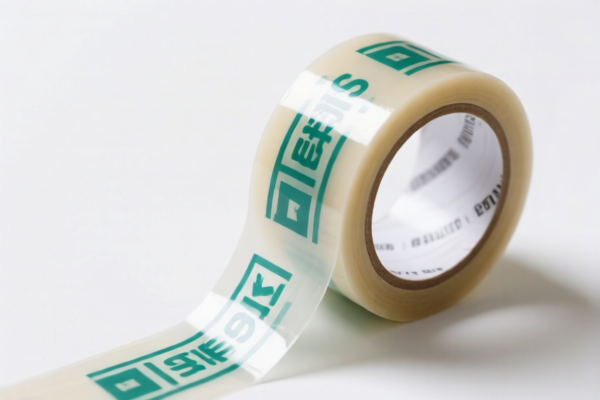
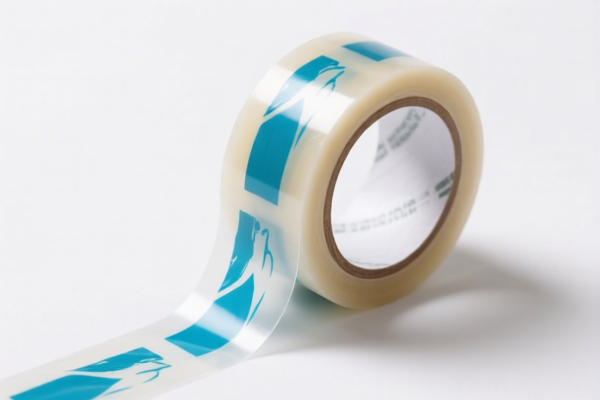
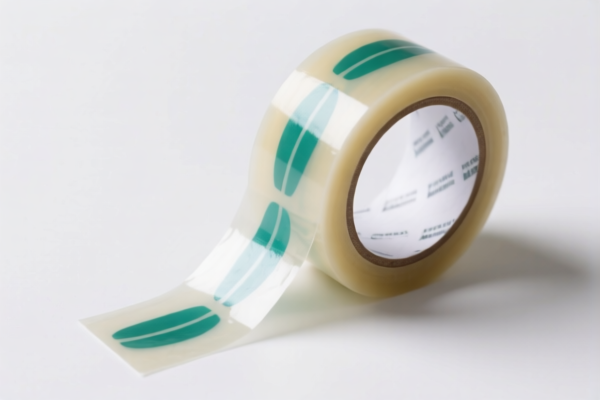
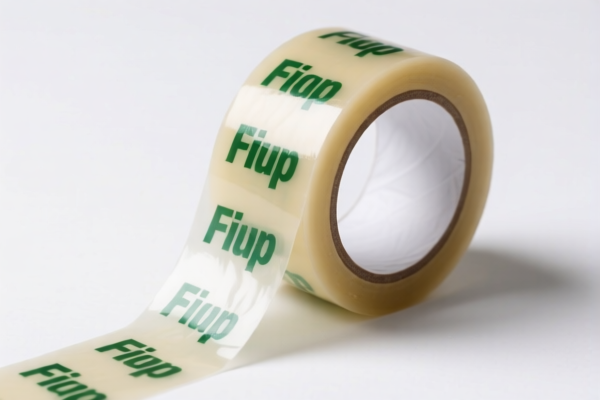
AI Analysis
🏷️ Lithium Print Self-Adhesive Sticker
🌐 HS Code Reference & Customs Clearance Guide | 2026 Latest Tariff Analysis | Professional Compliance Strategy
📌 I. Product Definition & Classification: Do You Really Understand "Lithium Print Self-Adhesive Sticker"?
Lithium Print Self-Adhesive Stickers are specialized packaging or labeling materials, often used in industrial, electronic, or retail contexts. The term "Lithium Print" typically refers to:
1. Printing on Lithium Batteries: Stickers applied directly to lithium-ion cells or packs for identification, safety warnings, or specifications.
2. High-Performance Adhesives: Stickers with adhesives resistant to chemical/electrostatic properties often found in lithium battery manufacturing.
In international trade, these are primarily classified under Chapter 48 (Paper/Paperboard) if paper-based, or Chapter 39 (Plastics) if plastic film-based, depending on the face stock material and self-adhesive nature.
⚠️ Key Distinction:
- If the sticker is made of paper/paperboard →归入 Chapter 48 (e.g.,4823.90)
- If the sticker is made of plastic film/foils →归入 Chapter 39 (e.g.,3919.10or3919.90)
- Self-adhesive nature is the critical factor for both chapters.
📦 II. HS Code Classification Details (2026 Latest Tariff Authority Comparison)
Based on the provided <DATA>, here are the relevant HS Codes and their corresponding tax treatments:
| HS Code | Product Description | Material Type | Tax Rate (US Import from China) |
|---|---|---|---|
4823.90.86.80 |
Other paper, paperboard, cellulose wadding, etc., cut to size/shape; other articles of paper pulp, paper, paperboard, etc. : Other : Other : Other : Other : Other Other Other | Paper/Paperboard Based | 25.0% |
4823.90.86.20 |
Other paper, paperboard... : Other : Other : Other : Other : Other Shoe covers (booties) of a kind described in statistical note 2 to this chapter | Paper/Paperboard Based | 25.0% |
3919.10.20.55 |
Self-adhesive plates, sheets, film, foil, tape, strip... of plastics : In rolls of width not exceeding 20 cm : Other Other : Other | Plastic Film/Roll (≤20cm) | 0.0% |
3919.90.50.60 |
Self-adhesive plates, sheets, film, foil, tape, strip... of plastics : Other : Other Other | Plastic Film/Roll (>20cm or Other) | 0.0% |
🔍 Critical Analysis:
- Paper-Based Stickers (4823.90...): Subject to 25% total tax (0% base + 25% additional). This includes standard printed labels.
- Plastic-Based Self-Adhesive Stickers (3919...): Subject to 0% total tax (0% base + 0% additional). This is a significant advantage if the sticker is made of plastic film (e.g., polyester, polypropylene).
- "Lithium Print" Context: If the sticker is for lithium batteries and is plastic-based, aim for HS Code3919.10.20.55or3919.90.50.60to achieve 0% tariff. If it is paper-based, it will face 25% tariff.
💰 III. 2026 Latest Tariff Rate Breakdown (Including Additional Duties & Policy Surcharges)
✅ Applicable Country: United States (US)
✅ Country of Origin: China (CN)
✅ Effective Date: 2025年11月10日起 (Including subsequent imports)
🎯 1. Paper-Based Self-Adhesive Stickers (4823.90.86.80 / 4823.90.86.20)
| Item | Content |
|---|---|
| Base Tariff | 0% (ad valorem) |
| USITC Additional Duty | +25% (Section 301 Tariffs) |
| IEEPA Additional Duty | 0% (Not explicitly listed as additional in this specific data snippet, but total is 25%) |
| Total Tax Rate | 25.0% |
| Tax Calculation | CIF Value × 25% |
| De Minimis Exemption | ❌ Not Eligible |
| Legal Basis Path | USITC:4823.90.86.80 → FOOTNOTE:301 |
📌 Explanation:
- Paper-based stickers fall under Chapter 48.
- Under current US-China trade policies, many paper products from China are subject to a 25% additional duty.
- Total Cost Impact: High. A $10,000 shipment incurs $2,500 in duties.
🎯 2. Plastic-Based Self-Adhesive Stickers (3919.10.20.55 / 3919.90.50.60)
| Item | Content |
|---|---|
| Base Tariff | 0% (ad valorem) |
| USITC Additional Duty | 0% (Not subject to Section 301 surcharge in this specific data) |
| IEEPA Additional Duty | 0% |
| Total Tax Rate | 0.0% |
| Tax Calculation | CIF Value × 0% = $0 |
| De Minimis Exemption | ✅ May Apply (if value < $800 and meets all criteria) |
| Legal Basis Path | USITC:3919.10.20.55 / USITC:3919.90.50.60 |
📌 Explanation:
- Plastic-based self-adhesive tapes/stickers are classified under Chapter 39.
- Significant Advantage: 0% Total Duty. This is a major cost-saving opportunity.
- Condition: The product must be genuinely plastic-based and self-adhesive. If misclassified, risks penalties.
🛠️ IV. Customs Clearance Practical Advice (Battle-Tested Pitfall Avoidance Guide)
✅ 1. Required Documentation Checklist (All Items Mandatory)
| Document | Must Provide | Notes |
|---|---|---|
| ✅ Product Specification Sheet | ✔️ | Clearly state material (Paper vs. Plastic), adhesive type, width, length. |
| ✅ Material Composition Proof | ✔️ | Certificate of Material (CoM) to prove plastic vs. paper. |
| ✅ Product Photos | ✔️ | Show texture, cross-section (if possible), and adhesive backing. |
| ✅ Commercial Invoice | ✔️ | Describe as "Self-Adhesive Plastic Film Sticker" or "Paper Label" accurately. |
| ✅ Packing List | ✔️ | Include dimensions to confirm width (≤20cm vs. >20cm). |
| ✅ Safety Data Sheet (SDS) | ✔️ | If adhesive contains hazardous chemicals. |
✅ 2. Declaration Tips (Key Mnemonic)
🔥 "Plastic Zero, Paper Twenty-Five; Width Matters, Roll Size Counts!"
| Scenario | Correct HS Code | Incorrect Declaration | Risk |
|---|---|---|---|
| Plastic film sticker, roll width ≤20cm | 3919.10.20.55 |
"Paper Label" | 25% penalty |
| Plastic film sticker, roll width >20cm | 3919.90.50.60 |
"Paper Label" | 25% penalty |
| Paper-based label/sticker | 4823.90.86.80 |
"Plastic Sticker" | Misclassification, seizure risk |
| Shoe covers (paper) | 4823.90.86.20 |
"Stickers" | Wrong category, delay |
✅ 3. Special Considerations for "Lithium" Context
| Situation | Handling Advice |
|---|---|
| Stickers for Lithium Batteries | If plastic-based, emphasize "Self-Adhesive Plastic Film" in description. Avoid "Paper" if possible. |
| Width Measurement | Ensure roll width is clearly stated. ≤20cm triggers 3919.10, >20cm triggers 3919.90. Both are 0%. |
| Mixed Shipments | Do not mix paper and plastic stickers in one HS Code line item. Separate them for accurate duty calculation. |
🌍 V. Global Market Customs Comparison (2026 Latest)
| Country/Region | Recommended HS Code | Tariff Rate (China Origin) | Certification Requirement | Notes |
|---|---|---|---|---|
| 🇺🇸 USA | 3919.10.20.55 / 3919.90.50.60 |
0.0% (Plastic) 25.0% (Paper) |
FDA (if food contact), ASTM | Plastic stickers are 0% duty. Paper is 25%. |
| 🇨🇳 China | 3919.10 / 4823.90 |
0-5% | RoHS, REACH (for export) | Domestic trade lower rates. |
| 🇪🇺 EU | 3919.10 / 4823.90 |
0-4.5% | CE, REACH, RoHS | Plastic tapes often 0%. Paper varies. |
| 🇬🇧 UK | 3919.10 / 4823.90 |
0-5% | UKCA | Post-Brexit rules apply. |
| 🇨🇦 Canada | 3919.10 / 4823.90 |
0-5% | Health Canada | Free trade under CUSMA for many items. |
📌 Conclusion:
- USA is the most critical market for tariff optimization.
- Plastic-based self-adhesive stickers enjoy 0% duty, while paper-based ones face 25%.
- Action Item: If your "Lithium Print Sticker" can be manufactured on plastic film (e.g., PET, PP), switch material to save 25% in duties.
📌 VI. Common Errors & Pitfall Avoidance Guide (Blood & Tears Lessons)
❌ Error 1: Declaring a plastic sticker as "Paper Label" to avoid complexity
👉 Consequence: If customs inspects and finds plastic, you face penalties + back duties.
❌ Error 2: Mixing roll widths without clarification
👉 Consequence: Customs may default to the wrong subheading, leading to duty reassessment.
❌ Error 3: Ignoring the "Self-Adhesive" feature in description
👉 Consequence: Misclassification under Chapter 48 or 39 non-adhesive items, leading to wrong duty rates.
❌ Error 4: Assuming all "Stickers" are the same
👉 Consequence: Paper vs. Plastic distinction is critical for US tariffs.
✅ Correct Approach:
"Self-Adhesive Plastic Film Sticker, Roll Width 15cm, Polypropylene Material, Printed with Lithium Battery Safety Warning, Model XYZ"
🎯 VII. Conclusion: Professional Declaration, Save Time, Reduce Costs!
🎯 Remember the Mnemonic:
🔹 "Plastic Zero, Paper Twenty-Five; Width Determines Subcategory, Material Defines Duty!"
🔹 "HS Code Determines Duty Rate; 25% Difference Can Make or Break Your Profit Margin!"
📌 Pro Tip:
If your product is plastic-based self-adhesive, ensure your supplier provides a Material Composition Certificate to prove it is not paper. This is your key to 0% duty in the US.
Consider applying for an Advance Ruling (Pre-Ruling) from US CBP to confirm the HS Code before shipping large volumes.
📣 Immediate Action Required:
📞 Consult a Licensed Customs Broker + Provide Material Sample + Apply for HS Code Pre-Ruling
🚀 Ensure your Lithium Print Self-Adhesive Sticker is plastic-based to achieve 0% Duty in the US!
✨ Professional Customs Clearance Starts with Accurate Classification!
💼 Every Percentage Point of Duty Savings is Pure Profit!
Customer Reviews
About HS Code Classification
The Harmonized System (HS) is an internationally standardized nomenclature developed by the World Customs Organization (WCO) to classify traded products. Over 200 countries use the HS system as the basis for customs tariffs, trade statistics, and import/export regulations.
Each HS code follows a hierarchical structure:
- Chapter (2 digits) — Broad category of goods (e.g., Chapter 84: Machinery and Mechanical Appliances)
- Heading (4 digits) — More specific grouping within the chapter
- Subheading (6 digits) — Internationally standardized breakdown, used by all WCO member countries
- National subdivisions (8-10 digits) — Country-specific extensions for further classification, such as US HTSUS 10-digit codes
Correct HS code classification is essential for smooth customs clearance, accurate duty payment, and compliance with trade regulations. Misclassification can lead to customs delays, overpayment of duties, or penalties.
When importing from CN to US, the applicable tariff rates may include:
- Most-Favored-Nation (MFN) rate — The standard duty rate applied to WTO members
- General rate — Applied to countries without trade agreements
- Trade remedy duties — Additional tariffs such as Section 301 (anti-dumping), Section 232 (national security), or countervailing duties
The information provided on this page is for reference purposes only. For official classification, please consult with your local customs authority or a licensed customs broker.