Lithium ion Battery
CN → US| HS Code | Tariff Rate | Origin | Destination | Doc |
|---|---|---|---|---|
| 8507600010 | 20.9% | CN | US | Official Doc |
| 8548000000 | 35.0% | CN | US | Official Doc |
| 8507600010 | 20.9% | CN | US | Official Doc |
Product Images
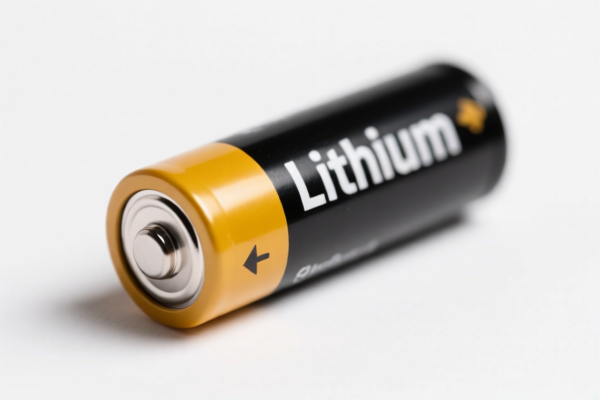
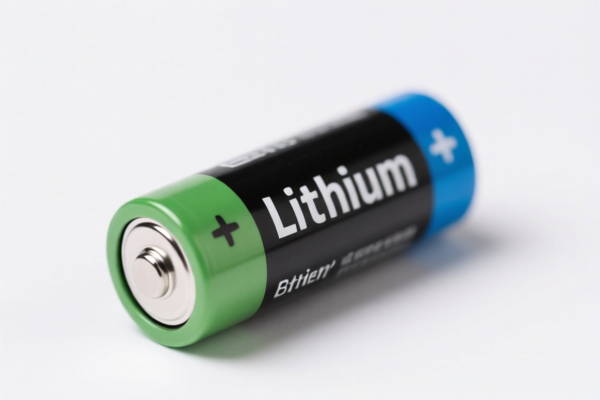
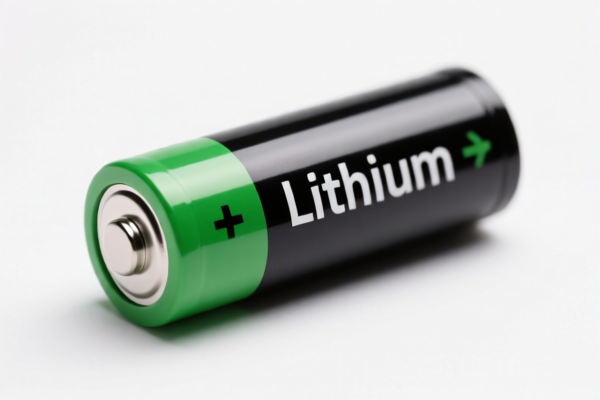
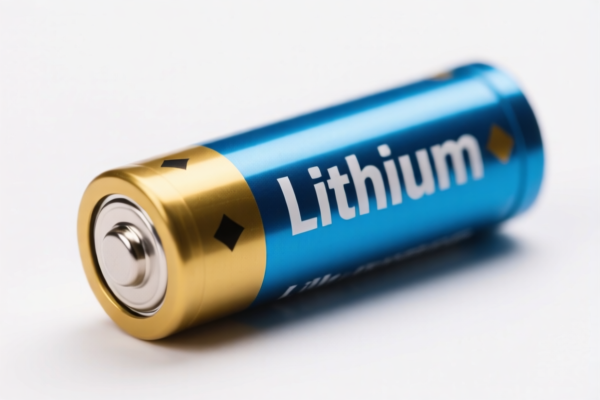
AI Analysis
🔋 Lithium-Ion Battery Groups: HS Code Classification & US Customs Clearance Guide (2026 Update)
🌐 HS Code Reference & Customs Clearance Strategy | 2026 Tariff Analysis | Professional Compliance Guide
📌 I. Product Definition & Classification: What is a "Lithium-Ion Battery Group"?
A Lithium-Ion Battery Group (often referred to as a battery pack) is an assembly of lithium-ion cells connected in series or parallel, protected by a Battery Management System (BMS), and housed in an external casing or connector. In international trade, the classification hinges on two critical factors: 1. Specific Function: Is it a general power source (e.g., for consumer electronics, EVs, power tools) or a specific electrical component/device? 2. Material Composition: Confirmed as lithium-ion.
⚠️ Key Classification Conflict:
- Primary Power Source: If the item is a complete battery pack intended to power devices (like laptops, drones, or electric vehicles), it is typically classified as a battery under Chapter 85.
- Electrical Component/Part: If the item is considered a "part" of a larger electrical machine or device (and not a standalone power source in its own right in the commercial context), it may fall under Chapter 85 as a part or under Chapter 85 as a specific electrical apparatus.
📦 II. HS Code Classification Details (Based on Provided Data)
According to the provided data, there are two primary classification paths for Lithium-Ion Battery Groups. Note that HS Code 8507.60.00.10 appears twice in the data with identical tax details but slightly different summaries, while HS Code 8548.00.00.00 represents a different classification bucket.
| HS Code | Product Description & Summary from Data | Applicable Scenario |
|---|---|---|
8507.60.00.10 |
Lithium-Ion Battery Group: Matches material and form. Based on common sense, it falls under the category of lithium-ion batteries. No conflict in usage. | General-purpose battery packs (e.g., for portable electronics, tools, EVs). Recognized as a "battery" per se. |
8507.60.00.10 |
Lithium-Ion Battery Group: Infers material as lithium-ion from "Li-battery." Specific use cannot be determined initially. Judged as non-conflicting based on principle. | Generic lithium-ion packs where specific end-use is unclear but material matches 8507. |
8548.00.00.00 |
Lithium-Ion Battery Group: As an electrochemical device, it fits the category of parts and accessories for electrical machines/devices or apparatus. | Battery packs treated as parts/accessories of a larger electrical apparatus or machine, rather than standalone batteries. |
🔍 Key Distinction:
- 8507.60.00.10: Classifies the item as a Battery (Primary article).
- 8548.00.00.00: Classifies the item as a Part/Accessory (Secondary article).
Note: In US Customs practice, "Battery" usually goes to 8507. If the battery is integrated into a device such that the device is the primary article, the battery may be classified as a part of that device. However, standalone battery packs are overwhelmingly classified under 8507.
💰 III. 2026 US Tariff Rate Detail (China Origin)
✅ Applicable Country: United States (US)
✅ Origin: China (CN)
✅ Effective Time: Current rates as per data (Subject to 122 Section and 301 Tariffs)
🎯 1. HS Code 8507.60.00.10 – Lithium-Ion Battery (As a Battery)
| Item | Detail |
|---|---|
| Base Tariff Rate | 3.4% |
| Section 301 Tariff (Added Tariff) | 7.5% |
| Section 122 Tariff | 10% |
| Total Tariff Rate | 20.9% |
| Calculation Method | CIF Value × 20.9% |
| De Minimis Eligibility | ❌ No (Section 122 and 301 tariffs generally do not apply to de minimis, but this code is for commercial shipments). Note: Section 122 often applies to packages valued under $800 if not otherwise exempt, but for standard commercial imports, it stacks. |
| Legal Basis Path | HTSUS:8507.60.00.10 → Section 301 (List 4A) → Section 122 |
📌 Explanation:
- The 3.4% is the standard Most Favored Nation (MFN) duty for lithium batteries.
- The 7.5% is the Section 301 additional duty on Chinese lithium-ion batteries.
- The 10% is the Section 122 tariff (temporary tariff on imports from China, often applied to lower-value shipments or specific categories).
- Total Cost Impact: A $10,000 shipment incurs $2,090 in duties.
🎯 2. HS Code 8548.00.00.00 – Parts & Accessories of Electrical Machines/Devices
| Item | Detail |
|---|---|
| Base Tariff Rate | 0.0% |
| Section 301 Tariff (Added Tariff) | 25.0% |
| Section 122 Tariff | 10% |
| Total Tariff Rate | 35.0% |
| Calculation Method | CIF Value × 35.0% |
| De Minimis Eligibility | ❌ No |
| Legal Basis Path | HTSUS:8548.00.00.00 → Section 301 (List 4A - Parts) → Section 122 |
📌 Explanation:
- The 0.0% base rate for general electrical parts is misleadingly low.
- The 25.0% Section 301 tariff is significantly higher than the 7.5% for batteries. This is because "parts" of Chinese-origin electrical equipment often face higher retaliation tariffs.
- The 10% Section 122 tariff still applies.
- Total Cost Impact: A $10,000 shipment incurs $3,500 in duties.
- Critical Risk: Misclassifying a standard battery pack as a "part" (8548) can increase your tariff by 14.1 percentage points (from 20.9% to 35.0%).
🛠️ IV. Customs Clearance Practical Advice
✅ 1. Documentation Checklist (Non-Negotiable)
| Document | Required? | Notes |
|---|---|---|
| ✅ Commercial Invoice | ✔️ | Must clearly state: "Lithium-Ion Battery Pack," Model Number, Voltage (V), Ampere-Hours (Ah), Watt-Hours (Wh). |
| ✅ Battery Data Sheet (MSDS/SDS) | ✔️ | Mandatory for all lithium shipments. Must include UN38.3 test summary. |
| ✅ UN38.3 Test Report | ✔️ | Proof that the battery packs passed safety testing (height, temperature, vibration, shock, etc.). |
| ✅ FCC Certificate (if applicable) | ✔️ | If the battery pack has electronic controls or is marketed for US sale, FCC ID may be required. |
| ✅ Packaging List | ✔️ | Show packaging details (e.g., "Packed in boxes, inner packaging with non-conductive material"). |
| ✅ Bill of Lading/Air Waybill | ✔️ | Must have UN3480 (Lithium-ion batteries packed in equipment) or UN3481 (Lithium-ion batteries alone) hazard label. |
✅ 2. Classification Strategy: How to Avoid the 35% Trap
🔥 Golden Rule: "If it's a standalone battery pack, use 8507.60.00.10. Do NOT use 8548 unless it is an integral, inseparable part of a larger machine."
| Scenario | Correct HS Code | Tariff Rate | Risk if Misclassified |
|---|---|---|---|
| Standalone Battery Pack (e.g., for power tools, e-bikes, laptops) | 8507.60.00.10 |
20.9% | If classified as 8548 → 35.0% (Overpay by 14.1%) |
| Battery Integrated into Device (e.g., iPhone, Laptop) | Part of the main device (e.g., 8517.62) |
Varies (Main Device Rate) | Separate declaration of battery is complex; usually shipped as part of the device. |
| Spare Battery for a Machine | 8507.60.00.10 |
20.9% | If declared as "Part of Machine" → 8548 → 35.0% |
📌 Pro Tip:
- Avoid 8548 for standalone packs. US Customs generally views lithium-ion battery packs as "batteries" (8507) even if they have BMS circuits.
- Use 8507.60.00.10 for the lowest effective tariff burden among the two options provided in the data.
✅ 3. Special Handling for Section 122 & 301
- Section 122 (10%): This tariff applies to imports from China. It is cumulative. Ensure your customs broker includes this in the calculation.
- Section 301: The difference between 7.5% (for batteries) and 25% (for parts) is significant. Proper description on the invoice ("Lithium-Ion Battery Pack, not a part of any machine") supports the 8507 classification.
🌍 V. Global Market Comparison (2026)
| Region | Recommended HS Code | Est. Tariff (China Origin) | Key Notes |
|---|---|---|---|
| 🇺🇸 USA | 8507.60.00.10 |
20.9% | Includes 301 (7.5%) + 122 (10%) + Base (3.4%). |
| 🇨🇳 China | 8507.60.00.10 |
0% - 5% | China may have lower import duties for lithium batteries used in manufacturing. |
| 🇪🇺 EU | 8507.60.30 |
4% + VAT | No Section 301/122. Standard EU duty applies. |
| 🇨🇦 Canada | 8507.60.00.90 |
5% + GST/HST | CUSMA eligible if originating in NA. |
📌 Conclusion:
- The USA has the highest effective tariff due to trade remedies (301 & 122).
- Accurate classification under 8507.60.00.10 is crucial to save 14.1% compared to misclassification under 8548.00.00.00.
📌 VI. Common Mistakes & Pitfalls (Lessons Learned)
❌ Mistake 1: Declaring a standalone battery pack as "Part of Laptop" or "Electrical Component" → HS 8548.
👉 Consequence: Tariff jumps from 20.9% to 35.0%.
❌ Mistake 2: Missing UN38.3 Test Report.
👉 Consequence: Cargo held at customs, demurrage fees, potential rejection.
❌ Mistake 3: Incorrect Hazard Labeling (UN3480/UN3481).
👉 Consequence: Rejection by carrier, return to sender, or fines.
✅ Correct Practice:
"Lithium-Ion Battery Pack, 12V 50Ah, for Solar Storage System, Model XYZ, UN3480 Compliant, MSDS Attached"
🎯 VII. Conclusion: Optimize Your Clearance Strategy
🎯 Remember:
🔹 "Battery = 8507 (20.9%)". "Part = 8548 (35.0%)". Choose 8507!
🔹 "Un38.3 & MSDS are Mandatory. No Exceptions!"
🔹 "Section 301 & 122 Apply. Plan for 20.9% Total Duty."
📌 Action Item:
📞 Consult a licensed customs broker to apply for a Binding Ruling on your specific battery pack design.
🚀 Save 14.1% in tariffs by classifying correctly as a Battery, not a Part.
✨ Precision in Classification = Profit in Logistics!
💼 Every Percentage Point Counts in Cross-Border Trade!
Customer Reviews
About HS Code Classification
The Harmonized System (HS) is an internationally standardized nomenclature developed by the World Customs Organization (WCO) to classify traded products. Over 200 countries use the HS system as the basis for customs tariffs, trade statistics, and import/export regulations.
Each HS code follows a hierarchical structure:
- Chapter (2 digits) — Broad category of goods (e.g., Chapter 84: Machinery and Mechanical Appliances)
- Heading (4 digits) — More specific grouping within the chapter
- Subheading (6 digits) — Internationally standardized breakdown, used by all WCO member countries
- National subdivisions (8-10 digits) — Country-specific extensions for further classification, such as US HTSUS 10-digit codes
Correct HS code classification is essential for smooth customs clearance, accurate duty payment, and compliance with trade regulations. Misclassification can lead to customs delays, overpayment of duties, or penalties.
When importing from CN to US, the applicable tariff rates may include:
- Most-Favored-Nation (MFN) rate — The standard duty rate applied to WTO members
- General rate — Applied to countries without trade agreements
- Trade remedy duties — Additional tariffs such as Section 301 (anti-dumping), Section 232 (national security), or countervailing duties
The information provided on this page is for reference purposes only. For official classification, please consult with your local customs authority or a licensed customs broker.