Living Room Natural Grass Floor Mat
CN → US| HS Code | Tariff Rate | Origin | Destination | Doc |
|---|---|---|---|---|
| 4602191800 | 39.5% | CN | US | Official Doc |
| 4602198000 | 37.3% | CN | US | Official Doc |
| 5705001000 | 35.0% | CN | US | Official Doc |
| 5705002090 | 38.3% | CN | US | Official Doc |
| 5705002090 | 38.3% | CN | US | Official Doc |
Product Images
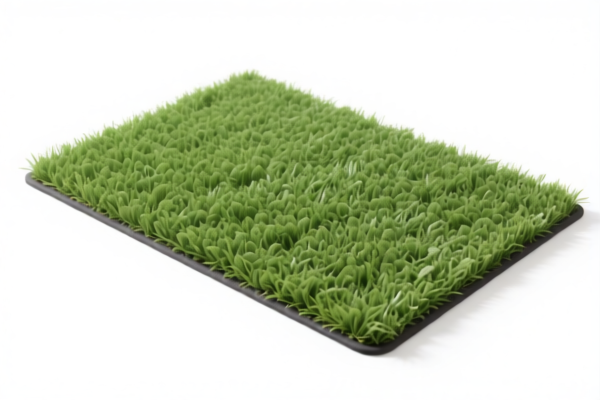
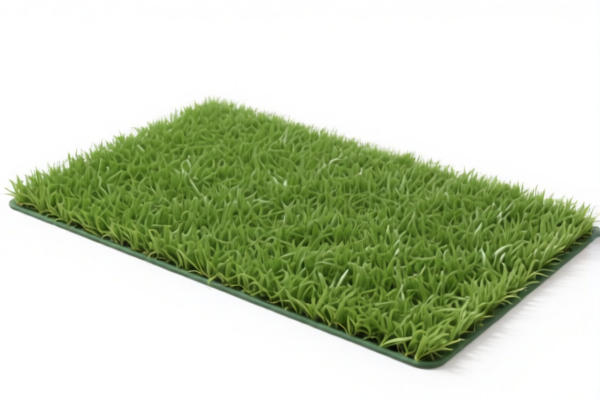
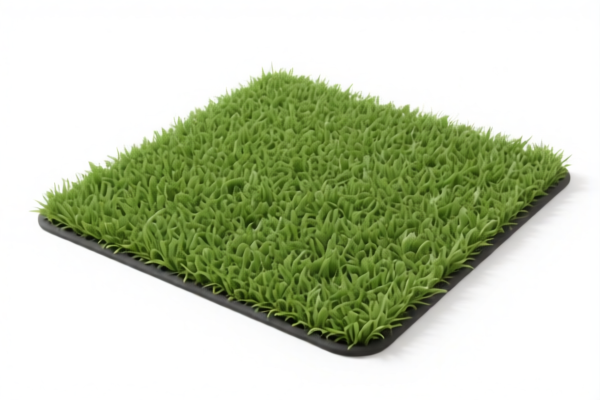
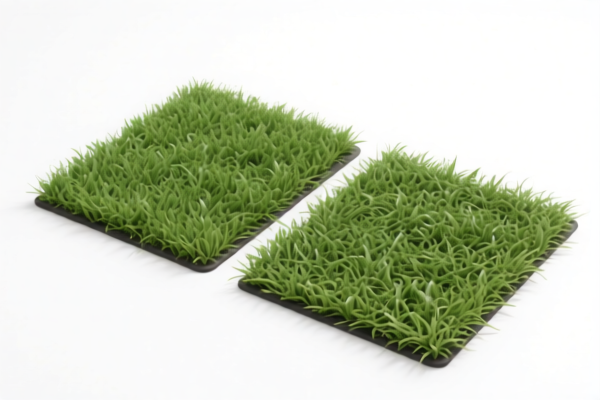
AI Analysis
🌿 Living Room Natural Grass Floor Mat
🌐 HS Code Reference & Customs Clearance Guide | 2026 Tariff Breakdown | Strategic Classification for Plant-Based Textiles
📌 I. Product Definition & Classification: What Exactly Is a "Grass Mat"?
A "Living Room Natural Grass Floor Mat" is a floor covering made primarily from natural plant fibers (such as seagrass, jute, sisal, or water hyacinth). In international trade, the classification hinges on two main factors:
1. Material Composition: Is it purely plant fiber woven, or is it classified as a textile/fiber flooring?
2. Manufacturing Process: Is it strictly a "woven vegetable product" (Chapter 46) or a "textile floor covering" (Chapter 57)?
⚠️ Key Distinction:
- If the mat is considered a woven vegetable product (simple weaving, no backing, no complex textile treatment) →归入 Chapter 46.
- If the mat is treated as a textile/fiber floor covering (often with latex backing, tufted, or processed like carpet) → 归入 Chapter 57.
📦 II. HS Code Classification Details (2026 Latest Tariff Schedule)
Based on the provided data, here are the valid HS Codes and their specific applications:
| HS Code | Product Description | Key Characteristics | Tax Rate (Total) |
|---|---|---|---|
4602.19.18.00 |
Grass Floor Mat, Plant Material, Woven Article | Specific sub-category for woven vegetable products | 39.5% |
4602.19.80.00 |
Grass Floor Mat, Plant Material, Woven/Like Articles | General category for woven vegetable products not specified elsewhere | 37.3% |
5705.00.10.00 |
Grass Floor Mat, Fiber-Type Textile Flooring | Classified as textile floor covering; Base duty 0% | 35.0% |
5705.00.20.90 |
Grass Floor Mat, Plant Fiber Textile Floor Covering | Specific sub-category for other textile floor coverings; Base duty 3.3% | 38.3% |
5705.00.20.90 |
Grass Mat, Textile/Fiber Type, Plant Fiber | Duplicate entry for textile classification | 38.3% |
🔍 Important Note:
- Codes under 4602 are classified under Chapter 46 (Articles of straw, of esparto, or of other weaving materials).
- Codes under 5705 are classified under Chapter 57 (Carpets and other textile floor coverings).
- The choice between Chapter 46 and 57 significantly impacts the Base Duty, which in turn affects the final total tax when combined with附加税.
💰 III. 2026 Latest Tariff Rate Breakdown (Including Surcharges & Policy Add-ons)
✅ Applicable Country: United States (US)
✅ Country of Origin: China (CN)
✅ Effective Time: November 10, 2025 (and subsequent imports)
🎯 1. 4602.19.18.00 —— Grass Floor Mat (Woven Vegetable Product)
| Item | Detail |
|---|---|
| Base Tariff | 4.5% (ad valorem) |
| Section 301 Surcharge | +25.0% (From USITC Footnote) |
| Section 122 Surcharge | +10.0% (Specific tariff add-on) |
| Total Tax Rate | 39.5% |
| Calculation | CIF Value × 39.5% |
| De Minimis Exemption | ❌ Not Eligible (Deny de minimis) |
| Legal Basis Path | Base: 4.5% → Sec301: +25% → Sec122: +10% |
📌 Explanation:
- This code has the highest base duty among the options due to the 4.5% initial rate.
- The 122条款 tariff is a specific penalty/add-on.
- Total impact: 39.5%, which is a significant cost factor.
🎯 2. 4602.19.80.00 —— Grass Floor Mat (Other Woven Articles)
| Item | Detail |
|---|---|
| Base Tariff | 2.3% (ad valorem) |
| Section 301 Surcharge | +25.0% |
| Section 122 Surcharge | +10.0% |
| Total Tax Rate | 37.3% |
| Calculation | CIF Value × 37.3% |
| De Minimis Exemption | ❌ Not Eligible |
| Legal Basis Path | Base: 2.3% → Sec301: +25% → Sec122: +10% |
📌 Explanation:
- Slightly lower total rate than4602.19.18.00due to a lower base duty (2.3% vs 4.5%).
- Still subject to both Section 301 and 122 surcharges.
🎯 3. 5705.00.10.00 —— Grass Floor Mat (Textile Floor Covering, Fiber Type)
| Item | Detail |
|---|---|
| Base Tariff | 0.0% (ad valorem) |
| Section 301 Surcharge | +25.0% |
| Section 122 Surcharge | +10.0% |
| Total Tax Rate | 35.0% |
| Calculation | CIF Value × 35.0% |
| De Minimis Exemption | ❌ Not Eligible |
| Legal Basis Path | Base: 0.0% → Sec301: +25% → Sec122: +10% |
📌 Explanation:
- Lowest Total Tax Rate among the listed options.
- The 0% base duty makes this the most cost-effective option if the product qualifies as a textile floor covering.
- Critical: Must be classified under Chapter 57 (Textile) rather than Chapter 46 (Vegetable Weaving).
🎯 4. 5705.00.20.90 —— Grass Mat (Plant Fiber Textile Floor Covering)
| Item | Detail |
|---|---|
| Base Tariff | 3.3% (ad valorem) |
| Section 301 Surcharge | +25.0% |
| Section 122 Surcharge | +10.0% |
| Total Tax Rate | 38.3% |
| Calculation | CIF Value × 38.3% |
| De Minimis Exemption | ❌ Not Eligible |
| Legal Basis Path | Base: 3.3% → Sec301: +25% → Sec122: +10% |
📌 Explanation:
- Higher base duty (3.3%) than5705.00.10.00, leading to a higher total rate (38.3% vs 35.0%).
- This sub-category is for "other" textile floor coverings not specifically listed as10.00.
🛠️ IV. Customs Clearance Practical Advice (Avoiding Pitfalls)
✅ 1. Preparation Checklist (Mandatory)
| Document | Required | Notes |
|---|---|---|
| ✅ Product Specifications | ✔️ | Material composition (e.g., 100% Seagrass), dimensions, backing type (latex/fabric/no backing). |
| ✅ Product Photos | ✔️ | Clear images showing texture, edges, and any backing materials. |
| ✅ Commercial Invoice | ✔️ | Must clearly state "Natural Grass Floor Mat" and HS Code. |
| ✅ Packing List | ✔️ | Weight and dimensions of each package. |
| ✅ Material Declaration | ✔️ | Confirm if any synthetic fibers are mixed (if yes, Chapter 57 is more likely). |
| ✅ Third-Party Test Report | ✔️ | Flammability test (if required by market), material composition analysis. |
✅ 2. Declaration Strategy (Key Tips)
🔥 "Classify by Process, Not Just Looks! Textile Base = 35%, Vegetable Weave = 37-39%!"
| Scenario | Recommended HS Code | Reason |
|---|---|---|
| Mat with Latex/Fabric Backing | 5705.00.10.00 |
Classified as textile floor covering; lowest base duty (0%). |
| Simple Woven Grass Mat (No Backing) | 4602.19.80.00 |
Classified as woven vegetable product; moderate base duty. |
| Specific Woven Sub-Category | 4602.19.18.00 |
If product fits this specific sub-description; highest base duty. |
| Other Textile Floor Covering | 5705.00.20.90 |
If it’s textile but doesn’t fit 10.00; higher base duty. |
📌 Critical Warning:
- Do NOT misdeclare a textile-backed mat as a "vegetable product" to avoid scrutiny, but ensure it genuinely qualifies for Chapter 57 to benefit from the 0% base duty.
- Always include "Plant Fiber" and "Floor Covering" in the description to support Chapter 57 classification if applicable.
✅ 3. Special Cases
| Case | Handling Advice |
|---|---|
| Mixed Material (e.g., Grass + Jute + Cotton) | If >50% plant fiber but processed as textile → Likely Chapter 57. If woven simply → Chapter 46. |
| With Rubber Backing | Strongly suggests Chapter 57 (Textile Floor Covering). Base duty 0% is advantageous. |
| OEM Custom Designs | Provide design blueprints to justify specific HS Code sub-category. |
| Samples vs. Bulk | Samples may still be subject to tariffs if value exceeds de minimis thresholds; declare accurately. |
🌍 V. Global Market Comparison (2026 Update)
| Market | Recommended HS Code | Total Tax Rate (China Origin) | Key Notes |
|---|---|---|---|
| 🇺🇸 USA | 5705.00.10.00 |
35.0% | Lowest rate due to 0% base + 35% surcharges. |
| 🇨🇳 China | 5705.00.10.00 |
~5-10% | No Section 301/122 surcharges. |
| 🇪🇺 EU | 5705.00.10.00 |
~0-5% | Check for anti-dumping duties; no 122 clauses. |
| 🇬🇧 UK | 5705.00.10.00 |
~0-5% | Post-Brexit tariffs may vary; verify latest schedule. |
| 🇯🇵 Japan | 5705.00.10.00 |
~0-3% | Generally low duties on textiles. |
📌 Conclusion:
- USA is the most challenging market due to Section 301 and 122 surcharges.
- Strategy for USA: Aim for5705.00.10.00to minimize the total tax burden (35.0%) compared to Chapter 46 codes (37.3%-39.5%).
📌 VI. Common Errors & Pitfalls (Lessons Learned)
❌ Error 1: Declaring a latex-backed grass mat as 4602.19.18.00
👉 Consequence: Higher tax (39.5%) than necessary. Should be 5705.00.10.00 (35.0%).
👉 Fix: Ensure backing material is declared and classified under textile rules.
❌ Error 2: Misidentifying "Woven Vegetable Product" vs. "Textile Floor Covering"
👉 Consequence: Customs may reclassify, leading to delays, penalties, and back-payments.
👉 Fix: Use precise descriptions: "Woven Seagrass Mat" (Ch 46) vs. "Textile Grass Floor Covering" (Ch 57).
❌ Error 3: Ignoring Section 122 Tariffs
👉 Consequence: Underestimating total cost.
👉 Fix: Always include the 10% add-on in cost calculations for US imports from China.
❌ Error 4: Incomplete Documentation
👉 Consequence: Customs hold for additional info, causing delays.
👉 Fix: Provide material composition certificates and photos upfront.
✅ Correct Approach:
"Natural Grass Floor Mat, Woven Plant Fiber, with Latex Backing, 2x3 ft, Brown, Model XYZ"
→ Supports5705.00.10.00for optimal tariff treatment.
🎯 VII. Conclusion: Smart Classification Saves Money!
🎯 Remember the Rule:
🔹 "Backed = Textile (35%); Woven Only = Vegetable (37-39%)"
🔹 "HS Code Choice = Direct Impact on 2-4.5% Tax Difference"
🔹 "Always Account for Section 301 + 122 Surcharges"
📌 Pro Tip:
If your product has a fabric or latex backing, strongly advocate for 5705.00.10.00. It offers the lowest total tax rate (35.0%).
For simple woven mats without backing, use 4602.19.80.00 (37.3%) rather than 4602.19.18.00 (39.5%) to save 2.2%.
📣 Immediate Action:
📞 Consult with a customs broker to confirm Chapter 46 vs. 57 classification based on backing material.
📄 Submit detailed product descriptions and photos for pre-ruling if possible.
🚀 Optimize your supply chain costs by choosing the correct HS Code from day one.
✨ Precise Classification, Lower Costs, Smooth Clearance!
💼 Every Percentage Point Counts in Customs Duties!
Customer Reviews
About HS Code Classification
The Harmonized System (HS) is an internationally standardized nomenclature developed by the World Customs Organization (WCO) to classify traded products. Over 200 countries use the HS system as the basis for customs tariffs, trade statistics, and import/export regulations.
Each HS code follows a hierarchical structure:
- Chapter (2 digits) — Broad category of goods (e.g., Chapter 84: Machinery and Mechanical Appliances)
- Heading (4 digits) — More specific grouping within the chapter
- Subheading (6 digits) — Internationally standardized breakdown, used by all WCO member countries
- National subdivisions (8-10 digits) — Country-specific extensions for further classification, such as US HTSUS 10-digit codes
Correct HS code classification is essential for smooth customs clearance, accurate duty payment, and compliance with trade regulations. Misclassification can lead to customs delays, overpayment of duties, or penalties.
When importing from CN to US, the applicable tariff rates may include:
- Most-Favored-Nation (MFN) rate — The standard duty rate applied to WTO members
- General rate — Applied to countries without trade agreements
- Trade remedy duties — Additional tariffs such as Section 301 (anti-dumping), Section 232 (national security), or countervailing duties
The information provided on this page is for reference purposes only. For official classification, please consult with your local customs authority or a licensed customs broker.