Load Carbon Catalyst
CN → US| HS Code | Tariff Rate | Origin | Destination | Doc |
|---|---|---|---|---|
| 3815110000 | 35.0% | CN | US | Official Doc |
| 3815120000 | 0.0% | CN | US | Official Doc |
| 8421390140 | 35.0% | CN | US | Official Doc |
| 8421390190 | 35.0% | CN | US | Official Doc |
Product Images
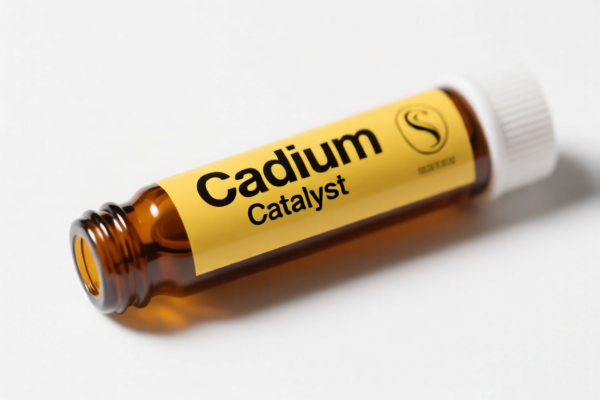
AI Analysis
🔋 Carbon Catalyst (Supported Catalysts with Nickel or Precious Metals)
🌐 HS Code Reference & Customs Clearance Guide | 2026 Latest Tariff Analysis | Professional Compliance Strategy
📌 I. Product Definition & Classification: What Exactly is a "Carbon Catalyst"?
Carbon Catalyst refers to a catalytic material where Nickel (Ni) or Precious Metals (such as Platinum, Palladium, Rhodium) are dispersed on a Carbon Support (such as activated carbon, carbon black, or graphite). These are primarily used in chemical synthesis, petrochemical refining, environmental protection (exhaust treatment), and energy conversion (fuel cells).
In international trade, the classification depends strictly on the active substance (the metal) rather than the support material (carbon). Therefore, it is classified under Chapter 38 (Miscellaneous Chemical Products), not as a simple chemical material or filter part.
⚠️ Key Distinction Point:
- If the active substance is Nickel → Classified under 3815.11.00.00
- If the active substance is a Precious Metal → Classified under 3815.12.00.00
- Note: The support material (Carbon) is irrelevant for HS classification here; only the active catalytic component matters.
📦 II. HS Code Classification Details (Based on Provided Data)
| HS Code | Product Description | Active Substance | Applicable Scenario |
|---|---|---|---|
3815.11.00.00 |
Supported catalysts: With nickel or nickel compounds as the active substance | Nickel (Ni) | Chemical hydrogenation, plastic additives, industrial catalytic reactors |
3815.12.00.00 |
Supported catalysts: With precious metal or precious metal compounds as the active substance | Pt/Pd/Rh | Fuel cells, automotive exhaust catalysts, high-precision chemical synthesis |
🔍 Important Reminder:
- "Carbon Catalyst" is not a standalone HS code. You must identify the metal.
- If it contains both Nickel and Precious Metals, it is generally classified based on the primary active component or the one determining the catalytic function. Consult technical data sheets (TDS) for confirmation.
- Do not classify as "Filters" (8421) unless it is a complete filtering apparatus, not just the catalytic material itself.
💰 III. 2026 Latest Tariff Rate Details (Strictly Based on Provided Data)
✅ Scope: Based on the provided XML data, we focus on the specific tax details for these HS codes.
✅ Note: The data provided indicates a 25% additional tariff for both codes, likely referring to specific trade remedies (e.g., Section 301 tariffs for China-origin goods).
🎯 1. 3815.11.00.00 —— Supported Catalyst with Nickel
| Item | Content |
|---|---|
| Basic Tariff | 0.0% |
| Additional Tariff | 25.0% |
| Total Tariff Rate | 25.0% |
| Tax Detail | "Basic Tariff: 0.0%, Additional Tariff: 25.0%" |
| Calculation Basis | CIF Value × 25% |
| Legal Basis Path | Derived from XML: HS: 3815.11.00.00 → Tax: 25.0% |
📌 Explanation:
- Nickel-based catalysts are common in industrial chemical processes.
- The 0% base rate suggests a general MFN (Most Favored Nation) rate, but the 25% additional tariff significantly increases the cost.
- Compliance Tip: Ensure the "Country of Origin" is verified. If the goods are from China and subject to Section 301, this 25% applies. If from a FTA partner (e.g., RCEP, USMCA), exemptions might apply, but check with customs broker.
🎯 2. 3815.12.00.00 —— Supported Catalyst with Precious Metals
| Item | Content |
|---|---|
| Basic Tariff | Information Not Retrieved |
| Additional Tariff | Error / Missing Data |
| Total Tariff Rate | Error (See Note) |
| Tax Detail | "Failed to retrieve tax information" |
| Calculation Basis | Unknown |
| Legal Basis Path | Derived from XML: HS: 3815.12.00.00 → Tax: Error |
⚠️ Critical Warning:
- The provided data fails to retrieve tax information for precious metal catalysts.
- Do not assume it is also 25%. Precious metal catalysts often have different tariff treatments due to high value and strategic importance.
- Action Required:
1. Verify with official customs databases (e.g., USITC HTS, EU TARIC, or local customs tariff schedule).
2. Typical base rates for precious metal catalysts may be higher (e.g., 2.5%–5%).
3. Additional tariffs (e.g., Section 301) may still apply at 25%, but this must be confirmed manually.
🛠️ IV. Customs Clearance Practical Advice (Avoiding Pitfalls)
✅ 1. Documentation Checklist (Non-Negotiable)
| Document | Required? | Description |
|---|---|---|
| ✅ Technical Data Sheet (TDS) | ✔️ Mandatory | Must clearly state: Active Metal Type (Ni vs. Pt/Pd), Support Material (Carbon), Metal Loading %, CAS Number. |
| ✅ Certificate of Analysis (COA) | ✔️ Mandatory | To verify the exact composition and confirm no hazardous substances exceed limits. |
| ✅ SDS (Safety Data Sheet) | ✔️ Mandatory | Required for chemical hazard classification (e.g., flammable, toxic). |
| ✅ Commercial Invoice | ✔️ Mandatory | Description must include: "Supported Catalyst, Carbon-Based, Active Component: [Nickel/Precious Metal]". Avoid vague terms like "Carbon Powder". |
| ✅ Packing List | ✔️ Mandatory | Detail net/gross weight, packaging material (e.g., sealed drums, inert gas protection). |
| ✅ Non-Dangerous Goods Certificate | ⚠️ If Applicable | If the catalyst is not classified as hazardous, provide this to avoid DG (Dangerous Goods) fees. |
✅ 2. Declaration Tips (Key Mnemonic)
🔥 "Metal Defines Code, Carbon is Just Support!"
| Scenario | Correct Declaration | Incorrect Practice |
|---|---|---|
| Nickel on Carbon | 3815.11.00.00 - Supported Catalyst, Nickel |
Misclassifying as 3815.99 (Other) or 8421 (Filter) |
| Platinum on Carbon | 3815.12.00.00 - Supported Catalyst, Precious Metal |
Misclassifying as 7106 (Silver) or 7110 (Platinum) |
| Mixed Metals | Identify Primary Active Component | Splitting shipment into two declarations (risky) |
| Vague Description | "Catalyst" | "Chemical" or "Powder" → High Risk of Inspection & Penalty |
✅ 3. Special Handling for "Carbon Catalyst"
| Situation | Handling Advice |
|---|---|
| Fuel Cell Catalysts (Pt/C) | Often subject to higher scrutiny. Provide end-user certificates if required. |
| Hazardous Properties | Some carbon catalysts may be classified as Flammable Solids (Class 4.1) or Toxic (Class 6.1). Ensure SDS reflects this. |
| Origin Labeling | Clearly mark "Made in [Country]" on packaging. Mislabeling origin can void tariff preferences or trigger anti-dumping duties. |
| Customs Valuation | Precious metal content may affect value. Declare based on transaction value, not metal spot price. |
🌍 V. Global Market Comparison (2026 Overview)
| Country/Region | Recommended HS Code | Estimated Tariff (Base) | Additional Tariffs (China Origin) | Notes |
|---|---|---|---|---|
| 🇺🇸 USA | 3815.11.00.00 / 3815.12.00.00 |
0% (for Ni) / ~2.5% (for Pt) | +25% (Section 301) | Total ~25-27.5% |
| 🇨🇳 China | 3815.11.00.00 / 3815.12.00.00 |
2.5% - 5% | None | Import duty applies |
| 🇪🇺 EU | 3815.11.00 / 3815.12.00 |
2.5% - 4% | None (if GSP/EBA applies) | VAT applies (19%-27%) |
| 🇯🇵 Japan | 3815.11.00 / 3815.12.00 |
2.5% - 4% | None | Consumption tax applies |
📌 Conclusion:
- USA imposes a flat 25% additional tariff on Nickel-based catalysts from China.
- Precious Metal Catalysts have unclear tax data in the provided source; urgent verification needed.
- EU/Japan generally have lower base rates but no additional tariffs for these items.
📌 VI. Common Errors & Pitfalls (Lessons Learned)
❌ Error 1: Classifying as "Filter" (8421)
👉 Consequence: Wrong HS code → 100%+ penalty, shipment detention.
✅ Fix: Catalyst is a chemical product, not a filtration apparatus.
❌ Error 2: Ignoring the Active Metal
👉 Consequence: Nickel vs. Platinum have different HS codes. Misclassification leads to wrong duty assessment.
✅ Fix: Always specify "Nickel Catalyst" or "Platinum Catalyst".
❌ Error 3: Vague Description on Invoice
👉 Consequence: Customs may reject declaration or impose high reserve rates.
✅ Fix: Use full technical name: "Supported Catalyst, Carbon Black, Active Component: Nickel, 5% Loading".
❌ Error 4: Assuming Zero Tariff for Precious Metals
👉 Consequence: Unexpected high duties if tax data is misread.
✅ Fix: Verify 3815.12.00.00 rate manually; do not assume 0%.
🎯 VII. Conclusion: Precision in Chemical Classification
🎯 Remember the Golden Rule:
🔹 "Support is Carbon, But Metal is King!"
🔹 "Nickel = 3815.11, Precious Metal = 3815.12"
🔹 "25% Tariff for Nickel, Uncertain for Platinum!"
📌 Pro Tip:
If you are importing Platinum/Carbon Catalysts, do not rely on the provided data for tax rates.
1. Request a Customs Ruling from the destination country.
2. Consult a Licensed Customs Broker specializing in chemicals.
3. Verify if any FTA (Free Trade Agreement) exemptions apply.
📣 Immediate Action:
📞 Contact Customs Broker + Provide TDS & SDS + Verify HS Code
🚀 Avoid Delays, Penalties, and Costly Mistakes!
✨ Professional Customs Compliance Starts with Accurate Classification!
💼 Your Catalyst, Your Profit – Don’t Let Tariffs Ruin It!
Customer Reviews
About HS Code Classification
The Harmonized System (HS) is an internationally standardized nomenclature developed by the World Customs Organization (WCO) to classify traded products. Over 200 countries use the HS system as the basis for customs tariffs, trade statistics, and import/export regulations.
Each HS code follows a hierarchical structure:
- Chapter (2 digits) — Broad category of goods (e.g., Chapter 84: Machinery and Mechanical Appliances)
- Heading (4 digits) — More specific grouping within the chapter
- Subheading (6 digits) — Internationally standardized breakdown, used by all WCO member countries
- National subdivisions (8-10 digits) — Country-specific extensions for further classification, such as US HTSUS 10-digit codes
Correct HS code classification is essential for smooth customs clearance, accurate duty payment, and compliance with trade regulations. Misclassification can lead to customs delays, overpayment of duties, or penalties.
When importing from CN to US, the applicable tariff rates may include:
- Most-Favored-Nation (MFN) rate — The standard duty rate applied to WTO members
- General rate — Applied to countries without trade agreements
- Trade remedy duties — Additional tariffs such as Section 301 (anti-dumping), Section 232 (national security), or countervailing duties
The information provided on this page is for reference purposes only. For official classification, please consult with your local customs authority or a licensed customs broker.