Loaded Alumina Catalyst
CN → US| HS Code | Tariff Rate | Origin | Destination | Doc |
|---|---|---|---|---|
| 3815190000 | 35.0% | CN | US | Official Doc |
| 3815110000 | 35.0% | CN | US | Official Doc |
| 2818200000 | 10.0% | CN | US | Official Doc |
| 3809921000 | 41.5% | CN | US | Official Doc |
Product Images
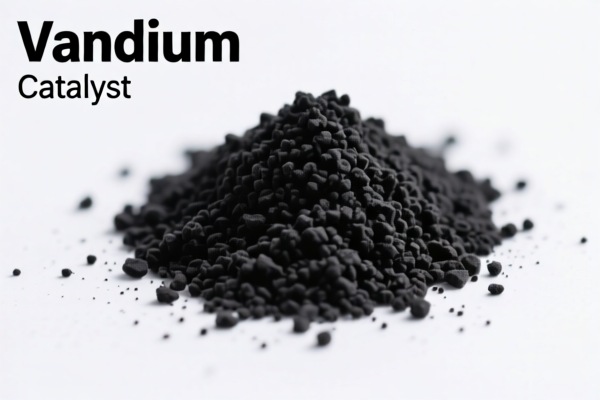

AI Analysis
🧪 Loaded Alumina Catalyst (Supported Alumina Catalyst)
🌐 HS Code Reference & Customs Clearance Guide | 2026 Latest Tariff Analysis | Professional Clearance Strategy
📌 I. Product Definition & Classification: What is a "Loaded Alumina Catalyst"?
Loaded Alumina Catalysts are industrial chemical agents where alumina ($Al_2O_3$) serves as the carrier (support) for active catalytic metals or compounds. They are critical in petrochemical refining, environmental protection (catalytic converters), and chemical synthesis.
In international trade, the classification depends heavily on the primary function and physical form: 1. As a Chemical Support: If the primary value is the alumina structure itself, used to hold other chemicals → Classified under Chapter 28 (Inorganic Chemicals). 2. As a Functional Catalyst: If the primary value is the catalytic activity (the "loaded" part) → Classified under Chapter 38 (Miscellaneous Chemical Products). 3. As an Industrial Aid: If used specifically as a dye carrier or paper treating agent → Classified under Chapter 38 but distinct from pure catalysts.
⚠️ Key Distinction Point:
- Is it primarily a carrier material (chemical commodity)? → 2818.20.00.00
- Is it primarily a functional catalyst (ready for chemical reaction)? → 3815.11/19
- Is it used as a processing aid (paper/dye)? → 3809.92.10.00
📦 II. HS Code Classification Matrix (2026 Latest Tariff Authority)
| HS Code | Product Description | Application Scenario | Tax Rate (Total) |
|---|---|---|---|
2818.20.00.00 |
Alumina as a Chemical Carrier: Core component is alumina, classified as an inorganic chemical. | Industrial fillers, general support media, non-catalytic alumina products. | 10.0% |
3815.11.00.00 |
Loaded Catalysts on Supports: Matches "Carrier" form & logical "Supported Catalyst" category. | Precise catalytic applications where the carrier nature is emphasized. | 35.0% |
3815.19.00.00 |
Other Supported Catalysts: Matches "Support" form & "Other Supported Catalysts" category. | General industrial catalysts not specifically listed elsewhere (e.g., general refining catalysts). | 35.0% |
3809.92.10.00 |
Industrial Agents: Used as paper finishing agents, dye carriers, or other preparations. | Specific use in paper mills or textile dyeing industries. | 41.5% |
🔍 Critical Reminder:
- Chapter 28 vs. Chapter 38: If the product is merely "high-purity alumina" without significant catalytic activity, it falls under 2818.20.00.00 (10%).
- Catalytic Function: If it contains active metals (e.g., Platinum, Palladium, Nickel) and is marketed for chemical reactions, it must go to 3815 series (35%).
- Misclassification Risk: Declaring a high-value catalyst as "Alumina Powder" (2818) to save on taxes is a high-risk error. Customs will inspect the SDS (Safety Data Sheet) and CAS numbers.
💰 III. 2026 Latest Tariff Rate Breakdown (Including Surcharges & Policy Add-ons)
✅ Applicable Country: United States (US)
✅ Country of Origin: China (CN)
✅ Effective Date: From November 10, 2025 (including subsequent imports)
🎯 1. 2818.20.00.00 —— Alumina (Inorganic Chemical Carrier)
| Item | Details |
|---|---|
| Base Tariff | 0.0% (Ad Valorem) |
| Section 301 Surcharge | 0.0% |
| Section 122 Tariff | +10% (Specific to China Origin) |
| Total Effective Rate | 10.0% |
| Tax Calculation | CIF Value × 10% |
| De Minimis Exemption | ❌ Not Applicable (Deny De Minimis for Section 122 items) |
| Legal Basis Path | Section 122 Tariff Act → USITC:2818.20.00.00 |
📌 Interpretation:
- This is the lowest tariff option (10%).
- It applies ONLY if the product is defined as a chemical raw material (Alumina) rather than a functional catalyst.
- Warning: If the product is a "Loaded Catalyst" (containing active catalytic metals), customs will reject this code and assess the 35% rate, leading to severe penalties.
🎯 2. 3815.11.00.00 & 3815.19.00.00 —— Supported Catalysts
| Item | Details |
|---|---|
| Base Tariff | 0.0% |
| Section 301 Surcharge | +25% (USITC Footnote for Chinese Chemicals) |
| Section 122 Tariff | +10% (Specific to China Origin) |
| Total Effective Rate | 35.0% |
| Tax Calculation | CIF Value × 35% |
| De Minimis Exemption | ❌ Not Applicable |
| Legal Basis Path | Section 301 (301 Tariff Act) → Section 122 Tariff Act → USITC:3815.1x.00.00 |
📌 Interpretation:
- 3815.11: Used when the emphasis is on the "Carrier" aspect of the catalyst.
- 3815.19: Used for "Other" supported catalysts (general category).
- Both attract a heavy 35% total tax due to the combination of Section 301 (25%) and Section 122 (10%).
- This is the standard classification for most industrial catalysts imported from China.
🎯 3. 3809.92.10.00 —— Paper/Dye Industry Agents
| Item | Details |
|---|---|
| Base Tariff | 6.5% |
| Section 301 Surcharge | +25% |
| Section 122 Tariff | +10% |
| Total Effective Rate | 41.5% |
| Tax Calculation | CIF Value × 41.5% |
| De Minimis Exemption | ❌ Not Applicable |
| Legal Basis Path | Section 301 → Section 122 → USITC:3809.92.10.00 |
📌 Interpretation:
- This is the highest tax rate (41.5%).
- Only apply if the product is explicitly marketed and used as a paper finishing agent or dye carrier, not for chemical synthesis or refining.
- Misusing this code for general catalysts is illegal.
🛠️ IV. Customs Clearance Operational Advice (Practical Pitfall Guide)
✅ 1. Required Documentation Checklist
| Document | Mandatory? | Explanation |
|---|---|---|
| ✅ Safety Data Sheet (SDS) | ✔️ | Must clearly state: "Contains Alumina as Support" and list active ingredients. |
| ✅ Certificate of Analysis (COA) | ✔️ | Shows chemical composition. Crucial for proving it is NOT pure Alumina (2818) if claiming 3815. |
| ✅ Technical Specification Sheet | ✔️ | Describes surface area, pore size, and active metal loading (%). |
| ✅ Commercial Invoice | ✔️ | Description must be precise: "Alumina-Supported Nickel Catalyst" vs "Alumina Powder". |
| ✅ Letter of Use | ✔️ | Proof of intended use (e.g., "Used in Hydrodesulfurization Unit"). |
| ✅ Import License | ✔️ | Check if the specific chemical requires an EPA or DOT permit. |
✅ 2. Declaration Strategy (Key Mantra)
🔥 "Composition Determines Code, Function Dictates Tax!"
| Scenario | Correct Declaration | Incorrect Declaration | Result of Error |
|---|---|---|---|
| Pure Alumina Powder | 2818.20.00.00 |
3815.19.00.00 |
Under-declaration (Penalty + Back Taxes 35%-10%=25%) |
| General Catalyst (Active Metal Loaded) | 3815.19.00.00 |
2818.20.00.00 |
Under-declaration (Penalty + Back Taxes) |
| Catalyst Used Specifically for Paper | 3809.92.10.00 |
3815.19.00.00 |
Over-declaration (Paying 41.5% instead of 35% - Loss of Profit) |
| Mixed Batch (Carrier + Catalyst) | 3815.11.00.00 |
Split Declaration | Complex Audit Risk (Customs may reject split) |
✅ 3. Special Circumstances Handling
| Situation | Handling Advice |
|---|---|
| High-Value Precious Metal Catalysts (Pt/Pd) | Ensure HS Code is 3815. Do NOT use 2818 to avoid suspicion of smuggling or tax evasion. The 35% tax is worth the legal compliance. |
| Experiments/Lab Samples | If quantity is small, still subject to 35% if misclassified. Use accurate descriptions. |
| Origin Switching | If catalyst is NOT from China (e.g., Europe), Section 122 (10%) and Section 301 (25%) DO NOT APPLY. Rate may drop to 0-6.5% depending on FTA. |
| Re-exports | If imported under 3815 and re-exported, verify bond requirements. |
🌍 V. Global Market Comparison (2026 Latest)
| Country/Region | Recommended HS Code | Tariff (CN Origin) | Certification | Remarks |
|---|---|---|---|---|
| 🇺🇸 USA | 3815.19.00.00 |
35% | EPA/DOT | High barrier due to Section 301 + 122. |
| 🇨🇳 China | 3815.19.00.00 |
5-8% | N/A | Low import tax, but high environmental scrutiny. |
| 🇪🇺 EU | 3815.10.00 |
5-6% | REACH | No Section 301/122. REACH registration is key. |
| 🇮🇳 India | 3815.19.00 |
10-15% | BIS | Anti-dumping duties may apply depending on source. |
| 🇻🇳 Vietnam | 3815.19.00 |
0-5% | N/A | Potential FTA benefits if processed locally. |
📌 Conclusion:
- The US market is the most expensive for Chinese-made catalysts due to the 35% effective tariff.
- Europe and Asia remain cost-effective alternatives for sourcing, provided REACH/Local standards are met.
📌 VI. Common Errors & Pitfalls (Lessons Learned)
❌ Error 1: Declaring "Catalyst" as "Alumina Powder" (2818) to save taxes.
👉 Consequence: Customs lab test finds active metals. Penalty + 25% back tax + Possible seizure.
❌ Error 2: Ignoring Section 122 (10%) in addition to Section 301 (25%).
👉 Consequence: Budgeting only 25% tax, but actual cost is 35%. Margin erosion.
❌ Error 3: Using 3809 code for general industrial catalysts.
👉 Consequence: 41.5% tax applies unnecessarily. Lost profit.
✅ Correct Practice:
"Alumina-Supported Vanadium Catalyst, CAS #XXXX-XX-X, Surface Area XXX m²/g, for SCR DeNOx Process"
🎯 VII. Conclusion: Professional Declaration, Cost Control, Risk Mitigation!
🎯 Remember the Mantra:
🔹 "Active Metals = 35%, Pure Support = 10%, Wrong Use = 41.5%!"
🔹 "Don't guess the code, let the SDS speak, or pay the price!"
📌 Tips:
- If your catalyst contains Platinum Group Metals (PGMs), ensure the HS code explicitly reflects "Catalyst" to avoid valuation disputes.
- For US Imports, calculate the landed cost with 35% tax included.
- Consider Pre-Ruling (Advance Ruling) from US CBP if the product is novel.
📣 Immediate Action:
📞 Consult with a licensed customs broker + Provide SDS/COA + Verify Section 122 applicability
🚀 Ensure Compliance, Accuracy, and Profitability in your supply chain!
✨ Professional Customs Clearance Starts with Accurate Classification!
💼 Your Bottom Line Depends on Every Percentage Point!
Customer Reviews
About HS Code Classification
The Harmonized System (HS) is an internationally standardized nomenclature developed by the World Customs Organization (WCO) to classify traded products. Over 200 countries use the HS system as the basis for customs tariffs, trade statistics, and import/export regulations.
Each HS code follows a hierarchical structure:
- Chapter (2 digits) — Broad category of goods (e.g., Chapter 84: Machinery and Mechanical Appliances)
- Heading (4 digits) — More specific grouping within the chapter
- Subheading (6 digits) — Internationally standardized breakdown, used by all WCO member countries
- National subdivisions (8-10 digits) — Country-specific extensions for further classification, such as US HTSUS 10-digit codes
Correct HS code classification is essential for smooth customs clearance, accurate duty payment, and compliance with trade regulations. Misclassification can lead to customs delays, overpayment of duties, or penalties.
When importing from CN to US, the applicable tariff rates may include:
- Most-Favored-Nation (MFN) rate — The standard duty rate applied to WTO members
- General rate — Applied to countries without trade agreements
- Trade remedy duties — Additional tariffs such as Section 301 (anti-dumping), Section 232 (national security), or countervailing duties
The information provided on this page is for reference purposes only. For official classification, please consult with your local customs authority or a licensed customs broker.