Lock Parts
CN → US| HS Code | Tariff Rate | Origin | Destination | Doc |
|---|---|---|---|---|
| 7326908688 | 87.9% | CN | US | Official Doc |
| 8302419015 | 38.5% | CN | US | Official Doc |
| 8302419045 | 38.5% | CN | US | Official Doc |
| 8301106080 | 23.6% | CN | US | Official Doc |
Product Images
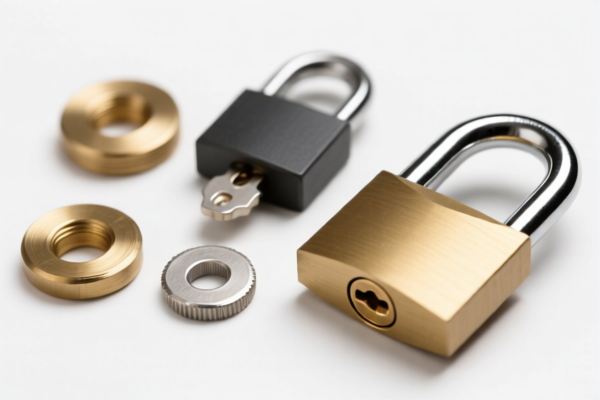


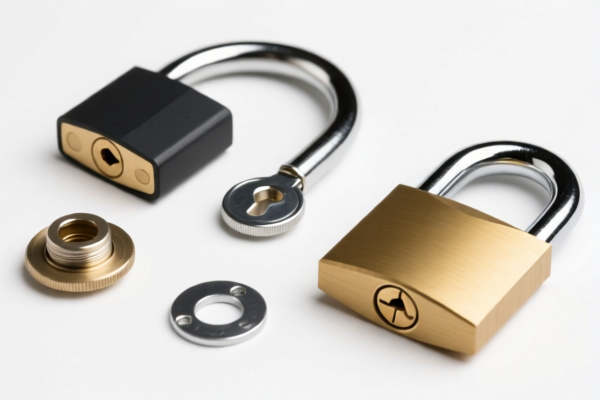
AI Analysis
🔐 Lock Parts (Lock Components & Accessories)
🌐 HS Code Reference & Customs Clearance Guide | 2026 Latest Tariff Analysis | Professional Clearance Strategy
Product Category: Lock Parts / Lock Accessories
Material Basis: Inferenced as Base Metal (Iron/Steel) based on standard manufacturing norms.
Usage: Components for doors, windows, cabinets, or security systems.
⚠️ Critical Classification Insight:
The classification of "Lock Parts" varies significantly depending on whether the part is a general mechanical component (falling under general metal articles) or a specific architectural hardware fitting (falling under specific metal fittings for buildings). This distinction drastically changes your tariff burden.
📦 II. HS Code Classification Details (2026 Latest Authoritative Comparison)
Based on the provided data, here are the four potential HS Codes and their specific logic.
| HS Code | Product Description & Logic | Material/Type | Key Differentiator |
|---|---|---|---|
7326.90.86.88 |
Other Articles of Iron or Steel | Iron/Steel | Generic Metal Article. Used when the part doesn't fit specific "architectural hardware" definitions. Treats lock parts as general metal fabrication. |
8302.41.90.15 |
Base Metal Fittings for Doors/Windows | Base Metal | Specific Arch. Fitting. Classified as metal accessories specifically for doors (e.g., chains, locks). Aligns with "metal fittings for buildings." |
8302.41.90.45 |
Other Base Metal Fittings | Base Metal | Specific Arch. Fitting. Similar to above but may cover a slightly different sub-category of metal fittings for buildings/structures. |
8301.10.60.80 |
Locks & Fittings (General) | Base Metal | Primary Lock Category. The "fallback" or specific category for locks and parts thereof. Preferred if it is a complete locking mechanism or standard part. |
🔍 Key Distinction:
-7326.90.86.88: Treats the item as a generic metal part. High risk of being flagged as "over-generalized" if it has a clear architectural function. -8302.41.90.15/45: Treats the item as Architectural Hardware. This is often the most accurate classification for door/window lock components. -8301.10.60.80: Treats the item under the General Locks category. Often has lower base duties but may still attract Section 301/IEEPA taxes.
💰 III. 2026 Latest Tariff Rate Breakdown (US Import from China)
✅ Applicable Country: United States (US)
✅ Origin: China (CN)
✅ Effective Time: Current rates (including Section 301 & IEEPA provisions)
🎯 1. 7326.90.86.88 —— Other Articles of Iron or Steel (Generic Metal)
| Item | Detail |
|---|---|
| Base Duty | 2.9% |
| Section 301 Duty | 25.0% |
| IEEPA / 122 Clause | 50.0% (Specific to Steel/Aluminum/Copper products under certain trade enforcement clauses) |
| Total Effective Rate | 87.9% |
| Tax Calculation | CIF Value × 87.9% |
| De Minimis Exemption? | ❌ NO (Deny de minimis) |
| Legal Path | USITC:7326.90.86.88 + Section 301:25% + IEEPA/122:50% |
📌 Explanation:
- This is the HIGHEST potential tax bracket. - The 50% IEEPA/122 Clause applies specifically to certain steel/aluminum products under current enforcement actions. - Using this code for lock parts is risky due to the massive 87.9% total duty. It implies the item is not recognized as specialized hardware, attracting the broadest metal tariffs.
🎯 2. 8302.41.90.15 —— Base Metal Fittings for Doors/Windows
| Item | Detail |
|---|---|
| Base Duty | 3.5% |
| Section 301 Duty | 25.0% |
| IEEPA / 122 Clause | 10.0% |
| Total Effective Rate | 38.5% |
| Tax Calculation | CIF Value × 38.5% |
| De Minimis Exemption? | ❌ NO (Deny de minimis) |
| Legal Path | USITC:8302.41.90.15 + Section 301:25% + IEEPA:10% |
📌 Explanation:
- This code recognizes the product as Architectural Hardware. - The 10% IEEPA tax is significantly lower than the 50% applicable to generic steel articles. - Recommendation: This is a strong candidate if the part is specifically for doors/windows.
🎯 3. 8302.41.90.45 —— Other Base Metal Fittings (Architectural)
| Item | Detail |
|---|---|
| Base Duty | 3.5% |
| Section 301 Duty | 25.0% |
| IEEPA / 122 Clause | 10.0% |
| Total Effective Rate | 38.5% |
| Tax Calculation | CIF Value × 38.5% |
| De Minimis Exemption? | ❌ NO (Deny de minimis) |
| Legal Path | USITC:8302.41.90.45 + Section 301:25% + IEEPA:10% |
📌 Explanation:
- Identical tax treatment to8302.41.90.15. - Use this if the specific sub-category of "door fitting" doesn't strictly apply, but it is still clearly a metal fitting for a building. - Recommendation: Equally valid as #2 for cost-saving purposes.
🎯 4. 8301.10.60.80 —— Locks and Fittings (General Category)
| Item | Detail |
|---|---|
| Base Duty | 6.1% |
| Section 301 Duty | 7.5% (Note: Reduced Section 301 rate may apply in some cases or specific product exclusions) |
| IEEPA / 122 Clause | 10.0% |
| Total Effective Rate | 23.6% |
| Tax Calculation | CIF Value × 23.6% |
| De Minimis Exemption? | ❌ NO (Deny de minimis) |
| Legal Path | USITC:8301.10.60.80 + Section 301:7.5% + IEEPA:10% |
📌 Explanation:
- This code has the LOWEST total tax rate among the options. - The Section 301 rate here is listed as 7.5%, which is significantly lower than the 25% applied to other categories (likely due to specific product exclusions or different enforcement bands). - Recommendation: BEST OPTION if the lock parts can be classified under general lock fittings rather than generic metal articles.
🛠️ IV. Customs Clearance Practical Advice (Avoiding Pitfalls)
✅ 1. Preparation Checklist (Non-Negotiable)
| Document | Required? | Notes |
|---|---|---|
| ✅ Product Specification Sheet | ✔️ | Must detail material (e.g., "Zinc Alloy," "Stainless Steel"), dimensions, and usage. |
| ✅ Technical Drawings/Photos | ✔️ | Clear photos showing the part's shape and function. Is it a key? A bolt? A latch? |
| ✅ Commercial Invoice | ✔️ | Must clearly state "Lock Parts" or specific name (e.g., "Door Lock Cylinder Part"). Avoid vague terms like "Metal Part." |
| ✅ Material Declaration | ✔️ | Specify if it is Iron, Steel, Aluminum, or Zinc Alloy. This triggers the correct HS code path. |
| ✅ HS Code Pre-Ruling Request | ✔️ | Highly Recommended. Apply for an official ruling from CBP to confirm 8301 vs 8302 vs 7326. |
✅ 2. Declaration Strategy (Golden Rules)
🔥 "Specific Function Trumps Generic Material!"
| Scenario | Correct Declaration | Wrong Declaration |
|---|---|---|
| Part is for a Door Lock | 8302.41.90.15 or 8301.10.60.80 |
7326.90.86.88 (Saves 49% in tax!) |
| Part is for a Window Latch | 8302.41.90.45 |
7326.90.86.88 |
| Generic Metal Bracket (Not Lock Specific) | 7326.90.86.88 |
8301... (Misclassification risk) |
| Complete Lock Assembly | 8301.10.60.80 |
7326.90.86.88 |
📌 Key Takeaway:
- Do NOT use7326.90.86.88if the item is clearly a lock part. The 87.9% tax is punitive. - Aim for8301.10.60.80for the lowest tax (23.6%). - Use8302.41.90.15/45as a strong backup if8301is disputed, but expect 38.5% tax.
✅ 3. Special Considerations
| Situation | Advice |
|---|---|
| Material Ambiguity | If the part is made of Plastic + Metal, ensure it is classified under the metal components if they define the essential character. |
| OEM Parts | Provide end-user documentation showing these are parts for specific lock models. |
| Section 301 Exclusions | Check if your specific lock part was ever granted an exclusion from the 25% tariff. If yes, the effective rate may be even lower. |
🌍 V. Global Market Comparison (2026)
| Market | Recommended HS Code | Est. Total Duty (China Origin) | Notes |
|---|---|---|---|
| 🇺🇸 USA | 8301.10.60.80 |
23.6% | Lowest duty. Avoid 7326 (87.9%). |
| 🇨🇳 China | 8301.10.60.80 |
~6.1% - 9% | Standard import duty. |
| 🇪🇺 EU | 8301.10 |
~2.7% | Low base duty. No Section 301 equivalent. |
| 🇬🇧 UK | 8301.10 |
~2.7% | Post-Brexit tariffs similar to EU. |
📌 Conclusion:
The USA imposes the highest barrier due to Section 301 and IEEPA clauses. Precise classification is not just about compliance—it is about saving up to 64% in tariffs.
📌 VI. Common Mistakes & Pitfalls (Blood & Tears Lessons)
❌ Mistake 1: Declaring all metal lock parts as "Other Metal Articles" (7326).
👉 Consequence: 87.9% Tax! A massive, unnecessary financial loss.
❌ Mistake 2: Using vague terms like "Metal Hardware" on the invoice.
👉 Consequence: CBP may reclassify to the highest tax bracket or delay shipment for inspection.
❌ Mistake 3: Ignoring the "122 Clause" / IEEPA steel/aluminum surcharge.
👉 Consequence: Unexpected 50% surcharge if classified under generic steel codes.
✅ Correct Approach:
"Steel Door Lock Bolt, Part Number XYZ, for Residential Doors" → Declared under
8301.10.60.80or8302.41.90.15.
🎯 VII. Conclusion: Professional Classification Saves Money
🎯 Remember the Golden Rule:
🔹 "Function First, Material Second."
🔹 "Lock Parts ≠ Generic Metal."
🔹 "23.6% vs 87.9%: The difference is in the HS Code."📌 Pro Tip:
Always request an Advance Ruling (CBP Ruling) for new lock parts. The cost of a ruling is negligible compared to the potential 64% tax savings.
📣 Immediate Action:
📞 Consult your freight forwarder with detailed photos and specs.
📄 Prepare a technical datasheet highlighting the part's specific function (e.g., "part of a deadbolt mechanism").
🚀 Declare accurately under8301or8302to avoid the7326penalty.
✨ Precision in Classification, Profit in Clearance!
💼 Your bottom line depends on the first 8 digits of the HS Code!
Customer Reviews
About HS Code Classification
The Harmonized System (HS) is an internationally standardized nomenclature developed by the World Customs Organization (WCO) to classify traded products. Over 200 countries use the HS system as the basis for customs tariffs, trade statistics, and import/export regulations.
Each HS code follows a hierarchical structure:
- Chapter (2 digits) — Broad category of goods (e.g., Chapter 84: Machinery and Mechanical Appliances)
- Heading (4 digits) — More specific grouping within the chapter
- Subheading (6 digits) — Internationally standardized breakdown, used by all WCO member countries
- National subdivisions (8-10 digits) — Country-specific extensions for further classification, such as US HTSUS 10-digit codes
Correct HS code classification is essential for smooth customs clearance, accurate duty payment, and compliance with trade regulations. Misclassification can lead to customs delays, overpayment of duties, or penalties.
When importing from CN to US, the applicable tariff rates may include:
- Most-Favored-Nation (MFN) rate — The standard duty rate applied to WTO members
- General rate — Applied to countries without trade agreements
- Trade remedy duties — Additional tariffs such as Section 301 (anti-dumping), Section 232 (national security), or countervailing duties
The information provided on this page is for reference purposes only. For official classification, please consult with your local customs authority or a licensed customs broker.