Lock Ring Removal Tool
CN → US| HS Code | Tariff Rate | Origin | Destination | Doc |
|---|---|---|---|---|
| 8205593080 | 35.0% | CN | US | Official Doc |
| 8205595510 | 40.3% | CN | US | Official Doc |
Product Images
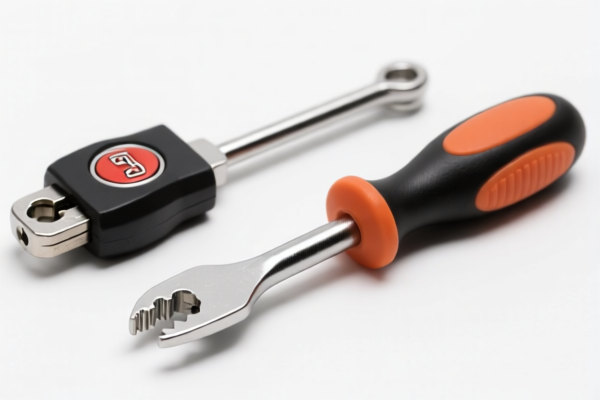
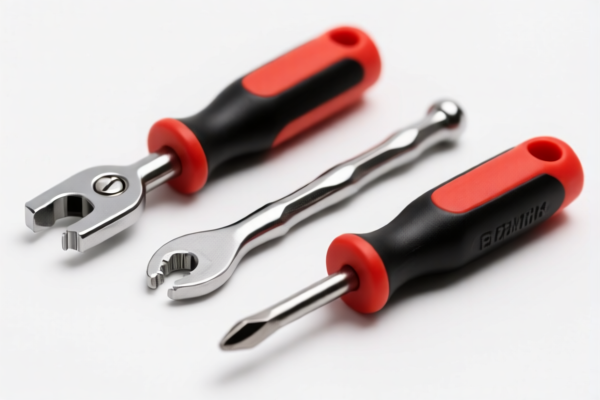
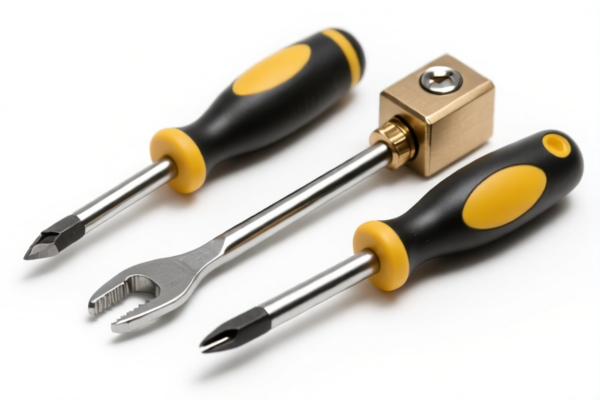
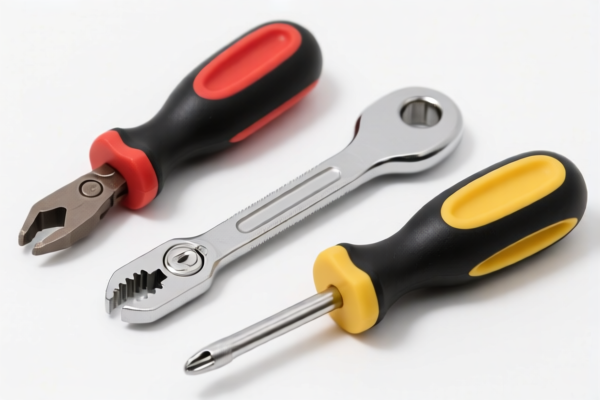
AI Analysis
🔧 Lock Ring Removal Tool (Crowbars, Track Tools & Wedges)
🌐 HS Code Reference & Customs Clearance Guide | 2026 Latest Tariff Analysis | Professional Clearance Strategy
📌 I. Product Definition & Classification: What exactly is a "Lock Ring Removal Tool"?
A Lock Ring Removal Tool is a specialized mechanical aid designed to extract, install, or adjust lock rings (also known as retaining rings or circlips) on machinery, automotive components, or plumbing fixtures. In international trade, these tools are often categorized under general Handtools or specific Iron/Steel Edged Tools, depending on their precise design and functionality.
Key Distinction:
- Crowbars/PrY Bars/Wedges: If the tool is a simple lever (iron/steel bar) used to pry apart components or remove rings through force, it falls under "Crowbars, track tools and wedges".
- Specialized Edged Tools: If the tool has a specific cutting or gripping edge designed for engagement, it may fall under "Other Edged Handtools".
⚠️ Critical Classification Point:
- If the item is a plain iron/steel bar used for prying →归入 8205.59.30.80 (Crowbars/Wedges).
- If the item is a specific gripping/cutting tool made of iron/steel →归入 8205.59.55.10 (Other Edged Handtools).
- Note: Plastic or non-metal handles do not change the material classification if the working part is metal.
📦 II. HS Code Classification Details (2026 Latest Tariff Authority Comparison)
| HS Code | Product Description | Applicable Scenario | Material/Type |
|---|---|---|---|
8205.59.30.80 |
Other handtools (including glass cutters) and parts thereof: Crowbars, track tools and wedges, and parts thereof | Simple pry bars, lever-type lock ring extractors, wedge-shaped pullers | Iron or Steel |
8205.59.55.10 |
Other handtools: Other: Of iron or steel: Other Edged handtools: Other | Specialized ring pliers with cutting/gripping edges, non-standard extractors | Iron or Steel |
🔍 Key Reminder:
-8205.59.30.80is the most common classification for crowbar-style lock ring tools. It captures "Crowbars, track tools and wedges."
-8205.59.55.10applies if the tool is considered an "Other Edged Handtool" (e.g., specialized pliers with teeth/cutting edges for rings).
- Do not classify as "Parts of Machines" unless the tool is permanently attached to a machine (which is rare for hand tools).
💰 III. 2026 Latest Tariff Rate Details (Including Additional Taxes & Policy Add-ons)
✅ Applicable Country: United States (US)
✅ Origin: China (CN)
✅ Effective Date: Current rates apply (Check for any 2026 updates, but historical 301/IEEPA rates are stable)
🎯 1. 8205.59.30.80 —— Crowbars, Track Tools & Wedges (Lock Ring Removal Tools)
| Item | Content |
|---|---|
| Base Tariff Rate | 0.0% (Ad Valorem) |
| Section 301 Additional Tariff | +25.0% |
| Total Tariff Rate | 25.0% |
| Tax Calculation | CIF Value × 25% |
| De Minimis Eligibility | ❌ No (Not eligible for Section 321/De Minimis exemption if value > $800 or if restricted) |
| Legal Basis Path | HTSUS:8205.59.30.80 → USITC:Footnote 301 |
📌 Explanation:
- "Base Tariff: 0.0%": Crowbars and similar handtools often have a low or zero base duty under HTS 8205.
- "Add-on Tariff: 25.0%": This is the Section 301 tariff applied to Chinese-origin goods. It is mandatory for imports from China.
- Total Cost Impact: For every $1,000 worth of tools, you pay $250 in additional tariffs.
- No IEEPA Surcharge: Unlike some electronics, handtools currently do not have an additional 10% IEEPA surcharge on top of the 301 rate (check latest USITC lists for changes).
🎯 2. 8205.59.55.10 —— Other Edged Handtools (Specialized Lock Ring Pliers)
| Item | Content |
|---|---|
| Base Tariff Rate | 0.0% (Ad Valorem) |
| Section 301 Additional Tariff | 0.0% |
| Total Tariff Rate | 0.0% |
| Tax Calculation | CIF Value × 0% |
| De Minimis Eligibility | ✅ Yes (Standard rules apply; low risk of audit if correctly declared) |
| Legal Basis Path | HTSUS:8205.59.55.10 → Exempt from 301 List 4B (if correctly classified) |
📌 Explanation:
- "Base Tariff: 0.0%": No base duty.
- "Add-on Tariff: 0.0%": Some "Other Edged Handtools" are exempt from Section 301 tariffs (List 4B exclusions).
- ⚠️ Risk: If the CBP (Customs and Border Protection) determines the tool is actually a "Crowbar/Wedge," they will reclassify it to8205.59.30.80and assess 25% duty + penalties.
- Strategic Advantage: If your tool can be legally described as an "Edged Handtool" (e.g., specialized pliers), you may save 25%. However, this requires robust product documentation.
🛠️ IV. Customs Clearance Practical Advice (Real-World Pitfall Guide)
✅ 1. Documentation Checklist (Essential)
| Document | Required | Description |
|---|---|---|
| ✅ Product Photos | ✔️ | Clear images of the tool, showing its shape (bar vs. pliers) and material. |
| ✅ Detailed Description | ✔️ | "Metal Lock Ring Removal Tool, Iron/Steel, Lever Type" or "Specialized Pliers with Gripping Edges." |
| ✅ Material Composition | ✔️ | Confirm it is Iron or Steel. If it has plastic handles, state "Iron/Steel working parts." |
| ✅ Function Statement | ✔️ | "Used for prying apart lock rings" (Supports 8205.59.30.80) or "Used for gripping/extracting via edges" (Supports 8205.59.55.10). |
| ✅ Commercial Invoice | ✔️ | Must match the HS Code description. Do not write "Generic Tool." |
✅ 2. Classification Strategy (Key Mnemonic)
🔥 "Lever = Crowbar (25%), Pliers = Edged (0% Risk)"
| Scenario | Correct HS Code | Tariff Risk |
|---|---|---|
| Simple Bar/Pry Tool | 8205.59.30.80 |
High (25%). Mandatory 301 tax. |
| Specialized Pliers with Teeth | 8205.59.55.10 |
Low (0%). If CBP agrees it's an "Edged Handtool." |
| Plastic-Handled Iron Bar | 8205.59.30.80 |
High (25%). Metal working part determines classification. |
| Non-Metal Tool (e.g., Plastic) | ❌ Not in DATA | May be classified elsewhere (e.g., Chapter 39 or 73), check with CBP. |
✅ 3. Special Handling Cases
| Situation | Advice |
|---|---|
| OEM Custom Tools | Provide the original design drawing. If it’s a "wedge-shaped extractor," it’s likely 8205.59.30.80. |
| Set of Tools (Kit) | If the kit includes a crowbar and pliers, classify each item separately. Do not lump into one code if tax rates differ. |
| Dispute with CBP | If CBP assesses 25% on a "Pliers" tool, appeal using the definition of "Edged Handtool" in HTS Note 1 to Chapter 82. |
| De Minimis (Section 321) | For shipments <$800, if using 8205.59.55.10 (0% tax), clearance is smoother. 8205.59.30.80 (25% tax) may trigger more scrutiny even if duty is waived under de minimis (check current CBP policy). |
🌍 V. Global Market Comparison (2026)
| Country/Region | Recommended HS Code | Tariff | Notes |
|---|---|---|---|
| 🇺🇸 United States | 8205.59.30.80 |
25.0% | High risk of 301 tariff for crowbar-style tools. |
| 🇺🇸 United States | 8205.59.55.10 |
0.0% | Potential savings if tool is specialized pliers. |
| 🇨🇳 China | 8205.59.30.80 |
0% - 5% | Check local import duties. |
| 🇪🇺 EU | 8205.59.30 |
3.9% | No anti-dumping on handtools generally. |
| 🇯🇵 Japan | 8205.59.30 |
6.0% | Standard duty. |
📌 Conclusion:
- US Market: The difference between 25% and 0% is huge.
- Strategy: If your tool is a specialized plier with gripping edges, argue for8205.59.55.10. If it’s a simple bar, accept the 25% duty or optimize supply chain (e.g., ship from third-party country if legally compliant).
📌 VI. Common Errors & Pitfalls (Lessons Learned)
❌ Error 1: Calling a "Crowbar" a "Lock Ring Plier" to avoid 25% tax.
👉 Consequence: CBP inspection finds it’s a lever bar → Reclassification + 25% Duty + Penalties.
❌ Error 2: Not specifying "Iron or Steel" in the description.
👉 Consequence: CBP may assign a default higher rate or require additional verification.
❌ Error 3: Lumping all handtools into one HS Code.
👉 Consequence: Misclassification if the kit contains both wedges (25%) and other tools (0%).
✅ Correct Approach:
"Lock Ring Removal Tool, Model XYZ, Made of Iron/Steel, Lever-Type Prying Device, For Automotive Use" →
8205.59.30.80
"Lock Ring Extraction Pliers, Model ABC, with Gripping Teeth, Iron/Steel, Non-Cutting" →8205.59.55.10
🎯 VII. Conclusion: Professional Classification, Cost Optimization!
🎯 Remember:
🔹 "Bar = Crowbar = 25% Tax"
🔹 "Pliers = Edged Tool = 0% Tax (If Argued Successfully)"
🔹 "Document Everything: Photos + Descriptions = Smooth Clearance"
📌 Pro Tip:
If your product is a hybrid (e.g., a handle with a wedge tip), consult a customs broker before shipping. Request a Binding Ruling from CBP if the value is high. This prevents surprise bills at the port of entry.
📣 Action Required:
📞 Contact a Customs Broker: Provide photos and function details.
📄 Prepare Precise Descriptions: Avoid vague terms like "Hand Tool." Use "Crowbar" or "Edged Plier."
🚀 Optimize Your HS Code: Save up to 25% by correctly classifying specialized tools as "Edged Handtools."
✨ Professional Clearance Starts with Accurate Classification!
💼 Your Bottom Line Depends on the First 8 Digits of the HS Code!
Customer Reviews
About HS Code Classification
The Harmonized System (HS) is an internationally standardized nomenclature developed by the World Customs Organization (WCO) to classify traded products. Over 200 countries use the HS system as the basis for customs tariffs, trade statistics, and import/export regulations.
Each HS code follows a hierarchical structure:
- Chapter (2 digits) — Broad category of goods (e.g., Chapter 84: Machinery and Mechanical Appliances)
- Heading (4 digits) — More specific grouping within the chapter
- Subheading (6 digits) — Internationally standardized breakdown, used by all WCO member countries
- National subdivisions (8-10 digits) — Country-specific extensions for further classification, such as US HTSUS 10-digit codes
Correct HS code classification is essential for smooth customs clearance, accurate duty payment, and compliance with trade regulations. Misclassification can lead to customs delays, overpayment of duties, or penalties.
When importing from CN to US, the applicable tariff rates may include:
- Most-Favored-Nation (MFN) rate — The standard duty rate applied to WTO members
- General rate — Applied to countries without trade agreements
- Trade remedy duties — Additional tariffs such as Section 301 (anti-dumping), Section 232 (national security), or countervailing duties
The information provided on this page is for reference purposes only. For official classification, please consult with your local customs authority or a licensed customs broker.