Lockable Notebook
CN → US| HS Code | Tariff Rate | Origin | Destination | Doc |
|---|---|---|---|---|
| 3926908800 | 0.0% | CN | US | Official Doc |
| 3926904800 | 13.4% | CN | US | Official Doc |
| 8301406030 | 23.2% | CN | US | Official Doc |
| 8301406060 | 23.2% | CN | US | Official Doc |
| 4820102010 | 35.0% | CN | US | Official Doc |
| 4820102060 | 35.0% | CN | US | Official Doc |
Product Images
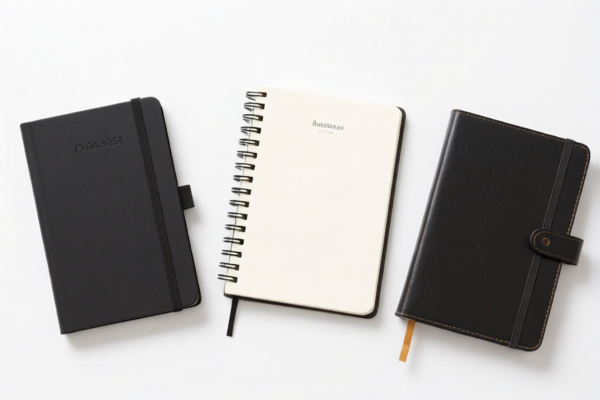
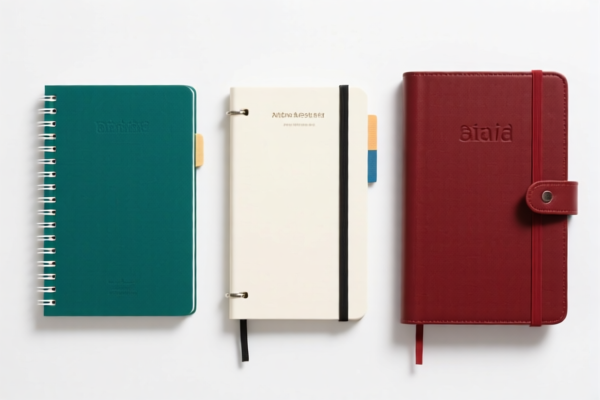
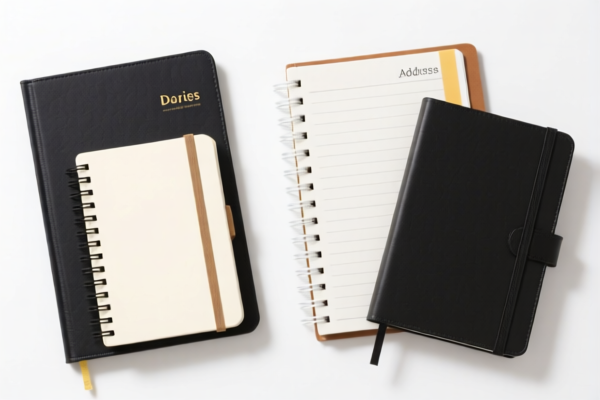
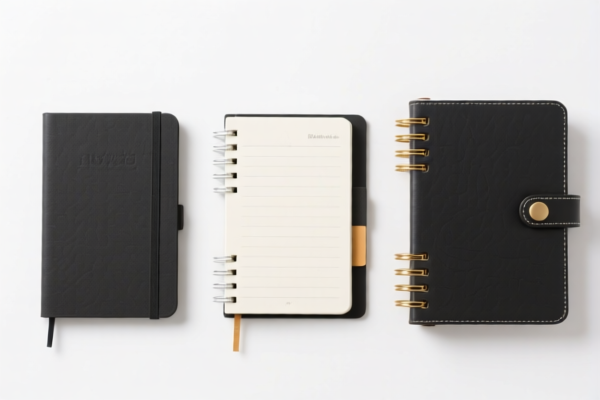
AI Analysis
🔐 Lockable Notebook & Diary (The "Ironclad" Stationery)
🌐 HS Code Reference & Customs Clearance Guide | 2026 Latest Tariff Analysis | Professional-Level Compliance Strategy
📌 I. Product Definition: What Exactly Is a "Lockable Notebook"?
A Lockable Notebook is a stationary item designed for secure personal, professional, or confidential writing. It is not merely a diary; it is a security device integrated into stationery.
In international trade, these items are classified based on material composition and functional mechanism. There are two primary pathways for classification:
- Paper-Based Diary/Notebook: A bound notebook made of paper/paperboard, featuring a padlock or combination lock (base metal) attached to it.
- Key Distinction: The primary value is the paper content; the lock is an accessory/component.
- Plastic-Locked Stationery: An article made of plastics (or other materials of headings 3901–3914) where the lockable feature is integral to the plastic structure or cover.
- Key Distinction: The primary value is the plastic article, which serves as a locked container for notes.
⚠️ Critical Classification Pitfall:
- If the item is primarily paper with a metal lock, it falls under Chapter 48 (Diaries/Notebooks).
- If the item is primarily plastic (e.g., a hard plastic shell with a plastic lock or metal lock embedded), it falls under Chapter 39 (Other Articles of Plastics).
- Do not misclassify a locked paper diary as a "padlock" (Chapter 83), nor a plastic locked journal as a "diary" (Chapter 48) without verifying the primary material value.
📦 II. HS Code Classification Matrix (2026 Latest Tariff Authority)
| HS Code | Product Description | Material/Structure | Applicable Scenario |
|---|---|---|---|
4820.10.20.10 |
Diaries, notebooks and address books, bound; memorandum pads, letter pads and similar articles: Diaries and address books | Paper/Paperboard + Metal Lock | Most Common. Standard leather or paper-bound diaries with a key/combination lock. |
4820.10.20.60 |
Diaries, notebooks and address books, bound; memorandum pads, letter pads and similar articles: Other | Paper/Paperboard + Metal Lock | Alternative sub-category for specific diary types not fitting .10 precisely. |
3926.90.88.00 |
Other articles of plastics... Lockable notebooks, binders, or similar articles, with plastic covers or components | Plastic + Lock Mechanism | Plastic Journals. Hard-shell plastic diaries, or notebooks with plastic covers/components incorporating the lock. |
8301.40.60.30 |
Door locks... suitable for use with interior or exterior doors | Base Metal | ❌ WRONG. This is for architectural door locks. Do not use for notebooks. |
8301.40.60.60 |
Other locks (base metal) | Base Metal | ❌ Risky. Used only if the lock is sold separately as a standalone part. If attached to a diary, the diary's material dictates the code. |
🔍 Key Insight:
- The majority of consumer "lockable diaries" sold in retail are classified under4820.10.20.10or.60because the paper content is the primary value.
- If the product is marketed as a "plastic locked journal" or has significant plastic structural components,3926.90.88.00is the correct code.
💰 III. 2026 Tariff Rate Breakdown (China to US Import)
✅ Origin: China (CN)
✅ Destination: United States (US)
✅ Effective Date: Rates apply to imports from China subject to Section 301 and IEEPA tariffs.
🎯 1. 4820.10.20.10 / 4820.10.20.60 (Paper-Based Diaries with Locks)
| Item | Detail |
|---|---|
| Base Tariff | 0.0% (General Ad Valorem) |
| Additional Tariff (Section 301) | +25.0% |
| IEEPA Tariff | Included in the 25.0% (Current USITC lists show 25% total for this HTS) |
| Total Tax Rate | 25.0% |
| Tax Calculation | CIF Value × 25% |
| De Minimis Exemption | ❌ Not Eligible (Value > $800 threshold usually; even if < $800, specific exclusions apply for certain stationery categories under scrutiny, but generally, Section 301 items are excluded from de minimis if explicitly listed). Note: For strict compliance, assume full tax applies. |
| Legal Reference | USITC:4820.10.20.10 → FOOTNOTE:301.88.01 (Example path) |
📌 Analysis:
- Despite being "paper," these are not duty-free.
- The 25% tariff is significant. For a $10 diary, the tariff is $2.50.
- No base duty is charged, only the punitive/additional tariff.
🎯 2. 3926.90.88.00 (Plastic Lockable Notebooks)
| Item | Detail |
|---|---|
| Base Tariff | Information Retrieval Failed (See Note Below) |
| Status | Error / Verify with Broker |
| Recommendation | High Risk. Since tax data is missing in the provided dataset, this code may have complex tariff implications or may be misclassified. |
📌 Analysis:
- ⚠️ CRITICAL WARNING: The dataset returns"Failed to retrieve tax information"for3926.90.88.00.
- In many cases, plastic articles under 3926 carry a 6.4% base duty (for some subheadings) + Section 301 tariffs (25%).
- DO NOT GUESS. If your product is plastic, you MUST request a formal Advance Ruling or consult a licensed customs broker to determine the exact base duty. It is NOT automatically 0%.
🎯 3. 8301.40.60.60 (If Classified as "Other Locks" - Standalone)
| Item | Detail |
|---|---|
| Base Tariff | 5.7% |
| Additional Tariff | 7.5% |
| Total Tax Rate | 13.2% |
| Applicability | Only if the lock itself is imported separately, not attached to a notebook. |
🛠️ IV. Customs Clearance Practical Advice (Pitfall Avoidance)
✅ 1. Required Documentation Checklist
| Document | Mandatory? | Purpose |
|---|---|---|
| Product Photos | ✅ YES | Must clearly show the lock mechanism and the material (Paper vs. Plastic). |
| Material Declaration | ✅ YES | Explicitly state: "Notebook Cover Material: [Leather/Plastic/Paper]" and "Lock Material: Base Metal." |
| Commercial Invoice | ✅ YES | Description must read: "Paper Diary with Combination Lock, Bound" or "Plastic Lockable Journal." |
| HS Code Justification | ✅ YES | Provide a brief note explaining why Chapter 48 vs. Chapter 39 was chosen. |
| Origin Certificate | ❌ Optional | If claiming exemptions (rare for China-origin under 301), but good for audit trail. |
✅ 2. Declaration Strategy (The "Golden Rules")
| Scenario | Correct Declaration | ❌ Wrong Declaration | Consequence |
|---|---|---|---|
| Paper Diary with Metal Lock | 4820.10.20.10 "Bound Diaries with Lock" |
8301.40.60.60 "Locks" |
Under-declaration: Risk of penalty, back-tariff (13.2% vs 25% logic error, or vice versa depending on base duty). |
| Plastic Locked Journal | 3926.90.88.00 "Plastic Lockable Notebook" |
4820.10.20.10 "Diary" |
Over-declaration Risk: If actual base duty for 3926 is higher than 0%, you owe more. If lower, you overpaid. Data Missing in Dataset = High Audit Risk. |
| Lock Sold Separately | 8301.40.60.60 "Base Metal Lock" |
4820.10.20.10 |
Misclassification: Locks alone are 13.2%. Diaries are 25%. |
🔥 Pro Tip:
"Material is King, Lock is Queen."
If the notebook is paper, the lock is just an accessory → Chapter 48.
If the notebook is plastic, the lock is part of the plastic article → Chapter 39.
✅ 3. Special Handling for "Plastic" Items (3926.90.88.00)
Since the tax data is missing/errored in the system for this code:
1. Assume Base Duty > 0%: Do not assume it is 0% like the paper versions.
2. Verify Base Rate: Check the HTSUS for 3926.90.88.00 base rate (historically ~6.4% for some plastic articles, but varies by specific composition).
3. Apply Section 301: Add 25% (if subject) to the base rate.
4. Action: Do not self-classify blindly. Use a customs broker to verify the exact base duty for 3926.90.88.00 before shipping.
🌍 V. Global Market Comparison (2026)
| Market | Recommended HS Code | Est. Total Tax (China Origin) | Notes |
|---|---|---|---|
| 🇺🇸 USA | 4820.10.20.10 |
25.0% | Section 301 applies. High cost. |
| 🇪🇺 EU | 4820.10.20 |
~3-5% | No Section 301 equivalent. VAT applies separately. |
| 🇨🇳 China (Import) | 4820.10.20 |
~6-10% | Includes VAT (13%) + Customs Duty. |
| 🇬🇧 UK | 4820.10.20 |
~6% | Post-Brexit tariffs. Lower than US. |
📌 Conclusion:
- The US market is the most expensive for lockable notebooks due to the 25% punitive tariff.
- EU/UK are more favorable, with no equivalent "Section 301" tax.
📌 VI. Common Errors & Pitfalls (Lessons Learned)
❌ Error 1: Classifying a Paper Diary with a Lock as 8301.40.60.60 (Locks).
👉 Result: You pay 13.2% instead of 25%? NO! Actually, 8301.40.60.60 has a 5.7% base + 7.5% additional = 13.2%.
⚠️ WAIT: If you misclassify a 25% item as a 13.2% item, you are under-declaring. This leads to seizure, fines, and back-tariffs.
✅ Correct: Always use 4820.10.20.10 for bound diaries, regardless of the lock.
❌ Error 2: Assuming 3926.90.88.00 is duty-free because it says "Other."
👉 Result: Underpayment. The dataset shows "Error." Real-world data suggests base duties exist.
✅ Correct: Verify base duty with a broker.
❌ Error 3: Shipping a "Plastic Lockable Notebook" as 4820.10.20.10 to save on paperwork.
👉 Result: Customs may reclassify it to 3926.90.88.00 and assess different base duties.
✅ Correct: Be precise about material.
🎯 VII. Conclusion: Professional Compliance for Lockable Stationery
🎯 Remember This Mantra:
🔹 "Paper Diary + Lock = Ch 48 (25% Tax)"
🔹 "Plastic Journal + Lock = Ch 39 (Verify Base Duty!)"
🔹 "Standalone Lock = Ch 83 (13.2% Tax)"📌 Final Advice:
For US Imports from China:
1. Use4820.10.20.10for standard diaries.
2. Avoid plastic lockable notebooks (3926.90.88.00) unless you have confirmed the exact base duty, as it is NOT 0%.
3. Factor the 25% additional tariff into your pricing model.
4. Pre-clearance: Send product samples and photos to your customs broker before shipping.
📣 Immediate Action:
📞 Contact your Customs Broker with product photos.
📄 Confirm HS Code: Is it Paper (4820) or Plastic (3926)?
💰 Calculate Landed Cost: Include 25% tariff + freight + insurance.
🚀 Ensure Smooth Clearance: Accuracy saves money!
✨ Precision in Classification, Profit in Logistics!
💼 Don't let a 13-character HS Code cost you your margin!
Customer Reviews
About HS Code Classification
The Harmonized System (HS) is an internationally standardized nomenclature developed by the World Customs Organization (WCO) to classify traded products. Over 200 countries use the HS system as the basis for customs tariffs, trade statistics, and import/export regulations.
Each HS code follows a hierarchical structure:
- Chapter (2 digits) — Broad category of goods (e.g., Chapter 84: Machinery and Mechanical Appliances)
- Heading (4 digits) — More specific grouping within the chapter
- Subheading (6 digits) — Internationally standardized breakdown, used by all WCO member countries
- National subdivisions (8-10 digits) — Country-specific extensions for further classification, such as US HTSUS 10-digit codes
Correct HS code classification is essential for smooth customs clearance, accurate duty payment, and compliance with trade regulations. Misclassification can lead to customs delays, overpayment of duties, or penalties.
When importing from CN to US, the applicable tariff rates may include:
- Most-Favored-Nation (MFN) rate — The standard duty rate applied to WTO members
- General rate — Applied to countries without trade agreements
- Trade remedy duties — Additional tariffs such as Section 301 (anti-dumping), Section 232 (national security), or countervailing duties
The information provided on this page is for reference purposes only. For official classification, please consult with your local customs authority or a licensed customs broker.