Long Handle Storage Basket (White/Black)
CN → US| HS Code | Tariff Rate | Origin | Destination | Doc |
|---|---|---|---|---|
| 3924905650 | 20.9% | CN | US | Official Doc |
| 4602191700 | 35.0% | CN | US | Official Doc |
| 3924104000 | 13.4% | CN | US | Official Doc |
Product Images
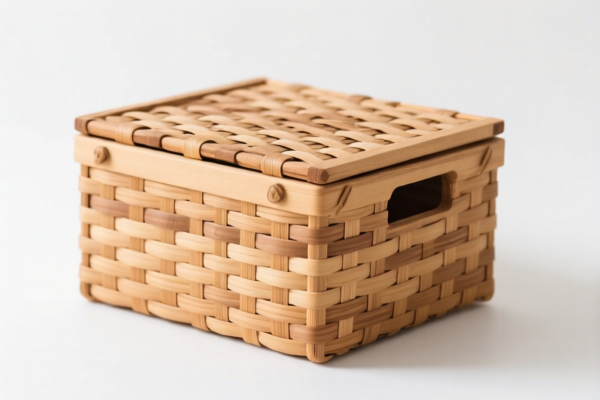
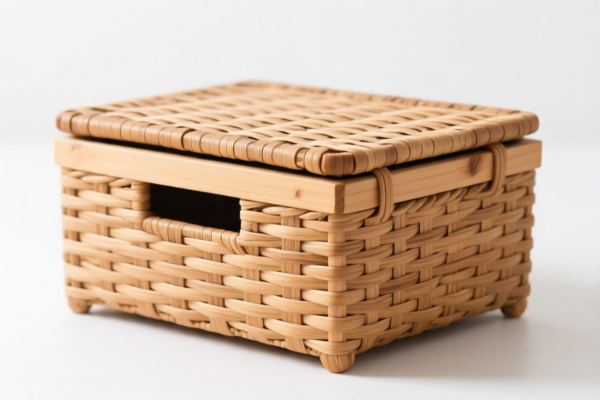
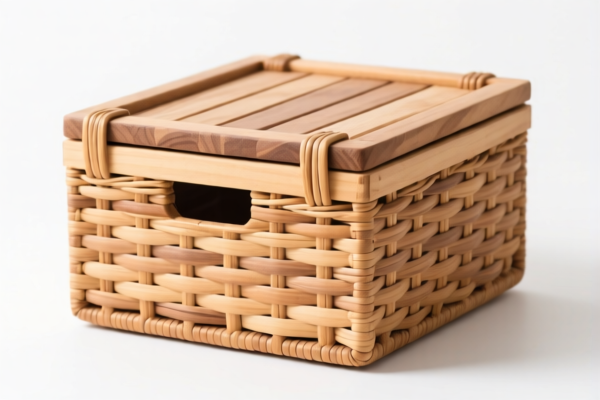
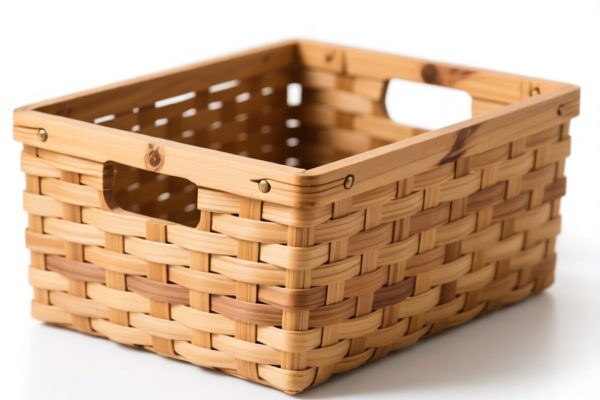
AI Analysis
🧺 Long Handle Storage Basket (White/Black)
🌐 HS Code Reference & Customs Clearance Guide | 2026 Latest Tariff Analysis | Professional Logistics Strategy
📌 I. Product Definition & Classification: What Exactly is a "Long Handle Storage Basket"?
The Long Handle Storage Basket is a versatile household organizational tool, typically used for laundry, toys, blankets, or general storage. In international trade, its classification depends heavily on the material composition and manufacturing method.
According to the provided data, these products generally fall under two main categories: 1. Bamboo/Wicker Work (Heading 4602): If the basket is woven directly from vegetable materials (like bamboo, rattan, or wicker) into its final shape. 2. Plastics or Steel Articles: If the "basket" is actually a molded plastic container or a metal wire frame with plastic coating.
⚠️ Key Distinction Point:
- If it is a woven bamboo/wicker basket → HS Code 4602
- If it is a molded plastic container with a handle → HS Code 3924
- If it is a metal frame (iron/steel) → HS Code 7323
📦 II. HS Code Classification Details (2026 Latest Tariff Authority对照)
Based on the provided data, here are the specific HS Codes and their corresponding tax structures for "Long Handle Storage Baskets" depending on the material:
| HS Code | Product Description | Material | Key Feature | Applicable Scenario |
|---|---|---|---|---|
4602.11.07.00 |
Other baskets and bags, whether or not lined: Wickerwork | Vegetable Materials (Bamboo) | Made directly to shape from plaiting materials | Woven bamboo baskets with handles |
4602.19.17.00 |
Other baskets and bags, whether or not lined: Other: Wickerwork | Vegetable Materials (Other) | Other vegetable materials (e.g., rattan, reed) | Woven baskets not made of bamboo |
3924.10.40.00 |
Tableware, kitchenware, other household articles... of plastics: Tableware and kitchenware | Plastics | Molded plastic household article | Hard plastic storage bins with handles |
3924.90.56.50 |
Tableware, kitchenware, other household articles... of plastics: Other | Plastics | Other plastic household articles | Plastic baskets not classified as tableware/kitchenware |
7323.99.90.40 |
Table, kitchen or other household articles... of iron or steel: Other | Iron/Steel | Metal wire frame, possibly coated | Metal wire baskets with handles |
🔍 Critical Reminder:
- Woven baskets (bamboo, rattan) must be declared under 4602. Do not classify them as "plastic" if they have a plastic lining unless the lining is the primary structural component (which is rare for wicker).
- Plastic baskets should be distinguished between "Tableware/Kitchenware" (e.g., dish racks) and "Other Household Articles" (e.g., toy bins).
- Metal baskets are often subject to higher additional tariffs due to trade restrictions on steel/aluminum/copper products.
💰 III. 2026 Latest Tariff Rate Breakdown (Including Surtaxes & Policy Add-ons)
✅ Applicable Country: United States (US)
✅ Origin: China (CN)
✅ Effective Date: Current as of 2026 tariff schedule
🎯 1. 4602.11.07.00 & 4602.19.17.00 —— Bamboo/Wicker Baskets
| Item | Detail |
|---|---|
| Base Tariff | 0.0% |
| Additional Surtax | +25.0% (Section 301 Retaliatory Tariff) |
| Total Tax Rate | 25.0% |
| Tax Calculation | CIF Value × 25% |
| De Minimis Exemption | ❌ Not Applicable (Section 301 tariffs apply even to low-value shipments if not excluded) |
| Legal Basis | USITC:4602.11.07.00 / USITC:4602.19.17.00 → FOOTNOTE:301 |
📌 Explanation:
- While the base duty for bamboo wickerwork is often 0%, the 25% additional tariff imposed on Chinese goods under Section 301 applies.
- Total Cost Impact: You pay 25% of the declared value in duties alone.
- Note: Ensure the product is genuinely "made of vegetable materials" (bamboo/rattan). If it’s plastic-coated fiber, customs may reclassify it, leading to penalties.
🎯 2. 3924.10.40.00 —— Plastic Household Articles (Tableware/Kitchenware)
| Item | Detail |
|---|---|
| Base Tariff | 3.4% |
| Additional Surtax | 0.0% |
| Total Tax Rate | 3.4% |
| Tax Calculation | CIF Value × 3.4% |
| De Minimis Exemption | ✅ Possible (If value < $800, but verify Section 301 applicability) |
| Legal Basis | USITC:3924.10.40.00 |
📌 Explanation:
- This is a low-tax category for plastic household items classified as "tableware/kitchenware."
- Strategy: If your plastic basket can be argued as a "dish rack" or "kitchen organizer," it may qualify for this lower rate.
- Risk: If deemed a "storage bin" and reclassified to3924.90, the rate increases (see below).
🎯 3. 3924.90.56.50 —— Other Plastic Household Articles
| Item | Detail |
|---|---|
| Base Tariff | 3.4% |
| Additional Surtax | +7.5% |
| Total Tax Rate | 10.9% |
| Tax Calculation | CIF Value × 10.9% |
| De Minimis Exemption | ❌ Likely Not Applicable for Section 301 goods |
| Legal Basis | USITC:3924.90.56.50 → FOOTNOTE:301 |
📌 Explanation:
- This code captures plastic baskets that are not tableware/kitchenware (e.g., toy bins, laundry hampers).
- The 7.5% additional tax significantly increases the cost compared to kitchenware classifications.
🎯 4. 7323.99.90.40 —— Iron/Steel Household Articles
| Item | Detail |
|---|---|
| Base Tariff | 3.4% |
| Additional Surtax | +25.0% (Section 301) +50% (Steel/Aluminum/Copper Surtax) |
| Total Tax Rate | 78.4% |
| Tax Calculation | CIF Value × 78.4% |
| De Minimis Exemption | ❌ Strictly Prohibited |
| Legal Basis | USITC:7323.99.90.40 → FOOTNOTE:301 + Steel/Aluminum/Copper Surtax |
⚠️ Critical Warning:
- This is the highest tariff rate in the dataset.
- If your "basket" has a metal wire frame (even if lined with fabric or plastic), it may fall under this code.
- Cost Impact: For every $100 of goods, you pay $78.40 in duties. This is often prohibitive for low-margin goods.
- Strategy: Avoid metal-frame baskets if possible, or ensure the primary character is plastic or wicker.
🛠️ IV. Customs Clearance Practical Advice (Pitfall Avoidance Guide)
✅ 1. Document Preparation Checklist (Essential)
| Document | Required? | Notes |
|---|---|---|
| ✅ Product Photos | ✔️ | Show the entire basket, handle, material texture, and any labels. |
| ✅ Material Declaration | ✔️ | Explicitly state: "100% Bamboo Woven" or "PP Plastic" or "Steel Wire Frame." |
| ✅ Bill of Lading | ✔️ | Ensure HS Code matches the material. |
| ✅ Commercial Invoice | ✔️ | Describe as "Bamboo Storage Basket" or "Plastic Laundry Basket," not generic "Container." |
| ✅ Manufacturing Process | ✔️ | For wicker: "Woven directly to shape." For plastic: "Injection Molding." |
✅ 2. Classification Strategy (Key Tips)
| Scenario | Recommended HS Code | Tax Rate | Why? |
|---|---|---|---|
| Woven Bamboo Basket | 4602.11.07.00 |
25% | Correct for vegetable wickerwork. Lower base tax. |
| Plastic Toy Bin | 3924.90.56.50 |
10.9% | "Other" plastic household article. |
| Plastic Dish Rack | 3924.10.40.00 |
3.4% | "Tableware/Kitchenware" gets lower rate. Try to argue this if applicable. |
| Metal Wire Basket | 7323.99.90.40 |
78.4% | Avoid! High tariff due to steel surtax. |
🔥 Golden Rule:
"Material Defines Code, Code Defines Cost!"
- Misclassifying a metal basket as plastic (3924) can lead to back taxes + penalties.
- Misclassifying plastic as wicker (4602) may result in rejection if material tests prove otherwise.
✅ 3. Special Considerations for 2026
| Issue | Recommendation |
|---|---|
| Section 301 Tariffs | All Chinese-origin goods above are subject to additional surtaxes. Factor this into your pricing. |
| De Minimis ($800) | Check if your product qualifies. For HS 7323 and 3924.90, surtaxes often negate de minimis benefits. |
| Labeling | Ensure "Made in China" is clearly marked on the product and packaging. |
| Packaging | If shipped disassembled (e.g., flat-pack bamboo), still declare as finished article if designed to be assembled into the basket. |
🌍 V. Global Market Comparison (2026 Overview)
| Market | Recommended HS Code | Est. Total Duty (China Origin) | Notes |
|---|---|---|---|
| 🇺🇸 USA | 4602.11.07.00 / 3924.90.56.50 |
25% / 10.9% | High additional tariffs apply. |
| 🇪🇺 EU | 4602 / 3924 | 0-6% | No Section 301 surtaxes. Lower overall cost. |
| 🇨🇦 Canada | 4602 / 3924 | 0-5% | FTA benefits may apply if sourced from eligible countries. |
| 🇯🇵 Japan | 4602 / 3924 | 5-10% | Generally lower duties, no major surtaxes. |
📌 Conclusion:
- The USA market is the most expensive due to Section 301 and steel surtaxes.
- EU and Japan offer more favorable duty rates for similar products.
- Consider supply chain diversification (e.g., sourcing from Vietnam or Mexico) to mitigate US tariffs.
📌 VI. Common Mistakes & Pitfalls (Lessons Learned)
❌ Mistake 1: Classifying a plastic-lined bamboo basket as "Plastic" (3924)
👉 Consequence: Customs may reclassify to 4602 (25%) or deny entry if documentation is inconsistent.
✅ Fix: Declare based on primary material and characterizing function. Bamboo wickerwork is typically classified under 4602 even with linings.
❌ Mistake 2: Under-declaring metal content
👉 Consequence: If a "plastic basket" has a steel handle or frame, it may be reclassified to 7323 (78.4%).
✅ Fix: Disclose all materials. If <5% metal is present and not structural, it may still be plastic. But be honest.
❌ Mistake 3: Using generic terms like "Storage Bin"
👉 Consequence: Customs lacks clarity, leading to delays, examinations, and potential misclassification.
✅ Fix: Use precise descriptions: "Woven Bamboo Storage Basket with Handle" or "Injection Molded PP Plastic Laundry Basket."
🎯 VII. Conclusion: Precision in Classification Saves Money!
🎯 Remember:
🔹 "Wicker = 4602 (25%), Plastic = 3924 (3.4%-10.9%), Steel = 7323 (78.4%)"
🔹 "One wrong digit costs hundreds of dollars!"
🔹 "Material declaration is your best friend."
📌 Pro Tip:
If you are importing bamboo baskets, consider applying for an HS Code Advance Ruling from US CBP to confirm the classification before shipment. This reduces the risk of sudden audits or reclassifications.
📣 Immediate Action:
📞 Consult a Customs Broker + Provide Material Samples + Verify HS Code Accuracy
🚀 Optimize Your Supply Chain to avoid the 78.4% steel tariff trap!
✨ Professional Clearance Starts with Accurate Classification!
💼 Your Profit Margin Depends on Your HS Code!
Customer Reviews
About HS Code Classification
The Harmonized System (HS) is an internationally standardized nomenclature developed by the World Customs Organization (WCO) to classify traded products. Over 200 countries use the HS system as the basis for customs tariffs, trade statistics, and import/export regulations.
Each HS code follows a hierarchical structure:
- Chapter (2 digits) — Broad category of goods (e.g., Chapter 84: Machinery and Mechanical Appliances)
- Heading (4 digits) — More specific grouping within the chapter
- Subheading (6 digits) — Internationally standardized breakdown, used by all WCO member countries
- National subdivisions (8-10 digits) — Country-specific extensions for further classification, such as US HTSUS 10-digit codes
Correct HS code classification is essential for smooth customs clearance, accurate duty payment, and compliance with trade regulations. Misclassification can lead to customs delays, overpayment of duties, or penalties.
When importing from CN to US, the applicable tariff rates may include:
- Most-Favored-Nation (MFN) rate — The standard duty rate applied to WTO members
- General rate — Applied to countries without trade agreements
- Trade remedy duties — Additional tariffs such as Section 301 (anti-dumping), Section 232 (national security), or countervailing duties
The information provided on this page is for reference purposes only. For official classification, please consult with your local customs authority or a licensed customs broker.