Long Lock with Key
CN → US| HS Code | Tariff Rate | Origin | Destination | Doc |
|---|---|---|---|---|
| 8301108000 | 22.3% | CN | US | Official Doc |
| 8301109000 | 14.2% | CN | US | Official Doc |
Product Images
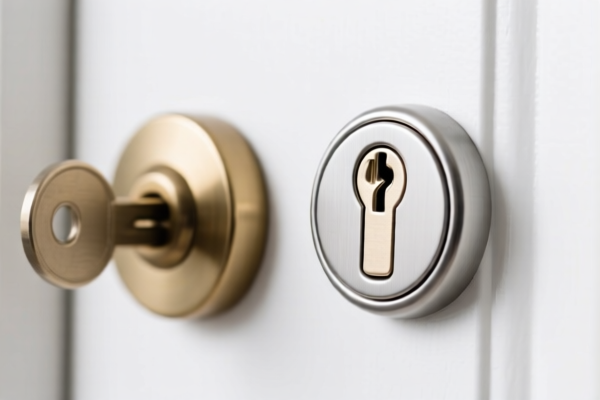


AI Analysis
🔒 Long Lock with Key (Base Metal Padlocks)
🌐 HS Code Reference & Customs Clearance Guide | 2026 Latest Tariff Analysis | Professional Clearance Strategy
📌 I. Product Definition and Classification: What Exactly is a "Long Lock"?
"Long Lock with Key" in international trade typically refers to Padlocks of base metal that use a key for operation. In customs classification, the critical factor distinguishing the tariff rate is not just the shape, but the width of the padlock body and the type of locking mechanism (specifically cylinder or pin tumbler construction).
These locks fall under Chapter 83: Miscellaneous manufactured articles of base metal.
⚠️ Key Distinction Point:
- If the width is Over 3.8 cm but not over 6.4 cm → It is considered a standard/large padlock → HS 8301.10.80.00
- If the width is Over 6.4 cm → It is considered an extra-large/long padlock → HS 8301.10.90.00
- Note: Both categories must be of "cylinder or pin tumbler construction" and made of "base metal."
📦 II. HS Code Classification Details (2026 Latest Tariff Authority Comparison)
| HS Code | Product Description | Width Specification | Construction Type |
|---|---|---|---|
8301.10.80.00 |
Padlocks: Of cylinder or pin tumbler construction: Over 3.8 cm but not over 6.4 cm in width | 3.8 cm < Width ≤ 6.4 cm | Cylinder or Pin Tumbler |
8301.10.90.00 |
Padlocks: Of cylinder or pin tumbler construction: Over 6.4 cm in width | Width > 6.4 cm | Cylinder or Pin Tumbler |
🔍 Critical Reminder:
- The term "Long Lock" is not a standard customs description. You must measure the maximum width of the shackle/body.
- If the lock is electrically operated or a combination lock, these HS codes DO NOT apply. They fall under other subheadings (e.g., 8301.20, 8301.30).
- Both codes above assume the lock is key-operated.
💰 III. 2026 Latest Tariff Rate Details (Detailed Breakdown)
✅ Applicable Country: United States (US)
✅ Origin: China (CN) (Assuming origin based on the tax detail provided in DATA)
✅ Effective Date: Current 2026 Tariff Schedule
🎯 1. 8301.10.80.00 —— Standard Large Padlocks (3.8–6.4 cm)
| Item | Detail |
|---|---|
| Base Tariff Rate | 4.8% (Ad Valorem) |
| Additional Tariff (Section 301) | +7.5% |
| Total Tax Rate | 12.3% |
| Tax Calculation | CIF Value × 12.3% |
| De Minimis Exemption? | ❌ No (De Minimis does not apply to goods subject to Section 301 tariffs from China) |
| Legal Basis | HTSUS 8301.10.80.00 + USITC Footnotes for Section 301 |
📌 Explanation:
- This is the most common category for standard heavy-duty padlocks found in hardware stores.
- The 12.3% total rate includes the base MFN rate (4.8%) and the Trump/Biden-era Section 301 additional duty (7.5%).
- This is a moderate-high tariff for hardware goods.
🎯 2. 8301.10.90.00 —— Extra-Long Padlocks (>6.4 cm)
| Item | Detail |
|---|---|
| Base Tariff Rate | 0.0% |
| Additional Tariff (Section 301) | 0.0% |
| Total Tax Rate | 0.0% |
| Tax Calculation | No Tax |
| De Minimis Exemption? | ✅ Yes (If value < $800, and no other restrictions apply) |
| Legal Basis | HTSUS 8301.10.90.00 |
📌 Explanation:
- This is a strategic loophole or benefit for extra-large padlocks.
- If your "Long Lock" exceeds 6.4 cm in width, it enjoys zero duty.
- Warning: Customs may scrutinize this classification closely to ensure it’s not a misdeclared standard lock.
🛠️ IV. Customs Clearance Practical Advice (Real-World Pitfall Avoidance)
✅ 1. Preparation Checklist (Non-Negotiable)
| Document | Required? | Explanation |
|---|---|---|
| ✅ Product Photos | ✔️ | Must clearly show the scale or a ruler next to the lock to prove width >6.4 cm if claiming 0% duty. |
| ✅ Detailed Specification Sheet | ✔️ | Must specify: Material (Base Metal), Mechanism (Pin Tumbler/Cylinder), and Exact Width. |
| ✅ Keys & Samples | ✔️ | Customs may request samples to verify the locking mechanism (key-operated vs. combination). |
| ✅ Commercial Invoice | ✔️ | Must describe the item precisely. Avoid vague terms like "Lock." Use "Padlock, Pin Tumbler, Width 7cm." |
| ✅ Packing List | ✔️ | Standard requirement. |
✅ 2. Declaration Tips (Key Mantras)
🔥 “Measure Width, Check Mechanism, Declare Precisely, Save Money!”
| Scenario | Correct Declaration | Incorrect Declaration | Consequence |
|---|---|---|---|
| Lock width is 7.0 cm | 8301.10.90.00 (0% Tax) |
8301.10.80.00 |
Overpay 12.3% tax |
| Lock width is 5.0 cm | 8301.10.80.00 (12.3% Tax) |
8301.10.90.00 |
Underpayment Penalty + Back Taxes |
| Lock is Combination Type | Other HS Code (e.g., 8301.30) | 8301.10.xxxx |
Misclassification, potential seizure |
| Lock is Electric | Other HS Code (e.g., 8301.60) | 8301.10.xxxx |
Misclassification, potential seizure |
✅ 3. Special Handling Cases
| Case | Handling Advice |
|---|---|
| OEM/Custom Sizes | Provide engineering drawings showing the widest point of the padlock body. |
| "Long" vs. "Tall" | Ensure the measurement is Width (side to side when hanging), not Height. |
| Mixed Shipments | If you ship both types (≤6.4cm and >6.4cm), declare them on separate lines in the manifest with different HS Codes. |
| Origin Marking | Ensure each padlock is marked "Made in China" if applicable, to avoid Country of Origin disputes. |
🌍 V. Global Market Comparison (2026 Update)
| Country/Region | Recommended HS Code | Estimated Duty (China Origin) | Notes |
|---|---|---|---|
| 🇺🇸 USA | 8301.10.90.00 |
0.0% | Best for locks >6.4cm. Check USITC lists. |
| 🇺🇸 USA | 8301.10.80.00 |
12.3% | Standard large locks. |
| 🇪🇺 EU | 8301.10 | 0.0% - 2.7% | Varies by member state. No Section 301 equivalent. |
| 🇨🇳 China | 8301.10 | 0.0% - 6% | Import duties may be lower. |
| 🇬🇧 UK | 8301.10 | 0.0% - 4.5% | Post-Brexit rules apply. |
📌 Conclusion:
- The USA is the most critical market due to the 12.3% penalty on standard sizes vs. 0% on extra-large sizes.
- EU/UK generally have lower or zero duties for these items, making the size distinction less financially critical there.
📌 VI. Common Errors & Pitfalls (Lessons Learned)
❌ Error 1: Declaring a 7cm lock as 8301.10.80.00 out of habit.
👉 Consequence: Paying 12.3% tax unnecessarily.
👉 Fix: Measure carefully! If Width > 6.4cm, use 8301.10.90.00.
❌ Error 2: Declaring a Combination Lock as a Key Lock.
👉 Consequence: Incorrect HS Code, potential fine.
👉 Fix: Verify the mechanism. If it uses a dial, it’s likely 8301.30.
❌ Error 3: Vague Description "Metal Lock."
👉 Consequence: Customs officer guesses, likely picks the higher duty code (8301.10.80.00) by default.
👉 Fix: Be specific: "Padlock, Pin Tumbler, Key Operated, Width 8cm, Base Metal."
✅ Correct Practice:
"Padlock, Cylinder Type, Key Operated, Base Metal, Overall Width 7.5 cm, Model XYZ, Made in China"
🎯 VII. Conclusion: Precision Pays Off!
🎯 Remember the Mantra:
🔹 "Width Matters: Under 6.4cm pays 12.3%, Over 6.4cm pays 0%!"
🔹 "Pin Tumbler Only: If it's combination or electric, this guide doesn't apply!"
📌 Pro Tip:
If you have a lock that is 6.5 cm wide, you save 12.3% in duties compared to a 6.3 cm lock.
Consider design optimization to push standard locks just above the 6.4 cm threshold if legal and functional.
Always consult a licensed customs broker before finalizing your HS Code.
📣 Immediate Action:
📞 Measure your locks!
📄 Update your invoice descriptions.
🚀 Claim the 0% duty if eligible!
✨ Professional Clearance Starts with Accurate Data!
💼 Don't let a 0.1 cm difference cost you 12.3% profit!
Customer Reviews
About HS Code Classification
The Harmonized System (HS) is an internationally standardized nomenclature developed by the World Customs Organization (WCO) to classify traded products. Over 200 countries use the HS system as the basis for customs tariffs, trade statistics, and import/export regulations.
Each HS code follows a hierarchical structure:
- Chapter (2 digits) — Broad category of goods (e.g., Chapter 84: Machinery and Mechanical Appliances)
- Heading (4 digits) — More specific grouping within the chapter
- Subheading (6 digits) — Internationally standardized breakdown, used by all WCO member countries
- National subdivisions (8-10 digits) — Country-specific extensions for further classification, such as US HTSUS 10-digit codes
Correct HS code classification is essential for smooth customs clearance, accurate duty payment, and compliance with trade regulations. Misclassification can lead to customs delays, overpayment of duties, or penalties.
When importing from CN to US, the applicable tariff rates may include:
- Most-Favored-Nation (MFN) rate — The standard duty rate applied to WTO members
- General rate — Applied to countries without trade agreements
- Trade remedy duties — Additional tariffs such as Section 301 (anti-dumping), Section 232 (national security), or countervailing duties
The information provided on this page is for reference purposes only. For official classification, please consult with your local customs authority or a licensed customs broker.