Long Reach Pruning Shears
CN → US| HS Code | Tariff Rate | Origin | Destination | Doc |
|---|---|---|---|---|
| 8201500000 | 0.0% | CN | US | Official Doc |
| 8201600000 | 0.0% | CN | US | Official Doc |
Product Images
AI Analysis
🌿 Long Reach Pruning Shears (Loppers)
🌐 HS Code Reference & Customs Clearance Guide | 2026 Latest Tariff Analysis | Professional Compliance Strategy
📌 I. Product Definition & Classification: Do You Know "Long Reach Pruning Shears"?
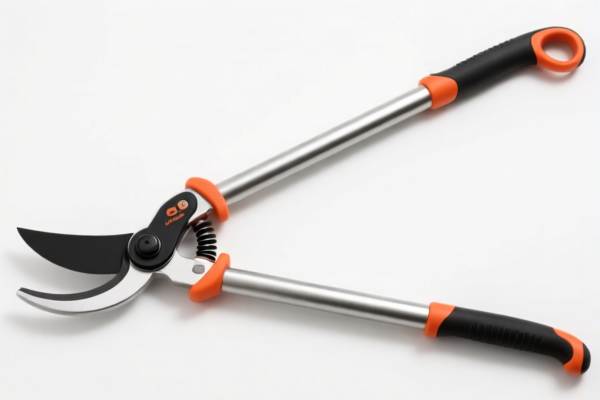
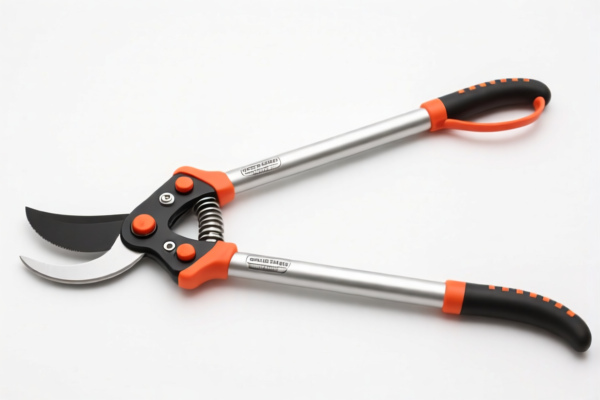
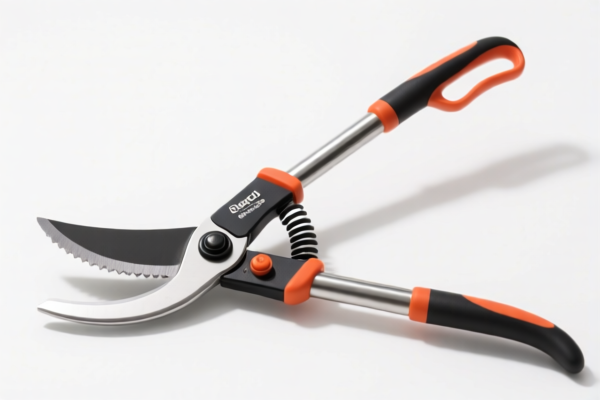
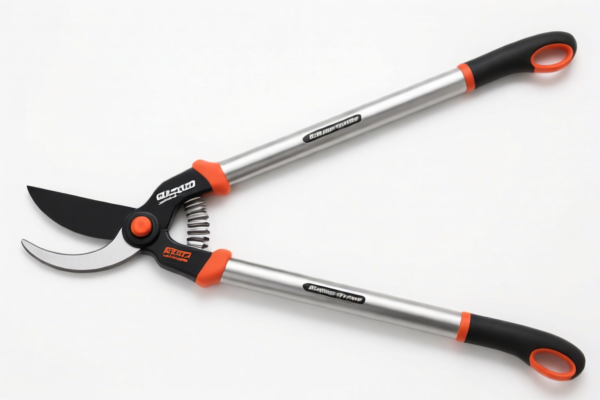
Long Reach Pruning Shears, commonly known as Loppers, are hand-operated cutting tools designed for pruning branches. They feature long handles to provide leverage, allowing users to cut thicker branches (typically 20mm to 50mm in diameter) that standard hand pruners cannot handle.
In international trade, they fall under the broader category of Handtools. The key distinction lies in their operating mechanism and handle length:
- One-Handed Pruners (Secateurs): Designed for thin branches, operated with one hand. (HS Code 8201.50)
- Two-Handed Shears (Loppers/Longs Handles): Designed for thicker branches, requiring two hands for operation. (HS Code 8201.60)
⚠️ Key Distinction Point:
- If the tool is designed to be operated with one hand (even if the handles are slightly extended, but not requiring two hands for leverage on thick branches) → It may fall under Secateurs/One-handed Pruners.
- If the tool is specifically designed as Long Reach Loppers (typically >30cm handle length, requiring two hands for cutting thick branches) → It falls under Hedge Shears/Two-handed Pruners.
- Crucial Note: In most standard customs classifications, "Long Reach Pruning Shears" (Loppers) are classified as Two-Handed Shears because their primary function requires two-handed leverage to cut through significant branch thickness.
📦 II. HS Code Classification Details (2026 Latest Tariff Authority Comparison)
Based on the provided , the relevant HS codes for Long Reach Pruning Shears are:
| HS Code | Product Description | Applicable Scenario | Operation Type |
|---|---|---|---|
8201.50.00.00 |
Secateurs and similar one-handed pruners and shears (including poultry shears), and parts thereof | Standard handheld secateurs, bypass pruners for thin branches. | ✅ One-Handed |
8201.60.00.00 |
Hedge shears, two-handed pruning shears and similar two-handed shears, and parts thereof | Long Reach Loppers, hedge shears, anvil loppers requiring two hands. | ✅ Two-Handed |
🔍 重点提醒 (Key Reminder):
- Long Reach Pruning Shears (Loppers) are typically classified under8201.60.00.00because they are "Two-handed pruning shears."
- Do not misclassify them as8201.50.00.00(One-handed secateurs) unless the specific product is explicitly designed and marketed as a one-handed tool with extended reach but still operated with one hand. Most "Long Reach" tools require two hands for safety and efficiency.
- The base metal parts of these tools are also included in these headings.
💰 III. 2026 Latest Tariff Rate Detailed Explanation (Including Surtaxes & Policy Add-ons)
✅ Applicable Country: United States (US)
✅ Origin: China (CN)
✅ Effective Date: Current (No Surtaxes Apply)
🎯 1. 8201.50.00.00 —— Secateurs and Similar One-Handed Pruners
| Item | Content |
|---|---|
| Base Tariff Rate | 0.0% (Ad Valorem) |
| Section 301 Surcharge | 0.0% |
| Total Tariff Rate | 0.0% |
| Tax Calculation | CIF Value × 0% = $0 |
| De Minimis Exemption | ✅ Yes (If value < $800, generally eligible) |
| Legal Basis | HTSUS 8201.50.00.00 |
📌 Explanation:
- These tools are considered low-risk, non-electronic, simple mechanical tools.
- No Section 301 or IEEPA surcharges apply to this category.
- This makes them highly cost-effective for export to the US.
🎯 2. 8201.60.00.00 —— Hedge Shears, Two-Handed Pruning Shears (Including Long Reach Loppers)
| Item | Content |
|---|---|
| Base Tariff Rate | 0.0% (Ad Valorem) |
| Section 301 Surcharge | 0.0% |
| Total Tariff Rate | 0.0% |
| Tax Calculation | CIF Value × 0% = $0 |
| De Minimis Exemption | ✅ Yes (If value < $800, generally eligible) |
| Legal Basis | HTSUS 8201.60.00.00 |
📌 Explanation:
- Similar to one-handed pruners, two-handed loppers and hedge shears are exempt from all additional tariffs.
- This is a significant advantage compared to electronic or steel-heavy industrial tools.
- No Surcharge: Neither USITC Footnote nor IEEPA surcharges apply.
🛠️ IV. Customs Clearance Practical Advice (Field Anti-Pitfall Guide)
✅ 1. Required Document Checklist (All Necessary)
| Document | Mandatory | Notes |
|---|---|---|
| ✅ Product Specification Sheet | ✔️ | Must specify: Handle length, cutting capacity (mm), material (e.g., High Carbon Steel, Biflex™ blades). |
| ✅ Product Photos | ✔️ | Clear images showing the two-hand operation mechanism if declaring under 8201.60. |
| ✅ Commercial Invoice | ✔️ | Must clearly state: "Long Reach Pruning Shears (Loppers)" or "Two-Handed Pruning Shears". |
| ✅ Packing List | ✔️ | Include net/gross weight. Avoid combining with unrelated items in the same box if possible. |
| ✅ Material Certificate | ✔️ | Proof of base metal composition (if requested) to confirm classification under Chapter 82. |
✅ 2. Declaration Tips (Key Mantra)
🔥 “Describe Function, Specify Hand Operation, Avoid Ambiguity!”
| Scenario | Correct Declaration | Wrong Practice |
|---|---|---|
| Long Reach Loppers (Two Hands) | 8201.60.00.00 - "Two-handed pruning shears (Loppers)" |
Calling it "Secateurs" or "Hand Pruners" → Misclassification Risk |
| Standard Hand Pruners | 8201.50.00.00 - "Secateurs (One-handed pruners)" |
Calling it "Loppers" or "Hedge Shears" → Incorrect |
| Blades Only (Parts) | Same HS Code as the tool (with "Parts thereof" note) | Declaring as "Steel Blades" under Chapter 73 → Wrong Chapter |
| Electric Pruning Shears | Not Covered Here → Likely Chapter 84 or 85 | Declaring Electric Loppers under 8201 → Severe Penalty |
✅ 3. Special Situations Handling
| Situation | Handling Advice |
|---|---|
| Electric/Powered Pruning Shears | Do NOT use 8201.50 or 8201.60. These are likely classified under Chapter 84 (Machinery) or Chapter 85 (Electrical). Check specific HTSUS for electric tools. |
| Multi-functional Tools | If the tool has a knife, saw, and pruner, declare based on the primary function. If pruning is primary, use 8201. If saw is primary, may fall under 8201.40 (Saws). |
| Gift Sets | If sold as a "Gardening Tool Set," declare the primary component or declare each item separately for accuracy. |
| OEM/White Label | Ensure the invoice reflects the actual product description, not just the brand name. |
🌍 V. Global Market Customs Comparison (2026 Latest)
| Country/Region | Recommended HS Code | Tariff Rate | Certification Requirements | Notes |
|---|---|---|---|---|
| 🇺🇸 USA | 8201.60.00.00 (Loppers) |
0% | None (Non-regulated) | Zero Tariff Advantage |
| 🇨🇳 China | 8201.60.00.00 |
5% (Import) | None | Standard tariff |
| 🇪🇺 EU | 8201.60.00 |
0% | CE (if powered), otherwise none | Zero Tariff |
| 🇬🇧 UK | 8201.60.00 |
0% | UKCA (if applicable) | Post-Brexit standard |
| 🇦🇺 Australia | 8201.60.00 |
5% | None | Standard MFN rate |
| 🇯🇵 Japan | 8201.60.00 |
0% | None | Free trade preference may apply |
📌 Conclusion:
- USA, EU, UK, and Japan offer 0% tariffs for hand pruning tools.
- No Surcharges: Unlike electronics or steel products, hand tools in this category are free from Section 301 tariffs.
- Australia and China have small tariffs (5%), but still very competitive.
📌 VI. Common Mistakes & Pitfall Guide (Blood Lessons)
❌ Mistake 1: Classifying Electric Loppers under 8201.60.00.00
👉 Consequence: Customs will reclassify under Chapter 84/85, leading to higher tariffs (e.g., 3.4% - 9.5%) and potential penalties.
👉 Solution: Identify if the tool is battery-powered. If yes, do NOT use 8201.
❌ Mistake 2: Calling "Two-Handed Loppers" "Secateurs" to confuse classifiers
👉 Consequence: While the tax rate is the same (0%), misdeclaration can lead to customs audits or rejection of entry if the physical item doesn't match the description.
👉 Solution: Use accurate terms: "Loppers," "Two-Handed Pruning Shears."
❌ Mistake 3: Ignoring "Parts" Classification
👉 Consequence: If importing replacement blades separately, they must still be declared under 8201.50/60 with "Parts thereof."
👉 Solution: Clearly state "Replacement Blades for Pruning Shears" in the description.
✅ Correct Declaration Example:
"Long Reach Pruning Shears, Two-Handed Operation, High Carbon Steel Blades, Rubber Grip Handles, Model XYZ, Net Weight 1.2kg"
🎯 VII. Conclusion: Precise Declaration for Cost Savings!
🎯 Remember the Mantra:
🔹 "Two-Handed Loppers = 8201.60, One-Handed = 8201.50. Both are 0% Tariff!"
🔹 "No Electric, No Surtax. Pure Hand Tools, Zero Tax in US/EU!"
📌 Pro Tip:
- If you are exporting Electric Pruning Shears, ensure you have the FCC/CE certification and declare under the correct Chapter 85 code.
- For Hand Tools, focus on material description (e.g., "High Carbon Steel") to ensure smooth customs inspection.
- Pre-Arrival Ruling: Not strictly necessary due to 0% tariff, but recommended if you have a complex multi-functional tool.
📣 Immediate Action:
📞 Confirm Product Type: Is it manual or electric?
📄 Prepare Invoice: Use precise descriptions ("Two-Handed Pruning Shears").
🚀 Enjoy Zero Tariffs: No surcharges, no hidden costs!
✨ Professional Customs Clearance Starts with Accurate Classification!
💼 Your Every Penny is Worth Calculating!
Customer Reviews
About HS Code Classification
The Harmonized System (HS) is an internationally standardized nomenclature developed by the World Customs Organization (WCO) to classify traded products. Over 200 countries use the HS system as the basis for customs tariffs, trade statistics, and import/export regulations.
Each HS code follows a hierarchical structure:
- Chapter (2 digits) — Broad category of goods (e.g., Chapter 84: Machinery and Mechanical Appliances)
- Heading (4 digits) — More specific grouping within the chapter
- Subheading (6 digits) — Internationally standardized breakdown, used by all WCO member countries
- National subdivisions (8-10 digits) — Country-specific extensions for further classification, such as US HTSUS 10-digit codes
Correct HS code classification is essential for smooth customs clearance, accurate duty payment, and compliance with trade regulations. Misclassification can lead to customs delays, overpayment of duties, or penalties.
When importing from CN to US, the applicable tariff rates may include:
- Most-Favored-Nation (MFN) rate — The standard duty rate applied to WTO members
- General rate — Applied to countries without trade agreements
- Trade remedy duties — Additional tariffs such as Section 301 (anti-dumping), Section 232 (national security), or countervailing duties
The information provided on this page is for reference purposes only. For official classification, please consult with your local customs authority or a licensed customs broker.