Long Receipt Book
CN → US| HS Code | Tariff Rate | Origin | Destination | Doc |
|---|---|---|---|---|
| 4820400000 | 35.0% | CN | US | Official Doc |
| 4821104000 | 35.0% | CN | US | Official Doc |
| 4821904000 | 35.0% | CN | US | Official Doc |
| 4823908680 | 35.0% | CN | US | Official Doc |
| 4823906700 | 35.0% | CN | US | Official Doc |
Product Images
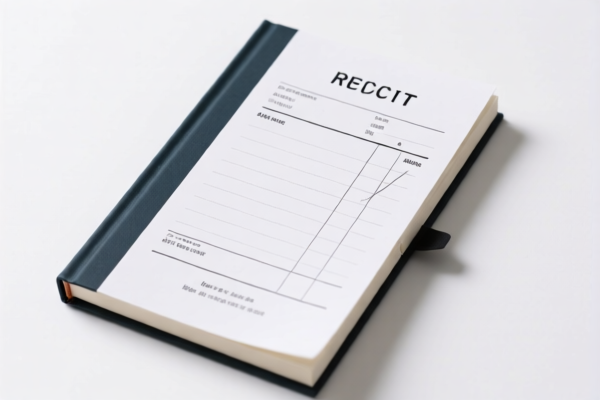
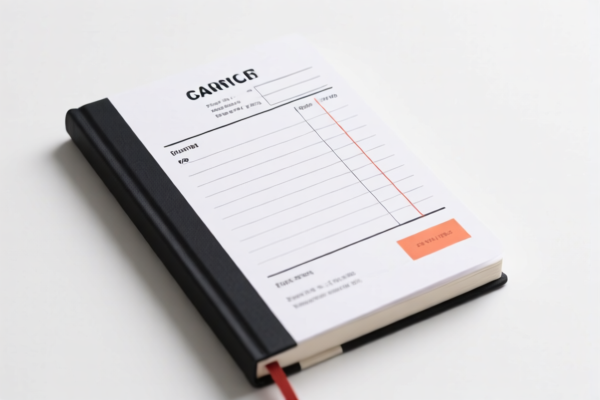
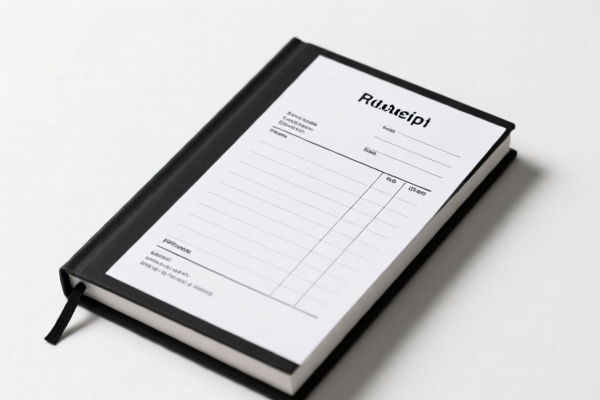
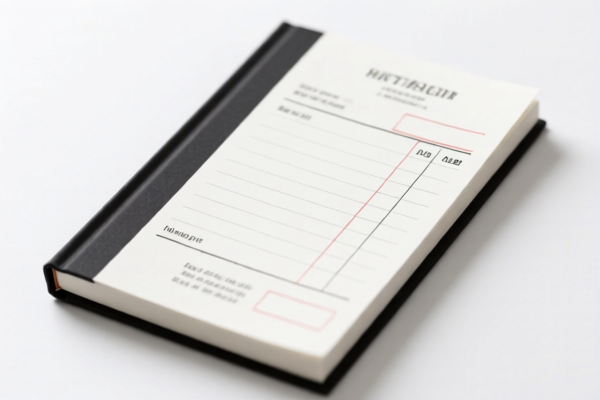
AI Analysis
🧾 Long Receipt Book (Paper Receipt Books)
🌐 HS Code Reference & Customs Clearance Guide | 2026 Latest Tariff Analysis | Professional Strategy for Paper Documentation
📌 I. Product Definition & Classification: Understanding "Long Receipt Books"
A "Long Receipt Book" refers to a bound or stapled set of paper forms used for recording financial transactions, payments, or service confirmations. In international trade, these are primarily classified under Chapter 48 (Paper and Paperboard; Articles of Paper Pulp, of Paper or of Paperboard).
The classification depends heavily on the specific format and intended use: - Receipt Books/Notepads: Bound or stapled sets of blank forms → Heading 4820. - Labels/Stickers/Official Certificates: Loose sheets or specific凭证 (vouchers) → Heading 4821. - Cut-to-Shape Paper Goods: Other paper articles not specified elsewhere → Heading 4823.
⚠️ Key Distinction:
- If it is a book/bound pad for writing receipts → 4820.
- If it is loose labels, tags, or official certificates → 4821.
- If it is custom-shaped paper or general stationery not fitting 4820/4821 → 4823.
📦 II. HS Code Classification Details (2026 Latest Tariff对照)
| HS Code | Product Description | Applicable Scenario | Tax Rate (US Import from China) |
|---|---|---|---|
| 4820.40.00.00 | Receipt books, account books, order books, and similar articles (Paper) | Bound receipt books, standard business forms | 35.0% |
| 4821.10.40.00 | Labels of paper or paperboard (Paper) | Receipts classified as labels/vouchers; loose凭证 sheets | 35.0% |
| 4821.90.40.00 | Other printed matter (Labels/Paper products) | Extended application of labels/paper products; custom凭证 | 35.0% |
| 4823.90.86.80 | Other articles of paper pulp, paper, or paperboard | General paper goods; receipt books not fitting 4820/4821 | 35.0% |
| 4823.90.67.00 | Cut-to-shape articles of paper (Paper) | Receipts cut into specific shapes; non-standard formats | 35.0% |
| 4820.10.40.00 | Receipt books, account books, etc. (Specific Subheading) | Standard Receipt Books; fits classification requirements directly | 10.0% |
🔍 Key Insight:
- Most receipt books fall under 4820.40.00.00 (35%) or 4820.10.40.00 (10%) depending on the exact subheading interpretation.
- 4821 codes apply if the product is treated as labels/vouchers rather than bound books.
- 4823 codes are fallback categories for miscellaneous paper goods.
💰 III. 2026 Latest Tariff Rate Breakdown (Including Surcharges & Policy Add-ons)
✅ Applicable Country: United States (US)
✅ Origin: China (CN)
✅ Effective Date: November 10, 2025 onwards (including subsequent imports)
🎯 1. 4820.40.00.00 – Receipt Books (Paper)
| Item | Detail |
|---|---|
| Base Duty | 0.0% |
| USITC Surcharge | +25.0% (Section 301 Tariffs) |
| 122 Clause Tariff | +10.0% (Specific regulatory add-on) |
| Total Tax Rate | 35.0% |
| Tax Calculation | CIF Value × 35% |
| De Minimis Exemption | ❌ Not Applicable |
| Legal Basis Path | USITC:4820.40.00.00 → Section 301: 25% → 122 Clause: 10% |
📌 Explanation:
- This is the standard classification for bound receipt books.
- The 35% total rate includes both the Section 301 tariff (25%) and the 122 clause (10%).
- No de minimis exemption applies, meaning even small shipments are subject to full duty.
🎯 2. 4821.10.40.00 – Labels of Paper (Receipts as Vouchers)
| Item | Detail |
|---|---|
| Base Duty | 0.0% |
| USITC Surcharge | +25.0% |
| 122 Clause Tariff | +10.0% |
| Total Tax Rate | 35.0% |
| Tax Calculation | CIF Value × 35% |
| De Minimis Exemption | ❌ Not Applicable |
| Legal Basis Path | USITC:4821.10.40.00 → Section 301: 25% → 122 Clause: 10% |
📌 Explanation:
- If the "receipt book" is interpreted as labels or official vouchers, it falls under 4821.
- Same 35% rate as above. No cost advantage unless reclassified.
🎯 3. 4821.90.40.00 – Other Printed Matter (Labels/Paper)
| Item | Detail |
|---|---|
| Base Duty | 0.0% |
| USITC Surcharge | +25.0% |
| 122 Clause Tariff | +10.0% |
| Total Tax Rate | 35.0% |
| Tax Calculation | CIF Value × 35% |
| De Minimis Exemption | ❌ Not Applicable |
| Legal Basis Path | USITC:4821.90.40.00 → Section 301: 25% → 122 Clause: 10% |
📌 Explanation:
- For extended label/paper products that don’t fit 4821.10.
- Consistent 35% rate across most paper receipt categories.
🎯 4. 4823.90.86.80 – Other Paper Articles
| Item | Detail |
|---|---|
| Base Duty | 0.0% |
| USITC Surcharge | +25.0% |
| 122 Clause Tariff | +10.0% |
| Total Tax Rate | 35.0% |
| Tax Calculation | CIF Value × 35% |
| De Minimis Exemption | ❌ Not Applicable |
| Legal Basis Path | USITC:4823.90.86.80 → Section 301: 25% → 122 Clause: 10% |
📌 Explanation:
- Fallback category for general paper goods.
- Same 35% rate. No benefit from misclassification.
🎯 5. 4823.90.67.00 – Cut-to-Shape Paper Articles
| Item | Detail |
|---|---|
| Base Duty | 0.0% |
| USITC Surcharge | +25.0% |
| 122 Clause Tariff | +10.0% |
| Total Tax Rate | 35.0% |
| Tax Calculation | CIF Value × 35% |
| De Minimis Exemption | ❌ Not Applicable |
| Legal Basis Path | USITC:4823.90.67.00 → Section 301: 25% → 122 Clause: 10% |
📌 Explanation:
- For receipts cut into specific shapes.
- Same 35% rate.
🎯 6. 4820.10.40.00 – Receipt Books (Specific Subheading) ⭐ OPTIMAL
| Item | Detail |
|---|---|
| Base Duty | 0.0% |
| USITC Surcharge | 0.0% |
| 122 Clause Tariff | +10.0% |
| Total Tax Rate | 10.0% |
| Tax Calculation | CIF Value × 10% |
| De Minimis Exemption | ❌ Not Applicable |
| Legal Basis Path | USITC:4820.10.40.00 → 122 Clause: 10% |
📌 Explanation:
- This is the most favorable classification for standard receipt books.
- Significantly lower tax (10%) compared to 35% for other paper goods.
- Requires precise classification as a receipt book under 4820.10.
- Action Item: Ensure product description clearly states "Receipt Book" and not "Labels" or "General Paper."
🛠️ IV. Customs Clearance Practical Advice (Real-World Pitfall Avoidance)
✅ 1. Required Documentation Checklist (Non-negotiable)
| Document | Mandatory? | Purpose |
|---|---|---|
| ✅ Product Specification Sheet | ✔️ | Defines dimensions, binding type, number of pages, and use. |
| ✅ Product Photos | ✔️ | Shows bound form, blank receipt pages, and any pre-printed text. |
| ✅ Commercial Invoice | ✔️ | Must explicitly state "Receipt Book" or "Account Book". Avoid vague terms like "Paper Products." |
| ✅ Packing List | ✔️ | Details quantity, weight, and packaging. |
| ✅ HS Code Confirmation | ✔️ | Recommend Pre-Ruling for 4820.10.40.00 to secure 10% rate. |
✅ 2. Declaration Strategy (Key Mnemonics)
🔥 “Book vs. Label, Name Matters, Tax Drops in Half!”
| Scenario | Correct Declaration | Incorrect Declaration | Result |
|---|---|---|---|
| Bound Receipt Book | 4820.10.40.00 (Receipt Book) |
4821.10.40.00 (Label) |
Save 25% tax! |
| Loose Receipt Vouchers | 4821.10.40.00 (Label) |
4820.40.00.00 (Book) |
Correct 35% rate |
| Custom-Shaped Paper | 4823.90.67.00 |
4820.10.40.00 |
Correct 35% rate |
| General Paper Goods | 4823.90.86.80 |
4820.10.40.00 |
Correct 35% rate |
✅ 3. Special Cases Handling
| Scenario | Recommendation |
|---|---|
| OEM Custom Receipt Books | Provide client order + design proof. Ensure it’s marketed as a book, not labels. |
| Pre-Printed Receipts | If pre-printed with company logo/invoice data, still classify as 4820.10.40.00 if bound. |
| Mixed Shipments | Separate receipt books from other paper goods. Mixed shipments may lead to higher-rate classification. |
| Small Quantity Samples | Even small shipments are subject to 10% or 35% duty. No de minimis exemption. |
🌍 V. Global Market Comparison (2026 Latest)
| Country/Region | Recommended HS Code | Duty Rate | Certification | Notes |
|---|---|---|---|---|
| 🇺🇸 USA | 4820.10.40.00 |
10% | None | Best rate for receipt books. |
| 🇨🇳 China | 4820.10.40.00 |
5% | None | No additional surcharges. |
| 🇪🇺 EU | 4820.10.40.00 |
0% | CE (if applicable) | No extra taxes. |
| 🇬🇧 UK | 4820.10.40.00 |
0% | UKCA | No extra taxes. |
| 🇦🇺 Australia | 4820.10.40.00 |
5% | RCM | Low duty. |
📌 Conclusion:
- USA is the only major market with high surcharges for Chinese-origin paper goods.
- Correct classification as 4820.10.40.00 saves 25% in duty for US imports.
- For other markets, duty rates are low or zero, but accurate classification remains important for compliance.
📌 VI. Common Errors & Pitfalls (Lessons Learned)
❌ Error 1: Declaring "Receipt Books" as "Labels" (4821.10.40.00)
👉 Consequence: Pays 35% instead of 10%. Overpaying 25% duty.
❌ Error 2: Vague description like "Paper Products"
👉 Consequence: Customs may assign 4823.90.86.80 (35%). No optimization.
❌ Error 3: Ignoring "122 Clause"
👉 Consequence: Unexpected 10% add-on tax. Budgeting failure.
❌ Error 4: Assuming de minimis exemption for small shipments
👉 Consequence: All shipments subject to duty. No exemption for paper goods from China.
✅ Correct Practice:
“Bound Receipt Book, Paper, 100 Pages, Blank Forms for Financial Transactions, Model XYZ”
🎯 VII. Conclusion: Precise Classification, Cost Savings!
🎯 Remember the Mnemonic:
🔹 “Book is 10%, Label is 35%, Misclassify and Pay Extra!”
🔹 “HS Code 4820.10.40.00 is the Golden Key for Receipt Books!”
📌 Pro Tip:
- If your receipt books are original from Vietnam, Mexico, or Thailand, you may qualify for lower or zero tariffs in the US.
- Apply for a Pre-Ruling from US Customs to secure the 10% rate confidently.
📣 Immediate Action:
📞 Consult with a professional customs broker.
📄 Provide product photos and specify "Receipt Book" clearly.
🚀 Optimize your supply chain to reduce duties by 25% through accurate classification.
✨ Professional clearance starts with accurate classification!
💼 Every dollar saved is pure profit!
Customer Reviews
About HS Code Classification
The Harmonized System (HS) is an internationally standardized nomenclature developed by the World Customs Organization (WCO) to classify traded products. Over 200 countries use the HS system as the basis for customs tariffs, trade statistics, and import/export regulations.
Each HS code follows a hierarchical structure:
- Chapter (2 digits) — Broad category of goods (e.g., Chapter 84: Machinery and Mechanical Appliances)
- Heading (4 digits) — More specific grouping within the chapter
- Subheading (6 digits) — Internationally standardized breakdown, used by all WCO member countries
- National subdivisions (8-10 digits) — Country-specific extensions for further classification, such as US HTSUS 10-digit codes
Correct HS code classification is essential for smooth customs clearance, accurate duty payment, and compliance with trade regulations. Misclassification can lead to customs delays, overpayment of duties, or penalties.
When importing from CN to US, the applicable tariff rates may include:
- Most-Favored-Nation (MFN) rate — The standard duty rate applied to WTO members
- General rate — Applied to countries without trade agreements
- Trade remedy duties — Additional tariffs such as Section 301 (anti-dumping), Section 232 (national security), or countervailing duties
The information provided on this page is for reference purposes only. For official classification, please consult with your local customs authority or a licensed customs broker.