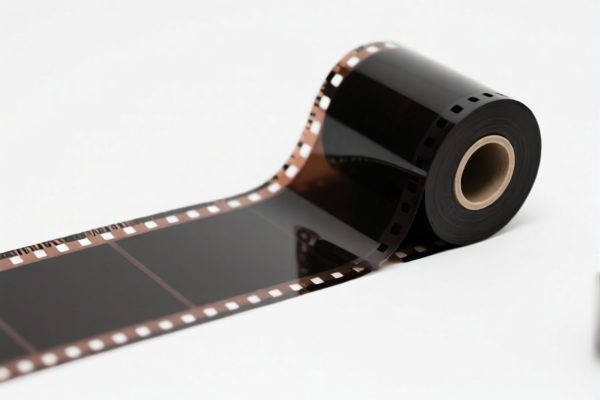
Long Roll Aerial Photography Film
CN → US| HS Code | Tariff Rate | Origin | Destination | Doc |
|---|---|---|---|---|
| 3701300000 | 35.0% | CN | US | Official Doc |
| 3702970000 | 35.0% | CN | US | Official Doc |
| 3701996060 | 35.0% | CN | US | Official Doc |
| 3702980000 | 38.7% | CN | US | Official Doc |
| 3920992000 | 39.2% | CN | US | Official Doc |
Product Images



AI Analysis
🎥 Long Roll Aerial Photography Film
🌐 HS Code Reference & Customs Clearance Guide | 2026 Latest Tariff Analysis | Professional Clearance Strategy
📌 I. Product Definition & Classification: What Exactly Is "Long Roll Aerial Photography Film"?
"Long Roll Aerial Photography Film" refers to specialized photographic materials used in aerial mapping, surveillance, and geological surveying. In international trade, classification hinges on two critical factors:
1. Physical Form: The term "Long Roll" typically implies a continuous strip exceeding 30 meters in length, distinguishing it from standard rolls or sheets.
2. Material & State: As "Photography Film," it is a sensitized material (already coated with light-sensitive chemicals). Crucially, it is NOT made of paper or textile (unlike traditional photographic paper). The base is usually polyester or cellulose acetate plastic.
⚠️ Key Distinction Point:
- If the material is less than 30m or in sheet form → Likely 3701.xx (Photographic Plates/Films in other forms).
- If the material is over 30m ("Long Roll") and sensitized → Likely 3702.xx (Photographic Film in Rolls).
- Material Assumption: Since the name doesn't specify "plastic," we infer it is non-paper/non-textile based on the industry standard for aerial film (high-strength plastic base).
📦 II. HS Code Classification Details (2026 Latest Tariff Authority Comparison)
The following table maps the provided data to specific HS Codes, explaining the rationale for each based on shape, material, and use.
| HS Code | Product Description | Matching Logic & Summary | Material Assumption |
|---|---|---|---|
3701.30.00.00 |
Photographic plates and film, sensitized, unexposed, of any material other than paper, paperboard or textiles... | Shape Match: Matches "Long Roll" (continuous) or "Flat" (if cut). Use Match: "Photography Film" clearly falls under photographic materials. Material: Inferred as non-paper/non-textile. |
Non-paper, Non-textile (Plastic/Plastic-like) |
3702.97.00.00 |
Other photographic film, sensitized, unexposed, in rolls of a length exceeding 30 m... | Shape Match: ✅ High Confidence. "Long Roll" directly matches the ">30m" requirement. Material Match: "Photography Film" implies sensitized material. Inferred non-paper/textile. |
Non-paper, Non-textile (Sensitized Plastic Base) |
3701.99.60.60 |
Other photographic plates and film, sensitized, unexposed... | Shape Match: "Film" is a photographic material. Material Inference: Reasonably inferred as non-paper/non-textile sensitized film, fitting the "Other" category definition. |
Non-paper, Non-textile (Sensitized Film) |
3702.98.00.00 |
Other photographic film, sensitized, unexposed, in rolls of a length exceeding 30 m... | Shape Match: ✅ "Rolls" (Long Roll). Use Match: "Photography Film". Material Logic: "Other" category allows inference of non-paper/non-textile sensitized film. No obvious material conflict. |
Non-paper, Non-textile (Sensitized Film) |
3920.99.20.00 |
Other plates, sheets, film, foil and strip, of plastics, not cellular... | Shape Match: "Film" fits "Plastic film/strip". Material Inference: Industrial aerial films are typically polyester (PET) or polypropylene. Fits "Other plastic film". Risk: Lower tariff, but requires proving it's un-sensitized or classified as plastic substrate if not strictly "photographic film" in the customs sense. |
Plastic (PET/PP Base) |
🔍 Critical Note on
3920vs3702:
- If the film is already sensitized (coated with chemicals for photography), it MUST go to Chapter 37 (3702).
- If the film is unsensitized plastic base (raw material), it goes to Chapter 39 (3920).
- Aerial Photography Film is almost always sensitized, so3702codes are the primary candidates.3920is only applicable if misclassified or if it's raw plastic film.
💰 III. 2026 Latest Tariff Rate Breakdown (Including Surcharge Policies)
✅ Applicable Country: United States (US)
✅ Origin: China (CN)
✅ Effective Date: From November 10, 2025 onwards
🎯 1. 3701.30.00.00 & 3702.97.00.00 & 3701.99.60.60
(Sensitized Film/Plates, Non-Paper/Non-Textile)
| Item | Details |
|---|---|
| Basic Tariff | 0% (Ad Valorem) |
| Section 301 Surcharge | +25% (USITC Footnote related to Chapter 37 items subject to trade actions) |
| IEEPA Surcharge (122 Clause) | +10% (Targeting Chinese products, effective from Nov 2025) |
| Total Tax Rate | 35.0% |
| Tax Calculation | CIF Value × 35% |
| De Minimis Exemption | ❌ Not Available (deny_de_minimis) |
| Legal Basis Path | IEEPA:9903.01.25 → IEEPA:9903.01.24 → USITC:3701.30.00.00 / 3702.97.00.00 → FOOTNOTE:9903.88.01 |
📌 Explanation:
- These codes fall under photographic materials which are subject to Section 301 (25% surcharge) and IEEPA (10% surcharge).
- Total 35% is a significant cost factor. Proper classification is essential to avoid misclassification penalties.
🎯 2. 3702.98.00.00
(Other Sensitized Film >30m)
| Item | Details |
|---|---|
| Basic Tariff | 3.7% |
| Section 301 Surcharge | +25% |
| IEEPA Surcharge (122 Clause) | +10% |
| Total Tax Rate | 38.7% |
| Tax Calculation | CIF Value × 38.7% |
| De Minimis Exemption | ❌ Not Available |
📌 Note:
- This code has a slightly higher base rate (3.7%) compared to 0% for other 3701/3702.97 codes, resulting in a higher total duty.
- Ensure the specific type of film matches the "Other" definition to justify this code.
🎯 3. 3920.99.20.00
(Other Plastic Film)
| Item | Details |
|---|---|
| Basic Tariff | 4.2% |
| Section 301 Surcharge | +25% |
| IEEPA Surcharge (122 Clause) | +10% |
| Total Tax Rate | 39.2% |
| Tax Calculation | CIF Value × 39.2% |
| De Minimis Exemption | ❌ Not Available |
📌 Warning:
- This code is for plastic film. If your product is sensitized photographic film, classifying it here is incorrect and may lead to customs audits.
- Only use this if the item is unsensitized plastic substrate intended for further processing.
- Even if correct, the tax rate is the highest (39.2%).
🛠️ IV. Customs Clearance Practical Advice (Battle-Tested Pitfall Guide)
✅ 1. Documentation Checklist (Essential)
| Document | Required | Description |
|---|---|---|
| ✅ Product Specification Sheet | ✔️ | Must specify: Length per roll (>30m vs <30m), Base Material (Polyester/Acetate), Sensitization Status (Yes/No). |
| ✅ Chemical Composition Report | ✔️ | Proof of light-sensitive coating if claiming Chapter 37. |
| ✅ Product Photos (Clear) | ✔️ | Show reel size, length markings, and packaging. |
| ✅ Commercial Invoice | ✔️ | Clearly state: "Long Roll Aerial Photography Film, Sensitized, Poly Base, >30m". |
| ✅ Packing List | ✔️ | Detail net/gross weight and number of rolls. |
| ✅ Certificate of Origin | ✔️ | If claiming preferential rates (though unlikely for US from China with surcharges). |
✅ 2. Declaration Strategy (Key Mantra)
🔥 "Length Matters, Sensitization Defines, Plastic is Risk!"
| Scenario | Correct Declaration | Wrong Action |
|---|---|---|
| Rolls >30m, Sensitized | 3702.97.00.00 or 3702.98.00.00 |
Misdeclare as 3920 (Plastic) → High audit risk |
| Rolls <30m, Sensitized | 3701.30.00.00 or 3701.99.60.60 |
Misdeclare as "Photographic Paper" → Wrong Chapter |
| Unsensitive Plastic Base | 3920.99.20.00 |
Misdeclare as "Photographic Film" → Penalty for false statement |
| Mixed Lot (Paper & Film) | Separate Codes | Combine into one code → Rejection/Seizure |
Why
3702.97is often the best fit:
- It specifically addresses "Rolls >30m" (Long Roll).
- It has a 0% base duty (lowest among valid Chapter 37 options).
- Total tax is 35%, lower than3702.98(38.7%) and3920(39.2%).
✅ 3. Special Case Handling
| Situation | Recommendation |
|---|---|
| Customs Questions Material | Provide a Technical Data Sheet showing the base is Polyester (PET), not paper or fabric. |
| "Long Roll" Ambiguity | If length is exactly 30m, clarify if it's exceeding (>30m). If <30m, use 3701 codes. |
| Aerial vs. Cinematic | Both are "Photographic Film." No special "Aerial" HS code exists; use general photographic film codes. |
| Unexposed Only | Ensure the product is Unexposed. Exposed film may fall under different categories (e.g., waste or specific industrial goods). |
🌍 V. Global Market Comparison (2026 Latest)
| Country/Region | Recommended HS Code | Base Duty | Surcharge (CN) | Total Est. Tax | Remarks |
|---|---|---|---|---|---|
| 🇺🇸 USA | 3702.97.00.00 |
0% | +35% (25%+10%) | 35% | Highest barrier. Verify >30m length. |
| 🇨🇳 China | 3702.97.00.00 |
~3-6% | 0% | ~3-6% | Low duty for import into China. |
| 🇪🇺 EU | 3702.97.00.00 |
0-2% | 0% | ~0-2% | No US-style surcharges. |
| 🇯🇵 Japan | 3702.97.00.00 |
~5% | 0% | ~5% | Standard MFN rates. |
📌 Conclusion:
- USA is the most expensive market due to Section 301 + IEEPA.
- Accuracy is critical: Misclassifying as plastic (3920) may save 0.2% but risks penalties for misdeclaration.
- Pre-certification: Consider applying for a Binding Tariff Information (BTI) or US Customs Ruling if volume is high.
📌 VI. Common Mistakes & Pitfalls (Lessons Learned)
❌ Mistake 1: Assuming "Film" = Plastic (3920)
👉 Result: Customs rejects it as photographic material. Penalty + Back Duty.
✅ Fix: Check if sensitized. If yes, use Chapter 37.
❌ Mistake 2: Ignoring Length (<30m vs >30m)
👉 Result: Using 3702 for short rolls. Incorrect Code.
✅ Fix: Verify roll length. If <30m, use 3701.
❌ Mistake 3: Missing "Sensitized" Status
👉 Result: Declaring unexposed as exposed or vice versa. Clearance Delay.
✅ Fix: Clearly state "Sensitized, Unexposed" in description.
❌ Mistake 4: Not Accounting for 122 Clause (IEEPA)
👉 Result: Underestimating cost by 10%.
✅ Fix: Add 10% IEEPA to all calculations for Chinese origin.
🎯 VII. Conclusion: Precision in Classification, Profit in Clearance!
🎯 Key Takeaway:
🔹 "Long Roll" (>30m) =
3702
🔹 "Short/Sheet" (<30m) =3701
🔹 "Sensitized" = Chapter 37 (Not Plastic!)
🔹 Total US Tax = 35% (Best Case) to 39.2% (Worst Case)
📌 Pro Tip:
If your aerial film rolls are exactly 30m or less, switch to 3701.30.00.00 to avoid the "Other" sub-category scrutiny, though tax is similar.
Always provide technical specs to prove the "Long Roll" length and "Sensitized" status.
📣 Immediate Action:
📞 Contact your customs broker with the roll length and base material.
📄 Prepare a data sheet highlighting "Sensitized, Polyester Base, >30m."
🚀 Avoid3920unless it's raw plastic!
✨ Professional Clearance Starts with Accurate Classification!
💼 Your bottom line depends on getting the HS Code right!
Customer Reviews
About HS Code Classification
The Harmonized System (HS) is an internationally standardized nomenclature developed by the World Customs Organization (WCO) to classify traded products. Over 200 countries use the HS system as the basis for customs tariffs, trade statistics, and import/export regulations.
Each HS code follows a hierarchical structure:
- Chapter (2 digits) — Broad category of goods (e.g., Chapter 84: Machinery and Mechanical Appliances)
- Heading (4 digits) — More specific grouping within the chapter
- Subheading (6 digits) — Internationally standardized breakdown, used by all WCO member countries
- National subdivisions (8-10 digits) — Country-specific extensions for further classification, such as US HTSUS 10-digit codes
Correct HS code classification is essential for smooth customs clearance, accurate duty payment, and compliance with trade regulations. Misclassification can lead to customs delays, overpayment of duties, or penalties.
When importing from CN to US, the applicable tariff rates may include:
- Most-Favored-Nation (MFN) rate — The standard duty rate applied to WTO members
- General rate — Applied to countries without trade agreements
- Trade remedy duties — Additional tariffs such as Section 301 (anti-dumping), Section 232 (national security), or countervailing duties
The information provided on this page is for reference purposes only. For official classification, please consult with your local customs authority or a licensed customs broker.