Long and Short Distance Handbag Shoulder Bag Gray Small
CN → US| HS Code | Tariff Rate | Origin | Destination | Doc |
|---|---|---|---|---|
| 4202122120 | 55.0% | CN | US | Official Doc |
| 4202128910 | 52.6% | CN | US | Official Doc |
| 4202923120 | 52.6% | CN | US | Official Doc |
| 4202923131 | 52.6% | CN | US | Official Doc |
Product Images
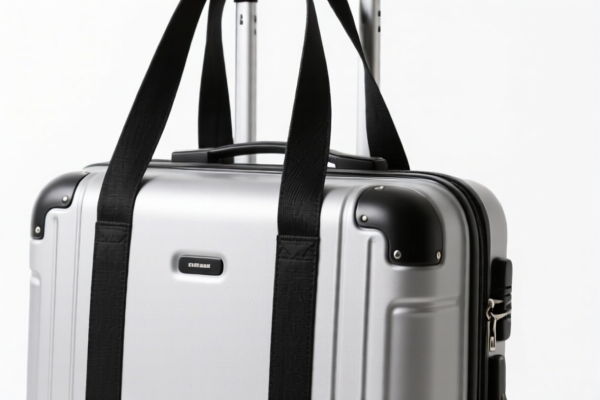
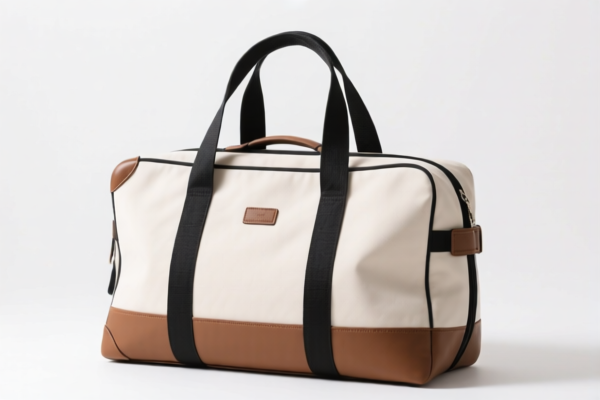
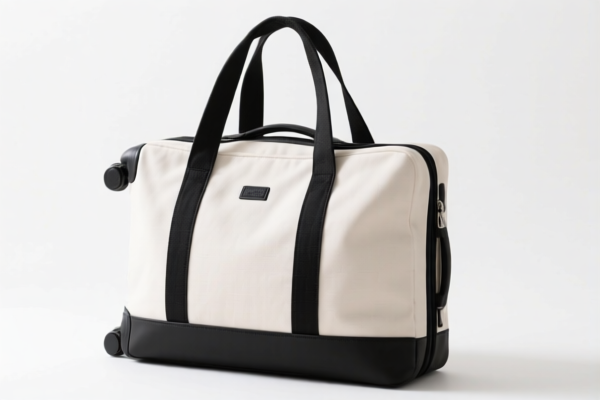
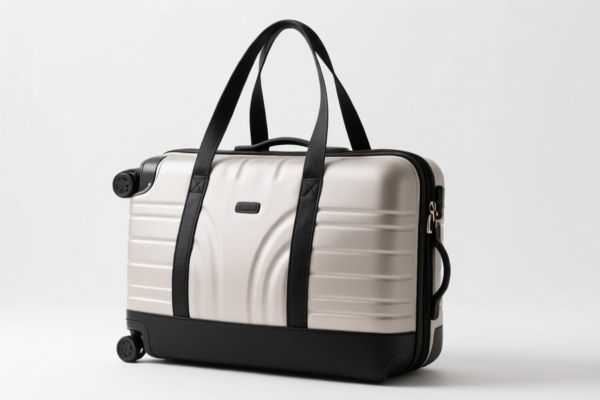
AI Analysis
👜 Gray Handbag / Shoulder Bag (Short & Long Distance Use)
🌐 HS Code Reference & Customs Clearance Guide | 2026 Latest Tariff Analysis | Professional Entry Strategy
📌 I. Product Definition & Classification: What is this Bag?
This product is a Gray Handbag/Shoulder Bag designed for both short-distance (daily urban use) and long-distance (travel/commute) purposes. Its key characteristics include: - Form Factor: Small size container; capable of being carried by hand or shoulder. - Material: The description implies a generic exterior. In customs classification, the outer surface material is the critical determinant for Chapter 42 (Articles of Leather; Saddle & Harness Goods; Travel Goods, Hand Bags, etc.). - Usage: General-purpose personal accessory, fitting the definition of "Satchels," "Handbags," or "Shoulder Bags."
⚠️ Key Distinction Point:
- If the outer surface is made of Plastic or Leather → It falls under 4202.12.
- If the outer surface is made of Textile Materials (e.g., Canvas, Nylon, Polyester) → It falls under 4202.92.
📦 II. HS Code Classification Details (2026 Latest Tariff Authority Match)
Based on the provided data, there are four potential HS Codes depending on the inferred material. Below is the breakdown:
| HS Code | Product Description | Applicability & Material Inference | Total Tax Rate |
|---|---|---|---|
| 4202.12.21.20 | Satchels, handbags, with outer surface of plastic or leather | Plastic/Leather: Inferred as suitable for travel/daily use bags. Small size container. | 55.0% |
| 4202.12.89.10 | Other travel goods, satchels & handbags, with outer surface of textile materials | Textile: Inferred as textile outer surface. Fits "Travel/Sports" category. | 52.6% |
| 4202.92.31.20 | Handbags with outer surface of textile materials (Not travel-specific) | Textile: Matches "Travel, sports and similar bags" use but classified under general handbags. | 52.6% |
| 4202.92.31.31 | Handbags with outer surface of man-made fiber textiles | Man-made Fiber: Specific inference of man-made textile fiber. "Other" bag type. | 52.6% |
🔍 Critical Clarification:
- 4202.12 codes are generally for Satchels/Handbags with specific outer surfaces.
- 4202.92 codes are for Other Bags (including shoulder bags not specifically listed as satchels).
- Material is King: You must know the exact outer material to choose between the 55% (Plastic/Leather) and 52.6% (Textile) rates.
💰 III. 2026 Latest Tariff Rate Breakdown (Including Surcharges)
✅ Applicable Country: United States (US)
✅ Origin: China (CN)
✅ Effective Date: Post-2025 Policy (Includes Section 301 & IEEPA)
🎯 1. 4202.12.21.20 —— Bag with Outer Surface of Plastic or Leather
| Item | Content |
|---|---|
| Base Duty Rate | 20.0% (Ad valorem) |
| Section 301 Surtax | +25.0% |
| IEEPA Surtax | +10.0% (Section 122 Tariff / IEEPA on China) |
| Total Rate | 55.0% |
| Tax Calculation | CIF Value × 55% |
| De Minimis Exemption | ❌ Not Eligible (Deny De Minimis) |
| Legal Basis Path | Base: 4202.12 → Surcharge: 9903.88.01 (25%) → IEEPA: 9903.01.25 (10%) |
📌 Explanation:
- This is the highest tax bracket among the options.
- Plastic or leather bags are often scrutinized for anti-dumping or specific material tariffs.
- Total 55% includes the 20% base MFN rate, 25% Section 301 tariff, and 10% IEEPA additional tariff.
🎯 2. 4202.12.89.10 —— Textile Material Bag (Travel/Hand Bag)
| Item | Content |
|---|---|
| Base Duty Rate | 17.6% (Ad valorem) |
| Section 301 Surtax | +25.0% |
| IEEPA Surtax | +10.0% |
| Total Rate | 52.6% |
| Tax Calculation | CIF Value × 52.6% |
| De Minimis Exemption | ❌ Not Eligible |
| Legal Basis Path | Base: 4202.12 → Surcharge: 9903.88.01 (25%) → IEEPA: 9903.01.25 (10%) |
📌 Note:
- Slightly lower than the plastic/leather version due to a lower base rate (17.6% vs 20.0%).
- Still subject to the same punitive surcharges.
🎯 3. 4202.92.31.20 & 4202.92.31.31 —— Textile/Man-made Fiber Handbags
| Item | Content |
|---|---|
| Base Duty Rate | 17.6% (Ad valorem) |
| Section 301 Surtax | +25.0% |
| IEEPA Surtax | +10.0% |
| Total Rate | 52.6% |
| Tax Calculation | CIF Value × 52.6% |
| De Minimis Exemption | ❌ Not Eligible |
| Legal Basis Path | Base: 4202.92 → Surcharge: 9903.88.01 (25%) → IEEPA: 9903.01.25 (10%) |
📌 Note:
- These two codes (...31.20and...31.31) are grouped together as they share the same tax structure.
-4202.92covers "Other" bags (e.g., shoulder bags that don't fit the strict "satchel" definition).
- Material Inference: For...31.31, the material is specifically man-made fibers (polyester, nylon, etc.).
🛠️ IV. Customs Clearance Practical Advice (Pitfall Avoidance Guide)
✅ 1. Preparation Checklist (Non-negotiable)
| Document | Must Provide | Purpose |
|---|---|---|
| ✅ Product Composition Label | ✔️ | Must explicitly state "Outer Surface Material" (e.g., "100% Polyester Outer," "Leather Trim") |
| ✅ Product Photos | ✔️ | Clear images of the outer texture to prove textile vs. plastic/leather |
| ✅ Commercial Invoice | ✔️ | Description: "Gray Shoulder Bag, Textile, Small Size, Travel Use" |
| ✅ Packing List | ✔️ | Show quantity and weight |
| ✅ HS Code Pre-Ruling | ✔️ | Recommended to avoid misclassification penalties |
⚠️ Common Mistake:
- Listing only "Bag" or "Accessory" without material.
- Result: Customs may assign the highest duty rate (55%) or demand a full material analysis, delaying clearance.
✅ 2. Classification Strategy (Key Mantra)
🔥 "Material Defines Code, Not Just Shape!"
| Scenario | Correct HS Code | Wrong Code | Consequence |
|---|---|---|---|
| Outer is Textile (Nylon/Cotton) | 4202.12.89.10 or 4202.92.31.x0 (52.6%) |
4202.12.21.20 |
Overpaying 2.4% duty |
| Outer is Plastic/Leather | 4202.12.21.20 (55.0%) |
4202.92.31.x0 |
Underpaying duty → Penalty + Back Taxes |
| Mix of Materials | Use the predominant outer material | N/A | If plastic/leather > 50%, use 55% rate |
| Lining Material | Ignored for classification | Used for classification | Lining does NOT affect HS Code |
✅ 3. Special Case Handling
| Situation | Advice |
|---|---|
| "Gray" Color | Color does not affect HS Code. Do not include color in the HS description for tariff purposes, but keep it in the product name. |
| Small Size | Size does not change Chapter 42 classification. It remains in 4202. |
| Branded vs. Unbranded | Brand name is not in HS Code, but must be on the invoice. |
| Set of Bags | If sold as a set (e.g., bag + wallet), classify based on the essential character (usually the bag). |
🌍 V. Global Market Comparison (2026)
| Market | Recommended HS Code | Est. Total Tax (China Origin) | Notes |
|---|---|---|---|
| 🇺🇸 USA | 4202.12.21.20 or 4202.92.31.x0 |
52.6% - 55.0% | High tariffs due to Section 301 + IEEPA |
| 🇨🇳 China | Same HS | ~5-10% | Import duty is low; no punitive surcharges |
| 🇪🇺 EU | 4202.12 or 4202.92 |
~4-6% | No Section 301 equivalent; standard MFN rate |
| 🇬🇧 UK | Same as EU | ~6% | Post-Brexit rules apply |
| 🇨🇦 Canada | Same HS | ~0-18.5% | CUSMA may apply if origin is Canada/USA |
📌 Conclusion:
- USA is the most expensive market for Chinese-made bags due to the 55% effective rate.
- Consider supply chain diversification (e.g., Vietnam, India) if targeting the US market heavily.
📌 VI. Common Errors & Pitfalls (Blood Lessons)
❌ Error 1: Assuming "Shoulder Bag" always means 4202.92.
👉 Correction: If it's a "Satchel" with a structured shape and textile material, it might be 4202.12.89.10.
❌ Error 2: Misidentifying "PU Leather" (Polyurethane).
👉 Correction: PU Leather is often classified as Plastic (4202.12.21.20 → 55%) if it's the outer surface. True leather has its own subheadings, but plastic/PU is taxed higher in this context.
❌ Error 3: Forgetting to declare Section 122 / IEEPA surcharge.
👉 Correction: The 10% IEEPA tax is automatic for Chinese goods in many categories. Do not try to omit it; it will be added by CBP if missed.
🎯 VII. Conclusion: Professional Declaration, Cost Control!
🎯 Remember the Mantra:
🔹 "Outer Material is Key: Textile 52.6%, Plastic/Leather 55.0%."
🔹 "No De Minimis for China: Prepare for 50%+ Taxes."
🔹 "Clear Description = Smooth Clearance."
📌 Pro Tip:
- If your bag is 100% Textile, use 4202.92.31.31 or 4202.12.89.10.
- If your bag is PU Leather/Plastic, you must use 4202.12.21.20.
- Always verify the exact material composition on the product label before declaring.
📣 Action Item:
📞 Consult a licensed customs broker.
📸 Provide clear photos of the outer surface texture.
📄 Ensure your invoice states: "Gray Handbag, [Material] Outer, Small Size".
✨ Accurate Classification Saves Money!
💼 Don't Let a 2.4% Difference Cost You Thousands!
Customer Reviews
About HS Code Classification
The Harmonized System (HS) is an internationally standardized nomenclature developed by the World Customs Organization (WCO) to classify traded products. Over 200 countries use the HS system as the basis for customs tariffs, trade statistics, and import/export regulations.
Each HS code follows a hierarchical structure:
- Chapter (2 digits) — Broad category of goods (e.g., Chapter 84: Machinery and Mechanical Appliances)
- Heading (4 digits) — More specific grouping within the chapter
- Subheading (6 digits) — Internationally standardized breakdown, used by all WCO member countries
- National subdivisions (8-10 digits) — Country-specific extensions for further classification, such as US HTSUS 10-digit codes
Correct HS code classification is essential for smooth customs clearance, accurate duty payment, and compliance with trade regulations. Misclassification can lead to customs delays, overpayment of duties, or penalties.
When importing from CN to US, the applicable tariff rates may include:
- Most-Favored-Nation (MFN) rate — The standard duty rate applied to WTO members
- General rate — Applied to countries without trade agreements
- Trade remedy duties — Additional tariffs such as Section 301 (anti-dumping), Section 232 (national security), or countervailing duties
The information provided on this page is for reference purposes only. For official classification, please consult with your local customs authority or a licensed customs broker.