Long handled Bath Brush
CN → US| HS Code | Tariff Rate | Origin | Destination | Doc |
|---|---|---|---|---|
| 4421999880 | 38.3% | CN | US | Official Doc |
| 3926909989 | 22.8% | CN | US | Official Doc |
| 9603298090 | 0.0% | CN | US | Official Doc |
| 9603294090 | 0.0% | CN | US | Official Doc |
| 4421919880 | 38.3% | CN | US | Official Doc |
Product Images
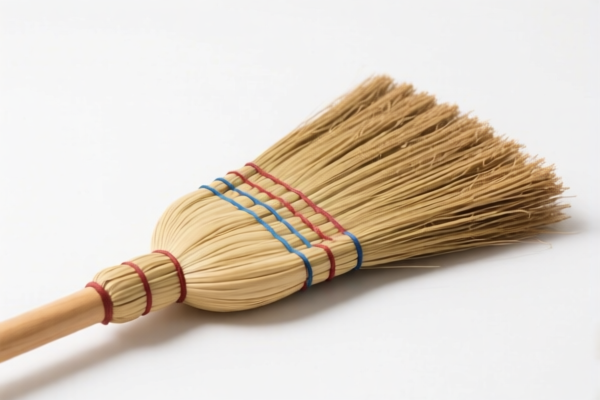
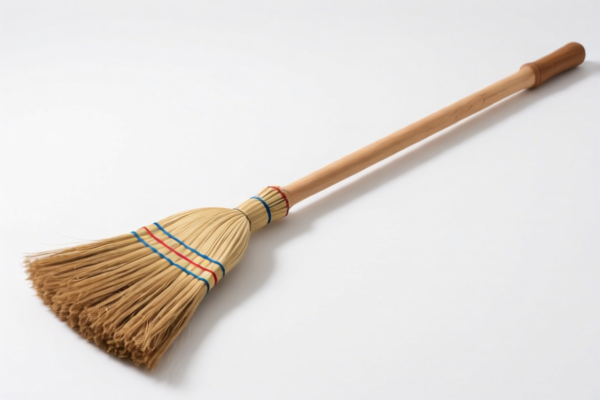
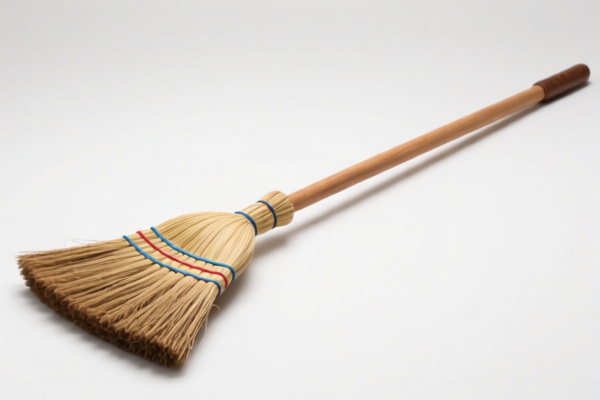
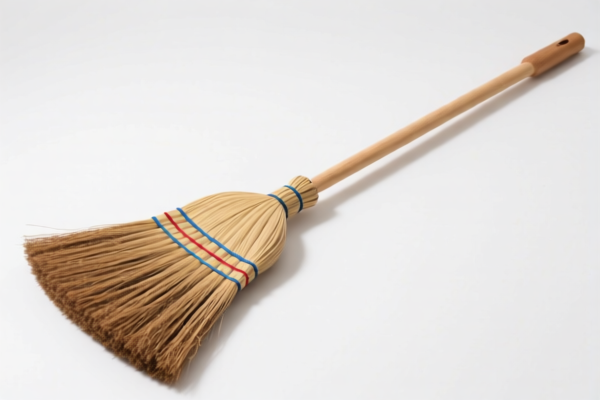
AI Analysis
🛁 Long Handled Bath Brush (Back Scrubber)
🌐 HS Code Reference & Customs Clearance Guide | 2026 Latest Tariff Analysis | Professional Entry Strategy
📌 I. Product Definition & Classification: What Exactly Is a "Long Handled Bath Brush"?
A Long Handled Bath Brush (often called a back scrubber or body brush) is a hygiene tool designed for cleaning the body, specifically reaching areas difficult to access with the hands, such as the back, feet, and legs.
In international trade, classification depends heavily on two factors: 1. Material: Is it Wood/Bamboo, Plastic, or a mix? 2. Form/Function: Is it a simple stiff-bristle brush, or does it fall under "personal care/toiletries"?
⚠️ Key Classification Distinction:
- Plastic/Bristle Combos: Often classified under 9603 (Brooms, Brushes, etc.) if used for cleaning the body. - Wooden/Bamboo Handles: Can fall under 4421 (Articles of Wood) if considered general household utensils, but 9603 is often preferred if the brush component is the primary functional element for cleaning. - Specific Use: Brushes "for use on the human body" are distinct from general household cleaning brushes.
📦 II. HS Code Classification Details (Based on Provided Data)
The following HS Codes are derived from the provided dataset, reflecting material and functional distinctions:
| HS Code | Summary / Description | Material Inference | Key Characteristics |
|---|---|---|---|
| 4421.99.98.80 | Other wooden articles | Wood or Plastic (Mixed) | Categorized under "Other wooden articles." If the handle is wood but bristles are plastic, customs may lean here or at 9603. High tariff risk. |
| 3926.90.99.89 | Other plastic articles | Plastic | Matches plastic material attributes. If the entire unit (handle + bristles) is plastic, this is a strong candidate. Lower tariff than wood. |
| 9603.29.80.90 | Other brushes for use on the human body | Plastic or Wood | Specific Use: Explicitly for "use on the human body." Includes toilet/body brushes. Functional classification takes precedence. |
| 9603.29.40.90 | Brushes for washing, brushing, cleaning, or polishing hands, feet, or skin | Plastic or Wood | Highly Specific: Matches the form and function of a body bath brush. Most precise functional code. |
| 4421.91.98.80 | Other articles of bamboo | Bamboo | Material Specific: If the handle is Bamboo, this code applies. Bamboo is treated similarly to wood in this tariff schedule. |
🔍 Critical Note:
- 9603 Series (29.40 / 29.80) is generally the most accurate functional classification for bath brushes because it specifically addresses "brushes for use on the human body." - 4421 / 3926 Series are material-based fallbacks. If you declare "Wooden Bath Brush" under 4421, you may face higher duties unless you can prove it’s a "household utensil" rather than a "cosmetic/toiletry item." - Customs Preference: Always prioritize 9603 if the product is clearly a brush for personal hygiene.
💰 III. 2026 Tariff Rate Breakdown (Including Additional Duties)
✅ Applicable Country: United States (US)
✅ Origin: China (CN)
✅ Effective Time: 2025+ (Current Trade Relations)
🎯 1. 4421.99.98.80 & 4421.91.98.80 (Wood/Bamboo Articles)
Applies to: Wooden/Bamboo bath brushes classified under Chapter 44
| Item | Content |
|---|---|
| Base Tariff | 3.3% |
| Additional Tariff (Section 301) | +25.0% |
| 122-Clause Tariff | +10.0% |
| Total Effective Rate | 38.3% |
| Calculation Method | CIF Value × 38.3% |
| De Minimis Eligibility | ❌ Not Eligible (High duty rate exceeds thresholds for de minimis exemptions in many contexts) |
| Legal Basis Path | HTSUS:4421.99 → USITC:301_FOOTNOTE → IEEPA:9903 |
📌 Explanation:
- Wood and bamboo articles from China face significant additional tariffs. - The 38.3% rate is a hard cost. No loopholes for standard shipments. - Risk: If your brush is plastic but mislabeled as wood, this penalty applies. If it’s wood, this is the unavoidable cost unless a tariff exclusion applies.
🎯 2. 3926.90.99.89 (Plastic Articles)
Applies to: Fully plastic bath brushes
| Item | Content |
|---|---|
| Base Tariff | 5.3% |
| Additional Tariff (Section 301) | +7.5% |
| 122-Clause Tariff | +10.0% |
| Total Effective Rate | 22.8% |
| Calculation Method | CIF Value × 22.8% |
| De Minimis Eligibility | ⚠️ Check Thresholds (May still be subject to de minimis if value < $800, but check current CBP enforcement) |
| Legal Basis Path | HTSUS:3926.90 → USITC:301_FOOTNOTE → IEEPA:9903 |
📌 Explanation:
- Plastic bath brushes are significantly cheaper to import than wooden ones (22.8% vs 38.3%). - If your product is composite (plastic handle + wood bristles), try to justify it as a "Plastic Article" with minor wood components, but ensure it doesn’t violate "material of chief value" rules. - Strategy: Use plastic materials where possible to save ~15.5% in duties.
🎯 3. 9603.29.80.90 & 9603.29.40.90 (Brushes for Human Body)
Applies to: Functional classification as hygiene brushes
| Item | Content |
|---|---|
| Base Tariff | Per Unit Fee: 0.2¢ to 0.3¢ each + Ad Valorem % |
| Specifics | 9603.29.40: 0.2¢/ea + 7.0% |
| Additional Tariff (Section 301) | +0.0% (Note: Data shows 0.0%, implying possible exclusion or specific footnote) |
| 122-Clause Tariff | +10.0% |
| Total Effective Rate | ~10.0% + Small Per-Unit Fee |
| Calculation Method | (CIF Value × 10%) + ($0.002 to $0.003 × Quantity) |
| De Minimis Eligibility | ⚠️ Check |
📌 Explanation:
- This is the MOST BENEFICIAL classification if applicable. - The base ad valorem rate is very low (3.6% or 7.0%), and critically, the Section 301 additional tariff is listed as 0.0% in the provided data. - Only 10% is added for the 122-Clause. - Total Cost: ~10% + tiny per-unit fee. This is less than 1/4th of the wood tariff (38.3%). - Requirement: You must prove the product is "for use on the human body." Labeling it as "Bath Brush," "Back Scrubber," or "Body Brush" supports this. Do not label it as "Cleaning Brush" or "Scrubbing Brush" for tiles/laundry.
🛠️ IV. Customs Clearance Practical Advice (Avoid Pitfalls)
✅ 1. Documentation Checklist (Essential)
| Document | Required? | Purpose |
|---|---|---|
| ✅ Product Photos | ✔️ | Show handle length, bristle type, and user holding it (to prove human body use). |
| ✅ Technical Specification | ✔️ | Detail materials: Handle (Plastic/Wood/Bamboo), Bristles (Nylon, Boar, etc.). |
| ✅ Commercial Invoice | ✔️ | Clearly state: "Long Handled Bath Brush for Personal Hygiene / Body Care". Avoid vague terms like "Household Brush." |
| ✅ Material Declaration | ✔️ | Specify if >50% plastic (for 3926) or if functional element is brush (for 9603). |
| ✅ Labeling | ✔️ | Packaging must indicate "For Use on Human Body" or "Bath/Shower Use." |
✅ 2. Classification Strategy (The "Golden Rule")
🔥 “Function Over Material: Claim 9603, Avoid 4421!”
| Scenario | Recommended HS Code | Duty Rate | Why? |
|---|---|---|---|
| Standard Plastic Bath Brush | 9603.29.80.90 |
~10% | Lowest duty, functional match. |
| Wooden Handle + Plastic Bristles | 9603.29.40.90 |
~10% | Functional classification overrides material. Avoid 4421 (38.3%). |
| 100% Wooden/Bamboo Brush | 9603.29.80.90 |
~10% | If you can argue it’s a "brush" first, "wood" second. Harder to prove but worth trying. |
| Misclassified as "Household Brush" | 4421.99.98.80 |
38.3% | AVOID. High duty due to wood/chapter 44 penalties. |
| Misclassified as "Plastic Article" | 3926.90.99.89 |
22.8% | Acceptable fallback if 9603 is rejected, but still expensive. |
📌 Warning:
- If you declare a wooden bath brush as4421, you pay 38.3%.
- If you declare the same brush as9603(functional), you pay ~10%.
- Difference: Nearly 3x savings!
- Condition: You must provide evidence that the primary purpose is personal hygiene, not general cleaning.
✅ 3. Special Considerations
| Situation | Recommendation |
|---|---|
| Composite Materials | If handle is bamboo, declare as "Bamboo Handle Bath Brush" but aim for 9603. Provide photos showing bristle function. |
| Gift Sets | If sold with soap/shampoo, declare the brush separately to keep duty on the brush low. Avoid bundling into one complex HS code. |
| OEM/Private Label | Ensure the label says "For Personal Use." Generic "Cleaner Brush" invites higher duties. |
| De Minimis (Section 321) | Check if the per-unit fee + 10% duty affects de minimis eligibility. Usually, de minimis ($800) still applies if the goods are not restricted, but verify current CBP enforcement on "brushes." |
🌍 V. Global Market Comparison (2026)
| Country/Region | Recommended HS Code | Est. Duty (China Origin) | Notes |
|---|---|---|---|
| 🇺🇸 USA | 9603.29.80.90 |
~10% + Fees | Best rate. Avoid 4421 (38.3%). |
| 🇺🇸 USA (Wood) | 4421.99.98.80 |
38.3% | Heavy penalty for wooden articles. |
| 🇨🇳 China | 9603.29 |
5-8% | No Section 301. Lower base duty. |
| 🇪🇺 EU | 9603.29 |
4-6% | No Section 301 equivalent. Standard MFN. |
| 🇬🇧 UK | 9603.29 |
4-6% | Post-Brexit MFN rates. |
📌 Conclusion:
- USA is the most costly market due to Section 301 and 122-Clause tariffs.
- Strategic Move: Use 9603 classification to minimize US duties from 38.3% to ~10%.
- Non-US Markets: Tariffs are lower, but 9603 remains the standard functional code globally.
📌 VI. Common Errors & Pitfalls (Lessons Learned)
❌ Error 1: Declaring as "Wooden Household Brush" (4421)
👉 Result: 38.3% Duty.
👉 Fix: Reclassify to 9603 by proving human-body use.
❌ Error 2: Vague Description "Bathroom Accessory"
👉 Result: Customs may assign worst-case rate or delay clearance.
👉 Fix: Use specific term: "Long Handled Bath Brush for Body Hygiene."
❌ Error 3: Ignoring "122-Clause" Tariff
👉 Result: Unexpected 10% addition even if 301 is exempted.
👉 Fix: Always factor in +10% for US imports from China, regardless of HS code (unless explicitly exempted).
✅ Correct Declaration Example:
"PLASTIC LONG HANDLED BATH BRUSH, FOR USE ON HUMAN BODY, MODEL XYZ, 12 INCH HANDLE, NYLON BRISTLES"
🎯 VII. Conclusion: Smart Classification = Big Savings
🎯 Key Takeaway:
🔹 Use HS Code
9603.29.80.90or9603.29.40.90for all bath brushes.
🔹 Avoid4421(Wood) and3926(Plastic Article) if possible.
🔹 Savings: Up to 28% duty reduction (38.3% → 10%).📌 Pro Tip:
- Ensure your product images and labels clearly show it’s for personal hygiene.
- If customs challenges9603, have a product spec sheet ready to justify "human body use."
- Plastic materials help avoid wood tariffs but9603is still better than3926.
📣 Immediate Action:
📞 Consult your broker to confirm
9603eligibility for your specific design.
📸 Update product photos to emphasize "Bath/Body Use."
🚀 Optimize your HS Code to save up to $28 per $100 in duties!
✨ Precision in Classification, Profit in Your Pocket!
💼 Every Percent Counts in International Trade!
Customer Reviews
About HS Code Classification
The Harmonized System (HS) is an internationally standardized nomenclature developed by the World Customs Organization (WCO) to classify traded products. Over 200 countries use the HS system as the basis for customs tariffs, trade statistics, and import/export regulations.
Each HS code follows a hierarchical structure:
- Chapter (2 digits) — Broad category of goods (e.g., Chapter 84: Machinery and Mechanical Appliances)
- Heading (4 digits) — More specific grouping within the chapter
- Subheading (6 digits) — Internationally standardized breakdown, used by all WCO member countries
- National subdivisions (8-10 digits) — Country-specific extensions for further classification, such as US HTSUS 10-digit codes
Correct HS code classification is essential for smooth customs clearance, accurate duty payment, and compliance with trade regulations. Misclassification can lead to customs delays, overpayment of duties, or penalties.
When importing from CN to US, the applicable tariff rates may include:
- Most-Favored-Nation (MFN) rate — The standard duty rate applied to WTO members
- General rate — Applied to countries without trade agreements
- Trade remedy duties — Additional tariffs such as Section 301 (anti-dumping), Section 232 (national security), or countervailing duties
The information provided on this page is for reference purposes only. For official classification, please consult with your local customs authority or a licensed customs broker.