Long handled Silicone Bath Brush
CN → US| HS Code | Tariff Rate | Origin | Destination | Doc |
|---|---|---|---|---|
| 3924905650 | 20.9% | CN | US | Official Doc |
| 9603298090 | 0.0% | CN | US | Official Doc |
| 3924900500 | 20.6% | CN | US | Official Doc |
| 9603294090 | 0.0% | CN | US | Official Doc |
| 3924900500 | 20.6% | CN | US | Official Doc |
Product Images


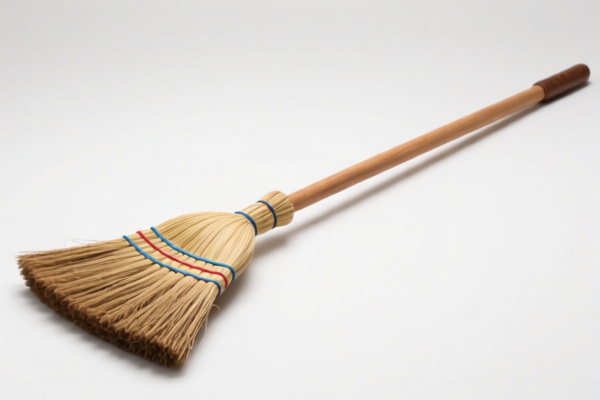
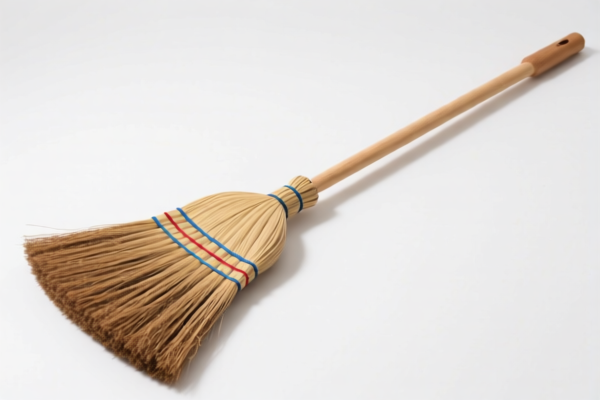
AI Analysis
🛁 Long Handled Silicone Bath Brush: HS Code Classification & 2026 US Customs Strategy
🌐 HS Code Reference & Clearance Guide | 2026 Updated Tariff Analysis | Professional Logistics Protocol
📌 I. Product Definition: What Exactly Is a "Long Handled Silicone Bath Brush"?
A Long Handled Silicone Bath Brush is a personal hygiene tool designed for exfoliation and cleaning the human body during bathing. Its defining characteristics include:
- Material: Silicone (Classified under plastics/synthetic rubber).
- Function: Scrubbing/cleaning the body (specifically for the bath/shower).
- Structure: Long handle for reach + silicone bristles/stripes for cleaning.
⚠️ Critical Classification Conflict:
In the eyes of US Customs and Border Protection (CBP), this product can be classified in two fundamentally different ways, leading to vastly different tax outcomes: 1. As a "Plastic Household Article" (General category): ~20.6% ~ 20.9% Total Tariff. 2. As a "Human Care Brush" (Specific category): ~10.3% ~ 10.6% Total Tariff + Specific Unit Duty (¢ per piece).
The distinction relies on whether the brush is viewed primarily as a "tool" (Plastic) or a "personal grooming implement" (Brush).
📦 II. HS Code Classification Matrix (2026 US Tariff Schedule)
Based on the provided data, here is the authoritative breakdown of the two competing classification paths:
| HS Code | Product Description | Classification Logic | Material | Key Differentiator |
|---|---|---|---|---|
| 3924.90.56.50 | Other Plastic Household & Sanitary Articles | Viewed as a "Plastic Cleaning Tool" for the home/bath. | Silicone (Plastic) | General Household category. |
| 3924.90.05.00 | Other Plastic Household & Sanitary Articles | Viewed as a "Plastic Sanitary Utensil". | Silicone/Plastic | Home/Sanitary category. Slightly lower base duty (3.1%). |
| 9603.29.80.90 | Other Brushes for the Human Body (Toilet/Bath) | Viewed specifically as a "Body Brush". | Silicone | Specific Grooming category. Subject to Unit Duty (¢/each). |
| 9603.29.40.90 | Other Brushes for Personal Toilet/Grooming | Viewed as a "General Hygiene Brush". | Silicone | Hygiene Grooming category. Subject to Unit Duty (¢/each). |
🔍 Deep Dive Analysis:
Path A (Chapters 39 - Plastics): The brush is treated as a molded plastic item. The tariff is calculated purely on the Value (CIF).
Path B (Chapter 96 - Brushes): The brush is treated as a functional grooming tool. The tariff is a Hybrid:(Unit Fee per item) + (Ad Valorem %).
The Trap: Many importers incorrectly classify high-volume, low-cost brushes under Chapter 39. If the CBP determines it is primarily a "grooming brush," they may reclassify to Chapter 96, but the 10% Section 301 & 122 Tariffs apply to both*.
💰 III. 2026 Tariff Rate Deep Dive (China to US)
✅ Target Market: United States (US)
✅ Origin: China (CN)
✅ Applicable Period: Post-Nov 2025 (Current & Projected)
🎯 Scenario A: Classification as Plastic Article (HS Code: 3924.90.56.50 or 3924.90.05.00)
| Tax Component | Rate Details | Impact on Cost |
|---|---|---|
| Base Duty (MFN) | 3.4% (for .56.50) or 3.1% (for .05.00) | Low base cost. |
| Section 301 (Add-on) | +7.5% | Mandatory "Add-on" tariff. |
| Section 122 (China Specific) | +10% | Mandatory "122 Clause" tariff. |
| Total Effective Rate | 20.6% ~ 20.9% | Calculated on CIF Value Only. |
| Tax Calculation | CIF Value × 20.6% |
No per-unit fee. |
📌 Why this happens: If the brush is deemed a "domestic use plastic tool" rather than a "grooming brush," the complex "per unit" calculation is avoided, but the percentage is higher due to the 10% Section 122 addition.
🎯 Scenario B: Classification as Human Care Brush (HS Code: 9603.29.80.90 or 9603.29.40.90)
| Tax Component | Rate Details | Impact on Cost |
|---|---|---|
| Base Duty | 3.6% (for .80.90) OR 7.0% (for .40.90) | Variable base rate. |
| Section 301 (Add-on) | 0.0% (Waived in this specific sub-class?) | See Note Below |
| Section 122 (China Specific) | +10% | Mandatory "122 Clause" tariff. |
| Unit Duty (The Catch) | 0.3¢ each (for .80.90) or 0.2¢ each (for .40.90) | High volume risk! |
| Total Effective Rate | Variable | (Unit Fee) + (3.6% or 7% + 10%) |
⚠️ Critical Warning on Section 301 (Add-on 7.5%):
For3924codes: 301 is 7.5% + 10% Section 122 = 17.5% extra. * For9603codes: The data shows 0.0% add-on for the 301 clause, but the 10% Section 122 applies. * Total for9603:0.3¢ + 3.6% + 10%. * Total for3924*:20.6%(includes 3.1% base + 7.5% 301 + 10% 122).🧮 Cost Comparison Example:
Order of 10,000 brushes @ $1.00 each (CIF = $10,000)
* Option A (Plastic 3924): $10,000 × 20.6% = $2,060 (Flat rate).
* Option B (Brush 9603): ($0.003 × 10,000) + ($10,000 × 13.6%) = $30 + $1,360 = $1,390.
Result: For high-volume, low-cost items, Chapter 96 (Brush) is often cheaper despite the "per unit" fee, because the 301 Add-on (7.5%) is often absent or lower in the 9603 category compared to the 3924 category.
🛠️ IV. Clearance Strategy & Expert Recommendations
✅ 1. The "122 Clause" & "301" Trap
- 122 Clause (Section 122): This is a mandatory 10% tariff on specific Chinese-origin goods. It applies to ALL 4 HS Codes listed above. There is no exemption.
- Section 301 (7.5% Add-on):
- Crucial Strategy: If your product can be legitimately argued as a "Body Brush" (9603), the 301 Add-on might be 0% (per the data), saving you 7.5% immediately.
- If classified as "Plastic Household" (3924), you pay the full 7.5% + 10% = 17.5% extra.
- Action: Push for 9603 classification if the unit price is low, as the total tax burden is often lower.
✅ 2. Product Description & Documentation
To successfully argue for 9603 (Brush) over 3924 (Plastic), your documentation must be precise: * Product Name: Do NOT use "Plastic Bath Brush" or "Silicone Cleaning Tool." Use "Body Scrubbing Brush", "Exfoliating Bath Brush", or "Grooming Brush for Human Use". * Marketing Copy: Emphasize "Personal Hygiene," "Exfoliation," and "Body Care." Avoid terms like "Household Cleaning," "Tile Scrubber," or "General Purpose." * Images: Show the brush being used on a human body (or in a context clearly implying human grooming), not on a floor or tile. * Material Declaration: Explicitly state "Silicone Bristles" and "Ergonomic Handle for Human Grip."
✅ 3. Unit Duty Calculation Risk
- If you choose 9603, remember the Unit Duty (¢/each).
- If you import 100,000+ units, the $0.3¢/unit adds up to $300.
- Verification: Ensure the "Base Duty" (3.6% or 7%) is applied correctly on top of the CIF value.
🌍 V. Global Market Comparison (US Focus)
| Feature | HS Code 3924 (Plastic) |
HS Code 9603 (Brush) |
|---|---|---|
| Primary Tax Driver | Ad Valorem (Value %) | Hybrid (Value % + Unit Fee) |
| Base Duty | 3.1% - 3.4% | 3.6% - 7.0% |
| Section 301 | +7.5% (High Risk) | 0.0% (Potential Savings) |
| Section 122 | +10% | +10% (Mandatory) |
| Total Estimate | ~20.6% - 20.9% | ~13.6% - 17% + Unit Fee |
| Best For | High-value brushes ( >$5.00) | High-volume, low-cost brushes ( < $2.00) |
🎯 VI. Conclusion & Final Action Plan
The "Long Handled Silicone Bath Brush" is a battleground for classification.
- If your unit price is HIGH: The flat percentage of 3924.90.56.50 (~20.9%) might be safer if the unit duty for 9603 becomes excessive.
- If your unit price is LOW (Standard Bath Brushes): 9603.29.80.90 is the WINNER. You avoid the 7.5% Section 301 add-on, paying only 3.6% base + 10% Section 122 + small unit fee.
- DO NOT IGNORE Section 122: No matter the HS code, the 10% surcharge is unavoidable for China-origin goods.
🚀 Pro Tip: Submit a Binding Ruling Request to CBP if you plan a large volume. Define your product as "A personal grooming brush for exfoliation" to lock in the 9603 rate before shipping.
✨ Your Logistics, Optimized. Your Costs, Calculated.
💼 Don't guess the HS Code. The difference between 20.9% and 13.6% is your entire profit margin.
Customer Reviews
About HS Code Classification
The Harmonized System (HS) is an internationally standardized nomenclature developed by the World Customs Organization (WCO) to classify traded products. Over 200 countries use the HS system as the basis for customs tariffs, trade statistics, and import/export regulations.
Each HS code follows a hierarchical structure:
- Chapter (2 digits) — Broad category of goods (e.g., Chapter 84: Machinery and Mechanical Appliances)
- Heading (4 digits) — More specific grouping within the chapter
- Subheading (6 digits) — Internationally standardized breakdown, used by all WCO member countries
- National subdivisions (8-10 digits) — Country-specific extensions for further classification, such as US HTSUS 10-digit codes
Correct HS code classification is essential for smooth customs clearance, accurate duty payment, and compliance with trade regulations. Misclassification can lead to customs delays, overpayment of duties, or penalties.
When importing from CN to US, the applicable tariff rates may include:
- Most-Favored-Nation (MFN) rate — The standard duty rate applied to WTO members
- General rate — Applied to countries without trade agreements
- Trade remedy duties — Additional tariffs such as Section 301 (anti-dumping), Section 232 (national security), or countervailing duties
The information provided on this page is for reference purposes only. For official classification, please consult with your local customs authority or a licensed customs broker.