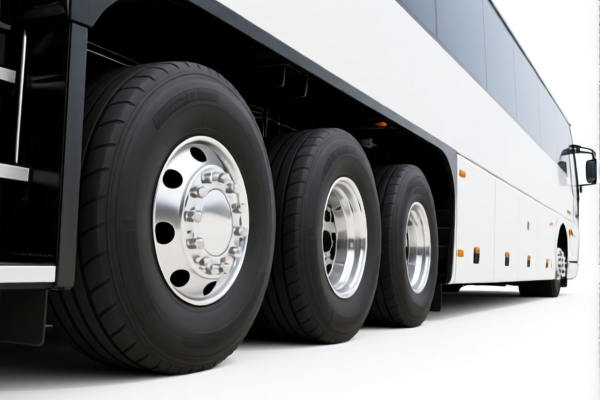
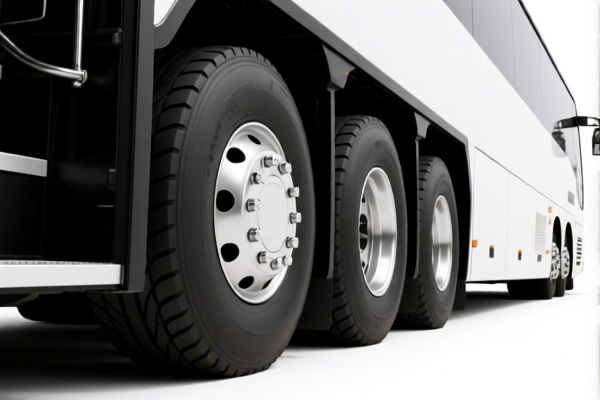
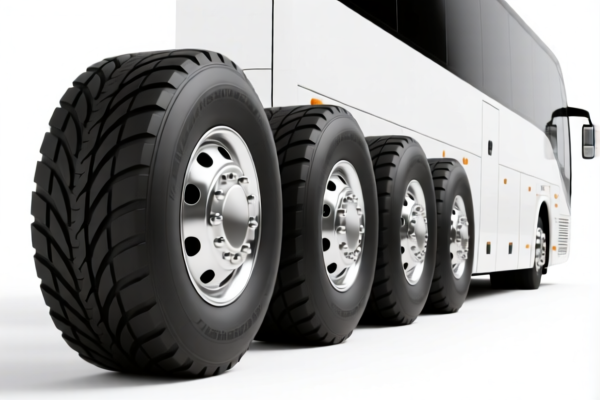
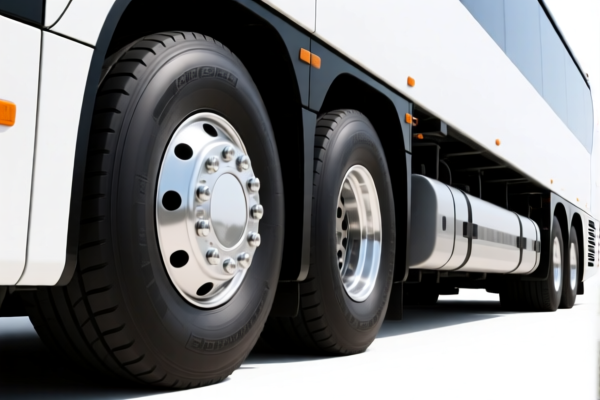
Long haul bus pneumatic tires
CN → US| HS Code | Tariff Rate | Origin | Destination | Doc |
|---|---|---|---|---|
| 4011201015 | 39.0% | CN | US | Official Doc |
| 4011201005 | 39.0% | CN | US | Official Doc |
Product Images
AI Analysis
🚌 Long Haul Bus Pneumatic Tires: HS Code Classification & Clearance Strategy (2026)
🌐 HS Code Reference & Clearance Guide | 2026最新税则全解析 | 专业级通关策略
Product Input: Long haul bus pneumatic tires
This guide breaks down the classification and tax implications for New Pneumatic Tires designed specifically for buses, focusing on Radial construction for on-the-highway use. Based on the provided dataset, we analyze the two specific sub-categories: Other and Light Truck variants.
📦 1. Product Definition & Classification: What exactly are "Long Haul Bus Tires"?
Long haul bus tires are heavy-duty pneumatic tires designed for commercial passenger vehicles. In international trade, they are strictly distinguished by vehicle type and construction.
- Vehicle Type: Buses or Trucks (Not passenger cars, motorcycles, or aircraft).
- Construction: Radial (Steel-belted radial is the standard for long-haul durability and fuel efficiency).
- Application: On-the-highway (Designed for speed, stability, and longevity on paved roads, unlike off-road or urban bus tires which may have different tread patterns).
⚠️ Key Distinction Point:
- If the tire is non-radial (bias-ply), it falls under a completely different heading (4011.10).
- If the tire is for passenger cars (SUVs/Sedans), it falls under 4011.10 or 4011.20 (but different sub-headers).
- Radial Bus/Truck Tires must be classified under 4011.20 series.
📊 2. HS Code Classification Details (2026 Official Tariff Data)
Based on the provided dataset, there are two specific HS Codes for Radial On-the-highway Bus/Truck tires. Note the critical difference in Tax Rates.
| HS Code | Product Description | Application Scenario | Tax Rate (Total) |
|---|---|---|---|
| 4011.20.10.15 | New pneumatic tires, of rubber: Of a kind used on buses or trucks: Radial On-the-highway: Other | Standard long-haul bus tires, heavy-duty truck tires (not light truck) | 4.0% |
| 4011.20.10.05 | New pneumatic tires, of rubber: Of a kind used on buses or trucks: Radial On-the-highway: Light Truck | Tires classified as "Light Truck" within the bus/truck category (e.g., smaller commercial vans/light buses) | 0.0% |
🔍 Critical Analysis:
- HS 4011.20.10.15 ("Other"): This is the standard classification for most heavy-duty bus tires. It attracts a 4.0% total tariff.
- HS 4011.20.10.05 ("Light Truck"): Despite being for "buses or trucks," this specific sub-heading carries a 0.0% tariff.
- ⚠️ Risk: Misclassifying a standard bus tire as "Light Truck" to avoid tax is high-risk. Customs requires strict proof of vehicle weight class and load index.
💰 3. 2026 Tariff Rate Breakdown & Legal Basis
✅ Applicable Jurisdiction: Based on the tariff structure (Base + Additional), this reflects a market with specific trade policies (e.g., US/China trade dynamics or similar preferential/non-preferential regimes).
✅ Product Origin: Assumed to be subject to base tariffs as per dataset.
🎯 1. 4011.20.10.15 – Radial On-the-highway Tires (Other)
| Item | Content |
|---|---|
| Base Tariff | 4.0% |
| Additional Tariff | 0.0% |
| Total Tariff | 4.0% |
| Tax Calculation | CIF Value × 4.0% |
| De Minimis Exemption | ❌ Not Applicable (Generally, commercial tires >$800 do not qualify, but always check local de minimis rules). |
| Legal Path | HS 4011.20.10.15 → Base Tax 4.0% |
📌 Explanation:
- This is a standard commercial good. The 4% rate is relatively low compared to electronics or textiles, but it is not zero.
- No additional penalties are listed in the dataset for this specific code, making it a stable, predictable cost.
🎯 2. 4011.20.10.05 – Radial On-the-highway Tires (Light Truck)
| Item | Content |
|---|---|
| Base Tariff | 0.0% |
| Additional Tariff | 0.0% |
| Total Tariff | 0.0% |
| Tax Calculation | CIF Value × 0.0% |
| De Minimis Exemption | ❌ Not Applicable (Tariff is zero anyway). |
| Legal Path | HS 4011.20.10.05 → Base Tax 0.0% |
📌 Explanation:
- Zero Duty Advantage: If your bus tires are certified as "Light Truck" tires, you save 4% on the CIF value.
- Eligibility Criteria: "Light Truck" typically refers to vehicles with a Gross Vehicle Weight Rating (GVWR) below a certain threshold (e.g., 6,000 lbs / 2,722 kg in the US, or similar local definitions).
- Warning: Heavy-duty inter-city buses usually exceed "Light Truck" classifications and must use4011.20.10.15.
🛠️ 4. Clearance Practical Advice (Avoiding Pitfalls)
✅ 1. Required Documentation Checklist
| Document | Required? | Description |
|---|---|---|
| ✅ Product Specification Sheet | ✔️ | Must include: Radial construction, Load Range, Size (e.g., 295/80R22.5), Type (Bus/Truck). |
| ✅ Commercial Invoice | ✔️ | Clearly state "Pneumatic Tires, Radial, For Bus/Truck Use." |
| ✅ Packing List | ✔️ | Itemize each tire size. Do not mix "Light Truck" and "Other" codes in one line item without breakdown. |
| ✅ Certificate of Origin (CO) | ✔️ | May affect tax rates in preferential trade agreements. |
| ✅ Test Reports | ✔️ | DOT/ECE certification to prove they are road-legal (e.g., ECE R108 for buses). |
✅ 2. Classification Tips (Key Mnemonics)
🔥 "Radial Bus = 4011.20. Look at Weight: Light Truck = 0%, Other = 4%!"
| Scenario | Correct HS Code | Mistake to Avoid |
|---|---|---|
| Standard Inter-City Bus Tire (e.g., 22.5" diameter, heavy load) | 4011.20.10.15 |
❌ Misclassifying as "Light Truck" (4011.20.10.05) → Audit Risk + Back Taxes |
| Small Shuttle Van/Minibus Tire (Light GVWR) | 4011.20.10.05 |
❌ Misclassifying as "Passenger Car" → Wrong Heading (4011.10) |
| Bias-Ply Bus Tire | 4011.10 (Not in dataset) |
❌ Using Radial codes for Bias tires → Rejection |
| Retreaded Bus Tires | 4012.13 (Not in dataset) |
❌ Using "New" tire codes for retreads → Major Violation |
✅ 3. Special Handling for "Light Truck" Classification
If you claim 0% tax under 4011.20.10.05, be prepared for Customs to ask:
- GVWR Proof: Provide vehicle specifications showing the tires are mounted on vehicles with a Gross Vehicle Weight Rating below the "Light Truck" threshold.
- Load Index: Show that the tire's load index matches light-duty commercial vehicles, not heavy-duty bus axles.
- Tread Pattern: Light truck bus tires may have different tread depths/patterns than heavy-haul bus tires.
📌 Advice: If there is any doubt, classify as
4011.20.10.15(4% tax). The cost of compliance is often lower than the penalty for misclassification (often 2x-3x the tax difference + fines).
🌍 5. Global Market Comparison (General Context)
| Region | HS Code (Radial Bus/Truck) | Typical Base Tariff | Note |
|---|---|---|---|
| 🇺🇸 USA | 4011.20.10 (General) |
0% - 4% | Subject to Section 301 tariffs if from China (check additional duties). |
| 🇨🇳 China | 4011.20.10 |
0% - 10% | Depends on trade agreements (e.g., RCEP, ASEAN). |
| 🇪🇺 EU | 4011.20.00 |
4.5% | Standard NTS rate. |
| 🇯🇵 Japan | 4011.20.00 |
0% - 3% | Often zero for business vehicles. |
📌 Conclusion:
- The dataset reflects a 4.0% vs 0.0% split. This is likely a specific national tariff line (e.g., US HTS).
- Always verify local "Light Truck" definitions. In some countries, "Light Truck" may not exist as a separate sub-heading for tires, and all bus tires may fall under the 4% rate.
📌 6. Common Errors & Pitfalls (Lessons Learned)
❌ Error 1: Using "Tires" generically without specifying "Radial" or "Bus/Truck".
👉 Consequence: Customs may default to a higher duty rate or reject the declaration.
❌ Error 2: Claiming "Light Truck" status for a heavy-duty bus tire.
👉 Consequence: Customs audit, back-taxes (4% of value), and potential penalties for fraud.
❌ Error 3: Mixing new and used tires in one shipment.
👉 Consequence: New tires (4011) vs. Used tires (4012). Mixed shipment leads to rejection or separate costly declarations.
✅ Correct Practice:
"Radial Pneumatic Tire, Size 295/80R22.5, For Heavy-Duty Bus, Model XYZ, DOT Certified"
🎯 7. Conclusion: Precise Classification Saves Money
🎯 Remember the Rule:
🔹 "Radial Bus Tires: Check Weight. Light Truck = 0%, Standard Bus = 4%."
🔹 "HS Code 4011.20 is the home. 10.05 is free, 10.15 costs 4%."
📌 Pro Tip:
If you are importing large volumes, consider Pre-Ruling (Advance Ruling) from Customs to officially confirm whether your specific tire model qualifies as "Light Truck" (4011.20.10.05) or "Other" (4011.20.10.15). This provides legal certainty and protects your profit margins.
📣 Immediate Action:
📞 Contact your freight forwarder with tire sidewall specs and vehicle GVWR data.
🚀 Declare accurately. 4% difference adds up fast on bus fleets!
✨ Professional Clearance Starts with Accurate Classification!
💼 Your bottom line depends on the last two digits of your HS Code!
Customer Reviews
About HS Code Classification
The Harmonized System (HS) is an internationally standardized nomenclature developed by the World Customs Organization (WCO) to classify traded products. Over 200 countries use the HS system as the basis for customs tariffs, trade statistics, and import/export regulations.
Each HS code follows a hierarchical structure:
- Chapter (2 digits) — Broad category of goods (e.g., Chapter 84: Machinery and Mechanical Appliances)
- Heading (4 digits) — More specific grouping within the chapter
- Subheading (6 digits) — Internationally standardized breakdown, used by all WCO member countries
- National subdivisions (8-10 digits) — Country-specific extensions for further classification, such as US HTSUS 10-digit codes
Correct HS code classification is essential for smooth customs clearance, accurate duty payment, and compliance with trade regulations. Misclassification can lead to customs delays, overpayment of duties, or penalties.
When importing from CN to US, the applicable tariff rates may include:
- Most-Favored-Nation (MFN) rate — The standard duty rate applied to WTO members
- General rate — Applied to countries without trade agreements
- Trade remedy duties — Additional tariffs such as Section 301 (anti-dumping), Section 232 (national security), or countervailing duties
The information provided on this page is for reference purposes only. For official classification, please consult with your local customs authority or a licensed customs broker.