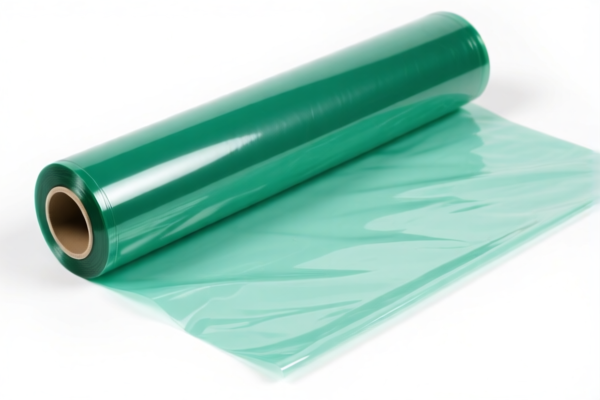
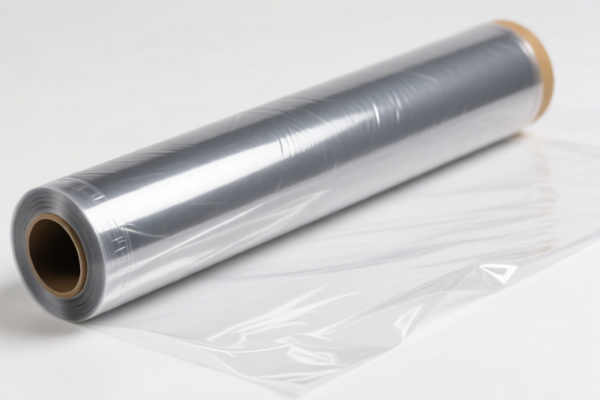
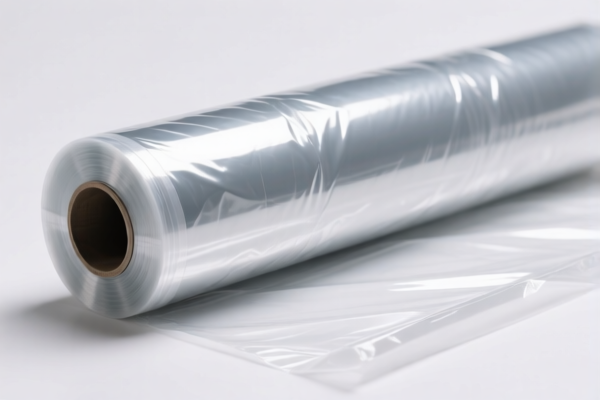
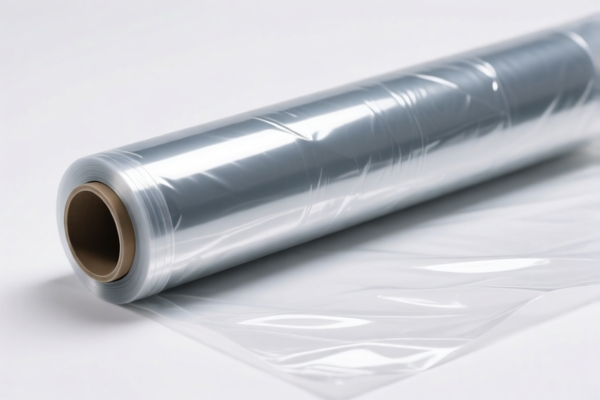
Long roll Industrial Grade Film
CN → US| HS Code | Tariff Rate | Origin | Destination | Doc |
|---|---|---|---|---|
| 3921190090 | 41.5% | CN | US | Official Doc |
| 3921905050 | 39.8% | CN | US | Official Doc |
| 3919102055 | 40.8% | CN | US | Official Doc |
| 3920991000 | 41.0% | CN | US | Official Doc |
| 3919905060 | 40.8% | CN | US | Official Doc |
Product Images
AI Analysis
🎞️ Long Roll Industrial Grade Film (工业级长卷薄膜)
🌐 HS Code Reference & Customs Clearance Guide | 2026 Latest Tariff Analysis | Professional Entry Strategy
📌 I. Product Definition & Classification: What is "Industrial Grade Film"?
Industrial Grade Film refers to plastic films, sheets, or foils used in manufacturing, packaging, protection, or industrial processes. Unlike consumer-grade packaging, these films are characterized by long rolls (jumbo reels), high tensile strength, and specific material properties (e.g., chemical resistance, thermal stability).
Key Classification Criteria:
1. Form: Is it a "roll" (3919) or a "sheet/film/foil" (3920/3921)?
2. Surface Treatment: Is it self-adhesive? (If yes, 3919).
3. Material: Which plastic polymer is it? (PE, PP, PVC, PET, etc.).
4. Purpose: Is it for general protection (3920/3921) or specific industrial use?
⚠️ Critical Distinction:
- If the film is self-adhesive (has glue on one side, often backed by a release liner), it belongs to Chapter 3919.
- If it is a plain film/sheet/foil (no adhesive), it belongs to Chapter 3920 or 3921.
- "Long Roll" does not change the HS code, but it confirms the product is not cut into small consumer packs, supporting the "Industrial" classification.
📦 II. HS Code Classification Matrix (2026 Latest Tariff Reference)
Based on the provided data, here are the 5 potential HS Codes for "Long Roll Industrial Grade Film," ranging from self-adhesive to non-adhesive types.
| HS Code | Product Description | Key Characteristics | Adhesive? | Total Tax Rate |
|---|---|---|---|---|
3919.10.20.55 |
Self-adhesive plastic film, in rolls, width ≤ 20cm | Narrow rolls, industrial labeling, masking tape-like films | ✅ Yes | 40.8% |
3919.90.50.60 |
Other self-adhesive plastic plates, sheets, film, tape, strip, and other forms | Wide rolls, heavy-duty industrial tapes, non-narrow self-adhesive films | ✅ Yes | 40.8% |
3920.99.10.00 |
Other plates, sheets, film, foil, and strip, of plastics | Non-adhesive, specific plastic type (not PE/PP/PVC/etc. listed elsewhere), industrial protection | ❌ No | 41.0% |
3921.19.00.90 |
Other plates, sheets, film, foil, and strip, of plastics | Industrial grade, specific material inferred as "Other Plastic," no material conflict | ❌ No | 41.5% |
3921.90.50.50 |
Other plates, sheets, film, foil, and strip, of plastics | Industrial film, generic plastic classification, "film" form factor | ❌ No | 39.8% |
🔍 Priority Analysis:
- Check for Adhesive First: If your film has glue (e.g., masking tape, protective film with pressure-sensitive adhesive), you MUST choose 3919 (3919.10.20.55or3919.90.50.60). Misclassifying adhesive film as non-adhesive (3920/3921) is a common customs error.
- If Non-Adhesive: You must determine the exact plastic material.
-3920.99.10.00: Often used for "other" plastics not specified in 3920.01-08.
-3921.19.00.90&3921.90.50.50: Used for films/sheets/foils where the specific plastic type might be a composite or "other" plastic.
- Tax Difference:3921.90.50.50offers the lowest total tax (39.8%), while3921.19.00.90is the highest (41.5%).
💰 III. 2026 Latest Tariff Rate Breakdown (US Import from China)
✅ Applicable Country: United States (US)
✅ Country of Origin: China (CN)
✅ Effective Date: From November 10, 2025 (and subsequent imports)
All HS Codes listed above are subject to a three-layer tariff structure:
1. Base Tariff (MFN): 4.8% – 6.5%
2. Section 301 Tariff (25%): Standard trade war surcharge.
3. Section 122 Tariff (10%): IEEPA surcharge on Chinese goods.
🎯 1. 3919.10.20.55 – Self-Adhesive Film (Narrow Roll)
| Item | Detail |
|---|---|
| Base Tariff | 5.8% |
| Section 301 | +25.0% |
| Section 122 (IEEPA) | +10.0% |
| Total Tax Rate | 40.8% |
| Calculation Basis | CIF Value × 40.8% |
| De Minimis Exemption | ❌ Not Eligible (Denied) |
📌 Explanation:
- Self-adhesive films are heavily scrutinized. The 10% IEEPA tariff applies specifically to many Chinese plastic products.
- Risk: If the product is not truly self-adhesive but classified here, customs may reclassify it to 3920/3921, potentially changing the base rate.
🎯 2. 3919.90.50.60 – Self-Adhesive Film (Wide/Other)
| Item | Detail |
|---|---|
| Base Tariff | 5.8% |
| Section 301 | +25.0% |
| Section 122 (IEEPA) | +10.0% |
| Total Tax Rate | 40.8% |
| Calculation Basis | CIF Value × 40.8% |
| De Minimis Exemption | ❌ Not Eligible |
📌 Note:
- Same tax structure as3919.10.20.55. The distinction is only in the width (≤20cm vs. >20cm).
- Ensure your invoice clearly states the roll width to avoid duty evasion accusations.
🎯 3. 3920.99.10.00 – Non-Adhesive Plastic Film
| Item | Detail |
|---|---|
| Base Tariff | 6.0% |
| Section 301 | +25.0% |
| Section 122 (IEEPA) | +10.0% |
| Total Tax Rate | 41.0% |
| Calculation Basis | CIF Value × 41.0% |
| De Minimis Exemption | ❌ Not Eligible |
📌 Explanation:
- This is a "basket" category for plastics not elsewhere specified.
- Risk: Customs may request a detailed composition analysis to verify it doesn't fit a more specific plastic category (e.g., Polyethylene3920.10).
🎯 4. 3921.19.00.90 – Industrial Grade Film (Specific Plastic)
| Item | Detail |
|---|---|
| Base Tariff | 6.5% |
| Section 301 | +25.0% |
| Section 122 (IEEPA) | +10.0% |
| Total Tax Rate | 41.5% |
| Calculation Basis | CIF Value × 41.5% |
| De Minimis Exemption | ❌ Not Eligible |
📌 Explanation:
- Highest base tariff (6.5%) among the options.
- Use this only if the film is a specific "industrial grade" plastic that fits this subheading.
- Optimization Tip: If your material is compatible with3921.90.50.50, you save 0.7% on the total duty.
🎯 5. 3921.90.50.50 – Industrial Grade Film (Generic/Other)
| Item | Detail |
|---|---|
| Base Tariff | 4.8% |
| Section 301 | +25.0% |
| Section 122 (IEEPA) | +10.0% |
| Total Tax Rate | 39.8% |
| Calculation Basis | CIF Value × 39.8% |
| De Minimis Exemption | ❌ Not Eligible |
📌 Explanation:
- Lowest Total Tax Rate (39.8%) in the list.
- Best for general industrial films where the specific plastic type is not critical or fits the "other" category.
- Recommendation: If your product qualifies, this is the most cost-effective classification.
🛠️ IV. Customs Clearance Practical Advice (Pitfall Avoidance)
✅ 1. Documentation Checklist (Mandatory)
| Document | Required? | Explanation |
|---|---|---|
| ✅ Product Specification Sheet | ✔️ | Must list: Material (e.g., PE, PP, PVC), Thickness, Width, Roll Length, Adhesive Type (Yes/No). |
| ✅ Material Safety Data Sheet (MSDS) | ✔️ | Helps customs verify chemical composition and industrial use. |
| ✅ Product Photos (Full Roll & Cross-Section) | ✔️ | Shows "long roll" format, label, and physical properties. |
| ✅ Commercial Invoice | ✔️ | Must clearly state: "Industrial Grade Plastic Film, Non-Adhesive" OR "Self-Adhesive Plastic Film." |
| ✅ Packing List | ✔️ | Detail number of rolls, weight per roll, total weight. |
| ✅ Letter of Explanation (if asked) | ✔️ | If customs questions the HS code, provide a technical memo explaining why this code is correct. |
✅ 2. Declaration Tips (Key Mnemonic)
🔥 "Adhesive Check First, Then Plastic Type. Width Matters for 3919. Roll Format Supports Industrial."
| Scenario | Correct Declaration | Incorrect Action |
|---|---|---|
| Self-Adhesive Tape/Film | 3919.xx.xx.xx |
Declare as 3920 → High Risk of Penalties |
| Non-Adhesive Film | 3920.99.10.00 or 3921.xx.xx.xx |
Declare as 3919 → Overpayment or Rejection |
| Specific Plastic (e.g., PE) | 3920.10.xx.xx (if applicable) |
Use 3920.99 (General) → May be challenged |
| Composite Film | 3921.19.00.90 or 3921.90.50.50 |
Declare as single material → Misclassification |
✅ 3. Special Cases
| Case | Handling Advice |
|---|---|
| Multi-layer Film (Lamination) | If bonded with adhesives, it may be 3921. If bonded by heat, check the primary material layer. |
| Coated Film | If one side is coated (not adhesive), it is still non-adhesive. Use 3920 or 3921. |
| Customs Audit Risk | Ensure the HS Code matches the Material Declaration. If you declare "PE" but use 3921.90 (which may imply other plastics), provide a justification. |
| Origin Marking | Clearly mark "Made in China" on the outer packaging to trigger IEEPA 10% tariff correctly (avoid surprises). |
🌍 V. Global Market Comparison (2026 Update)
| Market | Recommended HS Code | Base Tariff | S301/IEEPA Surcharge | Total Est. Tax |
|---|---|---|---|---|
| 🇺🇸 USA | 3921.90.50.50 (Lowest) |
4.8% | +35.0% (25%+10%) | 39.8% |
| 🇨🇳 China | 3921.90.50.50 |
5.5% - 7% | 0% | ~6-7% |
| 🇪🇺 EU | 3920.99.10.00 |
6.5% | 0% | 6.5% |
| 🇬🇧 UK | 3921.90.50.50 |
6.5% | 0% | 6.5% |
📌 Conclusion:
- The US market is the most expensive due to the 35% total surcharge (25% S301 + 10% IEEPA).
- EU/UK are much more favorable, but HS Codes differ (use EU Nomenclature).
- Strategy: If importing to the US, optimize the material description to fit the 39.8% category (3921.90.50.50) rather than 41.5%.
📌 VI. Common Errors & Pitfalls (Blood Lessons)
❌ Error 1: Calling "Protective Film" as "Packaging Material"
👉 Consequence: Wrong HS Code → Delays & Re-inspection.
✅ Fix: Declare as "Plastic Film, Industrial Grade."
❌ Error 2: Ignoring the "Adhesive" Factor
👉 Consequence: Misclassifying self-adhesive film as 3920 → Penalty + Back Duties.
✅ Fix: Always test for stickiness. If sticky, use 3919.
❌ Error 3: Vague Description "Plastic Film"
👉 Consequence: Customs cannot determine the exact plastic → Request for Samples/Tests.
✅ Fix: Specify "Polyethylene (PE) Industrial Film, 50um Thickness."
❌ Error 4: Assuming "Long Roll" = Lower Duty
👉 Consequence: No legal basis for lower duty based on roll length.
✅ Fix: Duty is based on Material + Form (Sheet/Film/Adhesive), not roll length.
🎯 VII. Conclusion: Professional Declaration, Cost Savings!
🎯 Remember the Mnemonic:
🔹 "Adhesive? → 3919. No Adhesive? → Check Plastic. 3921.90 is Best (39.8%). Never De Minimis!"
🔹 "HS Code is King. 35% Surcharge is Real. Declare Accurately!"
📌 Pro Tip:
If your film is made of Polyethylene (PE) or Polypropylene (PP), check if there are more specific codes in 3920.10 or 3920.30. If those apply, the base tariff might be different, but the 35% surcharge still applies.
Recommendation: Conduct a Pre-Ruling (Advance Ruling) with US CBP if the material is complex (e.g., multi-layer, coated) to lock in the 39.8% rate.
📣 Immediate Action:
📞 Contact Your Customs Broker + Provide Product Spec Sheet + Confirm Adhesive Status
🚀 Ensure Smooth Clearance, Avoid 41.5% Pitfall, Maximize Profit!
✨ Professional Customs Clearance Starts with Accurate Classification!
💼 Every Percent Saved is Pure Profit!
Customer Reviews
About HS Code Classification
The Harmonized System (HS) is an internationally standardized nomenclature developed by the World Customs Organization (WCO) to classify traded products. Over 200 countries use the HS system as the basis for customs tariffs, trade statistics, and import/export regulations.
Each HS code follows a hierarchical structure:
- Chapter (2 digits) — Broad category of goods (e.g., Chapter 84: Machinery and Mechanical Appliances)
- Heading (4 digits) — More specific grouping within the chapter
- Subheading (6 digits) — Internationally standardized breakdown, used by all WCO member countries
- National subdivisions (8-10 digits) — Country-specific extensions for further classification, such as US HTSUS 10-digit codes
Correct HS code classification is essential for smooth customs clearance, accurate duty payment, and compliance with trade regulations. Misclassification can lead to customs delays, overpayment of duties, or penalties.
When importing from CN to US, the applicable tariff rates may include:
- Most-Favored-Nation (MFN) rate — The standard duty rate applied to WTO members
- General rate — Applied to countries without trade agreements
- Trade remedy duties — Additional tariffs such as Section 301 (anti-dumping), Section 232 (national security), or countervailing duties
The information provided on this page is for reference purposes only. For official classification, please consult with your local customs authority or a licensed customs broker.