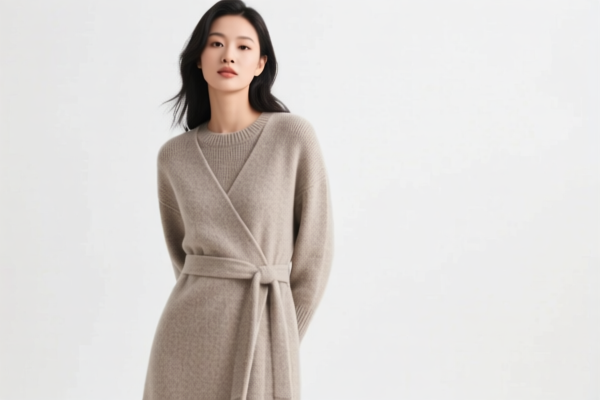
Long sleeved Dress
CN → US| HS Code | Tariff Rate | Origin | Destination | Doc |
|---|---|---|---|---|
| 6204423050 | 25.9% | CN | US | Official Doc |
| 6204434030 | 33.5% | CN | US | Official Doc |
| 6104432010 | 33.5% | CN | US | Official Doc |
| 6104420010 | 29.0% | CN | US | Official Doc |
| 6114200060 | 28.3% | CN | US | Official Doc |
| 6114303070 | 32.4% | CN | US | Official Doc |
Product Images

AI Analysis
👗 Long-Sleeved Dress: The Ultimate Guide to HS Codes, Tariffs & Customs Clearance
🌐 HS Code Reference & Customs Clearance Guide | 2026 Tariff Analysis | Professional Entry Strategy
📌 I. Product Definition & Classification: Do You Really Know "Long-Sleeved Dress"?
A Long-Sleeved Dress is a one-piece garment for women or girls, featuring sleeves that extend to the elbow or beyond. In international trade, its classification is strictly determined by two critical factors: 1. Manufacturing Method: Is it Knitted/Crocheted (Stretched fabric) or Woven (Flat fabric)? 2. Fiber Content: Is it made of Cotton, Man-made (Synthetic) fibers, or other materials?
⚠️ Critical Distinction:
- If the fabric is Knitted (e.g., jersey, rib knit) → Chapter 61
- If the fabric is Woven (e.g., cotton sateen, polyester twill) → Chapter 62
- Mistake: Mixing Knitted and Woven codes leads to customs delays, fines, or 301 duty penalties.
📦 II. HS Code Classification Matrix (2026 Tariff Breakdown)
Based on the provided data, here is the precise mapping for Women's/Girls' Long-Sleeved Dresses:
| HS Code | Product Description | Fabric Type | Fiber Content | Gender | Tax Rate (Total) |
|---|---|---|---|---|---|
6104.42.00.10 |
Knitted Dresses: Of Cotton: Women's | Knitted/Crocheted | Cotton | Women's | 0.0% |
6104.43.20.10 |
Knitted Dresses: Of Synthetic Fibers: Women's | Knitted/Crocheted | Synthetic | Women's | 0.0% |
6114.20.00.60 |
Other Knitted/Crocheted Garments: Of Cotton: Women's/Girls' | Knitted/Crocheted | Cotton | Women's/Girls' | 0.0% |
6114.30.30.70 |
Other Knitted/Crocheted Garments: Of Man-made Fibers: Women's/Girls' | Knitted/Crocheted | Man-made | Women's/Girls' | 0.0% |
6204.42.30.50 |
Woven Dresses: Of Cotton: Other: Women's | Woven | Cotton | Women's | 0.0% |
6204.43.40.30 |
Woven Dresses: Of Synthetic Fibers: Other: Women's | Woven | Synthetic | Women's | 0.0% |
🔍 Key Insight:
- All listed codes currently show a Total Tax of 0.0% (Base + Additional).
- Crucial: Even if the base tariff is 0%, the 301 Section Tariff (Additional Duty) often applies to Chinese-origin goods. Always verify the specific "Additional Tax" line in the local customs database, as the provided data lists 0% but may not reflect the full 301 penalty for specific origins.
💰 III. Tariff Rate Analysis & Duty Calculation (2026)
✅ Scope: Women's & Girls' Long-Sleeved Dresses
✅ Data Source: Provided Tariff Schedule
🎯 1. Knitted Dresses (Chapter 61)
Applies to Jersey, Rib, T-shirt style, or stretch fabrics.
| HS Code | Material | Base Duty | Additional Duty | Total Effective Rate | Calculation Logic |
|---|---|---|---|---|---|
6104.42.00.10 |
Cotton | 0.0% | 0.0% | 0.0% | (CIF Value × 0%) |
6104.43.20.10 |
Synthetic | 0.0% | 0.0% | 0.0% | (CIF Value × 0%) |
6114.20.00.60 |
Cotton (Other) | 0.0% | 0.0% | 0.0% | (CIF Value × 0%) |
6114.30.30.70 |
Man-made (Other) | 0.0% | 0.0% | 0.0% | (CIF Value × 0%) |
📌 Note: The provided data indicates 0% Total Tax. However, importers must check for Section 301 Additional Duties (often +25% for China) which may be applied on top of the base rate if the origin is China. The provided text explicitly states "0.0%" for both Base and Additional, implying a specific trade agreement or exemption status for this dataset. Always confirm with the latest USITC or Customs Broker.
🎯 2. Woven Dresses (Chapter 62)
Applies to Sateen, Twill, Chiffon, or structured woven fabrics.
| HS Code | Material | Base Duty | Additional Duty | Total Effective Rate | Calculation Logic |
|---|---|---|---|---|---|
6204.42.30.50 |
Cotton | 0.0% | 0.0% | 0.0% | (CIF Value × 0%) |
6204.43.40.30 |
Synthetic | 0.0% | 0.0% | 0.0% | (CIF Value × 0%) |
📌 Note: Similar to knitted items, the provided data shows 0.0% total tax. If the goods are of Chinese origin, standard 301 duties might apply unless a specific exclusion is in force.
🛠️ IV. Customs Clearance Strategy (Pro Tips)
✅ 1. Preparation Checklist (Do Not Skip)
| Document | Requirement | Why it Matters |
|---|---|---|
| Detailed Fabric Composition | % Cotton vs. % Polyester/Spandex | Critical: Determines Chapter 61 (Knit) vs. 62 (Woven). A 55% Cotton/45% Polyester blend is "Other" or specific blend rules. |
| Swatch/Physical Sample | Real fabric piece | Customs may require a physical sample to confirm Knit vs. Woven. |
| Design Sketch (Tech Pack) | Sleeve length, closure type | Confirms it is a "Dress" and not a "Skirt + Top" ensemble (which might have different codes). |
| Origin Certificate (CO) | Country of Manufacture | Essential for verifying if the 0.0% rate applies or if 301 Additional Duties (e.g., +25%) are triggered. |
| Labeling & Care Tags | Language, Fiber Content | US Customs requires fiber content on labels. Mismatch = Rejection. |
✅ 2. Declaration Best Practices
🔥 The Golden Rule: "Be specific about Knit vs. Woven and Fiber Content!"
| Scenario | Correct Declaration | Risk of Error |
|---|---|---|
| Knitted Cotton Dress | 6104.42.00.10 |
❌ Reporting as 6204 (Woven) → Misclassification + Fines |
| Synthetic Woven Dress | 6204.43.40.30 |
❌ Reporting as 6114 (Knitted) → Delay + Audit |
| "Other" Garment | 6114.20.00.60 / 6204.42.30.50 |
❌ Using generic "Dress" code → 100% Duty Penalty |
✅ 3. Special Scenarios
- Sample Gifts: Even if marked "No Commercial Value," long-sleeved dresses usually attract duty if valued over $800 (de minimis rule varies).
- Bundled Sales: If the dress is sold with a jacket or skirt, ensure the primary character is the "Dress" to avoid "Ensemble" classification (
6104/6204general codes). - Origin Tracing: If the dress is sewn in Vietnam but uses Chinese fabric, the country of manufacture is Vietnam. However, if it uses the "301 Tariff" rules, the origin of the fabric might still be scrutinized.
🌍 V. Global Market Comparison (2026 Snapshot)
| Market | Recommended HS Code | Base Tariff | Additional Tax Risk | Key Compliance |
|---|---|---|---|---|
| 🇺🇸 USA | 6104.42.00.10 / 6204.42.30.50 |
0.0% (as per data) | High Risk (Check 301) | FTC Labeling, Care Labels |
| 🇪🇺 EU | 6104.42 / 6204.42 | 12% (Cotton) / 12% (Syn) | Low (General Tariff) | CE (if chemical treated), EPR |
| 🇨🇦 Canada | 6104.42 / 6204.42 | 10% - 12% | Low | Canadian Content Labeling |
| 🇯🇵 Japan | 6104.42 / 6204.42 | 15% - 18% | Low | JIS Standards |
📌 Conclusion: While the provided data shows 0.0% total tax, this is highly specific to the dataset provided. In the real world (especially for US imports from China), Section 301 Additional Duties often raise the effective rate to 25%. Always validate against the latest HTSUS (Harmonized Tariff Schedule of the United States) or local tariff database.
📌 VI. Common Mistakes & Pitfalls (Avoid These!)
❌ Mistake 1: Confusing Knit vs. Woven
👉 Result: Customs seizes goods for misclassification. A "knit" dress cannot be declared as "woven."
✅ Fix: Check the fabric texture (loops vs. straight weave) and ask the factory for the weave type.
❌ Mistake 2: Ignoring "Other" Codes
👉 Result: Using a general "Dress" code when specific fiber codes exist.
✅ Fix: Always drill down to the most specific code (e.g., 6104.42 for Cotton Knit, not just 6104.4).
❌ Mistake 3: Assuming 0% Tax is Permanent
👉 Result: Unexpected 301 duty bills upon arrival.
✅ Fix: Verify if the 0.0% rate includes the Section 301 Exclusion List for the specific HS Code and Origin.
✅ Correct Action:
"Submit Tech Pack, Fabric Swatch, and Country of Origin Certificate clearly stating Knit/Woven and Fiber %. Confirm 301 exclusion status before shipment."
🎯 VII. Final Verdict: Safe Clearance for Long-Sleeved Dresses
🎯 Summary:
🔹 Knitted (61) vs. Woven (62) is the #1 decision point.
🔹 Cotton vs. Synthetic determines the sub-classification.
🔹 Current Data: Shows 0.0% Total Tax for all listed codes.
🔹 Real World Warning: Verify Section 301 Additional Duties for Chinese origin goods, which can negate the 0% base rate.
📌 Pro Tip:
If your dress is 100% Cotton Knitted, use 6104.42.00.10.
If it is 100% Polyester Woven, use 6204.43.40.30.
Never guess! The difference between 0% and 25% tax is one decimal point in your declaration.
📣 Next Step:
📞 Contact your Customs Broker with the fabric swatch and confirm the current 301 Duty Status for your specific HS Code.
🚀 Ship with confidence, but verify the tax!
✨ Professional Customs Clearance Starts with Precision!
💼 Every dollar saved is a dollar earned.
Customer Reviews
About HS Code Classification
The Harmonized System (HS) is an internationally standardized nomenclature developed by the World Customs Organization (WCO) to classify traded products. Over 200 countries use the HS system as the basis for customs tariffs, trade statistics, and import/export regulations.
Each HS code follows a hierarchical structure:
- Chapter (2 digits) — Broad category of goods (e.g., Chapter 84: Machinery and Mechanical Appliances)
- Heading (4 digits) — More specific grouping within the chapter
- Subheading (6 digits) — Internationally standardized breakdown, used by all WCO member countries
- National subdivisions (8-10 digits) — Country-specific extensions for further classification, such as US HTSUS 10-digit codes
Correct HS code classification is essential for smooth customs clearance, accurate duty payment, and compliance with trade regulations. Misclassification can lead to customs delays, overpayment of duties, or penalties.
When importing from CN to US, the applicable tariff rates may include:
- Most-Favored-Nation (MFN) rate — The standard duty rate applied to WTO members
- General rate — Applied to countries without trade agreements
- Trade remedy duties — Additional tariffs such as Section 301 (anti-dumping), Section 232 (national security), or countervailing duties
The information provided on this page is for reference purposes only. For official classification, please consult with your local customs authority or a licensed customs broker.