Longitudinally Sawed or Split Wood
CN → US| HS Code | Tariff Rate | Origin | Destination | Doc |
|---|---|---|---|---|
| 4407190055 | 35.0% | CN | US | Official Doc |
| 4407110001 | 35.0% | CN | US | Official Doc |
| 4407110043 | 35.0% | CN | US | Official Doc |
| 4407190055 | 35.0% | CN | US | Official Doc |
| 4407190055 | 35.0% | CN | US | Official Doc |
Product Images
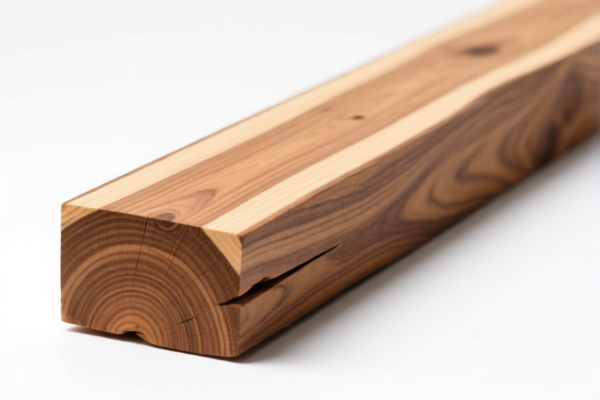
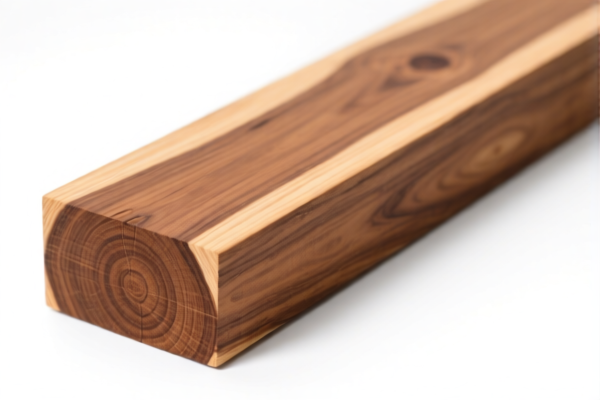
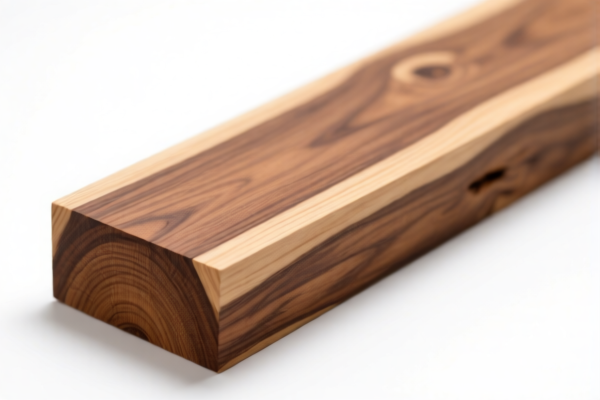
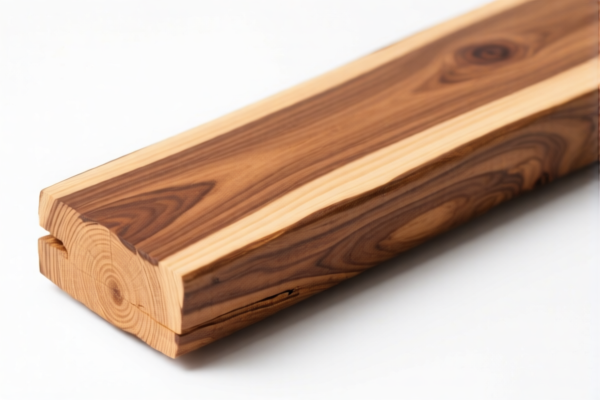
AI Analysis
🪵 Longitudinally Sawed or Split Wood (Processed Timber)
🌐 HS Code Reference & Customs Clearance Guide | 2026 Latest Tariff Analysis | Professional Classification Strategy
📌 I. Product Definition & Classification: What Exactly is "Longitudinally Sawed or Split Wood"?
In international trade, "Longitudinally Sawed or Split Wood" refers to timber that has undergone mechanical processing along its length. This category primarily falls under Chapter 44 (Wood and articles of wood; wood charcoal).
The key characteristic is the processing method: 1. Sawing (Sliced): Cutting the wood into planks, beams, or strips using saws. 2. Splitting: Mechanically splitting logs along the grain. 3. Planing: Smoothing the surface after sawing/splitting.
⚠️ Key Distinction:
- If the wood is merely squared off (roughly rectangular) but retains its natural bark or major defects, it may fall under Chapter 4407 if it meets specific thickness/width criteria, or Chapter 4406 (Railway sleepers) or 4403 (Wood in the rough, treated or not).
- However, for general commercial trade, Chapter 4407 covers wood sawn or chipped lengthwise, sliced or peeled, which is the primary focus here.
- Critical Factor: The type of wood (Coniferous vs. Non-Coniferous) and the specific dimensions determine the exact HS code.
📦 II. HS Code Classification Details (2026 Latest Tariff Authority Comparison)
Based on the provided data, the following HS Codes are applicable for longitudinally sawed or split wood, primarily targeting US imports from China.
| HS Code | Product Description | Summary / Logic for Classification | Applicable Scenario |
|---|---|---|---|
4407.19.00.55 |
Other wood, sawn or chipped lengthwise, sliced or peeled, whether or not planed, sanded or finger-jointed, of a thickness exceeding 6 mm | 兜底编码 (Fallback Code): Matches the general morphology of longitudinally sawn/sliced wood. It is a catch-all for wood that doesn't fit specific sub-categories (like specific softwoods or hardwoods with exact dimensions). | General purpose lumber, non-specific timber types, or mixed shipments. |
4407.11.00.01 |
Wood, sawn or chipped lengthwise, sliced or peeled, whether or not planed, sanded or finger-jointed, of a thickness exceeding 6 mm; of coniferous species; not further prepared than simply sawn or chipped lengthwise, sliced or peeled | Exact Match: The product name "Longitudinally Sawed..." fully matches the morphology and material characteristics. Specifically identifies Coniferous (Softwood) species. | Pine, Spruce, Fir, etc., processed longitudinally. |
4407.11.00.43 |
Same as above | Inferred Coniferous Wood: Wood treated by longitudinal sawing, cutting, or planing conforms to classification explanations. Inferred as coniferous wood based on other categories. | Softwood timber, similar to above, potentially different grade or dimension within the same broad category. |
4407.19.00.55 |
Wood, sawn or chipped lengthwise... | Attribute Match: Wood treated by longitudinal sawing, cutting, or planing is completely consistent with the longitudinal sawing or slicing classification. Matches wood attributes. | General wood products meeting the longitudinal processing criteria. |
4407.19.00.55 |
Wood, sawn or chipped lengthwise... | Processing Method Match: The morphology of sawn, planed, rotary-cut, or longitudinally cut wood is consistent with the processing methods required by HS Code 4407. | General timber products. |
🔍 Key Observation:
-4407.11series specifically refers to Coniferous (Softwood) species. -4407.19series is the "Other" category, often used as a fallback for non-coniferous woods or when specific coniferous sub-codes don't perfectly match dimensions/grades. - All listed codes in the data share the same total tax rate, simplifying the financial impact analysis.
💰 III. 2026 Latest Tariff Rate Breakdown (Including Additional Taxes & Policy Surcharges)
✅ Applicable Country: United States (US)
✅ Country of Origin: China (CN)
✅ Effective Date: Post-2025 policies (including subsequent imports)
🎯 1. All Listed HS Codes (4407.11.00.01, 4407.11.00.43, 4407.19.00.55)
| Item | Content |
|---|---|
| Base Tariff Rate | 0.0% (ad valorem) |
| Additional Tariff (Section 301 / 25%) | +25.0% (USITC Footnote associated with Section 301 tariffs on Chinese goods) |
| 122 Clause Tariff (IEEPA) | +10.0% (Specific surcharge under International Emergency Economic Powers Act, often linked to specific country lists or trade remedies) |
| Total Tariff Rate | 35.0% |
| Tax Calculation | CIF Value × 35% |
| De Minimis Exemption | ❌ Not Applicable (Denied) |
| Legal Basis Path | USITC:4407.xx.xx.xx → Section 301: +25% → 122 Clause: +10% |
📌 Explanation:
- "Base Tariff 0%": Wood products often have low or zero base Most Favored Nation (MFN) tariffs. - "25% Additional Tariff": This is the standard Section 301 tariff rate for many Chinese wood products. - "10% 122 Clause Tariff": This refers to a specific trade remedy or surcharge (often associated with specific legislative clauses or bilateral agreements) applied to Chinese-origin goods. - Total 35%: This is a significant cost factor. Importers must calculate this into the landed cost immediately.
🛠️ IV. Customs Clearance Practical Advice (Real-World Pitfall Avoidance Guide)
✅ 1. Documentation Checklist (All Required)
| Document | Must Provide | Notes |
|---|---|---|
| ✅ Product Specification Sheet | ✔️ | Must detail wood species (Coniferous vs. Non-Coniferous), dimensions (thickness, width, length), and moisture content. |
| ✅ Bill of Lading / Commercial Invoice | ✔️ | Clearly state "Longitudinally Sawed Wood" or "Sawn Timber". Avoid vague terms like "Wooden Material". |
| ✅ Phytosanitary Certificate | ✔️ | Critical for wood. Must confirm the wood is free from pests and diseases (ISPM 15 standards). |
| ✅ Fumigation Certificate | ✔️ | If wood is not heat-treated or treated with approved chemicals. |
| ✅ Country of Origin Certificate | ✔️ | To confirm Chinese origin (which triggers the 35% tariff). If transshipped, proper origin proof is vital. |
| ✅ Packing List | ✔️ | Include packaging details (pallets, etc.) to ensure no wood packaging violations. |
✅ 2. Declaration Tips (Key Mantras)
🔥 “Species Matters, Dimensions Define, Treatment is Key!”
| Situation | Correct Declaration Method | Wrong Practice |
|---|---|---|
| Coniferous Wood (Pine, Spruce) | HS Code 4407.11.00.01 or 4407.11.00.43 |
Misclassifying as 4407.19 (non-coniferous) → Risk of penalty if species is proven softwood. |
| Non-Coniferous / Unknown Wood | HS Code 4407.19.00.55 |
Misclassifying as 4407.11 → Customs may reclassify and fine. |
| Wood with Bark Still Attached | Check if it qualifies as "Wood in the Rough" (Ch 4403) or "Sawn" (Ch 4407). | Assuming all cut wood is 4407. |
| Wood Packaging (Pallets) | Must comply with ISPM 15. Marked with IPPC stamp. | Using non-compliant pallets → Detention & Destruction Risk. |
✅ 3. Special Cases Handling
| Situation | Handling Advice |
|---|---|
| Mixed Shipments (Softwood & Hardwood) | Split the declaration. Softwood → 4407.11; Hardwood → 4407.19. Mixed declaration can cause delays. |
| Wood with High Moisture Content | Ensure it meets export standards. High moisture can lead to mold, which triggers phytosanitary inspections. |
| Pressure-Treated Wood | Must declare chemical treatments. May require additional EPA or local environmental compliance documents. |
| Origin Fraud (Transshipment) | Do NOT attempt to re-label Chinese wood as "Made in Vietnam" or "Made in Thailand". The 35% tariff is strictly enforced on Chinese origin. |
🌍 V. Global Market Clearance Comparison (2026 Latest)
| Country/Region | Recommended HS Code | Tariff (China Origin) | Certification Requirements | Notes |
|---|---|---|---|---|
| 🇺🇸 USA | 4407.11.00.01 / 4407.19.00.55 |
35% (0% Base + 25% Sec 301 + 10% 122 Clause) | Phytosanitary Cert + ISPM 15 | High Tariff Risk. Must declare species accurately. |
| 🇨🇳 China | 4407.11.00.01 / 4407.19.00.55 |
~20-30% (Import Duty) | Phytosanitary | Domestic trade has different rules. |
| 🇪🇺 EU | 4407 Series |
0% (Most Cases) | EUTR (EU Timber Regulation) | Strict due diligence on legality. No Section 301 tariffs. |
| 🇨🇦 Canada | 4407 Series |
0% (Most Cases) | CFIA Phytosanitary | Generally favorable trade terms. |
| 🇯🇵 Japan | 4407 Series |
0-3% | ISPM 15 + Wood Protection Act | Low base tariff, strict quality controls. |
📌 Conclusion:
- USA is the most challenging market for Chinese wood due to the 35% total tariff.
- EU, Canada, and Japan offer more favorable tariff environments but have strict sustainability and phytosanitary regulations.
- Strategy: For US market, consider sourcing from non-China origins (if possible) or factor the 35% into pricing. For other markets, focus on legal sourcing documentation.
📌 VI. Common Mistakes & Pitfall Guide (Lessons Learned)
❌ Mistake 1: Ignoring Wood Species (Coniferous vs. Non-Coniferous)
👉 Consequence: Wrong HS code (4407.11 vs 4407.19). While tax rate is same in this data, incorrect classification can lead to audits and fines.
❌ Mistake 2: Missing Phytosanitary Certificate
👉 Consequence: Cargo detained at port, potential destruction. Wood is a high-risk category for pests.
❌ Mistake 3: Using Non-Compliant Wood Packaging (Pallets/Crates)
👉 Consequence: Violation of ISPM 15. Cargo rejected or re-exported at importer's cost.
❌ Mistake 4: Misdeclaring Origin to Avoid Tariffs
👉 Consequence: Severe penalties, seizure of goods, and blacklisting. The 35% tariff is heavily enforced.
✅ Correct Approach:
"Coniferous Wood, Longitudinally Sawn, 20mm Thick, Moisture Content <15%, Heat Treated, ISPM 15 Marked, Origin: China"
🎯 VII. Conclusion: Precision in Classification, Savings in Tariffs!
🎯 Remember the Mantra:
🔹 "Species Defines Code, Dimensions Define Grade, Treatment Prevents Rejection."
🔹 "35% Tariff is Real for US, 0% is Dream for EU."
🔹 "Phytosanitary Cert is King, No Cert, No Entry."
📌 Pro Tip:
If your wood is sourced from Vietnam, Thailand, or Malaysia (and not merely transshipped from China), you may avoid the 35% US tariff (tariff drops to base rate ~0-5%).
Recommend Advance Ruling with US Customs (CBP) for high-volume shipments to ensure HS code accuracy.
📣 Immediate Action:
📞 Contact a licensed customs broker + Provide Species Declaration + Apply for ISPM 15 Compliance
🚀 Ensure your wood passes customs smoothly, avoids detention, and maximizes profit!
✨ Professional clearance starts with accurate classification!
💼 Every percentage point of tariff affects your bottom line!
Customer Reviews
About HS Code Classification
The Harmonized System (HS) is an internationally standardized nomenclature developed by the World Customs Organization (WCO) to classify traded products. Over 200 countries use the HS system as the basis for customs tariffs, trade statistics, and import/export regulations.
Each HS code follows a hierarchical structure:
- Chapter (2 digits) — Broad category of goods (e.g., Chapter 84: Machinery and Mechanical Appliances)
- Heading (4 digits) — More specific grouping within the chapter
- Subheading (6 digits) — Internationally standardized breakdown, used by all WCO member countries
- National subdivisions (8-10 digits) — Country-specific extensions for further classification, such as US HTSUS 10-digit codes
Correct HS code classification is essential for smooth customs clearance, accurate duty payment, and compliance with trade regulations. Misclassification can lead to customs delays, overpayment of duties, or penalties.
When importing from CN to US, the applicable tariff rates may include:
- Most-Favored-Nation (MFN) rate — The standard duty rate applied to WTO members
- General rate — Applied to countries without trade agreements
- Trade remedy duties — Additional tariffs such as Section 301 (anti-dumping), Section 232 (national security), or countervailing duties
The information provided on this page is for reference purposes only. For official classification, please consult with your local customs authority or a licensed customs broker.