Longleaf Pine Logs
CN → US| HS Code | Tariff Rate | Origin | Destination | Doc |
|---|---|---|---|---|
| 4403210120 | 35.0% | CN | US | Official Doc |
| 4403220120 | 35.0% | CN | US | Official Doc |
Product Images
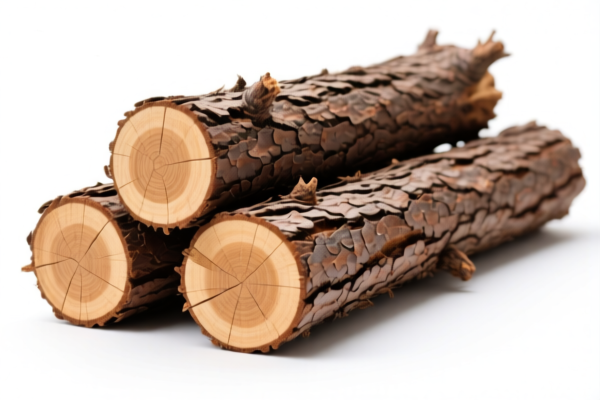
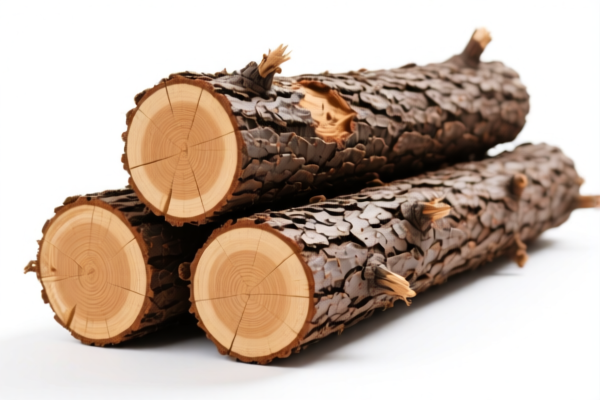
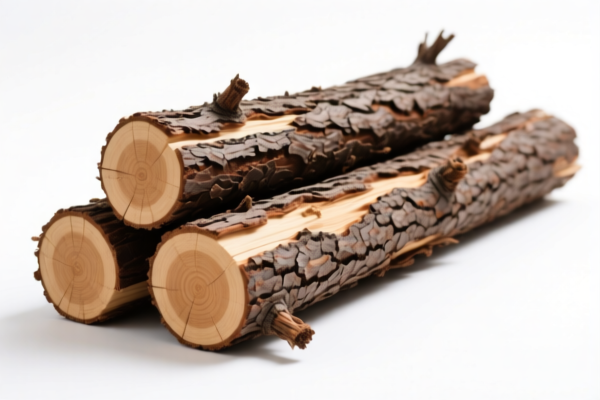
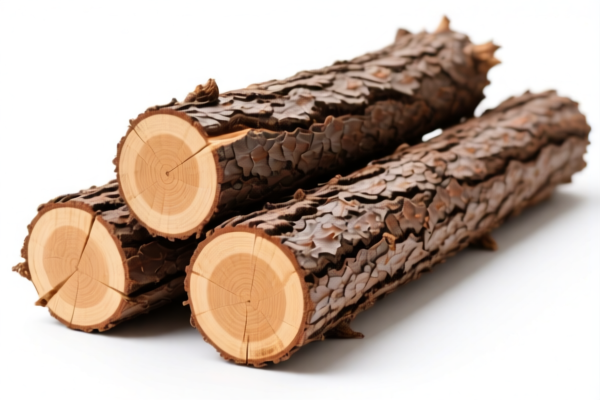
AI Analysis
🌲 Longleaf Pine Logs (Pinus palustris)
🌐 HS Code Reference & Customs Clearance Guide | 2026 Latest Tariff Analysis | Professional Clearance Strategy
📌 I. Product Definition & Classification: Are You Clear on "Longleaf Pine"?
Longleaf Pine is a specific, high-value species of Southern Yellow Pine native to the southeastern United States. In international trade, it falls under the broad category of "Wood in the Rough" (unprocessed timber), but its classification depends strictly on its physical dimensions and processing state.
Key Distinction: * Rough Squared vs. Unprocessed: Logs that are merely stripped of bark or roughly squared fall under HS 4403.21 or 4403.22 depending on the smallest cross-sectional dimension. * Dimension Threshold: The critical threshold is 15 cm. * ≥ 15 cm: Classified as Logs/Timbers (HS 4403.21.01.20). * < 15 cm (or other non-coniferous pine): Classified as Other Coniferous Wood (HS 4403.22.01.20).
⚠️ Critical Checkpoint:
- If the smallest cross-sectional dimension is 15 cm or more → Go to HS 4403.21.01.20.
- If the product is described generally as "Other Pine" or does not meet the specific "Logs/Timbers" dimension criteria for Southern Yellow Pine variants like Longleaf → Go to HS 4403.22.01.20.
📦 II. HS Code Classification Details (2026 Authoritative Mapping)
Based strictly on the provided data for Southern Yellow Pine (which includes Longleaf Pine, Pinus palustris):
| HS Code | Product Description | Key Criteria |
|---|---|---|
4403.21.01.20 |
Wood in the rough... Other, coniferous: Of pine... Logs and timber: Long leaf pine (Pinus palustris) | Smallest cross-sectional dimension ≥ 15 cm (Roughly squared or stripped of bark) |
4403.22.01.20 |
Wood in the rough... Other, coniferous: Of pine (Pinus spp.), other Logs and timber: Long leaf pine (Pinus palustris) | Other dimensions/specifications (Falls under "Other" category if not meeting specific 15cm+ log criteria or classified broadly) |
🔍 Important Note:
- Both codes explicitly list "Long leaf pine (Pinus palustris)".
- The difference lies entirely in the sub-heading structure:
- 4403.21: Refers to pine with the smallest cross-sectional dimension of 15 cm or more.
- 4403.22: Refers to other pine wood (often implying smaller dimensions or different processing states not covered by 4403.21).
- You must verify the physical dimensions of your Longleaf Pine logs to choose the correct code. Misclassification leads to significant tariff discrepancies (0% vs. 25%).
💰 III. 2026 Latest Tariff Rate Details (Including Additional Duties)
✅ Applicable Country: United States (US)
✅ Origin: China (CN) (Note: If origin is US, duties may differ; this analysis assumes Chinese origin as per typical tariff queries unless specified otherwise)
✅ Effective Time: Current rates apply as per the provided data.
🎯 1. 4403.21.01.20 — Longleaf Pine Logs (≥ 15 cm dimension)
| Item | Content |
|---|---|
| Base Tariff | 0.0% |
| Additional Tariff (Section 301/Retaliatory) | 0.0% |
| Total Tax Rate | 0.0% |
| Tax Calculation | CIF Value × 0% = $0 |
| De Minimis Eligibility | ❌ No (General rule for wood products; low-value shipments may still be subject to inspection) |
| Legal Basis Path | HTSUS:4403.21.01.20 → USITC Tariff Schedule |
📌 Explanation:
- This code benefits from a 0% total tax rate.
- This is likely due to specific trade agreements or exemptions for certain timber products, or the specific HS sub-heading being exempt from Section 301 tariffs.
- Low Risk: No additional duties apply.
🎯 2. 4403.22.01.20 — Longleaf Pine (Other/Non-15cm+ specific)
| Item | Content |
|---|---|
| Base Tariff | 0.0% |
| Additional Tariff (Section 301/Retaliatory) | +25.0% |
| Total Tax Rate | 25.0% |
| Tax Calculation | CIF Value × 25% |
| De Minimis Eligibility | ❌ No |
| Legal Basis Path | HTSUS:4403.22.01.20 → USITC Footnote 9903.xx.xx (General Section 301 applicability) |
📌 Explanation:
- This code incurs a 25% additional tariff.
- This reflects the standard Section 301 tariff imposed on many Chinese-origin goods.
- High Cost: A 25% tariff significantly impacts the landed cost.
- Warning: If your logs are ≥ 15 cm, they must be declared under4403.21.01.20to avoid this 25% penalty. Declaring a large log under4403.22is incorrect and may lead to audits, but declaring a small log under4403.21is also incorrect. Dimension is key.
🛠️ IV. Customs Clearance Practical Advice (Avoid Pitfalls)
✅ 1. Documentation Checklist (Must-Haves)
| Document | Required | Purpose |
|---|---|---|
| Commercial Invoice | ✔️ | Must clearly state "Longleaf Pine (Pinus palustris)" and HS Code. |
| Packing List | ✔️ | Detail the number of logs, dimensions (especially smallest cross-section), and weight. |
| Phytosanitary Certificate | ✔️ | CRITICAL for Wood. Issued by the country of origin's agricultural authority to prove pest-free status. |
| Species Declaration | ✔️ | Explicitly identify species as Pinus palustris. Mislabeling as generic "Pine" can lead to misclassification. |
| Dimension Verification | ✔️ | Provide measurements of the smallest cross-sectional diameter to justify HS 4403.21 vs. 4403.22. |
| Fumigation Certificate | ✔️ | Proof of heat treatment or fumigation (ISPM 15 standard). |
✅ 2. Declaration Tips (Key Mantra)
🔥 "Dimension Decides, Species Defines, Phytosanitary Validates!"
| Scenario | Correct Action | Wrong Action |
|---|---|---|
| Log diameter ≥ 15 cm | Declare under 4403.21.01.20 (0% tax) | Declare under 4403.22.01.20 (25% tax) → Overpayment |
| Log diameter < 15 cm | Declare under 4403.22.01.20 (25% tax) | Declare under 4403.21.01.20 → Underpayment/False Declaration |
| General "Pine" description | Specify Longleaf Pine | Use generic "Softwood" → Audit Risk |
| No Phytosanitary Cert | Do Not Ship | Risk of seizure, destruction, or return |
✅ 3. Special Handling & Pre-Clearance
| Situation | Advice |
|---|---|
| Mixed Shipments | If a shipment contains both ≥15cm and <15cm logs, split the HS codes on the entry. Do not average dimensions. |
| Roughly Squared Logs | Ensure the description states "Roughly Squared" if applicable. This supports the "Wood in the Rough" classification. |
| Bark Status | Specify if bark is stripped or retained. Both are allowed under 4403.21/22, but accuracy prevents delays. |
| Pre-Arrival Review | Submit an ACE (Automated Commercial Environment) pre-filing with photos of logs showing scale/ruler for dimension verification. |
🌍 V. Global Market Comparison (2026 Latest)
| Country/Region | Recommended HS Code | Tariff (China Origin) | Certification | Notes |
|---|---|---|---|---|
| 🇺🇸 United States | 4403.21.01.20 or 4403.22.01.20 |
0% or 25% | Phytosanitary Cert | Dimension is critical for tax optimization. |
| 🇨🇳 China | 4403.21 / 4403.22 |
Varies (Check Local Tariff) | N/A | US data provided; check CN import rules separately. |
| 🇪🇺 EU | 4403.21 / 4403.22 |
0-4.5% (Standard) | Fumigation/Phytosanitary | Strict EUTR (EU Timber Regulation) compliance required. |
| 🇨🇦 Canada | 4403.21 / 4403.22 |
0-6% | Phytosanitary Cert | Similar dimensional rules to US. |
📌 Conclusion:
- The US market offers a zero-tariff opportunity for Longleaf Pine logs if they meet the ≥15 cm dimension requirement (HS 4403.21.01.20).
- Failure to dimension correctly results in a 25% penalty.
- Phytosanitary documentation is non-negotiable for all wood products.
📌 VI. Common Errors & Pitfalls (Blood Lesson)
❌ Error 1: Declaring a 20 cm log as "Other Pine" (4403.22)
👉 Consequence: Pay 25% extra tax unnecessarily.
❌ Error 2: Declaring a 10 cm log as "Log ≥15cm" (4403.21)
👉 Consequence: Customs audit, potential fines, and repayment of 0% duty that was wrongly claimed.
❌ Error 3: Missing Phytosanitary Certificate
👉 Consequence: Seizure, destruction, or return of cargo. Delay of weeks/months.
❌ Error 4: Vague Species Description ("Pine")
👉 Consequence: CBP (Customs Border Protection) may reclassify, leading to delayed clearance and inquiries.
✅ Correct Practice:
"Longleaf Pine Logs, Pinus palustris, Roughly Squared, Bark Removed, Smallest Cross-Sectional Dimension: 18 cm, Fumigated, Phytosanitary Cert No. XYZ-123"
🎯 VII. Conclusion: Precise Classification Saves Money!
🎯 Remember the Mantra:
🔹 "15 cm is the Line: Above it, Zero Duty; Below it, 25% Bite!"
🔹 "Phytosanitary is King: No Cert, No Entry!"
🔹 "Species Matters: Longleaf is Specific, Not Generic!"
📌 Pro Tip:
If you are exporting US-origin Longleaf Pine to other countries, the tariffs will differ. However, for imports into the US, use the dimensional rule strictly. Consider Pre-Ruling from CBP if your shipment has mixed dimensions to ensure compliance.
📣 Immediate Action:
📞 Measure Every Log Batch: Verify the smallest cross-sectional dimension.
📋 Secure Phytosanitary Cert: Ensure it is issued by the competent authority.
📝 Accurate Description: Use "Longleaf Pine (Pinus palustris)" and specify dimensions.
✨ Professional Clearance Starts with Precise Classification!
💼 Every Dimension Counts, Every Percent Adds Up!
Customer Reviews
About HS Code Classification
The Harmonized System (HS) is an internationally standardized nomenclature developed by the World Customs Organization (WCO) to classify traded products. Over 200 countries use the HS system as the basis for customs tariffs, trade statistics, and import/export regulations.
Each HS code follows a hierarchical structure:
- Chapter (2 digits) — Broad category of goods (e.g., Chapter 84: Machinery and Mechanical Appliances)
- Heading (4 digits) — More specific grouping within the chapter
- Subheading (6 digits) — Internationally standardized breakdown, used by all WCO member countries
- National subdivisions (8-10 digits) — Country-specific extensions for further classification, such as US HTSUS 10-digit codes
Correct HS code classification is essential for smooth customs clearance, accurate duty payment, and compliance with trade regulations. Misclassification can lead to customs delays, overpayment of duties, or penalties.
When importing from CN to US, the applicable tariff rates may include:
- Most-Favored-Nation (MFN) rate — The standard duty rate applied to WTO members
- General rate — Applied to countries without trade agreements
- Trade remedy duties — Additional tariffs such as Section 301 (anti-dumping), Section 232 (national security), or countervailing duties
The information provided on this page is for reference purposes only. For official classification, please consult with your local customs authority or a licensed customs broker.