Loofah Creative Products
CN → US| HS Code | Tariff Rate | Origin | Destination | Doc |
|---|---|---|---|---|
| 3926204050 | 16.5% | CN | US | Official Doc |
| 5601220091 | 41.3% | CN | US | Official Doc |
| 5601210090 | 38.6% | CN | US | Official Doc |
| 6116105530 | 30.7% | CN | US | Official Doc |
Product Images
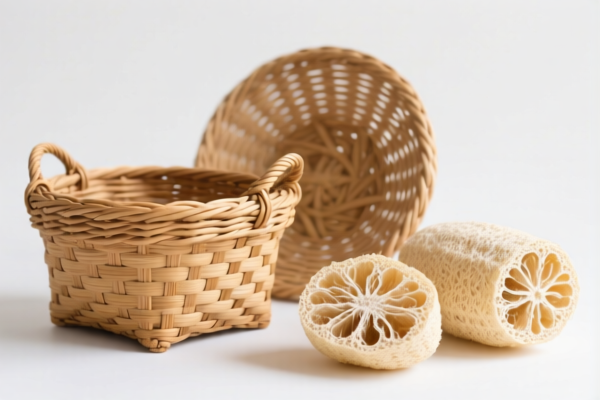
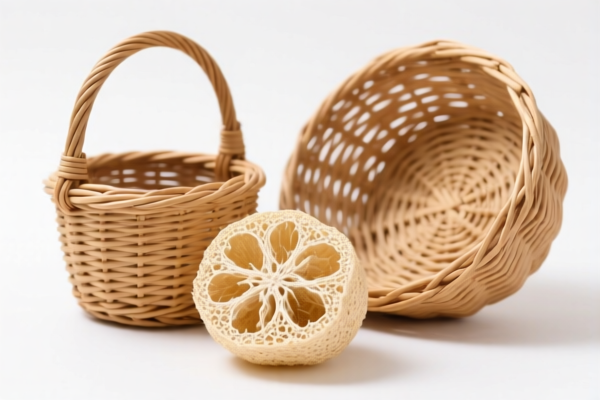
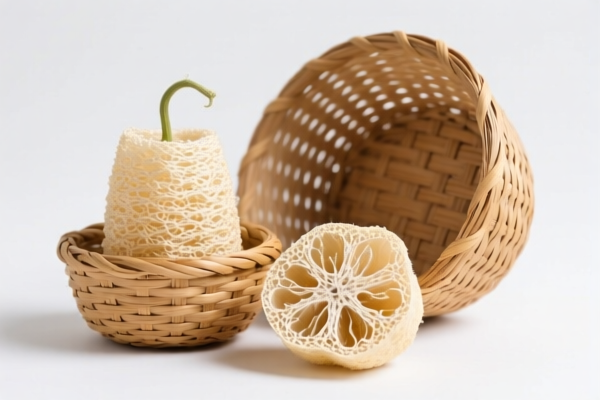
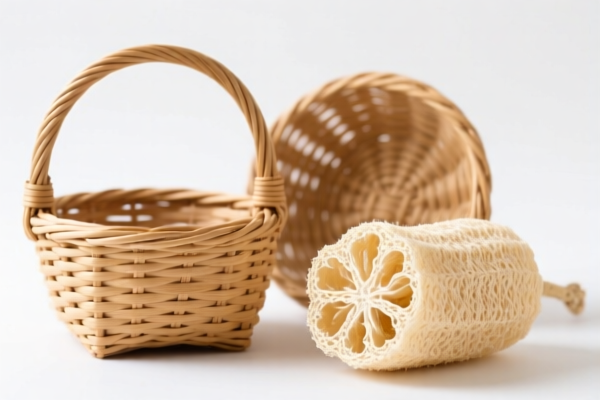
AI Analysis
🛁 Loofah Creative Products (Bath Gloves/Sponges)
🌐 HS Code Reference & Customs Clearance Guide | 2026 Latest Tariff Analysis | Strategic Compliance Strategy
📌 I. Product Definition & Classification: What Exactly is a "Loofah Creative Product"?
In international trade, "Loofah Creative Products" typically refer to bath accessories such as bath gloves, sponge mitts, or exfoliating sponges. These items are primarily used for personal hygiene and body care.
Depending on the material composition and manufacturing method, they fall into different categories:
- Plastic/Synthetic Sponge Gloves: Made from polyurethane (PU) foam or similar synthetic materials. These are soft, absorbent, and often shaped like a hand glove.
- Textile-Fleece Composite Gloves: Where the outer layer is textile material with a fleece/sponge backing (often PU-coated).
- Knitted Gloves: Woven or knitted fabric gloves, potentially with a coating.
⚠️ Key Distinction Point:
- If the product is primarily made of PU foam/synthetic sponge without significant textile backing → It leans towards Plastics (Chapter 39) or Non-woven/Fleece (Chapter 56).
- If the product is knitted or woven fabric with a coating → It leans towards Textile Gloves (Chapter 61).
- If the product is a fleece/synthetic wadding product → It leans towards Textile Fleece Products (Chapter 56).
📦 II. HS Code Classification Details (2026 Latest Tariff Authority Reference)
Based on the provided data, here are the four potential HS Codes with their tax implications and logic:
| HS Code | Product Description | Application Scenario | Material/Structure Logic |
|---|---|---|---|
3926.20.40.50 |
Other articles of plastic and articles of other materials of heading 3901 to 3914 | Plastic/Synthetic sponge bath gloves, PU foam pads | ✅ Plastic/Polymer based: Inferred as plastic/synthetic material (e.g., polyurethane), fitting "other plastic articles" |
5601.22.00.91 |
Wadding and articles of wadding; other articles of textile materials (catch-all) | Synthetic sponge/bath gloves using textile wadding/fleece logic | ✅ Textile Wadding/Fleece: Inferred as synthetic material (PU) used as textile wadding/fleece derivative |
5601.21.00.90 |
Wadding and articles of wadding of synthetic fibres; other articles of textile materials (catch-all) | Bath gloves with synthetic fiber wadding/padding | ✅ Synthetic Wadding: Based on material inference, classified as textile wadding/padding items |
6116.10.55.30 |
Gloves, mittens and mitts, impregnated, coated, covered or laminated with plastics, knitted or crocheted | Knitted/crocheted bath gloves coated with PU/plastic | ✅ Knitted/Crocheted Textile: Fits "knitted or crocheted gloves"; material inferred as textile with plastic coating |
🔍 Critical Reminder:
- Material is King: The primary differentiator is whether the core structure is pure plastic/sponge (3926) or textile-based (5601/6116).
- US Importer Caution: All listed codes attract significant Section 301 (25%) and IEEPA (10%) additional tariffs for Chinese origin.
- Duty Savings Potential:3926.20.40.50has the lowest total tariff (16.5%) compared to textile-based alternatives (30.7%–41.3%).
💰 III. 2026 Latest Tariff Rate Breakdown (Including Surtaxes & Policy Surcharges)
✅ Applicable Country: United States (US)
✅ Country of Origin: China (CN)
✅ Effective Date: From November 10, 2025 (including subsequent imports)
🎯 1. 3926.20.40.50 – Other Plastic Articles (Lowest Duty Option)
| Item | Content |
|---|---|
| Base Tariff | 6.5% |
| Section 301 Surtax | 0.0% (Note: Data shows 0.0% for this specific code, but verify if general 25% applies to other plastic goods) |
| IEEPA Surtax | 10% (Section 122 Clause) |
| Total Tariff | 16.5% |
| Tax Calculation | CIF Value × 16.5% |
| De Minimis Exemption | ❌ Not Applicable (Likely denied for commercial imports; check if under $800 threshold applies for personal use) |
| Legal Basis Path | IEEPA:9903.01.25 → 3926.20.40.50 |
📌 Explanation:
- This is the most cost-effective classification among the options.
- It avoids the heavy 25% Section 301 tariff seen in textile categories.
- Caution: Ensure the product is indeed predominantly plastic/synthetic foam. If misclassified, CBP may reclassify it to a higher duty code.
🎯 2. 5601.22.00.91 – Wadding & Articles of Wadding (Highest Duty)
| Item | Content |
|---|---|
| Base Tariff | 6.3% |
| Section 301 Surtax | 25.0% |
| IEEPA Surtax | 10% |
| Total Tariff | 41.3% |
| Tax Calculation | CIF Value × 41.3% |
| De Minimis Exemption | ❌ Not Applicable |
| Legal Basis Path | IEEPA:9903.01.25 → 5601.22.00.91 |
📌 Explanation:
- High duty burden due to 25% Section 301 surtax on textile/wadding products from China.
- Only suitable if the product is structurally defined as "wadding/fleece" rather than a glove.
🎯 3. 5601.21.00.90 – Synthetic Fiber Wadding Articles
| Item | Content |
|---|---|
| Base Tariff | 3.6% |
| Section 301 Surtax | 25.0% |
| IEEPA Surtax | 10% |
| Total Tariff | 38.6% |
| Tax Calculation | CIF Value × 38.6% |
| De Minimis Exemption | ❌ Not Applicable |
| Legal Basis Path | IEEPA:9903.01.25 → 5601.21.00.90 |
📌 Explanation:
- Similar to above, high due to 25% Section 301.
- Lower base rate than5601.22.00.91, but total duty remains prohibitive for competitive pricing.
🎯 4. 6116.10.55.30 – Knitted/Crocheted Plastic-Coated Gloves
| Item | Content |
|---|---|
| Base Tariff | 13.2% |
| Section 301 Surtax | 7.5% |
| IEEPA Surtax | 10% |
| Total Tariff | 30.7% |
| Tax Calculation | CIF Value × 30.7% |
| De Minimis Exemption | ❌ Not Applicable |
| Legal Basis Path | IEEPA:9903.01.25 → 6116.10.55.30 |
📌 Explanation:
- Section 301 surtax is only 7.5% for this specific glove subtype, which is lower than the standard 25%.
- However, the base tariff (13.2%) is higher than the plastic category.
- Total duty (30.7%) is still significantly higher than3926.20.40.50.
🛠️ IV. Customs Clearance Practical Advice (Battle-Tested Pitfall Avoidance)
✅ 1. Required Documentation Checklist (All Must Be Provided)
| Document | Must Provide | Explanation |
|---|---|---|
| ✅ Product Specification Sheet | ✔️ | Must detail material composition (e.g., "100% Polyurethane Foam" vs. "Cotton Knit with PU Coating") |
| ✅ Product Photos | ✔️ | Clear images showing texture, shape, and any labels. Highlight if it looks like a "sponge" or a "glove". |
| ✅ Bill of Materials (BOM) | ✔️ | Breakdown of material weights to prove if it's >50% plastic (for 3926) or textile (for 6116). |
| ✅ Commercial Invoice | ✔️ | Description must match HS Code logic (e.g., "Plastic Bath Sponge Glove" vs. "Knitted Cotton Bath Glove"). |
| ✅ Packing List | ✔️ | Net/Gross weight, dimensions. |
✅ 2. Declaration Strategy (Key Mantra)
🔥 "Plastic Sponge = 3926 (16.5%), Textile Glove = 6116 (30.7%)! Choose Wisely!"
| Scenario | Correct Declaration | Wrong Approach |
|---|---|---|
| Product is soft, spongy, non-woven PU | 3926.20.40.50 |
Call it "Cotton Glove" → Rejection & Penalties |
| Product is knitted fabric with PU coating | 6116.10.55.30 |
Call it "Plastic Article" → Rejection & Penalties |
| Product is textile fleece/sponge composite | 5601.22.00.91 or 5601.21.00.90 |
Avoid if possible due to high duty |
| Product is natural loofah (plant) | Not listed here (Likely Chapter 07 or 14) | Do not declare as synthetic plastic |
📌 Strategic Tip:
If your product is 100% Polyurethane Foam shaped like a glove, strongly advocate for3926.20.40.50. It saves you 14–25% in total duties compared to textile-based codes.
✅ 3. Special Case Handling
| Case | Handling Advice |
|---|---|
| Hybrid Products (Textile + Plastic) | If the plastic coating/layer is <10% by weight, it may still be textile. If >50%, argue for plastic. Get a lab test! |
| Section 301 Exclusion Requests | Check if any exclusions apply to plastic bath accessories. Unlikely, but worth verifying. |
| De Minimis ($800) | For individual parcels under $800, duties may not apply. But for commercial shipments, duties are always calculated. |
| Labeling | Ensure labels say "Made of Polyurethane" or "Synthetic Sponge" to support 3926 classification. |
🌍 V. Global Market Comparison (2026 Latest)
| Country/Region | Recommended HS Code | Total Tariff (CN Origin) | Remarks |
|---|---|---|---|
| 🇺🇸 USA | 3926.20.40.50 |
16.5% | Best option among listed codes. Avoid textile codes (5601/6116) due to high 301 duties. |
| 🇨🇳 China | 3926.20.40.50 |
~6–7% | Low export duty from China perspective. |
| 🇪🇺 EU | 3926.90 |
~4–6% | No Section 301 equivalent, but verify EU VAT/digital taxes. |
| 🇬🇧 UK | 3926.90 |
~4–6% | Post-Brexit rules apply. |
📌 Conclusion:
- USA is the most challenging market due to Section 301 (25%) on many goods.
- Plastic-based classification (3926) is your best shield against high tariffs for Loofah Products.
- Textile-based classification (6116/5601) is expensive and should only be used if the product is genuinely textile-dominant.
📌 VI. Common Errors & Pitfalls (Lessons Learned)
❌ Error 1: Declaring a PU Foam Glove as "Textile Glove" (6116)
👉 Result: Paying 30.7% instead of 16.5%. Overpayment of ~14%.
❌ Error 2: Declaring a Knitted Cotton Glove as "Plastic Article" (3926)
👉 Result: Customs Rejection, fines, and forced reclassification to higher duty code.
❌ Error 3: Ignoring Material Composition
👉 Result: CBP may conduct a lab test. If the result doesn't match your declaration, penalties apply.
❌ Error 4: Using Generic Terms like "Bath Sponge"
👉 Result: Ambiguity leads to higher duty assessments by CBP officers who may default to the highest-risk code.
✅ Correct Approach:
"Polyurethane Foam Bath Glove, Synthetic, Non-Knitted, For Personal Hygiene Use"
🎯 VII. Conclusion: Precision Classification Saves Money!
🎯 Remember the Mantra:
🔹 "Plastic Sponge = 16.5%, Textile Glove = 30.7%+!
🔹 "Prove it's plastic, save you thousands!"
📌 Pro Tip:
- If you are shipping small quantities (under $800 per recipient), you may utilize De Minimis to avoid duties entirely.
- For commercial shipments, secure the 3926.20.40.50 classification by providing material test reports showing >50% plastic content.
📣 Immediate Action:
📞 Contact your customs broker with material specs.
📝 Request an Advance Ruling if shipping large volumes.
🚀 Optimize your supply chain for the lowest 16.5% duty tier!
✨ Professional Customs Clearance Starts with Accurate Classification!
💼 Your Bottom Line Depends on These Percentages!
Customer Reviews
About HS Code Classification
The Harmonized System (HS) is an internationally standardized nomenclature developed by the World Customs Organization (WCO) to classify traded products. Over 200 countries use the HS system as the basis for customs tariffs, trade statistics, and import/export regulations.
Each HS code follows a hierarchical structure:
- Chapter (2 digits) — Broad category of goods (e.g., Chapter 84: Machinery and Mechanical Appliances)
- Heading (4 digits) — More specific grouping within the chapter
- Subheading (6 digits) — Internationally standardized breakdown, used by all WCO member countries
- National subdivisions (8-10 digits) — Country-specific extensions for further classification, such as US HTSUS 10-digit codes
Correct HS code classification is essential for smooth customs clearance, accurate duty payment, and compliance with trade regulations. Misclassification can lead to customs delays, overpayment of duties, or penalties.
When importing from CN to US, the applicable tariff rates may include:
- Most-Favored-Nation (MFN) rate — The standard duty rate applied to WTO members
- General rate — Applied to countries without trade agreements
- Trade remedy duties — Additional tariffs such as Section 301 (anti-dumping), Section 232 (national security), or countervailing duties
The information provided on this page is for reference purposes only. For official classification, please consult with your local customs authority or a licensed customs broker.