Loofah Hanging Ornament
CN → US| HS Code | Tariff Rate | Origin | Destination | Doc |
|---|---|---|---|---|
| 4602900000 | 38.5% | CN | US | Official Doc |
| 4602198000 | 37.3% | CN | US | Official Doc |
| 9505102500 | 10.0% | CN | US | Official Doc |
| 9505105020 | 10.0% | CN | US | Official Doc |
| 3926400090 | 15.3% | CN | US | Official Doc |
| 3926400010 | 15.3% | CN | US | Official Doc |
Product Images
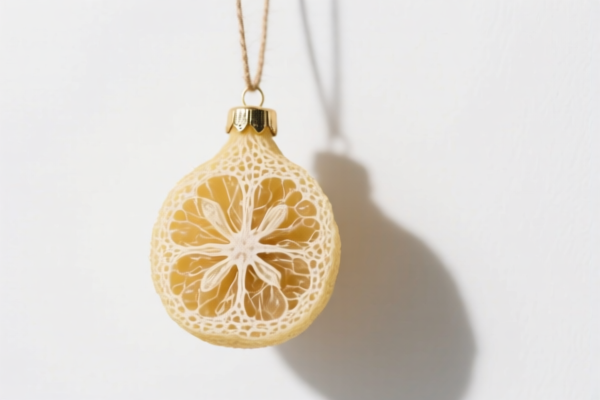
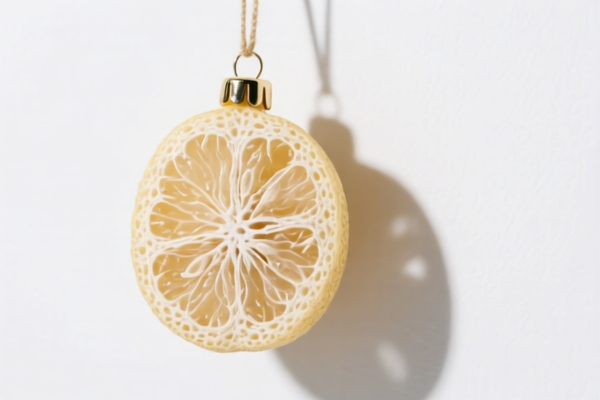
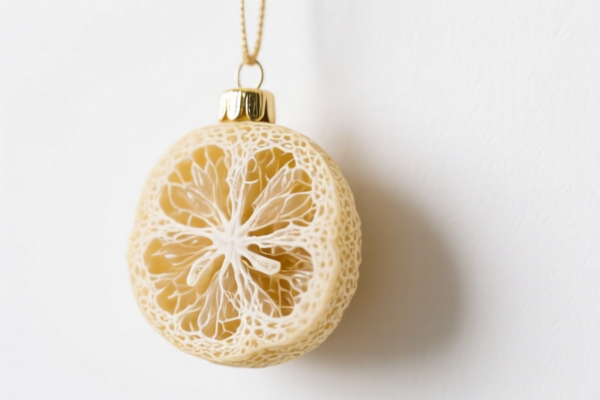
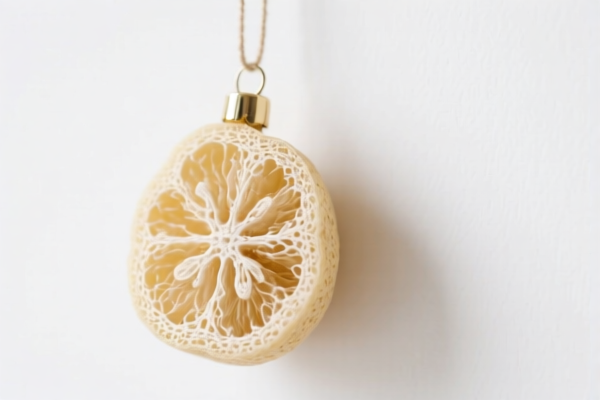
AI Analysis
🌿 Loofah Hanging Ornament (Natural Fiber Decor)
🌐 HS Code Reference & Clearance Guide | 2026 Latest Tariff Analysis | Professional Clearance Strategy
📌 I. Product Definition & Classification: Do You Really Understand "Loofah Ornament"?
Loofah hanging ornaments are decorative items made from natural plant fibers (specifically the dried inner skeleton of the loofah gourd) or artificial materials mimicking this structure. In international trade, they are not classified under "Vegetable Materials" (Heading 46) simply because they look natural, but rather under "Other articles" based on their manufacturing process and final use.
The key distinction lies in the material origin and processing: * Real Loofah/Natural Vegetable Fiber Articles: If made directly from plaited vegetable materials (like dried loofah mesh) or processed natural fibers, they often fall under Chapter 46 (Basketwork, wickerwork... of vegetable materials). However, specific subheadings require careful selection based on whether they are "other" articles. * Plastic/Synthetic Simulants: If made from plastics (even if textured to look like loofah), they fall under Chapter 39 (Articles of plastics).
⚠️ Key Distinction Point:
- If the item is a natural dried loofah or woven vegetable fiber → Look at Heading 46. Specifically, "Other" articles not specified elsewhere often fall into 4602.19.80.00 (if of vegetable materials, other) or 4602.90.00.00 (if general other articles).
- If the item is plastic/resin molded to look like a loofah → Look at Heading 39. Specifically, 3926.40.00 (Statuettes and other ornamental articles).
📦 II. HS Code Classification Details (2026 Latest Tariff Authoritative Comparison)
Based on the provided data, here are the two main classification paths depending on the actual material composition of your "Loofah Hanging Ornament":
| HS Code | Product Description | Material/Scenario | Classification Logic |
|---|---|---|---|
4602.19.80.00 |
Basketwork, wickerwork... Of vegetable materials: Other: Other: Other: Other | Real Natural Loofah or other vegetable fibers | ✅ Vegetable Material. Fits "Other" under vegetable materials basketwork. Lowest Risk/Tariff. |
4602.90.00.00 |
Basketwork...: Other | Mixed/Natural Fiber not specifically listed in 4602.19 | ✅ Other. General "Other" category for non-vegetable or unspecified natural fiber articles. Higher tax due to trade restrictions. |
3926.40.00.90 |
Other articles of plastics...: Statuettes and other ornamental articles Other | Plastic Loofah (Artificial) | ✅ Plastic. Artificial ornament mimicking natural look. |
3926.40.00.10 |
Other articles of plastics...: Bows and similar products for decorative purposes... | Plastic Loofah (Gift Wrap/Decoration) | ✅ Plastic. Specifically for gift-packaging/decorative bows. |
9505.10.25.00 |
Festive, carnival...: Articles for Christmas festivities...: Christmas ornaments: Other: Other | Holiday/Christmas Specific | ✅ Festive. If specifically sold as a Christmas decoration (e.g., red/gold tinted, holiday shape). |
9505.10.50.20 |
Festive, carnival...: Articles for Christmas festivities...: Other: Other Other | Festive/Other Holiday | ✅ Festive. General festive article if not strictly Christmas but seasonal. |
🔍 Critical Note:
- Natural vs. Artificial: Customs will inspect the material. If it burns like a plant (smells like burning paper/leaf), it’s likely 4602. If it melts and smells like plastic, it’s 3926.
- "Loofah" is often a texture, not a material: Many "loofah sponges" in gift sets are actually plastic. Ensure you declare the actual material, not just the visual style.
💰 III. 2026 Latest Tariff Rate Breakdown (Including Additional Duties)
✅ Applicable Country: United States (US)
✅ Country of Origin: China (CN) (Assumed for context based on typical trade data)
✅ Effective Date: 2025/2026 Current Regime
🎯 1. 4602.19.80.00 —— Natural Vegetable Fiber / Real Loofah Ornaments
| Item | Content |
|---|---|
| Base Tariff | 0.0% (Most Favored Nation / General Rate) |
| Additional Duty (Section 301) | 0.0% |
| Total Tax Rate | 0.0% |
| Tax Calculation | CIF Value × 0% = $0 |
| De Minimis Eligibility | ✅ Yes (If under $800, may enter duty-free via Section 321) |
| Legal Basis | Standard HTSUS 4602.19.80 |
📌 Explanation:
- This is the best-case scenario. Natural vegetable materials often enjoy low or zero base tariffs.
- Crucially, no additional Section 301 tariffs are applied to this specific subheading in the provided data.
- Advantage: Zero duty significantly lowers landed cost.
🎯 2. 4602.90.00.00 —— Other Basketwork/Wickerwork (Non-Specific Vegetable or Mixed)
| Item | Content |
|---|---|
| Base Tariff | 3.5% |
| Additional Duty (Section 301) | +25.0% |
| Total Tax Rate | 28.5% |
| Tax Calculation | CIF Value × 28.5% |
| De Minimis Eligibility | ❌ No (Subject to Section 301) |
| Legal Basis | HTSUS 4602.90.00 |
📌 Explanation:
- If your "loofah" item is classified here (perhaps due to complex manufacturing or mixed materials), the cost jumps significantly.
- The 25% additional duty is a major cost driver.
- Risk: Misclassifying a plastic item as "Natural" to save tax here can lead to audits and penalties.
🎯 3. 3926.40.00.90 & 3926.40.00.10 —— Plastic Ornamental Articles
| Item | Content |
|---|---|
| Base Tariff | 5.3% |
| Additional Duty (Section 301) | 0.0% |
| Total Tax Rate | 5.3% |
| Tax Calculation | CIF Value × 5.3% |
| De Minimis Eligibility | ❌ No (Plastic goods from CN often excluded or limited, but data shows 0% add-on) |
| Legal Basis | HTSUS 3926.40.00 |
📌 Explanation:
- Plastic ornaments have a moderate base rate (5.3%).
- No additional 301 duty is listed in the provided data for these codes, making them more tax-efficient than natural "other" wicker (4602.90) but more expensive than natural "vegetable" (4602.19).
- Strategy: If you can prove it’s plastic, you avoid the 25% hit of 4602.90. If you can prove it’s natural vegetable, you pay 0%.
🎯 4. 9505.10.25.00 & 9505.10.50.20 —— Christmas/Festive Ornaments
| Item | Content |
|---|---|
| Base Tariff | 0.0% |
| Additional Duty (Section 301) | 0.0% |
| Total Tax Rate | 0.0% |
| Tax Calculation | CIF Value × 0% |
| De Minimis Eligibility | ✅ Yes |
| Legal Basis | HTSUS 9505.10 |
📌 Explanation:
- Festive articles (especially Christmas) often have 0% duty.
- Condition: The item must be specifically designed for festive use (e.g., Christmas tree decorations, Halloween hangings). A generic "loofah ball" sold in June might NOT qualify.
- Advantage: Zero tax, same as natural vegetable. Best if the product is seasonal.
🛠️ IV. Clearance Practical Advice (Field Pitfall Avoidance Guide)
✅ 1. Preparation Checklist (Non-Negotiable)
| Material | Required For | Description |
|---|---|---|
| Material Safety Data Sheet (MSDS) or Fiber Analysis | ✅ Mandatory | To prove whether it’s Natural Loofah (4602) or Plastic (3926). Customs may require a lab test if unclear. |
| Product Photos | ✅ Mandatory | Close-up of texture, hanging string material, and overall shape. |
| Commercial Invoice | ✅ Mandatory | Must specify: "Natural Dried Loofah Ornament" (for 4602.19) OR "Plastic Ornament, Loofah Texture" (for 3926). Do not just say "Ornament". |
| Country of Origin Certificate | ✅ Recommended | To confirm CN origin and apply correct Section 301 status. |
| Seasonal Design Proof | ✅ Optional but Helpful | If claiming 9505 (Festive), provide marketing materials showing Christmas/Holiday theme. |
✅ 2. Declaration Tips (Key Mantra)
🔥 "Natural is Zero, Plastic is Five, Other Natural is Twenty-Eight, Festive is Zero!"
| Scenario | Correct HS Code | Why? |
|---|---|---|
| Real Dried Loofah | 4602.19.80.00 |
Vegetable material, "Other". 0% Tax. |
| Plastic Loofah Ball | 3926.40.00.90 |
Plastic ornamental article. 5.3% Tax. |
| Natural Loofah in "Other" Category | 4602.90.00.00 |
If not meeting 4602.19 specs. 28.5% Tax (Avoid!) |
| Christmas Tree Hanging | 9505.10.25.00 |
Festive article. 0% Tax. |
⚠️ Critical Warning:
- Do NOT misdeclare Plastic as Natural to save tax. US Customs (CBP) frequently tests imported "natural" fibers. If it’s plastic, penalties + back duties (28.5% vs 0%) will apply.
- Do NOT misdeclare Natural as Plastic if you want to avoid the 25% add-on on 4602.90. If it’s 4602.19, you pay 0%. If it’s 3926, you pay 5.3%. 4602.19 is the cheapest.
✅ 3. Special Case Handling
| Case | Recommendation |
|---|---|
| Mixed Materials (Loofah + Ribbon) | If ribbon is >50% by value, declare based on ribbon. If loofah is main feature, declare as loofah (4602). |
| Sold as "Set" with Lights | If lights are integral, it may move to Chapter 94 (Furniture/Lighting). Keep it simple: "Ornament". |
| Bulk Loose vs. Gift Wrapped | Gift-wrapped festive items easily claim 9505. Bulk loose natural loofah must claim 4602.19. |
🌍 V. Global Market Comparison (2026 Latest)
| Country/Region | Recommended HS Code | Tariff Rate | Certification | Note |
|---|---|---|---|---|
| 🇺🇸 USA | 4602.19.80.00 |
0% | None | Best Option for Natural. Avoid 4602.90 (28.5%). |
| 🇺🇸 USA | 3926.40.00.90 |
5.3% | None | Acceptable for Plastic. |
| 🇪🇺 EU | 4602.19 |
~3-5% | REACH | No Section 301 equivalent. |
| 🇨🇳 China | 4602.19 |
~5-10% | N/A | Export duty may apply. |
📌 Conclusion:
- For US Importers:4602.19.80.00(Natural) or9505.10.xxxx(Festive) are the most tax-efficient.
- Avoid4602.90.00.00unless absolutely necessary, as the 25% additional duty makes it uncompetitive.
📌 VI. Common Mistakes & Pitfalls (Blood-Test Lessons)
❌ Mistake 1: Declaring "Plastic Loofah" as "Natural Loofah" to get 0% tax.
👉 Consequence: CBP Lab Test → Fails → Penalty + 28.5% Back Duties + Potential Seizure.
❌ Mistake 2: Declaring "Natural Loofah" as 4602.90.00.00 instead of 4602.19.80.00.
👉 Consequence: Unnecessarily paying 28.5% tax instead of 0%. You left money on the table!
❌ Mistake 3: Calling a Christmas ornament "General Decor" (3926/4602) instead of "Festive" (9505).
👉 Consequence: Paying 5.3% or 28.5% instead of 0%. Proof of festive design is key.
✅ Correct Practice:
"100% Natural Dried Loofah Ornament, Hanging, Diameter 5cm, No Plastics" → 4602.19.80.00
"Plastic Ornament, Loofah Texture, For Christmas Tree" → 9505.10.25.00
🎯 VII. Conclusion: Professional Declaration, Maximize Profit!
🎯 Remember the Mantra:
🔹 "Natural Vegetable = 0% (4602.19)"
🔹 "Plastic Ornament = 5.3% (3926)"
🔹 "Festive/Christmas = 0% (9505)"
🔹 "Other Natural/Unspecified = 28.5% (4602.90) → AVOID!"
📌 Pro Tip:
If you are importing natural loofah, ensure your supplier provides a Plant Quarantine Certificate if required by USDA, as organic plant materials are regulated. For plastic, ensure FCC/CPSC compliance if applicable.
📣 Immediate Action:
📞 Verify Material Composition with your supplier.
📦 Select the 0% or Low-Tax HS Code (4602.19.80.00or9505.10.25.00).
🚀 Clear Customs Smoothly, Cut Costs, Boost Margins!
✨ Professional Clearance Starts with Accurate Classification!
💼 Every Percent Saved is Pure Profit!
Customer Reviews
About HS Code Classification
The Harmonized System (HS) is an internationally standardized nomenclature developed by the World Customs Organization (WCO) to classify traded products. Over 200 countries use the HS system as the basis for customs tariffs, trade statistics, and import/export regulations.
Each HS code follows a hierarchical structure:
- Chapter (2 digits) — Broad category of goods (e.g., Chapter 84: Machinery and Mechanical Appliances)
- Heading (4 digits) — More specific grouping within the chapter
- Subheading (6 digits) — Internationally standardized breakdown, used by all WCO member countries
- National subdivisions (8-10 digits) — Country-specific extensions for further classification, such as US HTSUS 10-digit codes
Correct HS code classification is essential for smooth customs clearance, accurate duty payment, and compliance with trade regulations. Misclassification can lead to customs delays, overpayment of duties, or penalties.
When importing from CN to US, the applicable tariff rates may include:
- Most-Favored-Nation (MFN) rate — The standard duty rate applied to WTO members
- General rate — Applied to countries without trade agreements
- Trade remedy duties — Additional tariffs such as Section 301 (anti-dumping), Section 232 (national security), or countervailing duties
The information provided on this page is for reference purposes only. For official classification, please consult with your local customs authority or a licensed customs broker.