Loose Combed Wool Yarn
CN → US| HS Code | Tariff Rate | Origin | Destination | Doc |
|---|---|---|---|---|
| 5106100090 | 41.0% | CN | US | Official Doc |
| 5107103000 | 41.0% | CN | US | Official Doc |
| 5107106000 | 41.0% | CN | US | Official Doc |
Product Images
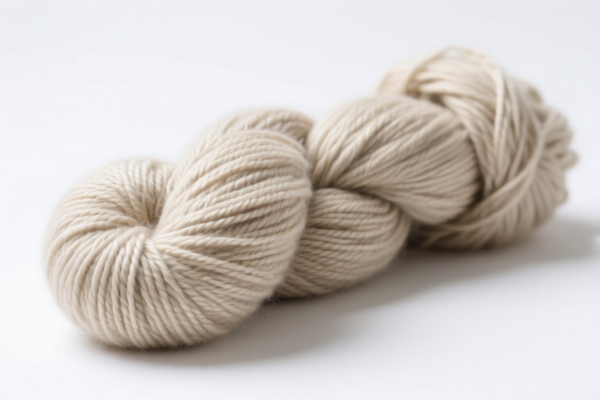
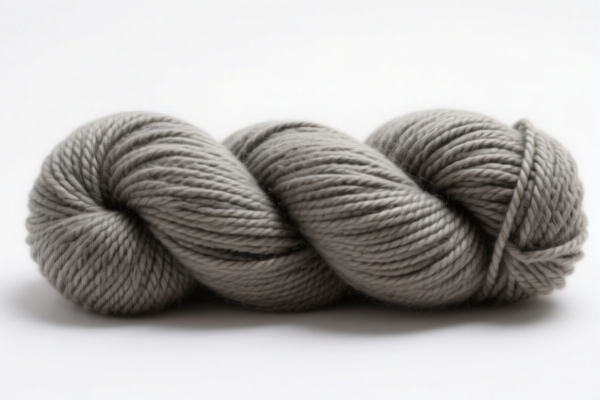
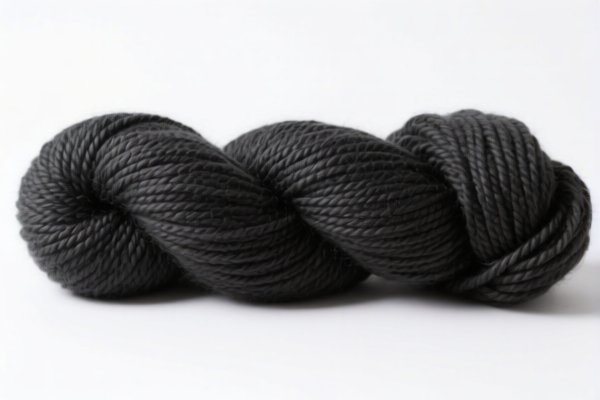
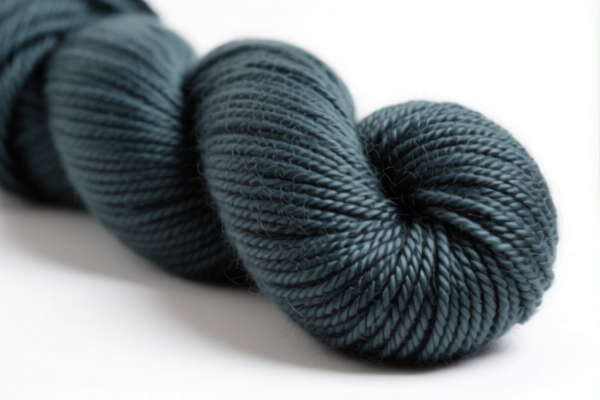
AI Analysis
🧶 Loose Combed Wool Yarn (羊毛精梳纱线)
🌐 HS Code Reference & Customs Clearance Guide | 2026 Latest Tariff Analysis | Professional-Level Strategy
📌 I. Product Definition & Classification: Do You Really Understand "Loose Combed Wool Yarn"?
Loose Combed Wool Yarn is a premium textile raw material used in high-end knitting and weaving. In international trade, it is strictly classified under Chapter 51 (Animal Hair and Coarse or Fine Animal Hair). The key identifier here is the "Combed" process, which removes short fibers and impurities, aligning the remaining fibers parallelly for smoother, stronger, and higher-quality yarn.
⚠️ Critical Distinction:
- If the wool is NOT combed (just carded or raw) → Likely falls under 5106 (Wool Yarn, Other)
- If the wool IS combed → Must fall under 5107 (Wool Yarn, Combed)
- "Loose" vs. "Skeins/Balls": While "loose" suggests the form, the primary classifier for Chapter 51 is the fiber preparation method (Combed vs. Non-Combed).
📦 II. HS Code Classification Details (2026 Latest Tariff Authority Comparison)
Based on the provided data, there are three potential HS codes. Here is the breakdown of why each was suggested and their specific nuances:
| HS Code | Product Description | Classification Logic & Applicability | Combed Status |
|---|---|---|---|
5106.10.00.90 |
Wool Yarn, Other (Non-Combed or Undefined) | Summary: Classified as wool yarn. Since the exact fiber diameter was not provided, it defaults to the "Other" category under 5106.10. ⚠️ Risk: If the product is explicitly Combed, this code is INCORRECT. This code is for carded or non-combed wool. |
❌ Not Combed |
5107.10.30.00 |
Combed Wool Yarn (Specific Sub-category) | Summary: Explicitly identified as Combed Wool Yarn. This is the most accurate classification if the product undergoes the combing process. It matches the high-quality attributes of combed yarn. | ✅ Combed |
5107.10.60.00 |
Other Combed Wool Yarn | Summary: Also classified as Combed Wool Yarn. If the specific sub-sub-category of 30 is not applicable (e.g., due to fiber content nuances not detailed), this acts as the general "Other" category for combed wool. | ✅ Combed |
🔍 Key Takeaway:
- "Combed" is the deciding factor.
- If your yarn is Combed, you MUST use 5107 (30or60). Using5106will lead to misclassification penalties.
- If you cannot prove it is combed, Customs may default to5106, but if your technical specs say "Combed," you must declare5107.
💰 III. 2026 Latest Tariff Rate Breakdown (Including Surcharges & Policy Add-ons)
✅ Applicable Country: United States (US)
✅ Country of Origin: China (CN)
✅ Effective Time: November 10, 2025 onwards (for subsequent imports)
✅ Total Tax Rate: 41.0%
🎯 1. 5107.10.30.00 & 5107.10.60.00 (Combed Wool Yarn)
These two codes share the same tax structure according to the provided data.
| Item | Content |
|---|---|
| Basic Tariff | 6.0% (Ad Valorem) |
| Additional Tariff (Section 301) | +25.0% (USITC Footnote 9903.88.01) |
| 122 Clause Tariff | +10.0% (Specific clause for certain Chinese textile imports) |
| Total Effective Rate | 41.0% |
| Tax Calculation | CIF Value × 41.0% |
| De Minimis Exemption | ❌ Not Applicable (High-risk category) |
| Legal Path | Base Tariff: 6% → Section 301: 25% → Clause 122: 10% → Total 41% |
📌 Explanation:
- The 6% is the standard MFN (Most Favored Nation) duty for wool yarn.
- The 25% is the heavy penalty under Section 301 for Chinese goods.
- The 10% is an additional surcharge under Section 122 (often related to specific textile/apparel provisions or retaliatory measures).
- 41% is extremely high. This significantly impacts profit margins.
🎯 2. 5106.10.00.90 (Non-Combed Wool Yarn)
| Item | Content |
|---|---|
| Basic Tariff | 6.0% |
| Additional Tariff (Section 301) | +25.0% |
| 122 Clause Tariff | +10.0% |
| Total Effective Rate | 41.0% |
| Tax Calculation | CIF Value × 41.0% |
| De Minimis Exemption | ❌ Not Applicable |
⚠️ Note: Even though
5106is technically for "other" wool, the tax rate is identical in this scenario. Misclassification does NOT save you money. It only risks customs fines, seizure, or legal action.
🛠️ IV. Customs Clearance Practical Advice (Avoid Pitfalls)
✅ 1. Documentation Checklist (Non-Negotiable)
| Document | Required | Explanation |
|---|---|---|
| ✅ Product Specification Sheet | ✔️ | Must explicitly state: "Combed" or "Non-Combed", Fiber Diameter (microns), Yarn Count (Nm/Ne), and Form (Loose/Skeins). |
| ✅ Technical Data Sheet | ✔️ | Proof of the combing process (e.g., manufacturing process description). |
| ✅ Commercial Invoice | ✔️ | Clearly state: "Loose Combed Wool Yarn, 100% Wool, HS Code 5107.10.30.00". |
| ✅ Packing List | ✔️ | Specify weight, gross/net, and packaging type (bags, cones, etc.). |
| ✅ Certificate of Origin (CO) | ✔️ | Essential for determining origin-based surcharges. |
| ✅ Photos of Product | ✔️ | Show labels, packaging, and yarn texture to prove it is wool and its form. |
✅ 2. Declaration Strategy (Key Tips)
🔥 "Declare Combed, Pay 41%, Avoid Penalty!"
| Situation | Correct Declaration | Incorrect Action |
|---|---|---|
| Product is Combed | 5107.10.30.00 or 5107.10.60.00 |
Misdeclaring as 5106 to "save" time → Fines for Misdeclaration |
| Product is Non-Combed | 5106.10.00.90 |
Over-declaring as "Combed" → Unnecessary complexity |
| Blended Wool | Check fiber % | If >50% wool, still Chapter 51, but check specific sub-headers |
| "Loose" Form | Mention in description | Do not rely on "loose" to change the HS code; form is secondary to fiber prep |
✅ 3. Special Considerations
| Scenario | Handling Advice |
|---|---|
| Fiber Diameter Unknown | If you cannot provide micron count, Customs may inspect closely. Provide a general range (e.g., 20-25 microns) if possible. |
| OEM Custom Yarn | Provide customer PO and design specs to prove it is a commercial textile product, not a sample. |
| High-Value Shipments | Consider Advance Ruling from CBP to confirm HS Code 5107 vs 5106 before shipment. |
| Supply Chain Diversification | If 41% is too high, consider sourcing from non-China origins (e.g., Australia, New Zealand, Mongolia) to avoid Section 301 and Clause 122 tariffs. |
🌍 V. Global Market Comparison (2026 Latest)
| Country/Region | Recommended HS Code | Tariff (China Origin) | Key Certifications | Notes |
|---|---|---|---|---|
| 🇺🇸 USA | 5107.10.30.00 |
41.0% | None specific | Highest cost due to 301 + 122 clauses |
| 🇨🇳 China | 5107.10.30.00 |
10-12% (Export) | None | Export rebates may apply |
| 🇪🇺 EU | 5107.10.30.00 |
6-8% | Oeko-Tex, GRS | No Section 301 equivalent |
| 🇬🇧 UK | 5107.10.30.00 |
6-8% | Oeko-Tex | Post-Brexit rules apply |
| 🇦🇺 Australia | 5107.10.30.00 |
5% | None | Major wool producer, low tariff |
📌 Conclusion:
- USA is the most expensive market due to political tariffs.
- EU and Australia are more cost-effective.
- If targeting the US, cost-benefit analysis is critical.
📌 VI. Common Mistakes & Pitfalls (Lessons Learned)
❌ Mistake 1: Declaring "Combed Wool" as 5106 (Non-Combed)
👉 Consequence: Misclassification penalty + Back taxes + Potential seizure.
👉 Why: 5106 and 5107 have identical tax rates (41%) in this dataset, so there is no financial benefit to lying. Only risk.
❌ Mistake 2: Ignoring "Loose" vs. "Skeins" in Description
👉 Consequence: Customs may delay inspection if description is vague.
👉 Fix: Always specify form: "Loose Combed Wool Yarn, 100% Merino, 20 Micron, Nm 50."
❌ Mistake 3: Assuming "Wool Yarn" is exempt from De Minimis
👉 Fact: Textiles are rarely exempt from de minimis under $800 in the US, especially with high tariffs.
👉 Fix: Plan for full duty payment.
✅ Correct Approach:
"Loose Combed Wool Yarn, 100% Wool, Fiber Diameter 22 Microns, Yarn Count Nm 40, HS Code: 5107.10.30.00"
🎯 VII. Conclusion: Precision Classification Saves Money & Time
🎯 Remember:
🔹 "Combed = 5107. Non-Combed = 5106. Tax Rate = 41% Either Way."
🔹 "Declare Accurately to Avoid Fines. 41% is a Sunk Cost; Fines are Extra Pain."
🔹 "Consider Non-China Origins if 41% is Unacceptable."
📌 Pro Tip:
If your wool yarn is sourced from Australia, New Zealand, or Mongolia, you may avoid the 25% Section 301 and 10% Clause 122 tariffs.
- Australian Wool to US: Likely 6% basic + 0% surcharge = 6% Total.
- Savings: 35% reduction in tax burden!
📣 Immediate Action:
📞 Verify Fiber Process: Is it truly combed?
📦 Check Origin: Can you source from non-China to save 35%?
📝 Declare Precisely: Use the exact HS Code5107.10.30.00or5107.10.60.00.
✨ Professional Customs Clearance Starts with Accurate Classification!
💼 Your Every Dollar of Duty Should Be Justified and Compliant!
Customer Reviews
About HS Code Classification
The Harmonized System (HS) is an internationally standardized nomenclature developed by the World Customs Organization (WCO) to classify traded products. Over 200 countries use the HS system as the basis for customs tariffs, trade statistics, and import/export regulations.
Each HS code follows a hierarchical structure:
- Chapter (2 digits) — Broad category of goods (e.g., Chapter 84: Machinery and Mechanical Appliances)
- Heading (4 digits) — More specific grouping within the chapter
- Subheading (6 digits) — Internationally standardized breakdown, used by all WCO member countries
- National subdivisions (8-10 digits) — Country-specific extensions for further classification, such as US HTSUS 10-digit codes
Correct HS code classification is essential for smooth customs clearance, accurate duty payment, and compliance with trade regulations. Misclassification can lead to customs delays, overpayment of duties, or penalties.
When importing from CN to US, the applicable tariff rates may include:
- Most-Favored-Nation (MFN) rate — The standard duty rate applied to WTO members
- General rate — Applied to countries without trade agreements
- Trade remedy duties — Additional tariffs such as Section 301 (anti-dumping), Section 232 (national security), or countervailing duties
The information provided on this page is for reference purposes only. For official classification, please consult with your local customs authority or a licensed customs broker.