Loose Wood Shavings
CN → US| HS Code | Tariff Rate | Origin | Destination | Doc |
|---|---|---|---|---|
| 4401394220 | 35.0% | CN | US | Official Doc |
| 4407110052 | 35.0% | CN | US | Official Doc |
| 4401490020 | 35.0% | CN | US | Official Doc |
| 4407110053 | 35.0% | CN | US | Official Doc |
| 4405000000 | 38.2% | CN | US | Official Doc |
Product Images
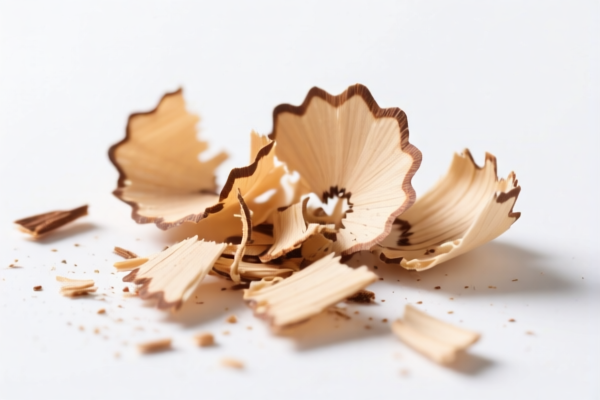
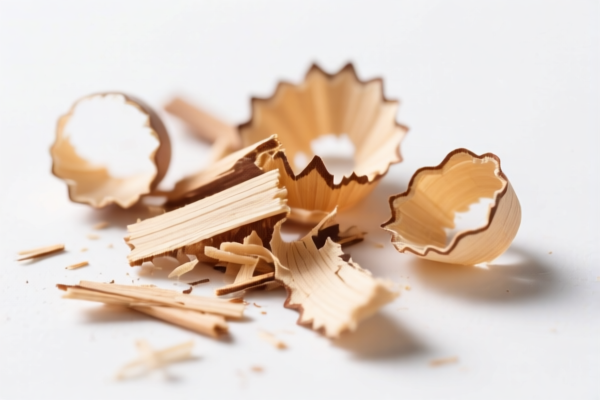
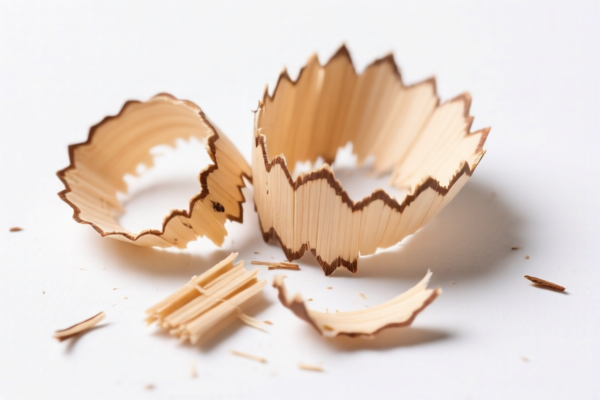

AI Analysis
🌲 Wood Shavings (Pinus/Softwood) – The "Chameleon" of Timber Classification
🌐 HS Code Reference & Customs Clearance Guide | 2026 Latest Tariff Analysis | Strategic Clearance Strategy
📌 I. Product Definition & Classification: Are You Sure About "Shavings"?
"Loose Wood Shavings" is a common but highly ambiguous trade term. In international trade, its HS Code classification depends entirely on its physical form, processing depth, and intended use. It is not a single product but a spectrum ranging from raw firewood waste to industrial raw material.
Three Key Distinctions: 1. Waste & Scrap (4401.49): Rough, unprocessed chunks used mainly for biomass energy or low-grade particle board. 2. Sawn/Chipped Wood (4407.11): Uniformly cut or sliced softwood planks/shingles, often used for construction or pallets. 3. Wood Wool/Fibers (4405.00): Fine, thread-like shavings or powder, used for packaging, insulation, or animal bedding.
⚠️ Critical Classification Point:
- If it is random, chunky, and bulky → Likely 4401.49 (Wood Waste).
- If it is uniform, sliced, or plank-like → Likely 4407.11 (Sawn Wood).
- If it is fine, fibrous, or powdery → Likely 4405.00 (Wood Wool/Fibers).
📦 II. HS Code Classification Details (2026 Latest Tariff Authority Match)
Based on the provided data for Pinus (Pine) Shavings, here are the specific HS Codes and their tax implications. Note that all listed codes are subject to US Trade Measures (Section 301 + IEEPA).
| HS Code | Product Description | Physical Attribute | Total Tax Rate (US) |
|---|---|---|---|
4401.49.00.20 |
Pine Wood Shavings, classified as Wood Waste/Scrap | Rough, irregular chunks; low processing | 35.0% |
4407.11.00.53 |
Pine Wood Shavings, Needle-leaved Pine in Sawn/Chipped form | Uniform slices; higher processing | 35.0% |
4405.00.00.00 |
Pine or Birch Wood Shavings, classified as Wood Wool/Fibers/Powder | Fine, thread-like; high processing | 38.2% |
4401.39.42.20 |
Pine Wood Shavings, Wood Raw Material in Shaved form | Industrial raw material form | 35.0% |
4407.11.00.52 |
Pine Wood Shavings, Other Pines (Catch-all Category) | Other forms of sawn/chipped pine | 35.0% |
🔍 Key Insight:
- The 35% rate is the most common, driven by a 0% Base Tariff + 25% Section 301 Tariff + 10% IEEPA Tariff.
- The 38.2% rate for4405.00.00.00includes a 3.2% Base Tariff + 25% Section 301 + 10% IEEPA.
- Misclassification Risk: Declaring fine "wood wool" as "waste" (4401.49) to save 3.2% is risky; customs may reclassify it, leading to penalties.
💰 III. 2026 Latest Tariff Breakdown (Including Surtaxes & Policy Surcharges)
✅ Applicable Country: United States (US)
✅ Origin: China (CN)
✅ Effective Date: November 10, 2025 (and subsequent imports)
🎯 1. The Standard "35% Bundle" (4401.49, 4407.11, 4401.39)
| Item | Content |
|---|---|
| Base Tariff | 0.0% (ad valorem) |
| Section 301 Surtax | +25.0% (USITC Footnote related to Chinese origin) |
| IEEPA Surtax | +10.0% (Under International Emergency Economic Powers Act, targeting specific Chinese goods) |
| Total Tax Rate | 35.0% |
| Tax Calculation | CIF Value × 35% |
| De Minimis Eligibility | ❌ NO (Likely denied for wood products under Section 301/IEEPA) |
| Legal Basis Path | IEEPA:9903.01.25 → IEEPA:9903.01.24 → USITC:4401/4407 → FOOTNOTE |
📌 Explanation:
- 0% Base: Many wood products have low base tariffs.
- 25% Section 301: The major hurdle for Chinese timber products.
- 10% IEEPA: An additional layer targeting specific sectors, pushing the total to 35%.
- Result: A $10,000 shipment incurs $3,500 in duties alone.
🎯 2. The "Fine Fiber" Category (4405.00.00.00)
| Item | Content |
|---|---|
| Base Tariff | 3.2% |
| Section 301 Surtax | +25.0% |
| IEEPA Surtax | +10.0% |
| Total Tax Rate | 38.2% |
| Tax Calculation | CIF Value × 38.2% |
| De Minimis Eligibility | ❌ NO |
| Legal Basis Path | IEEPA:9903.01.25 → IEEPA:9903.01.24 → USITC:4405.00.00.00 |
📌 Warning:
- Even if the product is physically similar (shavings), the 3.2% base tariff makes this category more expensive.
- Do not declare4405.00unless it is clearly wood wool, fiber, or powder.
🛠️ IV. Customs Clearance Practical Advice (Real-World Pitfall Avoidance)
✅ 1. Preparation Checklist (Non-Negotiable)
| Document | Must Provide | Notes |
|---|---|---|
| ✅ Product Spec Sheet | ✔️ | Must detail particle size, moisture content, and form (chunk vs. fiber). |
| ✅ Product Photos | ✔️ | Close-ups showing texture. Are they sawdust? Chips? Flakes? |
| ✅ Commercial Invoice | ✔️ | Clearly state "Pine Wood Shavings" and specific HS Code. |
| ✅ Packing List | ✔️ | Net weight, gross weight, dimensions. |
| ✅ Certificate of Origin | ✔️ | Prove Chinese origin (triggers surtaxes). |
| ✅ Phytosanitary Certificate | ✔️ | Crucial for wood. Must show pest-free status. |
✅ 2. Declaration Strategy (Key Mnemonic)
🔥 "Shape Determines Code, Origin Determines Tax!"
| Scenario | Correct HS Code | Why? |
|---|---|---|
| Bulky, irregular pine chips (e.g., for biomass) | 4401.49.00.20 |
Classified as "Wood Waste/Scrap". Base 0%. |
| Uniform, sliced pine pieces (e.g., for pallets) | 4407.11.00.53 |
Classified as "Sawn/Chipped Wood". Base 0%. |
| Fine, fibrous pine shavings (e.g., for animal bedding) | 4405.00.00.00 |
Classified as "Wood Wool/Fibers". Base 3.2%. |
| Industrial raw pine shavings | 4401.39.42.20 |
Classified as "Raw Material Shavings". Base 0%. |
✅ 3. Special Considerations
| Situation | Handling Advice |
|---|---|
| Moisture Content | High moisture (<20%) may be reclassified as "fresh wood" (different codes). Ensure proper drying if declaring as "shavings". |
| Mix with Other Woods | If mixed with hardwood, HS Code may change. Strict segregation is advised. |
| Phytosanitary Issue | Without a valid Phytosanitary Certificate, goods will be quarantined or destroyed. |
| IEEPA Exemptions | Currently, no broad exemptions for pine shavings. Check for specific exclusions (unlikely for bulk commodities). |
🌍 V. Global Market Comparison (2026 Latest)
| Country/Region | Recommended HS Code | Tariff (China Origin) | Certification | Notes |
|---|---|---|---|---|
| 🇺🇸 USA | 4401.49.00.20 / 4407.11.00.53 |
35% (Total) | Phytosanitary Certificate | High surtaxes apply. |
| 🇺🇸 USA | 4405.00.00.00 |
38.2% (Total) | Phytosanitary Certificate | Higher base tariff. |
| 🇪🇺 EU | 4401.49 |
Low/0% (Check EU Tariff) | Phytosanitary + FSC | No Section 301/IEEPA. |
| 🇨🇳 China | 4401.49 |
0-5% | N/A | Import duty low, but export restrictions may apply. |
📌 Conclusion:
- USA is the most challenging market due to 35%+ tariffs.
- EU and other markets are more favorable, but phytosanitary rules are strict globally.
📌 VI. Common Errors & Pitfall Guide (Lessons Learned)
❌ Error 1: Declaring "Wood Wool" (4405.00) as "Wood Waste" (4401.49)
👉 Consequence: Customs audits physical sample. If fine fibers are found, reclassification occurs. Back taxes + penalties for underpayment (3.2% base + interest).
❌ Error 2: Missing Phytosanitary Certificate
👉 Consequence: Detention/Rejection. Wood products are high-risk for pests (borers, beetles). No certificate = No entry.
❌ Error 3: Ignoring Moisture Content
👉 Consequence: If moisture is too high, it may be classified as "Green Wood" (Chapter 44, Heading 4403), which has different duty rates and stricter rules.
❌ Error 4: Vague Description: "Wood Pieces"
👉 Consequence: Customs ambiguity leads to highest possible duty assessment. Always specify "Pine Wood Shavings" and physical form.
✅ Correct Approach:
"Pine Wood Shavings (Pinus Sylvestris), Chopped Form, Moisture <20%, For Biomass Energy, HS Code 4401.49.00.20, Phytosanitary Certificate Attached"
🎯 VII. Conclusion: Professional Classification, Cost Control, Efficiency!
🎯 Remember the Mnemonic:
🔹 "Chunks = Waste (35%), Slices = Sawn (35%), Fibers = Wool (38.2%)"
🔹 "35% Total Tax in USA: 0% Base + 25% 301 + 10% IEEPA"
🔹 "Phytosanitary is Key: No Cert = No Entry!"
📌 Pro Tip:
If your product is not from China, you may avoid IEEPA/Section 301 surtaxes. Origin Documentation is critical.
For US imports, consider Advance Rulings from CBP to confirm the exact HS Code and tax liability before shipping.
📣 Immediate Action:
📞 Consult a Licensed Customs Broker
📄 Prepare Spec Sheet + Photos + Phytosanitary Cert
🚀 Ensure smooth clearance, avoid delays, and control costs!
✨ Professional Classification Starts with Precision!
💼 Every Percent of Duty Saved is Pure Profit!
Customer Reviews
About HS Code Classification
The Harmonized System (HS) is an internationally standardized nomenclature developed by the World Customs Organization (WCO) to classify traded products. Over 200 countries use the HS system as the basis for customs tariffs, trade statistics, and import/export regulations.
Each HS code follows a hierarchical structure:
- Chapter (2 digits) — Broad category of goods (e.g., Chapter 84: Machinery and Mechanical Appliances)
- Heading (4 digits) — More specific grouping within the chapter
- Subheading (6 digits) — Internationally standardized breakdown, used by all WCO member countries
- National subdivisions (8-10 digits) — Country-specific extensions for further classification, such as US HTSUS 10-digit codes
Correct HS code classification is essential for smooth customs clearance, accurate duty payment, and compliance with trade regulations. Misclassification can lead to customs delays, overpayment of duties, or penalties.
When importing from CN to US, the applicable tariff rates may include:
- Most-Favored-Nation (MFN) rate — The standard duty rate applied to WTO members
- General rate — Applied to countries without trade agreements
- Trade remedy duties — Additional tariffs such as Section 301 (anti-dumping), Section 232 (national security), or countervailing duties
The information provided on this page is for reference purposes only. For official classification, please consult with your local customs authority or a licensed customs broker.