Loudspeaker
CN → US| HS Code | Tariff Rate | Origin | Destination | Doc |
|---|---|---|---|---|
| 8518210000 | 17.5% | CN | US | Official Doc |
| 8518220000 | 17.5% | CN | US | Official Doc |
| 8543709810 | 37.6% | CN | US | Official Doc |
| 8543709860 | 37.6% | CN | US | Official Doc |
Product Images
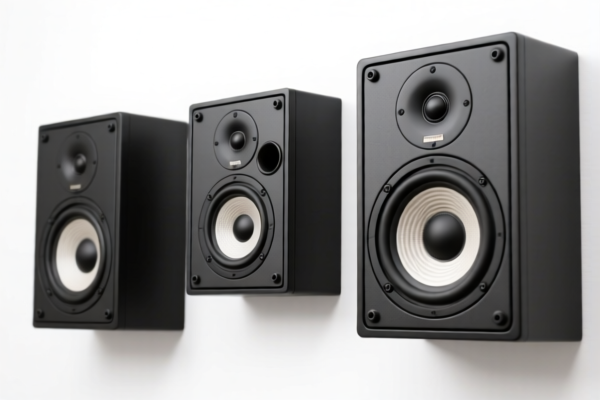
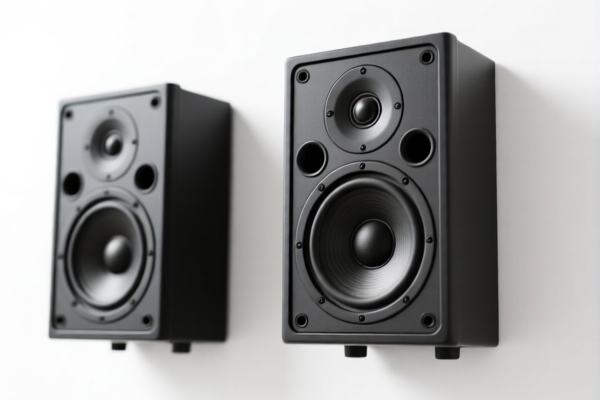
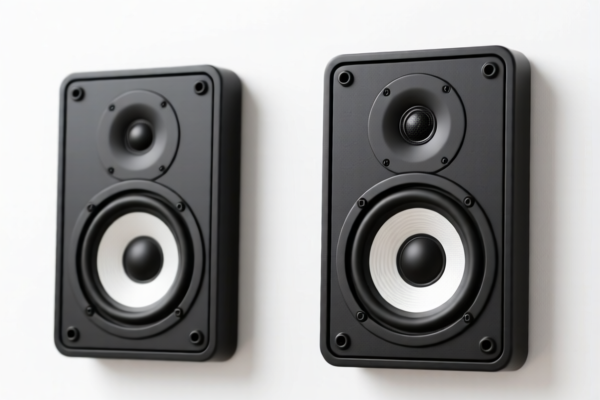
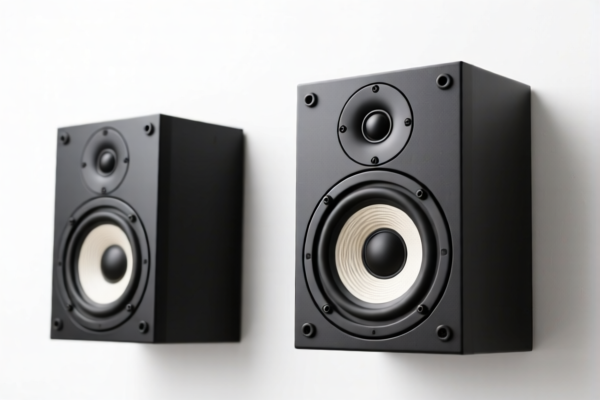
AI Analysis
🔊 Loudspeakers & Speaker Systems: The Ultimate 2026 US Customs Classification & Tax Guide
🌐 HS Code Reference & Customs Clearance Guide | 2026 Latest Tariff Rules | Professional Compliance Strategy
📌 I. Product Definition: What Exactly is a "Loudspeaker"?
In international trade, Loudspeakers are electroacoustic devices designed to convert electrical audio signals into audible sound. They are broadly categorized into two types based on their structure and function:
- Loudspeakers (Single Units): Individual driver units designed to be mounted in enclosures or used as components.
- Speaker Systems/Enclosures: Complete units containing one or more loudspeers mounted in a box/cabinet, often with integrated crossovers.
⚠️ Key Distinction for Classification:
- If the item is a standalone driver or a simple enclosure without complex independent electronic processing → Look at Chapter 85.18.
- If the item is a complex audio device with independent electronic function not strictly limited to basic sound reproduction (e.g., active processing, specific industrial use) → Potential misclassification risk into Chapter 85.43.
📦 II. HS Code Classification Details (Based on Provided Data)
| HS Code | Product Description | Summary & Logic |
|--------|--------------------------|
| 8518.21.00.00 | Loudspeakers | Core Match: Directly matches the commodity name "Loudspeaker." Core function alignment. Often used for spare parts or fallback categories for simple speaker units. |
| 8518.22.00.00 | Speaker Systems (including loudspeakers) | Standard Match: Typically contains loudspeaker units, conforming to the morphology of being "mounted in a casing/enclosure." This is the most common code for complete speaker boxes. |
| 8543.70.98.10 | Electrical Apparatus (Independent Function) | High-Risk/Alternative: Classified as an electrical apparatus with independent functions. Fits the "electrical device" category. Higher tax implication. |
| 8543.70.98.60 | Electroacoustic Equipment (Fallback) | High-Risk/Alternative: Classified as other electroacoustic equipment fitting the "catch-all" category for other machines/apparatus. Higher tax implication. |
🔍 Critical Note:
- Codes8518.21and8518.22are the standard and correct classifications for general consumer/industrial loudspeakers and speaker systems.
- Codes8543.70.98.10and8543.70.98.60are higher-tax fallbacks usually applied if customs argues the item has "independent electrical functions" beyond simple transduction, or if specific technical descriptions trigger this category. Avoid these if possible for standard speakers.
💰 III. 2026 US Customs Tariff Rate Breakdown (China Origin)
✅ Applicable Country: United States (US)
✅ Country of Origin: China (CN)
✅ Effective Date: 2025/2026 Current Rules
🎯 1. Standard Classification: 8518.21.00.00 & 8518.22.00.00
These are the correct and preferred codes for loudspeakers and speaker systems.
| Item | Content |
|---|---|
| Base Tariff | 0.0% (Ad Valorem) |
| Section 301 Tariff | +7.5% (Additional duty for Chinese goods) |
| Section 122 Tariff | +10% (Specific duty on Chinese electronic goods/audio equipment) |
| Total Duty Rate | 17.5% |
| Calculation | CIF Value × 17.5% |
| De Minimis Exemption | ❌ Not Eligible (Section 301 and 122 duties generally block $800 de minimis exemption) |
| Legal Basis Path | HTSUS:8518.21/22 → USITC Footnote 9903.88.01 → Section 122 Authority |
📌 Explanation:
- This is the standard duty rate for Chinese loudspeakers entering the US.
- While 17.5% is significant, it is far lower than the alternative 37.6% rate.
- Strategy: Ensure your product description explicitly states "Loudspeaker" or "Speaker System" to stick to 8518 codes.
🎯 2. Alternative/High-Tax Classification: 8543.70.98.10 & 8543.70.98.60
These codes should only be used if your product has complex independent electronic features that do not fit neatly into 8518, but even then, 8518 is usually preferred.
| Item | Content |
|---|---|
| Base Tariff | 2.6% (Ad Valorem) |
| Section 301 Tariff | +25.0% (Standard Section 301 rate for other electronic goods) |
| Section 122 Tariff | +10% |
| Total Duty Rate | 37.6% |
| Calculation | CIF Value × 37.6% |
| De Minimis Exemption | ❌ Not Eligible |
| Legal Basis Path | HTSUS:8543.70 → USITC Footnote 9903.88.01 → Section 122 Authority |
📌 Warning:
- 37.6% is more than double the standard rate.
- Customs may apply this if they believe the device is an "independent electrical apparatus" rather than a simple transducer.
- Do not voluntarily choose this code for standard speakers. It is a high-cost pitfall.
🛠️ IV. Customs Clearance Practical Advice (Avoiding Pitfalls)
✅ 1. Essential Documentation Checklist
| Document | Required? | Description |
|---|---|---|
| ✅ Product Specification Sheet | ✔️ | Must clearly state: "Loudspeaker" or "Speaker System." Include power input, frequency response, and enclosure type. |
| ✅ Technical Diagrams | ✔️ | Show internal structure. Prove it is a simple driver or standard cabinet (not a complex processing unit). |
| ✅ Photos (Including Label) | ✔️ | Clear view of model number, brand, and technical rating plate. |
| ✅ Commercial Invoice | ✔️ | Must use precise terms: "Loudspeaker" or "Speaker System." Avoid vague terms like "Audio Device" or "Electrical Box." |
| ✅ Packing List | ✔️ | Clearly list items as complete units. Do not split a speaker into "driver" + "box" if sold as one unit. |
| ✅ FCC/CE Certifications | ✔️ | Required for electronic audio equipment in the US/EU. |
✅ 2. Declaration Tips (Golden Rules)
🔥 "Name It Right, Tax It Light!"
| Scenario | Correct Declaration | Wrong Declaration | Result |
|---|---|---|---|
| Standard Speaker Box | Loudspeaker System, Model XYZ |
Audio Amplifier or Electrical Device |
⚠️ Risk of 37.6% tax |
| Single Driver Unit | Loudspeaker Driver, Component |
Part for Machinery |
✅ 17.5% Tax |
| Smart Speaker (Wi-Fi/Bluetooth) | Loudspeaker System with Integrated Electronics |
Computer Accessory |
✅ 17.5% Tax (if core function is sound) |
| Raw Driver Only | Loudspeaker Unit |
Electromagnetic Coil |
✅ 17.5% Tax |
📌 Key Strategy:
- Always emphasize the primary function is sound reproduction.
- If it has Bluetooth/Wi-Fi, still classify under 8518 if the audio transduction is the main purpose.
- Avoid descriptions like "Electronic Apparatus" or "Signal Processor" unless it is purely a processor without speakers.
✅ 3. Special Cases & Risk Management
| Case | Handling Advice |
|---|---|
| Smart Speakers (e.g., Alexa/Echo) | Still 8518.22.00.00. The smart assistant is secondary to the speaker function. |
| Industrial PA Speakers | 8518.22.00.00. Standard speaker system. |
| Car Audio Speakers | 8518.21.00.00 (if separate drivers) or 8518.22.00.00 (if installed in a dashboard unit). |
| Misclassified as 8543 | If Customs issues a red flag for 8543, provide technical data proving it lacks independent electronic processing functions beyond standard crossover circuits. |
🌍 V. Global Market Comparison (2026)
| Country/Region | Recommended HS Code | Duty Rate (China) | Certification | Notes |
|---|---|---|---|---|
| 🇺🇸 USA | 8518.21/22 |
17.5% | FCC | High risk of 37.6% if misclassified. |
| 🇨🇳 China | 8518.21/22 |
8.0% - 10.0% | CCC | Lower base duty, no Section 301/122. |
| 🇪🇺 EU | 8518.21/22 |
0% - 4.0% | CE/RoHS | Very favorable for speakers. |
| 🇨🇦 Canada | 8518.21/22 |
0% - 6.0% | IC/CSC | Low duty, strict safety standards. |
| 🇬🇧 UK | 8518.21/22 |
0% - 4.0% | UKCA | Post-Brexit standards apply. |
📌 Conclusion:
- The US is the most challenging market for loudspeaker exports due to Section 301 (7.5%) + Section 122 (10%) = 17.5% total.
- EU and Canada are much more cost-effective.
- Accuracy is critical in the US: A classification error from 8518 to 8543 nearly doubles your tax burden.
📌 VI. Common Mistakes & Pitfalls (Lessons Learned)
❌ Mistake 1: Calling the product "Audio Electronics" or "Signal Converter"
👉 Result: Customs may assign 8543.70.98.10 → 37.6% Tax.
✅ Fix: Use "Loudspeaker" or "Speaker System."
❌ Mistake 2: Declaring as "Parts of Machinery"
👉 Result: May trigger additional scrutiny or incorrect base rates.
✅ Fix: Be specific: "Loudspeaker Unit."
❌ Mistake 3: Ignoring Section 122 Tariff
👉 Result: Unexpected 10% surcharge even if 301 is applied.
✅ Fix: Budget for 17.5% total duty for US shipments from China.
🎯 VII. Final Recommendation: Clear, Compliant, Cost-Effective
🎯 Golden Rule:
🔹 "Specify 'Loudspeaker' or 'Speaker System' to hit 17.5%.
🔹 Avoid 'Electrical Apparatus' to dodge 37.6%.
🔹 Accurate description saves 20% in duties!"
📌 Pro Tip:
- Always request an Advance Ruling (CBP Ruling) from US Customs if you are shipping high volumes. This locks in the 17.5% classification for 8518.21/22.
- Ensure your FCC ID is clearly printed on the product, as this is often cross-checked with HS code declarations for electronic audio devices.
📣 Take Action Now:
📞 Contact your freight forwarder with the exact HS Code: 8518.21.00.00 or 8518.22.00.00.
📄 Prepare a spec sheet that highlights "Loudspeaker" as the primary function.
🚀 Ship with confidence, knowing your duty is capped at 17.5%, not 37.6%!
✨ Precision in Classification = Profit in Your Pocket
💼 Don’t let a wrong HS Code cost you an extra 20% on every container!
Customer Reviews
About HS Code Classification
The Harmonized System (HS) is an internationally standardized nomenclature developed by the World Customs Organization (WCO) to classify traded products. Over 200 countries use the HS system as the basis for customs tariffs, trade statistics, and import/export regulations.
Each HS code follows a hierarchical structure:
- Chapter (2 digits) — Broad category of goods (e.g., Chapter 84: Machinery and Mechanical Appliances)
- Heading (4 digits) — More specific grouping within the chapter
- Subheading (6 digits) — Internationally standardized breakdown, used by all WCO member countries
- National subdivisions (8-10 digits) — Country-specific extensions for further classification, such as US HTSUS 10-digit codes
Correct HS code classification is essential for smooth customs clearance, accurate duty payment, and compliance with trade regulations. Misclassification can lead to customs delays, overpayment of duties, or penalties.
When importing from CN to US, the applicable tariff rates may include:
- Most-Favored-Nation (MFN) rate — The standard duty rate applied to WTO members
- General rate — Applied to countries without trade agreements
- Trade remedy duties — Additional tariffs such as Section 301 (anti-dumping), Section 232 (national security), or countervailing duties
The information provided on this page is for reference purposes only. For official classification, please consult with your local customs authority or a licensed customs broker.