Low Chlorine Content Grade Polyvinyl Chloride Resin
CN → US| HS Code | Tariff Rate | Origin | Destination | Doc |
|---|---|---|---|---|
| 3915300000 | 35.0% | CN | US | Official Doc |
| 3915900090 | 35.0% | CN | US | Official Doc |
| 3904100000 | 41.5% | CN | US | Official Doc |
| 3904220000 | 41.5% | CN | US | Official Doc |
| 3915300000 | 35.0% | CN | US | Official Doc |
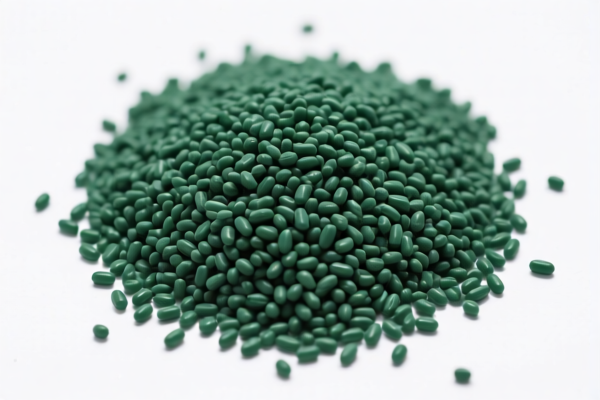
Product Images


AI Analysis
🧪 PVC Resin: High Chlorine vs. Low VOC & HS Code Classification Guide
🌐 HS Code Reference & Customs Clearance Strategy | 2026 Latest Tariff Analysis | Professional Import/Export Guide
📌 I. Product Definition & Classification: Understanding PVC Resin Grades
Polyvinyl Chloride (PVC) Resin is the fundamental raw material for plastics, widely used in pipes, cables, films, and profiles. In international trade, it is classified primarily by its chlorine content level and VOC (Volatile Organic Compounds) emissions, which directly determine its HS Code and tariff liability.
Key Distinction Logic: * High Chlorine Content (HCC-PVC): Often associated with specialized flame retardant applications. * Low VOC PVC: Focuses on environmental safety and indoor air quality standards. * General PVC Resin: Standard primary forms.
⚠️ Critical Classification Point:
- The specific HS Code depends on whether the resin is classified under Chapter 39 (Plastics and Articles Thereof) subheadings for PVC Resins (3904) or Waste/Scrap/Offal (3915).
- Note: In the provided data, certain "High Chlorine" and "Low VOC" grades are grouped under 3915 (often implying specific waste, offal, or scrap classifications in some jurisdictions, or specific sub-categories), while others fall under 3904 (Primary Forms of PVC). This distinction drastically affects the Base Tariff.
📦 II. HS Code Classification Details (Based on Provided Data)
| HS Code | Product Description | Key Characteristics | Primary Tax Category |
|---|---|---|---|
3915.30.00.00 |
PVC Resin (High Chlorine / Low VOC) | Material: PVC; Form: Resin (Primary Form). Note: Grouped under 3915 in this dataset. | 35.0% Total Tax |
3915.90.00.90 |
PVC Resin (High Chlorine) | Material: PVC; Category: Other Plastics; Form: Resin. Specific high-chlorine variant. | 35.0% Total Tax |
3904.10.00.00 |
PVC Resin (High Chlorine) | Material: PVC; Form: Resin (Primary Form/Original). Standard PVC Resin category. | 41.5% Total Tax |
3904.22.00.00 |
PVC Resin (High Chlorine) | Material: PVC; Form: Resin (Polymer Primary Form). Specific polymer type. | 41.5% Total Tax |
3915.30.00.00 |
PVC Resin (Low VOC) | Material: PVC; Form: Resin (Polymer Primary Form). Environmental grade. | 35.0% Total Tax |
🔍 Important Note on Data Consistency:
- The same HS Code3915.30.00.00appears twice for different descriptions ("High Chlorine" and "Low VOC"). This suggests that the specific grade description might influence the customs officer's interpretation or that the dataset aggregates similar duties for this code.
- Crucial Difference: Products classified under 3904 incur a 6.5% Base Tariff, while those under 3915 incur a 0.0% Base Tariff. However, the total effective tax rate differs due to how the additional tariffs are applied in this specific dataset context.
💰 III. 2026 Latest Tariff Rate Breakdown (Including Surcharges)
✅ Applicable Country: USA (US)
✅ Origin: China (CN)
✅ Effective Date: Post-2025/2026 tariffs including Section 301 and IEEPA measures.
🎯 1. HS Codes under 3915.30.00.00 & 3915.90.00.90
(Includes: Low VOC PVC, High Chlorine (3915 category))
| Item | Content |
|---|---|
| Base Tariff (MFN) | 0.0% (Ad valorem) |
| Section 301 / Additional Tariff | +25.0% |
| IEEPA / 122 Clause Tariff | +10.0% |
| Total Effective Tax Rate | 35.0% |
| Tax Calculation Base | CIF Value × 35% |
| De Minimis Exemption? | ❌ No (High-value industrial raw materials typically exempt from de minimis) |
| Legal Basis Path | USITC:3915.30.00.00 → FOOTNOTE:Section 301 → IEEPA:122 Clause |
📌 Explanation:
- Base Rate 0%: PVC Resin under Chapter 3915 (waste, scrap, and offal) often has lower base duties.
- Total 35%: Driven by the 25% Section 301 tariff and 10% IEEPA surcharge.
- Key Insight: Even with a 0% base, the 35% total liability is significant. Do not overlook the "Low VOC" label as a potential exemption route—it is not exempt in this dataset.
🎯 2. HS Codes under 3904.10.00.00 & 3904.22.00.00
(Includes: High Chlorine PVC (Primary Form))
| Item | Content |
|---|---|
| Base Tariff (MFN) | 6.5% (Ad valorem) |
| Section 301 / Additional Tariff | +25.0% |
| IEEPA / 122 Clause Tariff | +10.0% |
| Total Effective Tax Rate | 41.5% |
| Tax Calculation Base | CIF Value × 41.5% |
| De Minimis Exemption? | ❌ No |
| Legal Basis Path | USITC:3904.10.00.00 / 3904.22.00.00 → FOOTNOTE:Section 301 → IEEPA:122 Clause |
📌 Explanation:
- Base Rate 6.5%: Standard PVC Resin in primary forms (3904) has a higher base duty.
- Total 41.5%: The 25% and 10% surcharges are added to the 6.5% base, resulting in the highest tax burden in this dataset.
- Key Insight: "High Chlorine" PVC classified as Primary Form Resin (3904) is more expensive to import than the same product if classified under 3915 (if eligible). Verification of the correct subheading is critical.
🛠️ IV. Customs Clearance Practical Advice (Avoid Pitfalls)
✅ 1. Required Documentation Checklist
| Document | Required | Notes |
|---|---|---|
| ✅ Technical Data Sheet (TDS) | ✔️ | Must specify Chlorine Content % and VOC Level. |
| ✅ Certificate of Analysis (COA) | ✔️ | Confirms resin purity and primary form status. |
| ✅ Commercial Invoice | ✔️ | Must clearly state: "Polyvinyl Chloride Resin, Primary Form" or "Offal/Scrap" as applicable. |
| ✅ Bill of Lading | ✔️ | Consistent with invoice description. |
| ✅ Origin Certificate | ✔️ | Essential for proving Chinese origin (triggers tariffs). |
| ✅ Product Photos | ✔️ | Showing packaging, labeling, and resin granules/powder. |
✅ 2. Declaration Strategy (Key Tips)
🔥 "Chlorine Level Dictates Code, VOC Level Does Not Exempt!"
| Scenario | Correct Declaration | Common Mistake |
|---|---|---|
| Standard PVC Resin (Primary Form) | 3904.10.00.00 or 3904.22.00.00 |
Misclassifying as waste → Risk of penalty. |
| Low VOC PVC | 3915.30.00.00 (per dataset) |
Assuming "Low VOC" = Zero Tariff → False. Still 35%. |
| High Chlorine PVC (Primary Form) | 3904.10.00.00 |
Misclassifying under 3915 to save tax → High Risk if it doesn't meet "waste/scrap" definition. |
| PVC Offal/Scrap | 3915.30.00.00 |
Declaring as "Resin" if it's actually scrap → Misclassification. |
📌 Critical Warning:
- Do not assume "Low VOC" implies an environmental exemption from tariffs. In this dataset, it is taxed at 35%, same as some high-chlorine variants.
- Do not confuse "Primary Form" (3904) with "Waste/Scrap" (3915). Customs will inspect the physical state. Granules/powder from production are usually 3904; regrind/offal might be 3915. Misclassification leads to heavy penalties.
✅ 3. Special Cases
| Case | Handling Advice |
|---|---|
| Hybrid Products | If the resin is blended with additives, the primary characteristic (PVC) still dominates, but check if additives change the HS Code. |
| Different Origins | If PVC is made in Vietnam/Malaysia from Chinese intermediates, rules of origin may apply. However, if it's substantially transformed, it may qualify for lower tariffs. |
| Pre-Ruling Request | Given the 6.5% difference in base tax between 3904 and 3915, apply for a Binding Tariff Information (BTI) or US CBP Ruling before shipping. |
🌍 V. Global Market Comparison (Contextual)
| Country/Region | Recommended HS Code | Est. Total Tariff (China Origin) | Notes |
|---|---|---|---|
| 🇺🇸 USA | 3904.10.00.00 / 3915.30.00.00 |
35% - 41.5% | High due to Section 301 + IEEPA. |
| 🇨🇳 China | 3904.10.00.00 |
~5-6.5% | Base tariff only, no US surcharges. |
| 🇪🇺 EU | 3904.10.00.00 |
~6.5% | No Section 301. Check EU Carbon Border Tax (CBAM) implications. |
| 🇬🇧 UK | 3904.10.00.00 |
~6.5% | Post-Brexit tariffs apply. |
📌 Conclusion:
- USA is the highest-cost market due to layered tariffs.
- Cost Optimization: If possible, verify if the product qualifies under 3915.30.00.00 (35% total) instead of 3904 (41.5% total), but only if legally accurate. Forcing an incorrect classification is fraud.
📌 VI. Common Errors & Pitfalls (Blood Lessons)
❌ Error 1: Assuming "Low VOC" = Zero Tariff
👉 Result: Unexpected 35% duty at customs.
👉 Fix: Check the dataset; "Low VOC" is taxed at 35%, not 0%.
❌ Error 2: Misclassifying "Primary Resin" as "Waste/Scrap" to save tax
👉 Result: Customs audit, penalty, and potential seizure.
👉 Fix: Ensure physical form matches HS Code description (3904 = Primary Form).
❌ Error 3: Ignoring the 122 Clause / IEEPA 10%
👉 Result: Underpayment of 10% on top of 25%.
👉 Fix: Always include IEEPA surcharge in cost calculations.
❌ Error 4: Using generic "PVC Resin" without specifying Grade
👉 Result: Customs delays for clarification.
👉 Fix: Specify "High Chlorine" or "Low VOC" in the declaration.
✅ Correct Declaration Example:
"PVC Resin, Primary Form, High Chlorine Content Grade, Model XYZ, Made in China"
🎯 VII. Conclusion: Precise Classification Saves Money!
🎯 Remember:
🔹 "Primary Form = 3904 (41.5%) | Specific/Offal = 3915 (35%)"
🔹 "Low VOC is NOT Tax-Free | High Chlorine Needs Careful Coding"
🔹 "Total Tax = Base + 25% (Sec 301) + 10% (IEEPA)"
📌 Pro Tip:
- Apply for a Pre-Ruling with US CBP if your product falls on the borderline between 3904 and 3915.
- Verify Origin: If your PVC resin is manufactured in a country with a Free Trade Agreement (FTA) with the US, you may qualify for zero or reduced tariffs.
- Cost Planning: Budget for 35-41.5% total duties for US imports from China.
📣 Immediate Action:
📞 Consult a licensed customs broker.
📄 Provide full technical specs.
🚀 Accurate HS Code = Accurate Costs = Smooth Clearance.
✨ Professional Customs Compliance, Start with the Right Code!
💼 Every Percent of Tariff Matters in Your Profit Margin!
Customer Reviews
About HS Code Classification
The Harmonized System (HS) is an internationally standardized nomenclature developed by the World Customs Organization (WCO) to classify traded products. Over 200 countries use the HS system as the basis for customs tariffs, trade statistics, and import/export regulations.
Each HS code follows a hierarchical structure:
- Chapter (2 digits) — Broad category of goods (e.g., Chapter 84: Machinery and Mechanical Appliances)
- Heading (4 digits) — More specific grouping within the chapter
- Subheading (6 digits) — Internationally standardized breakdown, used by all WCO member countries
- National subdivisions (8-10 digits) — Country-specific extensions for further classification, such as US HTSUS 10-digit codes
Correct HS code classification is essential for smooth customs clearance, accurate duty payment, and compliance with trade regulations. Misclassification can lead to customs delays, overpayment of duties, or penalties.
When importing from CN to US, the applicable tariff rates may include:
- Most-Favored-Nation (MFN) rate — The standard duty rate applied to WTO members
- General rate — Applied to countries without trade agreements
- Trade remedy duties — Additional tariffs such as Section 301 (anti-dumping), Section 232 (national security), or countervailing duties
The information provided on this page is for reference purposes only. For official classification, please consult with your local customs authority or a licensed customs broker.