Low Contrast Color Copy Film
CN → US| HS Code | Tariff Rate | Origin | Destination | Doc |
|---|---|---|---|---|
| 3701996060 | 35.0% | CN | US | Official Doc |
| 3702310100 | 38.7% | CN | US | Official Doc |
| 3701910060 | 38.7% | CN | US | Official Doc |
| 3702520160 | 38.7% | CN | US | Official Doc |
| 3703203030 | 38.7% | CN | US | Official Doc |
Product Images
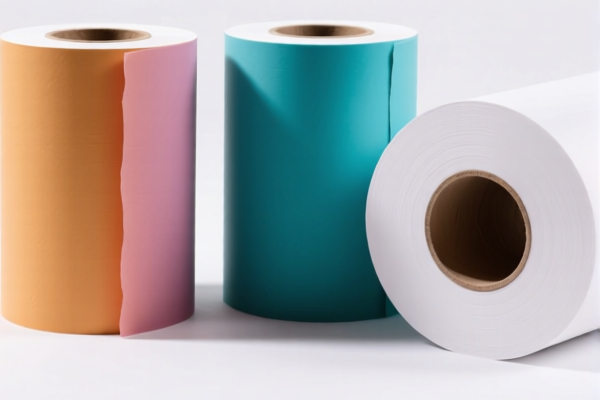
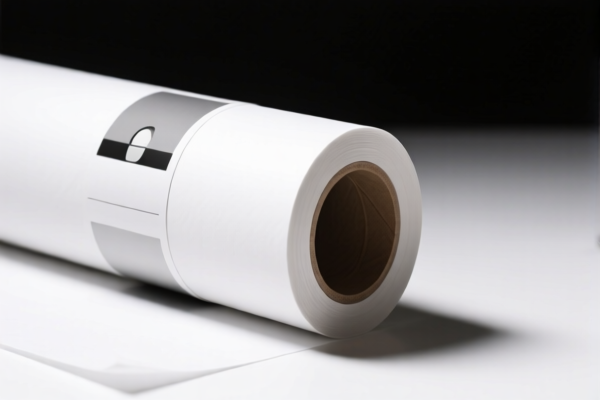
AI Analysis
🎞️ Low Contrast Color Copy Film
🌐 HS Code Reference & Customs Clearance Guide | 2026 Latest Tariff Analysis | Professional Clearance Strategy
📌 I. Product Definition & Classification: What Exactly is "Low Contrast Color Copy Film"?
Low Contrast Color Copy Film is a specialized photographic material designed primarily for copying original images (such as documents, art, or other films) rather than direct scene capture. Its key characteristic is low contrast, meaning it is engineered to faithfully reproduce tonal gradations without exaggerating the difference between light and dark areas. This makes it distinct from standard contrast media or general-purpose color negative films.
In international trade, this product falls under Chapter 37 (Photographic or Cinematographic Goods). However, precise classification depends heavily on its physical form (roll vs. sheet) and state (sensitized/unexposed vs. already exposed).
⚠️ Key Distinction Points:
- Form Factor: Is it wound on a spool (Roll Film) or in sheets?
- Usage: Is it for direct photography (capture) or for copying/reproduction (duplicating)?
- State: Is it raw sensitized material, or has it already been exposed and processed?
📦 II. HS Code Classification Details (2026 Latest Tariff Authority Alignment)
Based on the specific characteristics of "Low Contrast Color Copy Film," the following HS Codes apply. Note that HS Codes are 10-digit US HTSUSA codes, incorporating specific subheadings for tax and trade policy purposes.
| HS Code | Product Description | Application Scenario | Key Classification Criteria |
|---|---|---|---|
3701.99.60.60 |
Other photographic plates and films, sensitized, in the flat; other | Film Rolls (Non-paper/Textile Base) | Raw film rolls, non-paper/base type, low contrast, for copying. |
3702.31.01.00 |
Colour photographic film paper, of a width > 105 mm, in rolls, sensitized, unexposed | Colour Photography Purpose (Rolled) | Specifically identified as "Color Photography Use" in rolls. |
3701.91.00.60 |
Other photographic plates and films, sensitized, in the flat; colour, for colour photography | Colour Photography (Flat/Roll hybrid context) | Sensitized material for color photography, non-paper/textile form. |
3702.52.01.60 |
Colour photographic film paper, of a width > 105 mm, in rolls, sensitized, unexposed | Colour Use (Non-paper/Cardboard/Textile Base) | General color film rolls, specific base material exclusion. |
3703.20.30.30 |
X-ray film, colour, sensitised, in the flat, whether or not on a backing of paper, paperboard, plastics or other material | Low Sensitivity Color Rapid Copy Film | Specifically for "Low Sensitivity" color rapid copying/processing. |
🔍 Critical Reminder:
- "Copy Film" vs. "Negative Film": If the film is explicitly marketed for copying (reproducing existing images), it often falls under 3701 (plates/films for copying) or specific 3703 subheadings if specialized (e.g., x-ray or low-sensitivity).
- "Sensitized" Status: All codes listed assume the film is sensitized but unexposed. If it is already exposed, different HS codes may apply.
- Base Material: The distinction between "paper," "plastic," and "textile" bases can shift the code within the 3701/3702/3703 chapters.
💰 III. 2026 Latest Tariff Rate Breakdown (Including Surcharge & Policy Add-ons)
✅ Applicable Country: United States (US)
✅ Country of Origin: China (CN)
✅ Effective Date: November 10, 2025 onwards (for subsequent imports)
🎯 1. 3701.99.60.60 —— Other Photographic Films (Rolls, Non-paper/Textile Base)
| Item | Details |
|---|---|
| Base Tariff Rate | 0.0% (Ad Valorem) |
| USITC Surcharge | +25.0% (Under USITC Footnote 9903.88.01 / Section 301) |
| IEEPA Surcharge | +10.0% (Against China/HK products, effective Nov 10, 2025) |
| Total Tax Rate | 35.0% |
| Tax Calculation | CIF Value × 35% |
| De Minimis Exemption | ❌ Not Eligible (deny_de_minimis) |
| Legal Basis Path | IEEPA:9903.01.25 → IEEPA:9903.01.24 → USITC:3701.99.60.60 → FOOTNOTE:9903.88.01 |
📌 Explanation:
- "Base Tariff 0%" reflects the low duty on raw photographic materials.
- "25% USITC Surcharge" is the standard Section 301 tariff on many Chinese goods.
- "10% IEEPA Surcharge" is the additional penalty imposed on Chinese-origin goods.
- Total 35% is significant for low-margin photography supplies.
🎯 2. 3702.31.01.00, 3701.91.00.60, 3702.52.01.60 —— Color Photography/Use Films
| Item | Details |
|---|---|
| Base Tariff Rate | 3.7% (Ad Valorem) |
| USITC Surcharge | +25.0% |
| IEEPA Surcharge | +10.0% |
| Total Tax Rate | 38.7% |
| Tax Calculation | CIF Value × 38.7% |
| De Minimis Exemption | ❌ Not Eligible (deny_de_minimis) |
| Legal Basis Path | IEEPA:9903.01.25 → IEEPA:9903.01.24 → USITC:3702.xxxx.xxxx / 3701.91.00.60 → FOOTNOTE:9903.88.01 |
📌 Note:
- These codes carry a slightly higher base tariff (3.7%) because they are categorized more specifically under "color photographic film for photography use."
- The surcharges remain consistent at +25% and +10%.
- Total 38.7% is the highest burden among these options.
🎯 3. 3703.20.30.30 —— Low Sensitivity Color Rapid Copy Film
| Item | Details |
|---|---|
| Base Tariff Rate | 3.7% (Ad Valorem) |
| USITC Surcharge | +25.0% |
| IEEPA Surcharge | +10.0% |
| Total Tax Rate | 38.7% |
| Tax Calculation | CIF Value × 38.7% |
| De Minimis Exemption | ❌ Not Eligible (deny_de_minimis) |
| Legal Basis Path | IEEPA:9903.01.25 → IEEPA:9903.01.24 → USITC:3703.20.30.30 → FOOTNOTE:9903.88.01 |
📌 Explanation:
- Despite being "copy film," if classified under 3703 (often linked to specialized X-ray or rapid processing films), it attracts the 3.7% base rate.
- This code is specific to "Low Sensitivity" films, which may appeal to professional copy services requiring longer exposure times for higher fidelity.
🛠️ IV. Customs Clearance Practical Advice (Real-World Pitfall Avoidance Guide)
✅ 1. Document Checklist (Mandatory)
| Document | Required | Notes |
|---|---|---|
| ✅ Product Specification Sheet | ✔️ | Must clearly state "Low Contrast," "Color," "Copy Film," and base material (e.g., polyester, acetate). |
| ✅ Technical Data Sheet (TDS) | ✔️ | Include sensitivity (ISO), contrast index, and intended use (copying vs. photography). |
| ✅ Product Photos (Clear) | ✔️ | Show the roll/spool, packaging labels, and any "Sensitized" warnings. |
| ✅ Commercial Invoice | ✔️ | Describe as "Sensitized Color Copy Film Rolls, for Image Reproduction." |
| ✅ Packing List | ✔️ | Specify dimensions (width, length) to determine if it falls under >105mm width rules. |
| ✅ Certificate of Origin (CO) | ✔️ | Crucial for proving Chinese origin to apply correct surcharges. |
✅ 2. Declaration Tips (Key Mnemonics)
🔥 "State the Base, Declare the Use, Avoid Misclassification!"
| Scenario | Correct Declaration | Wrong Approach |
|---|---|---|
| Film Rolls for Copying | 3701.99.60.60 - "Low Contrast Color Copy Film Rolls, Polyester Base" |
Mislabel as "Camera Film" → Risk of 38.7% tax. |
| Exposure Status | Must state "Unexposed, Sensitized" | Failing to declare → Customs may suspect it's used goods (different HS). |
| Width > 105mm | Use 3702 series if applicable |
Using 3701 for wide rolls → Potential correction and penalties. |
| Low Sensitivity | Highlight "Low Sensitivity" if applicable for 3703 |
Generic "Color Film" → May miss optimal classification. |
✅ 3. Special Circumstances Handling
| Situation | Handling Advice |
|---|---|
| OEM/Private Label | Provide manufacturer’s letter confirming "Low Contrast Copy" purpose. |
| Mixed Shipments | Clearly separate copy film from other photographic supplies in invoice/packing list. |
| Already Exposed | Do not use these codes. Exposed film has different HS codes and potential import restrictions. |
| Samples for Testing | Still subject to tariffs. Declare accurately to avoid customs hold. |
🌍 V. Global Market Comparison (2026 Latest)
| Country/Region | Recommended HS Code | Tariff | Certification | Notes |
|---|---|---|---|---|
| 🇺🇸 USA | 3701.99.60.60 |
35.0% | None specific | High due to 25% + 10% surcharges. |
| 🇨🇳 China | 3701.99.60.60 |
~3-5% | CCC (if applicable) | Lower base rates, no US-style surcharges. |
| 🇪🇺 EU | 3701.99.60.60 |
0-2% | CE (if electronic equipment involved) | Generally lower tariffs on raw materials. |
| 🇬🇧 UK | 3701.99.60.60 |
0-2% | UKCA | Post-Brexit, tariffs vary but generally low. |
| 🇯🇵 Japan | 3701.99.60.60 |
0% | PSE (if applicable) | Zero duty on many photographic materials. |
📌 Conclusion:
- USA remains the most expensive market for importing Chinese photographic films due to additive surcharges.
- Cost Optimization: Consider if the film can be shipped from a third country (e.g., Vietnam, Thailand) if eligible for IEEPA exemption, though this requires strict supply chain verification.
📌 VI. Common Errors & Pitfalls (Lessons Learned)
❌ Error 1: Declaring "Color Film" without specifying "Copy" or "Low Contrast"
👉 Consequence: Customs may classify it under general photography HS codes → Higher Base Tax (3.7% vs 0%).
❌ Error 2: Failing to mention "Sensitized" status
👉 Consequence: Delay in clearance, potential inspection for contraband or used goods.
❌ Error 3: Ignoring Base Material (Paper vs. Plastic)
👉 Consequence: Incorrect HS Code selection → Penalties for misdeclaration.
❌ Error 4: Assuming "De Minimis" applies
👉 Consequence: No de minimis for these HS codes. Small shipments still incur full 35-38.7% tax.
✅ Correct Practice:
"Color Copy Film Rolls, Low Contrast, Polyester Base, Sensitized, Unexposed, Width: [XX] mm, Intended for Document/Art Reproduction."
🎯 VII. Conclusion: Precise Classification Saves Money!
🎯 Remember:
🔹 "Copy Film, Not Camera Film – 0% Base is Key."
🔹 "35% Total Tax in US – Plan Ahead."
🔹 "Declare Sensitized & Unexposed – Avoid Delays."
📌 Pro Tip:
If your Low Contrast Color Copy Film is originally produced in Vietnam, Mexico, Thailand, or Malaysia, you may qualify for IEEPA Exemption (reducing total tax from 35% to ~25-30% or lower).
Recommend Applying for Advance Ruling to confirm HS Code and tariff liability before shipment.
📣 Take Action Now:
📞 Contact a Professional Customs Broker + Provide Product Specs + Apply for HS Code Pre-Ruling
🚀 Ensure Smooth Clearance, Maximize Profit Margins, Avoid Surprises!
✨ Professional Customs Clearance Starts with Accurate Classification!
💼 Every Percent of Tax Savings is Pure Profit!
Customer Reviews
About HS Code Classification
The Harmonized System (HS) is an internationally standardized nomenclature developed by the World Customs Organization (WCO) to classify traded products. Over 200 countries use the HS system as the basis for customs tariffs, trade statistics, and import/export regulations.
Each HS code follows a hierarchical structure:
- Chapter (2 digits) — Broad category of goods (e.g., Chapter 84: Machinery and Mechanical Appliances)
- Heading (4 digits) — More specific grouping within the chapter
- Subheading (6 digits) — Internationally standardized breakdown, used by all WCO member countries
- National subdivisions (8-10 digits) — Country-specific extensions for further classification, such as US HTSUS 10-digit codes
Correct HS code classification is essential for smooth customs clearance, accurate duty payment, and compliance with trade regulations. Misclassification can lead to customs delays, overpayment of duties, or penalties.
When importing from CN to US, the applicable tariff rates may include:
- Most-Favored-Nation (MFN) rate — The standard duty rate applied to WTO members
- General rate — Applied to countries without trade agreements
- Trade remedy duties — Additional tariffs such as Section 301 (anti-dumping), Section 232 (national security), or countervailing duties
The information provided on this page is for reference purposes only. For official classification, please consult with your local customs authority or a licensed customs broker.