Low Contrast Color Film Roll
CN → US| HS Code | Tariff Rate | Origin | Destination | Doc |
|---|---|---|---|---|
| 3701910060 | 38.7% | CN | US | Official Doc |
| 3702520160 | 38.7% | CN | US | Official Doc |
| 3701996060 | 35.0% | CN | US | Official Doc |
| 3702310100 | 38.7% | CN | US | Official Doc |
| 3701910060 | 38.7% | CN | US | Official Doc |
Product Images
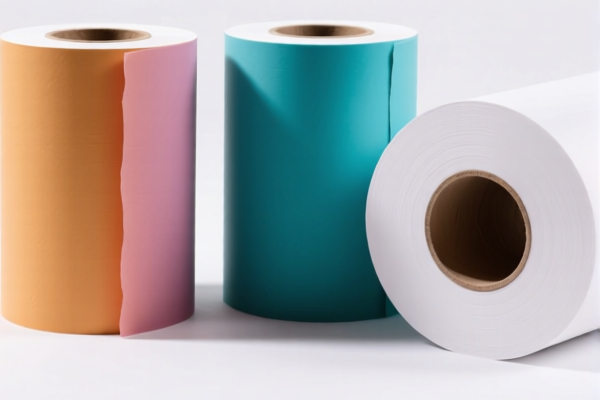
AI Analysis
🎞️ Low Contrast Color Film Roll (Photographic Film)
🌐 HS Code Reference & Customs Clearance Guide | 2026 Latest Tariff Analysis | Professional Clearance Strategy for Photographic Media
📌 I. Product Definition & Classification: What Exactly is "Low Contrast Color Film"?
Color Film Rolls are light-sensitive photographic media used in analog photography, industrial inspection, or scientific imaging. In international trade, they are strictly categorized based on their state of development (raw vs. exposed) and material substrate (non-paper/non-textile).
For "Low Contrast Color Film Rolls", the key distinction lies in whether the film is: 1. Unexposed (Raw Film): Freshly manufactured, ready for use. 2. Exposed (Processed Film): Already photographed and developed.
⚠️ Critical Classification Point:
- If the film is unexposed and non-paper/non-textile →归入 3701.91.00.60 or 3701.99.60.60
- If the film is exposed/developed and non-paper/non-textile → 归入 3702.31.01.00 or 3702.52.01.60
- Note: "Low Contrast" is a technical characteristic affecting image quality, NOT a basis for HS Code separation. The primary driver is the physical state (exposed/unexposed) and format.
📦 II. HS Code Classification Details (2026 Latest Tariff Authority对照)
| HS Code | Product Description | Application Scenario | State of Film | Material Basis |
|---|---|---|---|---|
3701.91.00.60 |
Color photographic plates and film strips, other than paper, cardboard or textile materials, unexposed (excluding those of heading 3701.10) | Raw color film rolls, unexposed, non-paper/non-textile | ❌ Unexposed | Non-paper/Non-textile |
3701.99.60.60 |
Other color photographic plates and film strips, other than paper, cardboard or textile materials | Other raw color films not specified above (e.g., specific large formats) | ❌ Unexposed | Non-paper/Non-textile |
3702.31.01.00 |
Color photographic film, other than paper, cardboard or textile materials, exposed, for printing, in rolls | Exposed color film rolls, used for printing/positive output | ✅ Exposed | Non-paper/Non-textile |
3702.52.01.60 |
Color photographic film, other than paper, cardboard or textile materials, exposed, in rolls (negative) | Exposed negative color film rolls (e.g., for standard photo processing) | ✅ Exposed | Non-paper/Non-textile |
🔍 Key Reminder:
- Raw Film (Unexposed): Falls under Chapter 3701.
- Exposed Film (Processed): Falls under Chapter 3702.
- Material Constraint: All codes listed above explicitly exclude paper/cardboard/textile bases. If your film is on paper (e.g., instant photo paper), it belongs to different codes (not in this dataset).
- "Low Contrast" Note: This attribute does not change the HS code. Ensure your declaration emphasizes "Color" and "Roll" format.
💰 III. 2026 Latest Tariff Rate Breakdown (Including Surtaxes & Policy Add-ons)
✅ Applicable Country: United States (US)
✅ Origin: China (CN)
✅ Effective Date: From November 10, 2025 (including subsequent imports)
✅ Total Tax Range: 35.0% – 38.7%
🎯 1. 3701.91.00.60 & 3702.52.01.60 & 3702.31.01.00 — Color Film Rolls (Raw/Exposed)
| Item | Content |
|---|---|
| Base Tariff Rate | 3.7% (Ad Valorem) |
| Section 301 Surtax | +25.0% (Add-on Tariff) |
| Section 122 Tariff | +10.0% (Specific Surtax for China) |
| Total Effective Rate | 38.7% |
| Tax Calculation | CIF Value × 38.7% |
| De Minimis Eligibility | ❌ Not Eligible (High duty rate exceeds de minimis thresholds for duty-free entry) |
| Legal Basis Path | Base: 3.7% → Section 301: +25% → Section 122: +10% → Total: 38.7% |
📌 Explanation:
- Base Rate (3.7%): Standard MFN (Most Favored Nation) duty for photographic materials.
- Section 301 (25%): Additional tariff imposed under US Trade Act Section 301 against China.
- Section 122 (10%): Additional tariff under IEEPA (International Emergency Economic Powers Act) for specific Chinese goods.
- Total (38.7%): This is a high-cost category. Importers must factor this into landed cost calculations.
🎯 2. 3701.99.60.60 — Other Color Film Rolls (Unexposed)
| Item | Content |
|---|---|
| Base Tariff Rate | 0.0% (Ad Valorem) |
| Section 301 Surtax | +25.0% (Add-on Tariff) |
| Section 122 Tariff | +10.0% (Specific Surtax for China) |
| Total Effective Rate | 35.0% |
| Tax Calculation | CIF Value × 35.0% |
| De Minimis Eligibility | ❌ Not Eligible |
| Legal Basis Path | Base: 0.0% → Section 301: +25% → Section 122: +10% → Total: 35.0% |
📌 Note:
- Although the base rate is 0%, the total effective rate is still 35.0%.
- This code applies to raw color films that do not fit the specific "3701.91" description (often broader or less common formats).
- Do not assume 0% duty! The surtaxes push it to 35%.
🛠️ IV. Customs Clearance Practical Advice (Real-World Pitfall Guide)
✅ 1. Required Documentation Checklist (Mandatory)
| Document | Must Provide | Explanation |
|---|---|---|
| ✅ Product Spec Sheet | ✔️ | Must state: "Color Film," "Roll Format," "Unexposed/Exposed," "Substrate: Plastic/Acetate (Non-Paper)" |
| ✅ Material Declaration | ✔️ | Explicitly confirm: "Not on Paper, Cardboard, or Textile" |
| ✅ Commercial Invoice | ✔️ | Clearly describe as "Color Photographic Film Rolls" |
| ✅ Bill of Lading/Air Waybill | ✔️ | Match quantity and weight |
| ✅ Certificate of Origin | ✔️ | Confirm China origin to apply correct surtaxes |
| ✅ Photos of Product | ✔️ | Show packaging, label, and roll structure |
✅ 2. Declaration Strategy (Key Mnemonic)
🔥 "Raw vs. Exposed, Non-Paper is Key, 38.7% or 35%, Don't Guess!"
| Scenario | Correct Declaration | Error Consequence |
|---|---|---|
| Raw, Color, Roll, Non-Paper | 3701.91.00.60 |
Misdeclare as exposed → Penalty + Back Duty |
| Exposed Negative, Color, Roll | 3702.52.01.60 |
Misdeclare as raw → Potential fraud accusation |
| Exposed Printing, Color, Roll | 3702.31.01.00 |
Misdeclare as paper-based → Wrong HS Code |
| Any Film on Paper | NOT IN THIS LIST | Using these codes → Rejection + Seizure |
⚠️ Critical Check:
Ensure the substate is explicitly declared as "Non-Paper/Non-Textile". If it's on paper, it falls under different HS codes (e.g., 3702.31.01.00 might still apply if exposed, but paper-based films have different rates). This dataset specifically excludes paper/cardboard/textile.
✅ 3. Special Cases
| Situation | Handling Advice |
|---|---|
| Mixed Shipments (Raw + Exposed) | Separate declarations for 3701 (Raw) and 3702 (Exposed) lines. Do not combine. |
| Sample Imports | High duty (35-38.7%) still applies. De Minimis (Section 321) does not apply due to high duty rate. |
| OEM Custom Film | Provide contract and specs. Ensure "Low Contrast" is noted in specs but not in HS Code description. |
| Industrial Inspection Film | Still classified as photographic film (3701/3702) if light-sensitive. Same rates apply. |
🌍 V. Global Market Clearance Comparison (2026 Latest)
| Country/Region | Recommended HS Code | Tariff (China Origin) | Certification Requirements | Remarks |
|---|---|---|---|---|
| 🇺🇸 USA | 3701.91.00.60 / 3702.52.01.60 |
35.0% – 38.7% | None Specific | High Surtax (Section 301 + 122) |
| 🇨🇳 China | 3701.91.00.60 / 3702.52.01.60 |
~0-6% (Import Duty) | None | Low Duty, No Surtax |
| 🇪🇺 EU | 3701.91.00 / 3702.52.00 |
~6.5% | REACH (if chemicals) | Moderate Duty |
| 🇯🇵 Japan | 3701.91.00 / 3702.52.00 |
~6.0% | None | Moderate Duty |
| 🇬🇧 UK | 3701.91.00 / 3702.52.00 |
~6.0% | None | Moderate Duty |
📌 Conclusion:
- The US is the most expensive market for Chinese-origin color film due to Section 301 and Section 122 tariffs.
- Total cost impact: Up to 38.7% additional duty on top of CIF value.
- Strategy: Consider pricing strategies, duty drawback (if re-exported), or alternative origins if possible.
📌 VI. Common Mistakes & Pitfalls (Blood & Tears Lessons)
❌ Mistake 1: Declaring "Low Contrast" as the product name
👉 Result: Customs may reject vague descriptions. Use "Color Photographic Film Roll".
❌ Mistake 2: Failing to specify "Non-Paper/Non-Textile"
👉 Result: Customs may assume paper-based (different HS code) → Delay & Inspection.
❌ Mistake 3: Confusing Raw vs. Exposed
👉 Result: Raw film (3701) vs. Exposed film (3702) have different sub-codes. Misdeclaration leads to audit flags.
❌ Mistake 4: Ignoring the 10% Section 122 Tariff
👉 Result: Underpaying duties. The 10% is mandatory for Chinese goods. Total is not just 25%.
✅ Correct Declaration Example:
"Color Photographic Film Rolls, Unexposed, Non-Paper, Non-Textile, Low Contrast Grade, Model XYZ"
🎯 VII. Conclusion: Professional Declaration, Save Costs, Ensure Compliance
🎯 Remember the Mnemonic:
🔹 "Raw is 3701, Exposed is 3702, Non-Paper is Key, 38.7% is the Fee!"
🔹 "Low Contrast doesn't change HS, State (Raw/Exposed) and Material are what matters!"
🔹 "US Market High Duty, Plan for 35-39%, Don't Skip the Surtax!"
📌 Tips:
- If your film is raw, use 3701.91.00.60 (most common for rolls).
- If your film is exposed negative, use 3702.52.01.60.
- If your film is exposed printing, use 3702.31.01.00.
- Always confirm the base material is not paper/textile.
📣 Immediate Action:
📞 Consult a licensed customs broker + Provide product specs + Verify "Non-Paper" status
🚀 Ensure accurate HS Code selection to avoid 38.7% unexpected costs!
✨ Professional Customs Clearance Starts with Accurate Classification!
💼 Every Percent of Duty Counts!
Customer Reviews
About HS Code Classification
The Harmonized System (HS) is an internationally standardized nomenclature developed by the World Customs Organization (WCO) to classify traded products. Over 200 countries use the HS system as the basis for customs tariffs, trade statistics, and import/export regulations.
Each HS code follows a hierarchical structure:
- Chapter (2 digits) — Broad category of goods (e.g., Chapter 84: Machinery and Mechanical Appliances)
- Heading (4 digits) — More specific grouping within the chapter
- Subheading (6 digits) — Internationally standardized breakdown, used by all WCO member countries
- National subdivisions (8-10 digits) — Country-specific extensions for further classification, such as US HTSUS 10-digit codes
Correct HS code classification is essential for smooth customs clearance, accurate duty payment, and compliance with trade regulations. Misclassification can lead to customs delays, overpayment of duties, or penalties.
When importing from CN to US, the applicable tariff rates may include:
- Most-Favored-Nation (MFN) rate — The standard duty rate applied to WTO members
- General rate — Applied to countries without trade agreements
- Trade remedy duties — Additional tariffs such as Section 301 (anti-dumping), Section 232 (national security), or countervailing duties
The information provided on this page is for reference purposes only. For official classification, please consult with your local customs authority or a licensed customs broker.