Low Density Material
CN → US| HS Code | Tariff Rate | Origin | Destination | Doc |
|---|---|---|---|---|
| 3920791000 | 41.2% | CN | US | Official Doc |
| 3920992000 | 39.2% | CN | US | Official Doc |
| 3701996060 | 35.0% | CN | US | Official Doc |
| 3701993000 | 35.0% | CN | US | Official Doc |
Product Images

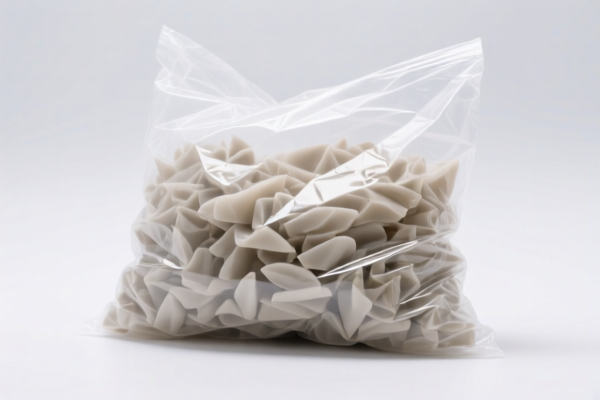


AI Analysis
🧪 Low Density Material: A Global Trade & Customs Classification Guide (2026)
🌐 HS Code Reference & Clearance Strategy | 2026 Tariff Analysis | Strategic Import Guide
📌 I. Product Definition: What is "Low Density Material"?
In international trade, "Low Density Material" is not a single, standardized commodity but a descriptive term often applied to foams, micro-films, or porous polymers with significantly lower mass per unit volume compared to standard solids.
In the context of customs classification (HS Code), these materials often fall into specific categories based on their chemical composition and physical form. For this analysis, we focus on Low Density Microfilm/Sheets, a critical material used in: * Archival Preservation: Storing historical documents. * Medical Imaging: X-ray and micro-radiography films. * Industrial Sensors: Lightweight protective layers. * Aerospace: Lightweight insulation sheets.
⚠️ Critical Distinction:
The classification depends entirely on whether the material is: 1. A Plastic/Film (Cellulose derivative or other polymer) → Chapter 39 2. A Photographic Film (Light-sensitive) → Chapter 37
📦 II. HS Code Classification Details (2026 Latest Tariff Data)
Based on the provided data, "Low Density Material" (specifically Low Density Microfilm) is classified into four distinct HS Codes. Each carries a unique tax structure due to US trade restrictions (Section 301, Section 232, and IEEPA).
| HS Code | Product Description | Summary | Total Tax Rate |
|---|---|---|---|
3920.79.10.00 |
Other Cellulose Derivatives or Plastic Films Low density microfilm classified as "other cellulose derivatives." |
Used for non-photographic, plastic-based low-density sheets. | 41.2% |
3920.99.20.00 |
Other Plastics Low density microfilm classified as "other plastic." |
General low-density polymer films not covered by cellulose sub-categories. | 39.2% |
3701.99.60.60 |
Other Sensitized Films (Non-paper/Cardboard/Textile) Low density microfilm classified as "non-paper sensitized film." |
Light-sensitive films for photographic use (general). | 35.0% |
3701.99.30.00 |
Sensitized Unexposed Flat Sheets Low density microfilm classified as "sensitized unexposed flat photographic plates/films." |
Specifically for unexposed photographic plates/sheets. | 35.0% |
🔍 Key Insight:
- Plastic/Film Classification (3920): Higher tax burden (39.2% – 41.2%).
- Photographic Classification (3701): Slightly lower tax burden (35.0%), but still high.
- Crucial: The material must be correctly identified as Plastic vs. Photographic to avoid audit penalties.
💰 III. 2026 Tariff Rate Breakdown (USA Import from China)
✅ Origin: China (CN)
✅ Destination: United States (US)
✅ Effective Date: 2025–2026 Trade Period
All rates below include Base Tariff + Section 301 (25%) + Section 232/122 (10%).
🎯 1. Classification: 3920.79.10.00 (Cellulose/Other Plastic Film)
- Summary: Low Density Microfilm as "Other Cellulose Derivatives or Plastic Films."
- Tax Structure:
- Base Duty: 6.2%
- Section 301 (Add-on): 25.0%
- Section 232/122 Add-on: 10.0%
- Total Effective Rate: 41.2%
- Legal Basis:
HTSUS 3920.79.10.00subject toSection 301andSection 232tariffs.
🎯 2. Classification: 3920.99.20.00 (Other Plastics)
- Summary: Low Density Microfilm as "Other Plastics."
- Tax Structure:
- Base Duty: 4.2%
- Section 301 (Add-on): 25.0%
- Section 232/122 Add-on: 10.0%
- Total Effective Rate: 39.2%
- Legal Basis:
HTSUS 3920.99.20.00subject toSection 301andSection 232tariffs.
🎯 3. Classification: 3701.99.60.60 (Non-Photosensitive Film)
- Summary: Low Density Microfilm as "Other Sensitized Film" (Non-paper/Cardboard/Textile).
- Tax Structure:
- Base Duty: 0.0%
- Section 301 (Add-on): 25.0%
- Section 232/122 Add-on: 10.0%
- Total Effective Rate: 35.0%
- Legal Basis:
HTSUS 3701.99.60.60subject toSection 301andSection 232tariffs.
🎯 4. Classification: 3701.99.30.00 (Unexposed Photographic Plates)
- Summary: Low Density Microfilm as "Sensitized Unexposed Flat Plates."
- Tax Structure:
- Base Duty: 0.0%
- Section 301 (Add-on): 25.0%
- Section 232/122 Add-on: 10.0%
- Total Effective Rate: 35.0%
- Legal Basis:
HTSUS 3701.99.30.00subject toSection 301andSection 232tariffs.
📌 Explanation of Terms: * Base Tariff: The standard Most-Favored-Nation (MFN) duty rate applied to the product. * Section 301 (25%): "Trump Tariff" / US Trade Action against China for unfair trade practices. * Section 122/232 (10%): Additional surcharge often linked to national security or specific trade acts (e.g., "122 Section Tariff" mentioned in the data). * Combined Impact: Even if the base duty is 0% (for photogs), the 35% total is still prohibitive for low-margin goods.
🛠️ IV. Clearance Practical Advice (Avoiding Pitfalls)
✅ 1. Pre-Shipment Documentation Checklist
| Document | Requirement | Reason |
|---|---|---|
| Material Safety Data Sheet (MSDS) | ✅ Required | Must confirm chemical composition (Cellulose vs. Polymer). |
| Technical Spec Sheet | ✅ Required | Must explicitly state "Low Density" and "Microfilm" properties. |
| Photographic Test Report | ✅ Required | If claiming 3701, prove it is light-sensitive. If not, prove it is inert. |
| Commercial Invoice | ✅ Required | Exact Description: "Low Density Microfilm, Plastic Type, [HS Code]" |
| Packing List | ✅ Required | Confirm unit weight vs. volume to prove "Low Density." |
✅ 2. Declaration Strategy
🔥 Rule: "Define by Composition, Not Just Name"
| Scenario | Correct Declaration | Incorrect Declaration |
|---|---|---|
| Plastic-based Low Density Film | 3920.79.10.00 or 3920.99.20.00 |
Generic "Plastic Film" (High risk of re-classification) |
| Photographic Film | 3701.99.60.60 or 3701.99.30.00 |
"Camera Parts" (Wrong chapter, severe penalties) |
| Low Density Foam | Verify if it falls under 3921 (Foams) instead of 3920 |
Misclassifying foam as sheet film |
✅ 3. Tax Optimization Tips
- Check Exemptions: Verify if the specific "Low Density" material falls under Exclusion Lists (e.g., HTS 3920 Exclusions). Some specific plastic films may have been granted temporary tariff exclusions.
- First Use Rule: If the material is a newly developed low-density polymer not listed in the standard lists, consider applying for a Binding Ruling from US Customs (CBP) before shipping.
- Origin Diversification: If the material is sourced from Vietnam or Mexico, check for USMCA/FTA benefits to reduce the 25% Section 301 tariff (though Section 122/232 may still apply).
🌍 V. Market Comparison (USA vs. Rest of World)
| Market | Recommended HS Code | Base Duty | Section 301 | Section 122/232 | Total Impact |
|---|---|---|---|---|---|
| 🇺🇸 USA | 3920.79.10.00 / 3701.99.30.00 |
0% – 6.2% | +25% | +10% | 35.0% – 41.2% |
| 🇨🇳 China | 3920.79.10.00 / 3701.99.30.00 |
5% – 10% | 0% | 0% | ~10% – 15% |
| 🇪🇺 EU | 3920.79.10.00 / 3701.99.30.00 |
5% – 7% | 0% | 0% | ~5% – 7% |
📌 Conclusion:
The US market is the most expensive for "Low Density Microfilm" due to the combination of Base Duty + 25% (301) + 10% (122/232).
Strategy: For US imports, ensure the HS Code is 100% accurate to avoid 25% penalties on top of the 41% tax. Consider sourcing from non-China locations if possible.
📌 VI. Common Errors & Pitfalls (Blood Lessons)
❌ Error 1: Calling it "Plastic Film" generically without specifying "Microfilm" or "Photographic."
👉 Consequence: Customs may re-classify to the highest tax bracket or demand a penalty for false declaration.
❌ Error 2: Confusing "Photographic" (3701) with "Standard Plastic" (3920).
👉 Consequence: If you claim 3701 (35%) but the material is inert plastic, you may face a duty audit and the goods could be seized.
❌ Error 3: Ignoring the "122 Section Tax" (10%).
👉 Consequence: Many importers calculate only Base + 301 (35%) and are shocked when the total bill hits 41.2%.
✅ Correct Approach:
"Low Density Microfilm, Polyethylene Terephthalate (PET), Unexposed, [HS Code 3701.99.30.00], Origin: China"
Total Cost Calculation: CIF × (1 + 35.0%)
🎯 VII. Final Takeaway
🎯 The Golden Rule:
"Composition is King. 301 is Queen. 122 is the Jailer."
- Plastic Microfilms pay ~40% in the US.
- Photographic Microfilms pay ~35% in the US.
- No matter the base, the 35% minimum is the floor for China-origin low-density films.📌 Action Plan:
1. Verify Material: Is it light-sensitive? If yes →3701. If no →3920.
2. Check Exclusions: Search the US Federal Register for "Section 301 Exclusions for 3920/3701".
3. Prepare for 35-41% Tax: Do not budget for the base duty alone.
📣 Next Steps:
📞 Contact: US Customs Broker + Provide Technical Specs
🚀 Goal: Accurate HS Code → Avoid Audit → Clear Customs in 48 Hours.
✨ Professional Clearance Starts with Precision!
💼 Your 41% tariff is your biggest cost, not the product price!
Customer Reviews
About HS Code Classification
The Harmonized System (HS) is an internationally standardized nomenclature developed by the World Customs Organization (WCO) to classify traded products. Over 200 countries use the HS system as the basis for customs tariffs, trade statistics, and import/export regulations.
Each HS code follows a hierarchical structure:
- Chapter (2 digits) — Broad category of goods (e.g., Chapter 84: Machinery and Mechanical Appliances)
- Heading (4 digits) — More specific grouping within the chapter
- Subheading (6 digits) — Internationally standardized breakdown, used by all WCO member countries
- National subdivisions (8-10 digits) — Country-specific extensions for further classification, such as US HTSUS 10-digit codes
Correct HS code classification is essential for smooth customs clearance, accurate duty payment, and compliance with trade regulations. Misclassification can lead to customs delays, overpayment of duties, or penalties.
When importing from CN to US, the applicable tariff rates may include:
- Most-Favored-Nation (MFN) rate — The standard duty rate applied to WTO members
- General rate — Applied to countries without trade agreements
- Trade remedy duties — Additional tariffs such as Section 301 (anti-dumping), Section 232 (national security), or countervailing duties
The information provided on this page is for reference purposes only. For official classification, please consult with your local customs authority or a licensed customs broker.