Low Density Polyethylene (LDPE) Greenhouse Film
CN → US| HS Code | Tariff Rate | Origin | Destination | Doc |
|---|---|---|---|---|
| 3920991000 | 41.0% | CN | US | Official Doc |
| 3920992000 | 39.2% | CN | US | Official Doc |
Product Images


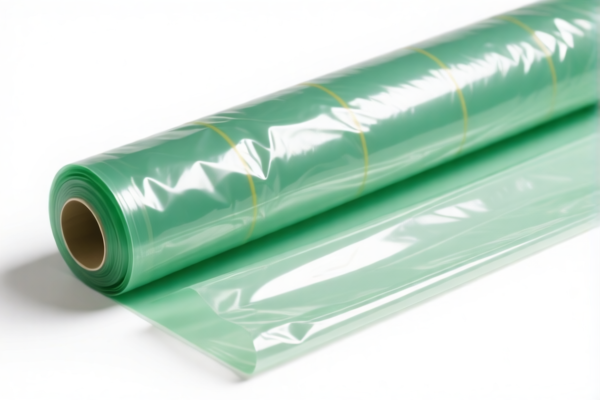
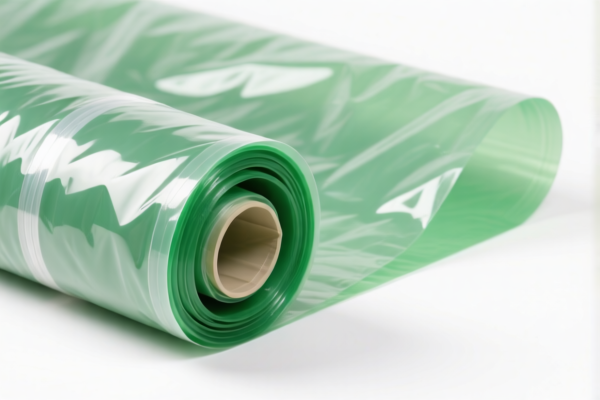
AI Analysis
🌿 Low Density Polyethylene (LDPE) Greenhouse Film
🌐 HS Code Reference & Customs Clearance Guide | 2026 Latest Tariff Analysis | Professional Clearance Strategy
📌 I. Product Definition & Classification: Do You Really Understand "Greenhouse Film"?
LDPE Greenhouse Film is a critical agricultural material used for covering greenhouses to regulate temperature, humidity, and light transmission for crop growth. In international trade, plastics are classified strictly by their structure (cellular vs. non-cellular), reinforcement status, and physical form (rolls vs. sheets/strip).
⚠️ Critical Distinction Point:
- If the film is flexible, non-cellular (solid plastic, not foam/bubble), and not reinforced/laminated, it falls under Heading 3920.
- The specific subheading depends entirely on the thickness and whether it is supplied in rolls.
📦 II. HS Code Classification Details (2026 Latest Tariff Authority)
Based on the provided data, LDPE Greenhouse Film is classified under two distinct HS Codes depending on its physical specification. Both fall under the broader description: "Other plates, sheets, film, foil and strip, of plastics, noncellular and not reinforced, laminated, supported or similarly combined with other materials: Of other plastics: Film, strip and sheets... flexible".
| HS Code | Product Description | Key Specifier | Applicable Scenario | Tax Rate |
|---|---|---|---|---|
| 3920.99.10.00 | Film, strip, and sheets, all the foregoing which are flexible: Over 0.152 mm in thickness, and not in rolls | Thickness > 0.152 mm NOT in rolls |
Thick, rigid-like plastic sheets or wide films cut into sheets/strands, not wound on cores. | 0.0% |
| 3920.99.20.00 | Film, strip, and sheets, all the foregoing which are flexible: Other | Any other configuration | Includes films in rolls, films ≤ 0.152 mm thick, or any flexible plastic film not meeting the specific criteria of the previous code. | 29.2% |
🔍 Key Reminder:
- Most standard greenhouse films are supplied in rolls. Therefore, unless your specific product is cut into discrete sheets or strips and is thicker than 0.152 mm, it likely falls under 3920.99.20.00.
- Rolls vs. Sheets: If the film is wound on a core (roll), it generally cannot qualify for 3920.99.10.00 unless it meets the "not in rolls" exception explicitly.
- Thickness Threshold: 0.152 mm is a critical cutoff. Check your product specification sheet!
💰 III. 2026 Latest Tariff Rate Breakdown (Including Surcharge, Policy Surcharges)
✅ Applicable Country: United States (US)
✅ Country of Origin: China (CN) (Assumed based on tariff details in DATA)
✅ Effective Date: Current tariff structure applies
🎯 1. 3920.99.10.00 —— Flexible Plastic Sheets/Films > 0.152mm, Not in Rolls
| Item | Content |
|---|---|
| Base Tariff | 0.0% |
| Section 301 Surcharge | 0.0% |
| Total Tax Rate | 0.0% |
| Tax Calculation | CIF Value × 0% = $0 |
| De Minimis Eligibility | ✅ Yes (Generally applicable for low-value shipments) |
| Legal Basis Path | HTSUS:3920.99.10.00 |
📌 Explanation:
- This code enjoys a 0% tariff rate.
- This is an optimal classification for large, thick, non-rolled plastic sheets.
- Note: If your greenhouse film is in rolls, it cannot use this code.
🎯 2. 3920.99.20.00 —— Other Flexible Plastic Films (Most Common for Greenhouse Film in Rolls)
| Item | Content |
|---|---|
| Base Tariff | 4.2% |
| Section 301 Surcharge | 25.0% |
| Total Tax Rate | 29.2% |
| Tax Calculation | CIF Value × 29.2% |
| De Minimis Eligibility | ❌ No (Subject to high tariffs, de minimis exemptions often do not apply to Section 301 goods) |
| Legal Basis Path | HTSUS:3920.99.20.00 → USITC Footnote 9903.88.01 → Section 301 List 3 |
📌 Important:
- This is the standard classification for most plastic films, including LDPE greenhouse films in rolls.
- The 25% surcharge is a significant cost driver.
- Combined with the 4.2% base rate, the total landed cost impact is nearly 30%.
- De Minimis (Section 321): Generally, goods valued under $800 may enter duty-free, but Section 301 tariffs (25%) often override de minimis exemptions for Chinese-origin goods. Verify with current CBP enforcement policies.
🛠️ IV. Customs Clearance Practical Advice (Real-World Pitfall Avoidance)
✅ 1. Document Preparation Checklist (Must-Haves)
| Document | Required | Explanation |
|---|---|---|
| ✅ Product Specification Sheet | ✔️ | Must clearly state: Material (LDPE), Thickness (mm), Form (Rolls/Sheets), Width, Length. |
| ✅ Commercial Invoice | ✔️ | Describe as "Low Density Polyethylene (LDPE) Greenhouse Film, Flexible, Non-Cellular, Not Reinforced." Avoid vague terms like "Plastic Sheet." |
| ✅ Bill of Lading/Air Waybill | ✔️ | Ensure weight and dimensions match the invoice. |
| ✅ Certificate of Origin (CO) | ✔️ | Essential to prove Chinese origin and apply (or defend against) Section 301 tariffs. |
| ✅ Photo of Product & Labels | ✔️ | Show the film roll, label with specs, and thickness marker if possible. |
✅ 2. Declaration Tips (Key Mantra)
🔥 "Rolls go to .20, Sheets >0.152mm go to .10. Be precise on thickness!"
| Scenario | Correct HS Code | Consequence of Error |
|---|---|---|
| LDPE Film in Rolls (Standard) | 3920.99.20.00 (29.2%) |
If misdeclared as .10, severe penalty + back taxes + seizure. |
| Thick LDPE Sheets >0.152mm, NOT Rolls | 3920.99.10.00 (0.0%) |
If misdeclared as .20, overpayment of 29.2%. Can apply for refund. |
| Foam/Bubble Film (Cellular) | NOT 3920 (Likely 3921.90) | 3920 is for non-cellular. If it’s bubble wrap/foam, 3920 is wrong. |
| Reinforced/Laminated Film | NOT 3920 (Likely 3921.xx) | If it has mesh or fabric backing, it’s laminated/reinforced, so 3920 is wrong. |
✅ 3. Special Case Handling
| Situation | Handling Advice |
|---|---|
| OEM Greenhouse Film | Provide customer contract and technical specs. Ensure description matches the physical form (roll vs. sheet). |
| Multiple Thicknesses in One Shipment | Split HS Codes if possible. If mixed, consult customs broker for commercial unit determination. |
| Plastic Film with UV Additives | Still classified as LDPE if LDPE is the principal material. Additives do not change HS Code unless they change the fundamental nature. |
| De Minimis ($800 Rule) | Caution: For Chinese-origin goods under Section 301, CBP may deny de minimis entry and assess the 25% surcharge. Check current CBP directives. |
🌍 V. Global Market Customs Comparison (2026 Latest)
| Country/Region | Recommended HS Code | Tariff Rate | Certification | Notes |
|---|---|---|---|---|
| 🇺🇸 USA | 3920.99.20.00 (Rolls) |
29.2% (CN) | None specific | High tariff due to Section 301. |
| 🇨🇳 China | 3920.99.20.00 |
~4.2% | CCC (if applicable) | Base rate for imports. |
| 🇪🇺 EU | 3920.99.99 |
6.5% (approx.) | CE (if applicable) | No Section 301 equivalent. |
| 🇦🇺 Australia | 3920.99.00 |
5% | GEMS (if applicable) | Standard import tariff. |
| 🇯🇵 Japan | 3920.99.00 |
6.0% | PSE (if applicable) | Standard import tariff. |
📌 Conclusion:
- The US market is the most challenging due to the 29.2% total tariff for standard rolls.
- European, Japanese, and Australian markets have significantly lower tariffs (5–6.5%).
- Consider supply chain diversification (e.g., sourcing from non-China origins) if targeting the US market heavily.
📌 VI. Common Mistakes & Pitfall Guide (Blood & Tears Lessons)
❌ Mistake 1: Declaring Rolls as "Not in Rolls"
👉 Consequence: Customs rejects 3920.99.10.00 → Forced to pay 29.2% + penalties.
❌ Mistake 2: Ignoring Thickness
👉 Consequence: If film is >0.152mm and NOT in rolls, you overpay 29.2%. You could have saved 0%.
❌ Mistake 3: Calling it "Agricultural Equipment"
👉 Consequence: Wrong heading (e.g., 8436). Customs will reclassify to 3920 and impose late fees.
❌ Mistake 4: Assuming De Minimis Exempts Section 301 Tariffs
👉 Consequence: Small shipments under $800 from China may still face 25% surcharge if CBP determines it’s a "direct shipment" or if policy shifts.
✅ Correct Practice:
"Low Density Polyethylene (LDPE) Greenhouse Film, Flexible, Non-Cellular, Not Reinforced, Supplied in Rolls, Thickness: 0.10mm, Width: 3m"
🎯 VII. Conclusion: Professional Declaration, Save Time, Reduce Cost!
🎯 Remember the Mantra:
🔹 "Rolls = .20 (29.2%)", "Thick Sheets >0.152mm = .10 (0%)"
🔹 "Thickness matters, Roll status matters, Origin matters!"
🔹 "One wrong digit, thousands of dollars lost!"
📌 Pro Tip:
If your LDPE film is laminated with EVA or PO (Polyolefin), or contains mesh reinforcement, it does not fit 3920.99.10.00 or 3920.99.20.00. It may fall under 3921.xx (Plastic plates/sheets/film/foil, not simple films).
Always verify material composition and structure.
📣 Immediate Action:
📞 Contact a licensed customs broker.
📄 Provide exact thickness (mm) and form (Rolls/Sheets).
🚀 Minimize duty burden through accurate classification!
✨ Professional Clearance Starts with Precise Classification!
💼 Every cent counts in international trade!
Customer Reviews
About HS Code Classification
The Harmonized System (HS) is an internationally standardized nomenclature developed by the World Customs Organization (WCO) to classify traded products. Over 200 countries use the HS system as the basis for customs tariffs, trade statistics, and import/export regulations.
Each HS code follows a hierarchical structure:
- Chapter (2 digits) — Broad category of goods (e.g., Chapter 84: Machinery and Mechanical Appliances)
- Heading (4 digits) — More specific grouping within the chapter
- Subheading (6 digits) — Internationally standardized breakdown, used by all WCO member countries
- National subdivisions (8-10 digits) — Country-specific extensions for further classification, such as US HTSUS 10-digit codes
Correct HS code classification is essential for smooth customs clearance, accurate duty payment, and compliance with trade regulations. Misclassification can lead to customs delays, overpayment of duties, or penalties.
When importing from CN to US, the applicable tariff rates may include:
- Most-Favored-Nation (MFN) rate — The standard duty rate applied to WTO members
- General rate — Applied to countries without trade agreements
- Trade remedy duties — Additional tariffs such as Section 301 (anti-dumping), Section 232 (national security), or countervailing duties
The information provided on this page is for reference purposes only. For official classification, please consult with your local customs authority or a licensed customs broker.