Low Density Polyethylene LLDPE Injection Molding Material
CN → US| HS Code | Tariff Rate | Origin | Destination | Doc |
|---|---|---|---|---|
| 3902900050 | 41.5% | CN | US | Official Doc |
| 3901105010 | 41.5% | CN | US | Official Doc |
| 3916100000 | 40.8% | CN | US | Official Doc |
| 3916905000 | 40.8% | CN | US | Official Doc |
| 3901400000 | 41.5% | CN | US | Official Doc |
Product Images
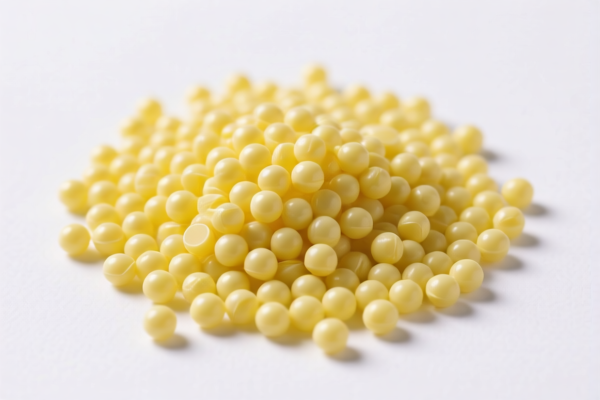
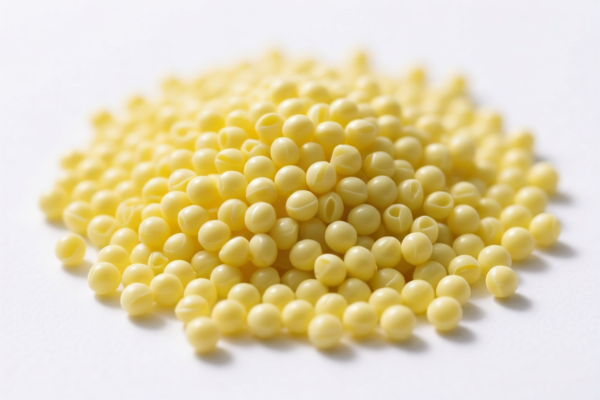
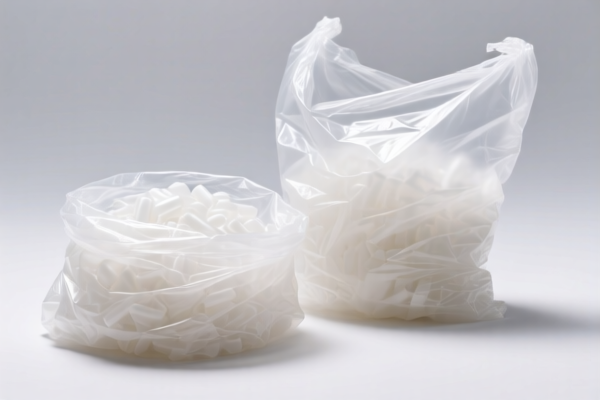
AI Analysis
🧪 Linear Low-Density Polyethylene (LLDPE) Injection Molding Material
🌐 HS Code Reference & Customs Clearance Guide | 2026 Latest Tariff Analysis | Professional Clearance Strategy
📌 I. Product Definition and Classification: Do You Really Understand "LLDPE"?
Linear Low-Density Polyethylene (LLDPE) is a major class of polyethylene resin, chemically classified as a copolymer of ethylene with higher alpha-olefins (such as butene, hexene, or octene). In international trade, LLDPE is almost exclusively traded in its primary form (pellets, granules, or powders).
While commonly used for blow molding, film extrusion, and rotational molding, Injection Molding Grade LLDPE is a specific variant designed for higher stiffness and impact resistance, suitable for producing items like lids, caps, automotive components, and industrial containers.
⚠️ Key Distinction:
- If the material is in primary form (resin/pellets) → It falls under Chapter 39 (Plastics and Articles Thereof).
- If it is already molded into a specific shape (e.g., a finished bottle or cap) → It falls under Chapter 39 (Articles of Plastic) or other specific chapters depending on use.
- Crucial Note: The data provided refers strictly to the raw material (resin). Do not confuse raw resin with finished plastic goods.
📦 II. HS Code Classification Details (2026 Latest Tariff Authority Comparison)
| HS Code | Product Description | Application Scenario | Tax Rate Summary |
|---|---|---|---|
3902.90.00.50 |
Polyolefins, other (LLDPE belongs to丙烯 or other olefin polymers, injection material is primary form) | General-purpose LLDPE pellets, often categorized under "other" polyolefins if specific subheadings don't fit perfectly. | 41.5% |
3901.10.50.10 |
LLDPE is linear low-density polyethylene, injection material complies with polymer primary form | Specific subheading for LLDPE; emphasizes the "linear" structure and "primary form" status. | 41.5% |
3916.10.00.00 |
LLDPE belongs to ethylene polymers, injection material is primary form/raw material | Warning: This code typically refers to monofilaments, rods, tubes, etc. of ethylene polymers, NOT raw resin. Misclassification Risk High. | 40.8% |
3916.90.50.00 |
LLDPE is plastic material, injection material belongs to plastic raw materials/primary form | Warning: Typically refers to other plastic shapes (like rods, tubes) not elsewhere specified. Misclassification Risk High. | 40.8% |
3901.40.00.00 |
LLDPE belongs to ethylene-alpha-olefin copolymers, injection material complies with primary form characteristics | The most technically accurate chemical classification for LLDPE (copolymer of ethylene and alpha-olefin) in primary form. | 41.5% |
🔍 Critical Clarification on Codes:
- Codes3901.10and3901.40are the correct chapters for raw resin/pellets (primary form).
- Codes3916.10and3916.90usually refer to semi-finished plastic shapes (like rods, tubes, profiles), NOT bulk resin pellets. Using these for raw LLDPE resin is a common misclassification that may lead to customs queries or penalties, even though the tax rate is slightly lower (40.8% vs 41.5%).
- Code3902.90is a fallback "Other" category for polyolefins. It is acceptable if the specific LLDPE subheadings in 3901 are deemed inapplicable, but 3901 is preferred for LLDPE.
💰 III. 2026 Latest Tariff Rate Detailed Breakdown (Including Surcharges and Policy Add-ons)
✅ Applicable Country: United States (US)
✅ Origin: China (CN)
✅ Effective Date: From November 10, 2025 onwards (including subsequent imports)
🎯 1. 3901.10.50.10 & 3901.40.00.00 & 3902.90.00.50 —— LLDPE Resin (Primary Form)
| Item | Content |
|---|---|
| Base Tariff Rate | 6.5% (Ad Valorem) |
| Section 301 Surcharge | +25.0% (Additional Duty) |
| Section 122 Tariff | +10.0% (Specific to Chinese Goods) |
| Total Tax Rate | 41.5% |
| Tax Calculation | CIF Value × 41.5% |
| De Minimis Eligibility | ❌ Not Eligible (Deny de minimis) |
| Legal Basis Path | USITC:3901.xx.xx.xx → Section 301: Footnote 9903.88.01 → Section 122: IEEPA Authority |
📌 Explanation:
- Base 6.5%: Standard Most Favored Nation (MFN) rate for polyethylene.
- Section 301 25%: The primary trade war tariff on Chinese polyolefins.
- Section 122 10%: Additional surcharge for Chinese-origin plastics.
- Total 41.5%: This is a high-cost commodity for importers. Margins must be carefully calculated.
🎯 2. 3916.10.00.00 & 3916.90.50.00 —— ⚠️ Misclassification Alert
| Item | Content |
|---|---|
| Base Tariff Rate | 5.8% |
| Section 301 Surcharge | +25.0% |
| Section 122 Tariff | +10.0% |
| Total Tax Rate | 40.8% |
| Tax Calculation | CIF Value × 40.8% |
| De Minimis Eligibility | ❌ Not Eligible |
| Legal Basis Path | USITC:3916.xx.xx.xx → Section 301 → Section 122 |
📌 Warning:
- While the tax is 0.7% lower (40.8% vs 41.5%), these codes are technically incorrect for raw LLDPE pellets.
- Customs officers often scrutinize3916for plastic shapes. If you declare "LLDP Resin Pellets" under3916, expect delays, audits, or reclassification.
- Recommendation: Pay the extra 0.7% to use3901codes for accuracy and smoother clearance.
🛠️ IV. Customs Clearance Practical Advice (Real-World Pitfall Guide)
✅ 1. Required Documentation Checklist (Non-Negotiable)
| Document | Must Provide | Description |
|---|---|---|
| ✅ Product Spec Sheet | ✔️ | Must state: "LLDPE Resin," "Primary Form," "Injection Grade," Melt Flow Index (MFI), Density. |
| ✅ Certificate of Origin (CO) | ✔️ | Proof of Chinese origin. If from other countries, check for FTZ benefits. |
| ✅ Commercial Invoice | ✔️ | Clearly describe: "Linear Low-Density Polyethylene (LLDPE) Resin Pellets for Injection Molding." |
| ✅ Packing List | ✔️ | Net weight, gross weight, number of bags/pallets. |
| ✅ SDS (Safety Data Sheet) | ✔️ | Required for chemical products. |
| ✅ Labeling Info | ✔️ | Bag labels must include brand, grade, batch number, and "Made in China." |
✅ 2. Declaration Tips (Key Mantra)
🔥 “Primary Form, Resin, Pellets – NOT Finished Goods!”
| Scenario | Correct Declaration | Wrong Approach |
|---|---|---|
| LLDPE Pellets in Bags | 3901.10.50.10 or 3901.40.00.00Description: "LLDPE Resin Pellets" |
3916.10.00.00Description: "Plastic Rods" → Rejection |
| LLDPE Pre-compounded Granules | 3901.40.00.00Description: "LLDPE Copolymer Resin" |
3902.90.00.50Description: "Other Plastic Material" → Less Accurate |
| Finished LLDPE Parts (e.g., Buckets) | Different HS Code (e.g., 3923.xx)DO NOT use resin codes |
3901.10.50.10Description: "Plastic Bucket" → Misclassification |
✅ 3. Special Circumstances Handling
| Situation | Handling Advice |
|---|---|
| Blended Resins | If LLDPE is blended with other polymers (e.g., HDPE), the classification may change based on the dominant material. Provide blend ratio. |
| Additives Present | If additives (UV stabilizers, colorants) are <10% by weight, it remains "primary form." If >10%, it may be considered "prepared plastic." |
| OEM/Private Label | Ensure the invoice matches the product label. Discrepancies can trigger audits. |
| Third-Party Warehousing | If shipped to a bonded warehouse, duties may be deferred. Use correct HS Code even for warehousing. |
🌍 V. Global Market Comparison (2026 Latest)
| Country/Region | Recommended HS Code | Tariff (China Origin) | Certification | Notes |
|---|---|---|---|---|
| 🇺🇸 USA | 3901.10.50.10 / 3901.40.00.00 |
41.5% | No specific product cert, but SDS required | Highest Tariff due to Section 301 + 122 |
| 🇨🇳 China | 3901.10.00.00 / 3901.40.00.00 |
6.5% (Import) / 0% (Export) | None | Major producer/consumer |
| 🇪🇺 EU | 3901.40.90 |
6.5% (if not exempt) | REACH Registration Required | REACH is critical for plastics |
| 🇮🇳 India | 3901.40.90 |
~7.5% + SWS | BIS Certification | Anti-dumping duties may apply |
| 🇻🇳 Vietnam | 3901.40.90 |
0% (if under EVFTA origin) | None | Check Rules of Origin carefully |
📌 Conclusion:
- USA is the most expensive market for Chinese LLDPE due to multiple layers of tariffs.
- EU requires REACH registration for all polymers. Ensure your supplier has this done before exporting.
- Alternative Sourcing: Consider sourcing LLDPE from Vietnam, Malaysia, or Saudi Arabia to avoid Section 301/122 tariffs, but ensure genuine origin.
📌 VI. Common Mistakes & Pitfall Guide (Lessons Learned)
❌ Mistake 1: Declaring LLDPE Pellets under 3916.10.00.00 to save 0.7%
👉 Consequence: Customs flags the shipment for "incorrect shape description," causing delays and potential fines.
👉 Fix: Always use 3901 codes for primary form resin.
❌ Mistake 2: Confusing LLDPE with LDPE (Low-Density Polyethylene)
👉 Consequence: LDPE and LLDPE have different HS subheadings (3901.10 vs 3901.21). Misclassification can lead to duty assessments.
👉 Fix: Verify the technical data sheet. LLDPE is a copolymer; LDPE is homopolymer.
❌ Mistake 3: Not declaring "Section 122" and "Section 301" compliance
👉 Consequence: Underpayment of duties. CBP will assess back duties + interest.
👉 Fix: Ensure all surcharges are included in landed cost calculations.
✅ Correct Declaration Example:
"LINEAR LOW-DENSITY POLYETHYLENE (LLDPE) RESIN PELLETS, PRIMARY FORM, INJECTION GRADE, FOR MANUFACTURING PLASTIC CONTAINERS, ORIGIN: CHINA, MODEL: ABC-123, NET WEIGHT: 25 KG/ BAG"
🎯 VII. Conclusion: Professional Declaration, Cost Efficiency, Risk Mitigation!
🎯 Remember the Mantra:
🔹 "Resin is 3901, Shapes are 3916.
🔹 "41.5% is the price for Chinese LLDPE.
🔹 "Specs matter: Primary Form, Pellets, Injection Grade."
📌 Pro Tip:
If your LLDPE is sourced from Vietnam, Malaysia, or the Middle East, check for preferential tariffs or exclusions from Section 301/122.
Always request REACH registration certificates (for EU) or TSCA certification (for US) if required by end-users.
📣 Immediate Action:
📞 Consult a licensed customs broker + Provide Technical Data Sheet + Apply for Advance Ruling if volume is high.
🚀 Ensure Smooth Clearance, Optimize Landed Cost, Protect Your Margin!
✨ Professional Customs Clearance Starts with Accurate Classification!
💼 Every Dollar Saved is a Dollar Earned!
Customer Reviews
About HS Code Classification
The Harmonized System (HS) is an internationally standardized nomenclature developed by the World Customs Organization (WCO) to classify traded products. Over 200 countries use the HS system as the basis for customs tariffs, trade statistics, and import/export regulations.
Each HS code follows a hierarchical structure:
- Chapter (2 digits) — Broad category of goods (e.g., Chapter 84: Machinery and Mechanical Appliances)
- Heading (4 digits) — More specific grouping within the chapter
- Subheading (6 digits) — Internationally standardized breakdown, used by all WCO member countries
- National subdivisions (8-10 digits) — Country-specific extensions for further classification, such as US HTSUS 10-digit codes
Correct HS code classification is essential for smooth customs clearance, accurate duty payment, and compliance with trade regulations. Misclassification can lead to customs delays, overpayment of duties, or penalties.
When importing from CN to US, the applicable tariff rates may include:
- Most-Favored-Nation (MFN) rate — The standard duty rate applied to WTO members
- General rate — Applied to countries without trade agreements
- Trade remedy duties — Additional tariffs such as Section 301 (anti-dumping), Section 232 (national security), or countervailing duties
The information provided on this page is for reference purposes only. For official classification, please consult with your local customs authority or a licensed customs broker.