Low Expansion Refractory Mortar
CN → US| HS Code | Tariff Rate | Origin | Destination | Doc |
|---|---|---|---|---|
| 3824995000 | 41.5% | CN | US | Official Doc |
| 3824500050 | 35.0% | CN | US | Official Doc |
| 6902205020 | 35.0% | CN | US | Official Doc |
| 6902905020 | 35.0% | CN | US | Official Doc |
Product Images
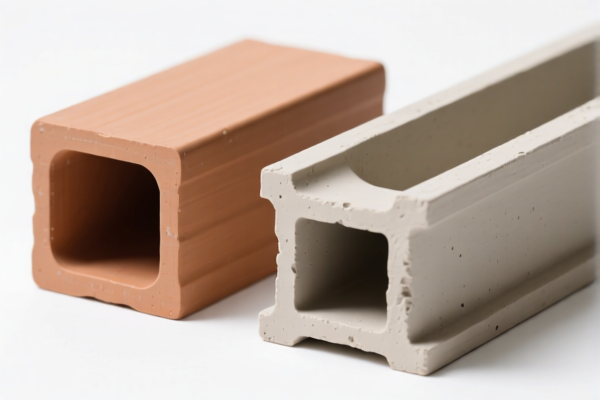
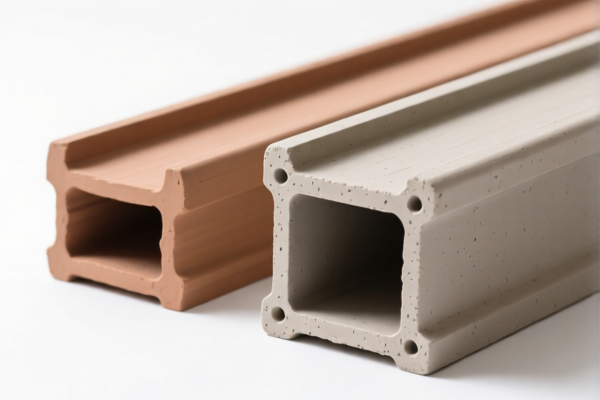
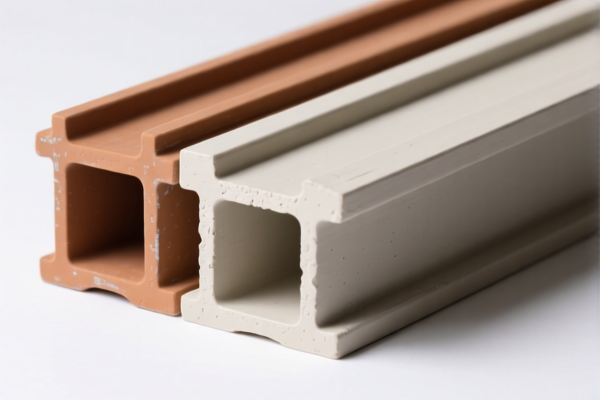
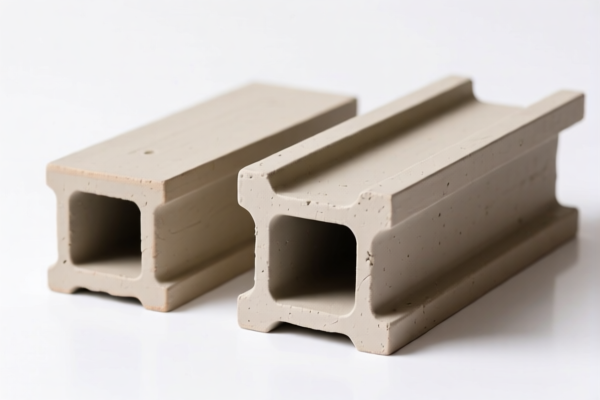
AI Analysis
🧱 Low Expansion Refractory Mortar: The Heat-Resistant Shield
🌐 HS Code Reference & Customs Clearance Guide | 2026 Latest Tariff Analysis | Professional Clearance Strategy
📌 Part I: Product Definition & Classification: What Exactly is "Low Expansion Refractory Mortar"?
Low Expansion Refractory Mortar is a specialized industrial chemical formulation used in high-temperature environments (such as furnaces, kilns, and industrial boilers). Its primary function is to bind refractory bricks or castables together while resisting thermal shock and chemical erosion.
In international trade, this product sits at the crossroads of Chemical Preparations and Refractory Ceramics. The correct classification depends heavily on the primary composition and intended use:
- Refractory Ceramic Products: If the product is primarily composed of inorganic ceramic materials (like alumina, silica, or magnesia) and is used as a building material for heat insulation/construction.
- Chemical Preparations: If the product is a mixture of chemical agents, binders, and additives, classified under "Other prepared binders for foundry moulds or cores" or "Other chemical products not elsewhere specified."
⚠️ Key Distinction Point:
- If the product is explicitly a mortar/cement for refractory bricks and fits the definition of ceramic material → Chapter 69 (Ceramics)
- If the product is a chemical binder/mixture not specifically listed as a refractory ceramic → Chapter 38 (Chemical Preparations)
- Note: The term "Low Expansion" refers to thermal properties, but HS codes are determined by material composition and function.
📦 Part II: HS Code Classification Details (2026 Latest Tariff Authority Comparison)
| HS Code | Product Description | Application Scenario | Primary Basis |
|---|---|---|---|
3824.99.50.00 |
Other prepared binders for foundry moulds or cores; Other chemical products not elsewhere specified | Chemical-based refractory mortars, binders, or mixes not explicitly listed as ceramics | Chemical Preparation |
3824.50.00.50 |
Refractory cements, mortars, concretes, etc., not elsewhere specified or included | Refractory mortars that do not fit specific ceramic categories | Refractory Chemical Mix |
6902.20.50.20 |
Other refractory bricks, blocks, tiles, and similar refractory construction goods, of alumina ≥ 85% | Refractory materials with high alumina content, classified as ceramic building materials | High-Alumina Ceramic |
6902.90.50.20 |
Other refractory bricks, blocks, tiles, and similar refractory construction goods, not elsewhere specified | General refractory casting or mortar forms, classified under other ceramic refractories | General Ceramic Refractory |
3824.99.50.00 |
Duplicate Entry | Same as above | Chemical Preparation |
🔍 Critical Reminder:
- If the mortar is a powder mix to be mixed with water on-site, it often falls under Chapter 38 if it’s a chemical binder, or Chapter 69 if it’s a refractory ceramic material.
- Customs officers will scrutinize the Material Safety Data Sheet (MSDS) and Composition Percentage. If the inorganic refractory content is >50%, Chapter 69 is more likely. If chemical binders dominate, Chapter 38 applies.
💰 Part III: 2026 Latest Tariff Rate Breakdown (Including Surcharges & Policy Add-ons)
✅ Applicable Country: United States (US)
✅ Country of Origin: China (CN)
✅ Effective Date: November 10, 2025 (and subsequent imports)
🎯 1. 3824.99.50.00 —— Other Chemical Preparations (Chemical Binders)
| Item | Content |
|---|---|
| Base Duty Rate | 6.5% |
| USITC Section 301 Surcharge | +25.0% |
| IEEPA Section 122 Surcharge | +10.0% |
| Total Duty Rate | 41.5% |
| Tax Calculation | CIF Value × 41.5% |
| De Minimis Eligibility | ❌ Not Eligible (denied under de minimis rules for Section 301 goods) |
| Legal Basis Path | USITC:3824.99.50.00 → FOOTNOTE:301.99.50 → IEEPA:9903.01.24 → SECTION 122:9903.88.01 |
📌 Explanation:
- Base Rate 6.5%: Standard Most Favored Nation (MFN) rate for miscellaneous chemical preparations.
- Section 301 (+25%): Applied to all Chinese-origin goods in this category under the Trade Act of 1974.
- Section 122 (+10%): Additional surcharge under the International Emergency Economic Powers Act (IEEPA) for specific Chinese goods.
- Total 41.5%: This is a high-cost entry. Clearing this code requires precise declaration to avoid under/over-payment penalties.
🎯 2. 3824.50.00.50 —— Refractory Cements/Mortars (Chemical Category)
| Item | Content |
|---|---|
| Base Duty Rate | 0.0% |
| USITC Section 301 Surcharge | +25.0% |
| IEEPA Section 122 Surcharge | +10.0% |
| Total Duty Rate | 35.0% |
| Tax Calculation | CIF Value × 35.0% |
| De Minimis Eligibility | ❌ Not Eligible |
| Legal Basis Path | USITC:3824.50.00.50 → FOOTNOTE:301.50.00 → IEEPA:9903.01.24 → SECTION 122:9903.88.01 |
📌 Note:
- Although the base rate is 0%, the surcharges bring the total to 35%.
- This code is specific for refractory cements and mortars under the chemical preparations chapter. If your product is explicitly marketed as "Refractory Mortar," this may be the most accurate chemical classification.
🎯 3. 6902.20.50.20 —— High-Alumina Refractory Ceramics
| Item | Content |
|---|---|
| Base Duty Rate | 0.0% |
| USITC Section 301 Surcharge | +25.0% |
| IEEPA Section 122 Surcharge | +10.0% |
| Total Duty Rate | 35.0% |
| Tax Calculation | CIF Value × 35.0% |
| De Minimis Eligibility | ❌ Not Eligible |
| Legal Basis Path | USITC:6902.20.50.20 → FOOTNOTE:301.02.20 → IEEPA:9903.01.24 → SECTION 122:9903.88.01 |
📌 Explanation:
- This code applies if the mortar/cement is considered a ceramic building material with high alumina content (≥85%).
- Even though it’s a "mortar," if it’s pre-mixed ceramic brick substitutes or high-alumina bricks/tiles, it falls here. For loose mortar, classification is tricky; if it’s a castable refractory, it might still fit here if it’s a ceramic product.
🎯 4. 6902.90.50.20 —— Other Refractory Ceramic Construction Goods
| Item | Content |
|---|---|
| Base Duty Rate | 0.0% |
| USITC Section 301 Surcharge | +25.0% |
| IEEPA Section 122 Surcharge | +10.0% |
| Total Duty Rate | 35.0% |
| Tax Calculation | CIF Value × 35.0% |
| De Minimis Eligibility | ❌ Not Eligible |
| Legal Basis Path | USITC:6902.90.50.20 → FOOTNOTE:301.02.90 → IEEPA:9903.01.24 → SECTION 122:9903.88.01 |
📌 Note:
- This is a "catch-all" for refractory ceramics not specified elsewhere.
- If your "Low Expansion Refractory Mortar" is a pre-packaged ceramic castable or refractory brick-forming mix, this may be the correct Chapter 69 classification.
🛠️ Part IV: Customs Clearance Practical Advice (Battle-Proven Pitfall Guide)
✅ 1. Required Documentation Checklist (Non-Negotiable)
| Document | Must Provide | Description |
|---|---|---|
| ✅ MSDS (Material Safety Data Sheet) | ✔️ | Critical for proving chemical composition and safety. Must show % of inorganic vs. organic binders. |
| ✅ Product Specification Sheet | ✔️ | Details: Alumina/Silica content, expansion rate, application temperature, mixing instructions. |
| ✅ Product Photos | ✔️ | Clear images of packaging, label, and raw material state (powder vs. paste). |
| ✅ Commercial Invoice | ✔️ | Must clearly state: "Low Expansion Refractory Mortar," HS Code, and Country of Origin. |
| ✅ Packing List | ✔️ | Weight, volume, and number of packages. Ensure no mixed goods in one shipment. |
| ✅ Test Report | ✔️ | Third-party lab report confirming thermal properties and chemical composition. |
✅ 2. Declaration Tips (Key Mantra)
🔥 “Composition Dictates Code, Binders to Ch 38, Ceramics to Ch 69!”
| Scenario | Correct Declaration | Wrong Practice |
|---|---|---|
| Chemical Binder Mix | 3824.99.50.00 or 3824.50.00.50 |
Misclassifying as ceramic → Risk of audit |
| High-Alumina Ceramic Mortar | 6902.20.50.20 |
Misclassifying as chemical → Lower tax but wrong legal basis |
| General Refractory Castable | 6902.90.50.20 |
Using vague term "Construction Material" |
| Mixed Shipment | Separate by Code | Packing chemical and ceramic goods together → Complex clearance, delays |
📌 Key Tip:
- If the product is a powder that becomes a ceramic brick after curing, Chapter 69 is often favored if the main component is refractory oxide.
- If it’s a liquid paste or chemical slurry, Chapter 38 is more appropriate.
✅ 3. Special Cases Handling
| Scenario | Handling Advice |
|---|---|
| OEM Custom Mortar | Provide client’s technical specs to prove composition. Avoid generic names. |
| High-Alumina Content (≥85%) | Declare under 6902.20.50.20 to ensure accurate ceramic classification. |
| Low-Alumina/Silica-Based | May fall under 6902.90.50.20 or 3824.50.00.50 depending on binder type. |
| Pre-mixed vs. Raw Powder | Pre-mixed with additives may be 3824.xxxx; Raw refractory oxides may be 25xx or 6902.xxxx. |
🌍 Part V: Global Market Comparison (2026 Latest)
| Country/Region | Recommended HS Code | Duty Rate | Certification Requirements | Notes |
|---|---|---|---|---|
| 🇺🇸 USA | 3824.50.00.50 or 6902.90.50.20 |
35% (China) | N/A | 41.5% if misclassified as 3824.99.50.00 |
| 🇨🇳 China | 3824.50.00.50 or 6902.90.50.20 |
0-6% | N/A | Low tax, no surcharges |
| 🇪🇺 EU | 6902.90 or 3824.99 |
0-6.5% | REACH Compliance | No Section 301/122 equivalents |
| 🇦🇺 Australia | 6902.90 |
5% | N/A | Standard MFN rates |
| 🇯🇵 Japan | 6902.90 |
0-5% | N/A | Favorable for ceramics |
📌 Conclusion:
- The US is the most challenging market due to Section 301 and Section 122 surcharges.
- Accurate classification is paramount to avoid a $41.5% vs $35% disparity.
- Documentation must prove composition to justify Chapter 38 vs Chapter 69.
📌 Part VI: Common Mistakes & Pitfall Guide (Lessons Learned)
❌ Mistake 1: Declaring as "Construction Mortar" under Chapter 69 without proving ceramic content
👉 Consequence: Customs rejects, demands reclassification to Chapter 38 → Delay + Penalty
❌ Mistake 2: Using 3824.99.50.00 when product is clearly a refractory cement (3824.50.00.50)
👉 Consequence: Overpaying 6.5% base duty unnecessarily (Total 41.5% vs 35%)
❌ Mistake 3: Omitting MSDS or Composition Details
👉 Consequence: CBP issues a "Red Line" inspection, seizure, or audit
❌ Mistake 4: Mixing chemical binders and ceramic bricks in one shipment
👉 Consequence: Complex clearance, potential misclassification of entire shipment
✅ Correct Action:
“Low Expansion Refractory Mortar, Alumina-based, Powder Form, for Industrial Kiln Lining, MSDS Attached, HS Code: 3824.50.00.50”
🎯 Part VII: Conclusion: Precision Classification Saves Money!
🎯 Remember the Mantra:
🔹 “Chemical Binder = Ch 38, Ceramic Brick = Ch 69”
🔹 “Section 301 + 122 = 35% or 41.5%, No De Minimis, No Excuses”
🔹 “Document the Composition, Avoid the Audit!”
📌 Pro Tip:
- If your product is pre-mixed with organic binders, lean towards Chapter 38.
- If it’s pure refractory oxide powder, lean towards Chapter 69.
- Apply for a Binding Ruling from CBP before shipment to lock in the HS Code and avoid disputes.
📣 Immediate Action:
📞 Consult a licensed customs broker + Provide MSDS + Verify Composition Percentages
🚀 Ensure Smooth Clearance, Zero Delays, Cost Optimization!
✨ Professional Clearance Starts with Accurate Classification!
💼 Every Percentage Point Counts in Customs Duty!
Customer Reviews
About HS Code Classification
The Harmonized System (HS) is an internationally standardized nomenclature developed by the World Customs Organization (WCO) to classify traded products. Over 200 countries use the HS system as the basis for customs tariffs, trade statistics, and import/export regulations.
Each HS code follows a hierarchical structure:
- Chapter (2 digits) — Broad category of goods (e.g., Chapter 84: Machinery and Mechanical Appliances)
- Heading (4 digits) — More specific grouping within the chapter
- Subheading (6 digits) — Internationally standardized breakdown, used by all WCO member countries
- National subdivisions (8-10 digits) — Country-specific extensions for further classification, such as US HTSUS 10-digit codes
Correct HS code classification is essential for smooth customs clearance, accurate duty payment, and compliance with trade regulations. Misclassification can lead to customs delays, overpayment of duties, or penalties.
When importing from CN to US, the applicable tariff rates may include:
- Most-Favored-Nation (MFN) rate — The standard duty rate applied to WTO members
- General rate — Applied to countries without trade agreements
- Trade remedy duties — Additional tariffs such as Section 301 (anti-dumping), Section 232 (national security), or countervailing duties
The information provided on this page is for reference purposes only. For official classification, please consult with your local customs authority or a licensed customs broker.