Low Melting Point Coconut Oil Fatty Acid
CN → US| HS Code | Tariff Rate | Origin | Destination | Doc |
|---|---|---|---|---|
| 1511100000 | 17.5% | CN | US | Official Doc |
| 1511900000 | 17.5% | CN | US | Official Doc |
| 3824994140 | 39.6% | CN | US | Official Doc |
Product Images


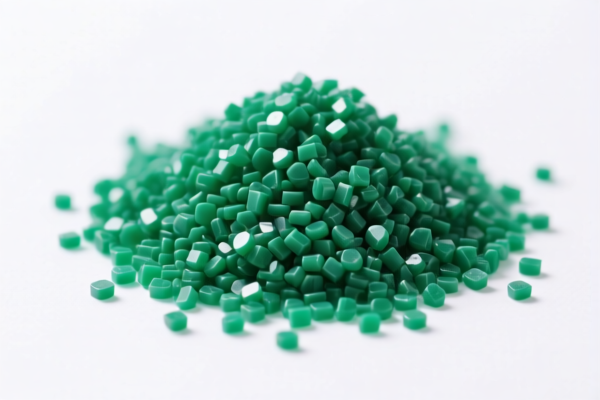
AI Analysis
🥥 Low Melting Point Coconut Oil Fatty Acid (LMCFA)
🌐 HS Code Reference & Customs Clearance Guide | 2026 Latest Tariff Analysis | Professional Entry Strategy
📌 I. Product Definition & Classification: What Exactly Is "Low Melting Point Coconut Oil Fatty Acid"?
Low Melting Point Coconut Oil Fatty Acid is a specific fraction of coconut oil fatty acids. Unlike standard coconut oil fatty acids which are a mix of medium-chain triglycerides, this product is refined or fractionated to have a lower melting point, making it suitable for specific industrial applications such as surfactant manufacturing, plasticizers, or specialized lubricants.
In international trade, its classification depends heavily on its chemical state and origin: 1. Natural/Oil Derivative: If it is primarily viewed as a refined oil fraction or glyceride mixture, it falls under Chapter 15 (Animal or Vegetable Fats and Oils). 2. Chemical/Industrial Mixture: If it is processed into a specific ester mixture or industrial chemical compound that doesn't fit strictly as a simple oil, it may fall under Chapter 38 (Miscellaneous Chemical Products).
⚠️ Critical Distinction:
- If the product is essentially refined coconut oil fatty acids (even if fractionated) → Goes to Chapter 15.
- If the product is a complex mixture of fatty acid esters or has undergone significant chemical modification beyond simple fractionation → Goes to Chapter 38.
📦 II. HS Code Classification Details (2026 Latest Tariff Authority Comparison)
Based on the provided data, here are the three potential HS Codes and their corresponding rationales:
| HS Code | Product Description | Rationale for Classification | Total Tax Rate |
|---|---|---|---|
1511.10.00.00 |
Low-melting point coconut oil fatty acid, fatty fraction | Classified under "Palm oil and its fractions." This classification assumes the product is treated as a fractionated fatty acid derived from palm/coconut oils, retaining its identity as a fat/oil derivative. | 17.5% |
1511.90.00.00 |
Low-melting point coconut oil fatty acid, other | Classified under "Other" palm/coconut oil fractions. Used if the product does not fit the specific "fatty fraction" definition of 1511.10 but remains a natural oil derivative without chemical modification. | 17.5% |
3824.99.41.40 |
Low-melting point coconut oil fatty acid, chemical mixture | Classified under "Miscellaneous chemical products." This applies if the product is considered a mixture of fatty acid esters or a prepared industrial chemical substance, not just a raw oil fraction. | 39.6% |
🔍 Key Clarification:
- 1511.10.00.00 vs. 1511.90.00.00: Both carry the same total tax rate (17.5%). The choice depends on whether customs views the product as a standard "fatty fraction" (1511.10) or a "general oil fraction" (1511.90).
- 3824.99.41.40: This carries a significantly higher tax rate (39.6%). It is applied if the product is deemed a "chemical mixture" rather than a simple oil.
- ⚠️ Risk: Misclassifying a simple oil fraction as a "chemical mixture" (38xx) leads to unnecessary high taxes. Conversely, misclassifying a complex chemical mixture as an oil (15xx) may lead to penalties for undervaluation of duties.
💰 III. 2026 Latest Tariff Rate Breakdown (Including Surcharges & Policy Add-ons)
✅ Applicable Country: United States (US)
✅ Origin: China (CN)
✅ Effective Date: Ongoing (Current Trade Policy)
🎯 1. 1511.10.00.00 & 1511.90.00.00 —— Coconut Oil Fatty Acids (Oil/Fat Category)
| Item | Content |
|---|---|
| Base Tariff | 0.0% (ad valorem) |
| Section 301 Surcharge | +7.5% |
| Section 301 / 122 Clause Tariff | +10% |
| Total Tax Rate | 17.5% |
| Tax Calculation | CIF Value × 17.5% |
| De Minimis Eligibility | ❌ No (Cannot benefit from de minimis exemption for commercial imports) |
| Legal Basis Path | USITC:1511.10.00.00 → Footnote:301_7.5% → Footnote:122_10% |
📌 Explanation:
- The 0% base rate reflects the standard MFN (Most Favored Nation) duty for these oil fractions.
- The 7.5% is the additional Section 301 tariff applied to specific Chinese-origin oils and fats.
- The 10% is an additional tariff under the "122 Clause" (often related to specific trade remedy measures or executive orders affecting Chinese agricultural/chemical products).
- Total 17.5% is significantly lower than the chemical category, making accurate classification to Chapter 15 financially advantageous if legally defensible.
🎯 2. 3824.99.41.40 —— Fatty Acid Ester Mixtures (Chemical Category)
| Item | Content |
|---|---|
| Base Tariff | 4.6% (ad valorem) |
| Section 301 Surcharge | +25.0% |
| Section 301 / 122 Clause Tariff | +10% |
| Total Tax Rate | 39.6% |
| Tax Calculation | CIF Value × 39.6% |
| De Minimis Eligibility | ❌ No |
| Legal Basis Path | USITC:3824.99.41.40 → Footnote:301_25% → Footnote:122_10% |
📌 Explanation:
- The 4.6% base rate is the standard duty for "Other prepared binders for foundry molds" or "Other chemical products."
- The 25% is the standard Section 301 surcharge for most chemical products from China.
- The 10% is the additional 122 Clause tariff.
- Total 39.6% is more than double the oil category rate. This classification is only appropriate if the product is chemically defined as a "mixture" rather than a simple fatty acid fraction.
🛠️ IV. Customs Clearance Practical Advice (Combat-Ready Pitfall Avoidance Guide)
✅ 1. Required Documentation Checklist (Non-Negotiable)
| Document | Required? | Description |
|---|---|---|
| ✅ Product Specification Sheet | ✔️ | Must detail fatty acid composition (e.g., Lauric, Myristic, Capric acid percentages), melting point range, and source. |
| ✅ Certificate of Analysis (COA) | ✔️ | Third-party lab results proving the product is "Coconut Oil Fatty Acid" and not a complex ester mixture. |
| ✅ Process Description | ✔️ | Explain how the product is made (e.g., "Hydrolysis of Coconut Oil followed by Fractionation"). This proves it's a natural derivative (Chapter 15). |
| ✅ Commercial Invoice | ✔️ | Clearly state "Low Melting Point Coconut Oil Fatty Acid" – avoid vague terms like "Chemical Mixture." |
| ✅ Certificate of Origin | ✔️ | Essential for determining applicability of Section 301 and 122 tariffs. |
| ✅ Packaging Photos | ✔️ | Show labeling matches the declaration. |
✅ 2. Declaration Strategy (Key Rules of Thumb)
🔥 “Natural Derivative to Ch. 15, Chemical Mixture to Ch. 38. Label Clearly, Avoid Ambiguity!”
| Scenario | Correct HS Code | Wrong Action | Consequence |
|---|---|---|---|
| Product is fractionated coconut oil fatty acid | 1511.10.00.00 or 1511.90.00.00 |
Classify as 3824.99.41.40 |
Overpay 22.1% in duties (39.6% vs 17.5%) |
| Product is esterified mixture (chemically modified) | 3824.99.41.40 |
Classify as 1511.xxxx |
Underpayment penalty + potential seizure for misdeclaration |
| Product is crude fatty acid | 1511.10.00.00 |
Vague description | Customs may reclassify and audit, causing delays |
| Product is highly refined, chemically altered | 3824.99.41.40 |
Vague description | Same as above |
📌 Important Note:
- Do not describe the product simply as "Coconut Oil." It must be specified as "Fatty Acid" or "Fatty Fraction."
- Do not use "Chemical" or "Mixture" in the description if the product is a simple physical fraction of coconut oil. Use "Fractionated Fatty Acid" instead.
✅ 3. Special Case Handling
| Situation | Handling Advice |
|---|---|
| OEM Private Label | Ensure the chemical composition matches the original manufacturer’s COA. Private labeling does not change HS classification. |
| Blended Products | If blended with other oils, the classification may change entirely. Declare as a "Mixture of Fats" if applicable. |
| Solid vs. Liquid | Melting point is critical. If it’s a solid fat, 1511.10.00.00 is more likely. If it’s a liquid/low-melt fraction, still 1511, but provide precise MP data. |
| Dispute Resolution | If customs questions the classification, submit a binding ruling request or a detailed technical explanation from a chemist. |
🌍 V. Global Market Comparison (2026 Latest)
| Country/Region | Recommended HS Code | Tariff (China Origin) | Certification Requirements | Notes |
|---|---|---|---|---|
| 🇺🇸 USA | 1511.10.00.00 |
17.5% | FDA (if food-grade), COA | High tariffs due to Section 301 & 122. |
| 🇪🇺 EU | 1511.90.00.00 |
0% (if certified) | REACH, Kos/Halal | Lower duties. Requires REACH registration for chemicals. |
| 🇨🇳 China | 1511.10.00.00 |
7% | No extra surcharges | Import duty + VAT. |
| 🇯🇵 Japan | 1511.90.00.00 |
0% | JAS (if organic) | Free trade benefits may apply. |
📌 Conclusion:
- USA is the most expensive market due to 17.5%–39.6% effective rates.
- EU and Japan are more favorable for this product, with 0% or low base tariffs.
- Key Strategy: Ensure classification to Chapter 15 (17.5%) rather than Chapter 38 (39.6%) to save money in the US market.
📌 VI. Common Errors & Pitfall Guide (Lessons from the Field)
❌ Error 1: Describing the product as "Coconut Oil Esters" when it is actually "Fatty Acids"
👉 Consequence: Customs may classify it as 3824.99.41.40 → 39.6% duty instead of 17.5%.
👉 Fix: Use precise chemical terminology: "Fatty Acids" not "Esters."
❌ Error 2: Claiming "Natural Product" to avoid Section 301 tariffs
👉 Consequence: Section 301 applies to Chinese-origin goods regardless of "natural" status.
👉 Fix: Accept the 7.5% + 10% surcharges. No exemptions for basic oils/fats from China.
❌ Error 3: Providing incomplete COA (Certificate of Analysis)
👉 Consequence: Customs cannot verify if it’s a "fatty fraction" or a "chemical mixture." May trigger audit or reclassification.
👉 Fix: Provide detailed % composition of each fatty acid.
❌ Error 4: Using "Miscellaneous Chemical Products" as a blanket term
👉 Consequence: Leads to 3824 classification → 39.6% duty.
👉 Fix: Be specific: "Fractionated Coconut Oil Fatty Acid."
✅ Correct Practice:
"Low Melting Point Coconut Oil Fatty Acid, Fractionated, CAS 61788-91-6, Melting Point 15-20°C, For Surfactant Manufacturing"
🎯 VII. Conclusion: Precision in Classification Saves Money!
🎯 Remember the Golden Rules:
🔹 "Oil Fraction = Ch. 15 (17.5%) | Chemical Mixture = Ch. 38 (39.6%)"
🔹 "Document the Process: Hydrolysis + Fractionation = Natural Derivative"
🔹 "Avoid 'Chemical' terms if it’s just physical separation"
📌 Pro Tip:
If your product is blended or chemically modified beyond fractionation, consult a customs broker before shipment. A small change in process can double your tax burden in the US market.
Consider Advance Ruling from US CBP if the product is unique or borderline between Chapter 15 and 38.
📣 Immediate Action:
📞 Hire a licensed customs broker.
📄 Prepare a detailed Process Flow Diagram and COA.
🚀 Clear customs smoothly, minimize tax liability, maximize profit!
✨ Professional Classification, Start with Accuracy!
💼 Your Every Cent Matters, Calculate Precisely!
Customer Reviews
About HS Code Classification
The Harmonized System (HS) is an internationally standardized nomenclature developed by the World Customs Organization (WCO) to classify traded products. Over 200 countries use the HS system as the basis for customs tariffs, trade statistics, and import/export regulations.
Each HS code follows a hierarchical structure:
- Chapter (2 digits) — Broad category of goods (e.g., Chapter 84: Machinery and Mechanical Appliances)
- Heading (4 digits) — More specific grouping within the chapter
- Subheading (6 digits) — Internationally standardized breakdown, used by all WCO member countries
- National subdivisions (8-10 digits) — Country-specific extensions for further classification, such as US HTSUS 10-digit codes
Correct HS code classification is essential for smooth customs clearance, accurate duty payment, and compliance with trade regulations. Misclassification can lead to customs delays, overpayment of duties, or penalties.
When importing from CN to US, the applicable tariff rates may include:
- Most-Favored-Nation (MFN) rate — The standard duty rate applied to WTO members
- General rate — Applied to countries without trade agreements
- Trade remedy duties — Additional tariffs such as Section 301 (anti-dumping), Section 232 (national security), or countervailing duties
The information provided on this page is for reference purposes only. For official classification, please consult with your local customs authority or a licensed customs broker.