Low Melting Point Fatty Acid
CN → US| HS Code | Tariff Rate | Origin | Destination | Doc |
|---|---|---|---|---|
| 1518004000 | 25.5% | CN | US | Official Doc |
| 1518002000 | 0.0% | CN | US | Official Doc |
| 3824994140 | 39.6% | CN | US | Official Doc |
| 3824994190 | 39.6% | CN | US | Official Doc |
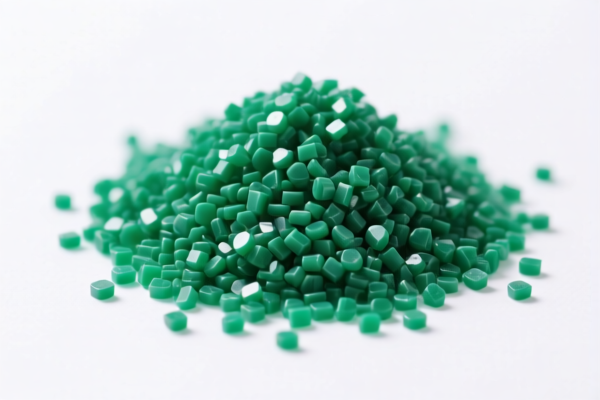
Product Images


AI Analysis
🧪 Low Melting Point Fatty Acid (Chemical Products & Modified Fats)
🌐 HS Code Reference & Customs Clearance Guide | 2026 Latest Tariff Analysis | Professional Clearance Strategy
📌 1. Product Definition & Classification: What exactly is "Low Melting Point Fatty Acid"?
Low melting point fatty acids are chemical substances derived from animal, vegetable, or microbial sources. In international trade, they are primarily classified based on their chemical state and intended use. The core distinction lies between prepared binders for foundry molds (chemical preparations) and chemically modified fats/oils (raw materials/intermediates).
Two Main Categories for Import: 1. Prepared Binders (Heading 3824): If the fatty acid is part of a mixture designed specifically for use as a binder in foundry molds or cores, or is a "chemical product... not elsewhere specified." 2. Chemically Modified Fats (Heading 1518): If the fatty acid/fat has been boiled, oxidized, dehydrated, sulfurized, blown, polymerized, or otherwise chemically modified, and is not suitable for food use (inedible).
⚠️ Critical Distinction Point:
- If the product is a mixture of fatty acid esters intended for industrial binding (foundry cores) → Heading 3824.
- If the product is a modified fat/oil (boiled, oxidized, etc.) for general industrial use → Heading 1518.
- If the product is Linseed/Flaxseed oil that is modified → Heading 1518.00.20 (specific subheading).
📦 2. HS Code Classification Details (2026 Latest Tariff Authority Comparison)
| HS Code | Product Description | Applicable Scenario | Tax Rate (US Import from China) |
|---|---|---|---|
3824.99.41.40 |
Prepared binders for foundry molds or cores; mixtures of fatty acid esters | Industrial binders, foundry core preparations, mixtures of fatty acid esters | 29.6% |
3824.99.41.90 |
Prepared binders for foundry molds or cores; other fatty substances (animal/veg origin) | Other industrial fatty preparations not specifically listed as esters | 29.6% |
1518.00.40.00 |
Chemically modified fats/oils; inedible mixtures/preparations (General) | Boiled, oxidized, dehydrated, sulfurized, blown, polymerized fats (Non-linseed) | 0.0% |
1518.00.20.00 |
Chemically modified fats/oils; specifically Linseed or Flaxseed Oil | Modified linseed/flaxseed oil for industrial use | 6.3¢/kg + 7.5% |
🔍 Key Reminder:
- Heading 3824 items are taxed as "Chemical Products" with a high total tax due to Section 301 tariffs.
- Heading 1518 items are taxed as "Modified Oils/Fats." Note that Linseed oil has a specific subheading with a different tax structure (ad valorem + specific duty).
- "Low Melting Point" is a physical property, but customs classification relies on the chemical modification and specific use (e.g., binder vs. general modified fat).
💰 3. 2026 Latest Tariff Rate Breakdown (Including Supplementary Taxes)
✅ Applicable Country: United States (US)
✅ Origin: China (CN)
✅ Effective Time: Current rates apply (Section 301 & IEEPA implications)
🎯 1. 3824.99.41.40 & 3824.99.41.90 —— Prepared Binders / Fatty Mixtures
| Item | Content |
|---|---|
| Base Tariff | 4.6% (Ad Valorem) |
| Section 301 Supplementary Tariff | +25.0% |
| Total Tariff Rate | 29.6% |
| Tax Calculation | CIF Value × 29.6% |
| De Minimis Exemption | ❌ Not Applicable (Items over $800 are subject to full tariff) |
| Legal Basis Path | HTSUS:3824.99.41 → USITC:Section 301 |
📌 Explanation:
- The 4.6% is the standard Most Favored Nation (MFN) rate for "Other prepared binders."
- The 25.0% is the additional tariff imposed on Chinese goods under Section 301 of the Trade Act.
- Total Cost Impact: A $10,000 shipment incurs $2,960 in duties. This is a significant cost driver for industrial chemical imports.
🎯 2. 1518.00.40.00 —— Chemically Modified Fats (General, Non-Linseed)
| Item | Content |
|---|---|
| Base Tariff | 0.0% |
| Section 301 Supplementary Tariff | 0.0% |
| Total Tariff Rate | 0.0% |
| Tax Calculation | $0 |
| De Minimis Exemption | N/A (Tax is 0%) |
| Legal Basis Path | HTSUS:1518.00.40 |
📌 Explanation:
- Chemically modified fats and oils (boiled, oxidized, etc.) are generally duty-free under the US Tariff Schedule.
- Strategic Advantage: If your "Low Melting Point Fatty Acid" can be classified under this heading (as a modified fat rather than a prepared binder), you save 29.6% in tariffs.
- Condition: Must be proven to be "chemically modified" (e.g., polymerized by heat, oxidized) and "inedible."
🎯 3. 1518.00.20.00 —— Chemically Modified Linseed/Flaxseed Oil
| Item | Content |
|---|---|
| Base Tariff | 6.3¢/kg (Specific Duty) |
| Section 301 Supplementary Tariff | +7.5% (Ad Valorem) |
| Total Tariff Structure | 6.3¢/kg + 7.5% |
| Tax Calculation | (Weight in kg × $0.063) + (CIF Value × 7.5%) |
| De Minimis Exemption | ❌ Not Applicable |
| Legal Basis Path | HTSUS:1518.00.20 → USITC:Section 301 |
📌 Explanation:
- If the product is specifically Linseed or Flaxseed oil that has been chemically modified, it falls into this unique subheading.
- The tax is a mix of specific duty (per kg) and ad valorem (% of value).
- The total effective rate depends on the value-to-weight ratio of the oil.
🛠️ 4. Customs Clearance Practical Advice (Real-World Pitfall Guide)
✅ 1. Document Preparation Checklist (Mandatory)
| Document | Required | Explanation |
|---|---|---|
| ✅ Product Specification Sheet | ✔️ | Must detail chemical composition, melting point, and chemical modification process (e.g., "oxidized at 200°C"). |
| ✅ MSDS / SDS | ✔️ | Safety Data Sheet is critical for chemical imports to prove it is not a regulated hazardous waste. |
| ✅ Certificate of Modification | ✔️ | If claiming 1518 (0% tax), provide lab reports proving the fat/oil was chemically modified (boiled, oxidized, etc.). |
| ✅ Intended Use Declaration | ✔️ | State clearly: "For use as industrial binder" (3824) or "Chemically modified fat for lubricant/coating" (1518). |
| ✅ Commercial Invoice | ✔️ | Must match the HS Code description exactly. Avoid vague terms like "Fatty Acid." Use "Chemically Modified Linseed Oil" or "Prepared Foundry Binder." |
| ✅ Certificate of Origin (CO) | ✔️ | Required for Section 301 tariff determination. |
✅ 2. Declaration Strategy (Key Mnemonics)
🔥 "Modify vs. Mix: Use 1518 to Save, Use 3824 if It's a Binder!"
| Scenario | Correct HS Code | Risk if Wrong |
|---|---|---|
| Fatty acid mixture used as a foundry binder | 3824.99.41.40 |
If misdeclared as 1518 (0%), customs may assess back duties + penalties. |
| Chemically modified fat (e.g., oxidized) | 1518.00.40.00 |
If misdeclared as 3824 (29.6%), you overpay. |
| Modified Linseed Oil | 1518.00.20.00 |
Must be specified as Linseed. General modified fat goes to 1518.00.40.00. |
| Unmodified Fatty Acid | Not in list (Likely 1516/1517) | If unmodified, it may not qualify for 1518 (which requires chemical modification). |
✅ 3. Special Circumstances Handling
| Situation | Handling Advice |
|---|---|
Claiming 0% Tax (1518) |
You must prove chemical modification. Provide lab tests showing changes in acid value, iodine value, or polymerization. |
| Mixed Shipments | Separate shipments or clear labeling. Do not mix 3824 and 1518 items in one bill of lading without clear segregation. |
| Linseed vs. Other Oils | Be extremely careful. If the product contains linseed oil but is a mixture, it may still fall under 1518.00.20 if linseed is the primary component. Otherwise, 1518.00.40. |
| "Prepared" Definition | If the fatty acid is mixed with other chemicals to form a binder, it likely moves to 3824. Pure modified fat stays in 1518. |
🌍 5. Global Market Comparison (2026 Latest)
| Country/Region | Recommended HS Code | Tariff Rate | Certification Requirements | Notes |
|---|---|---|---|---|
| 🇺🇸 United States | 3824.99.41.40 or 1518.00.40.00 |
29.6% or 0% | MSDS, Epa Registration (if pesticide/biocide) | US is strict on "Chemical Modification" proof for 0% tax. |
| 🇨🇳 China (Export) | Same HS Codes | 0% (Export) | GCMP, ISO | Export duties are generally 0% for these categories. |
| 🇪🇺 European Union | 3824 99 or 1518 |
~0-5% (General) | REACH Compliance | EU requires REACH registration for chemicals. Different HS codes may apply. |
| 🇬🇧 United Kingdom | 3824 99 or 1518 |
~0-5% | UK REACH | Post-Brexit, UK REACH applies. |
📌 Conclusion:
- The US is the most critical market due to the 29.6% vs. 0% tariff gap.
- Classification Accuracy is Key: Misclassifying a3824binder as1518can lead to severe penalties.
- Documenting Chemical Modification is the best way to achieve the 0% tariff rate under1518.
📌 6. Common Mistakes & Pitfall Guide (Lessons Learned)
❌ Mistake 1: Calling the product "Fatty Acid" without specifying if it is modified.
👉 Consequence: Customs may reject 1518 (requires modification) and classify as unmodified fat (different rate) or binder (3824).
❌ Mistake 2: Claiming 1518.00.40.00 (0% tax) for a simple mixture of fatty acids without chemical modification.
👉 Consequence: Customs will reclassify as 3824 → Back taxes of 29.6% + Penalties!
❌ Mistake 3: Ignoring the "Linseed" exception.
👉 Consequence: If it is modified linseed oil, 1518.00.20 has a different tax structure (6.3¢/kg + 7.5%). Using 1518.00.40 is incorrect.
✅ Correct Practice:
"Chemically Modified Oxidized Fatty Acid Mixture, For Industrial Lubricant Use, Non-Food Grade"
HS Code:1518.00.40.00(If modified)
Documentation: Include SDS + Lab Report showing oxidation.
🎯 7. Conclusion: Precise Classification Saves Money!
🎯 Remember the Mnemonic:
🔹 "Modified Fat? Check 1518 (0%!). Binder? Check 3824 (29.6%). Linseed? Check 1518.20 (Specific Rate)."
🔹 "Proof of Modification is the Key to 0% Tariff!"
📌 Tips:
- If your product is unmodified, it may not qualify for 1518. Check headings 1516 or 1517.
- For prepared binders, ensure the description highlights "Foundry Mold/Core Use" to justify 3824.
- Always consult a licensed customs broker before shipment to confirm the HS Code based on your specific product formula.
📣 Immediate Action:
📞 Contact your customs broker
📄 Prepare MSDS and Modification Lab Reports
🚀 Accurate Declaration = Lower Tariffs + Faster Clearance!
✨ Professional Clearance Starts with Accurate Classification!
💼 Every 1% in Tariff is 1% in Profit. Don't Leave Money on the Table!
Customer Reviews
About HS Code Classification
The Harmonized System (HS) is an internationally standardized nomenclature developed by the World Customs Organization (WCO) to classify traded products. Over 200 countries use the HS system as the basis for customs tariffs, trade statistics, and import/export regulations.
Each HS code follows a hierarchical structure:
- Chapter (2 digits) — Broad category of goods (e.g., Chapter 84: Machinery and Mechanical Appliances)
- Heading (4 digits) — More specific grouping within the chapter
- Subheading (6 digits) — Internationally standardized breakdown, used by all WCO member countries
- National subdivisions (8-10 digits) — Country-specific extensions for further classification, such as US HTSUS 10-digit codes
Correct HS code classification is essential for smooth customs clearance, accurate duty payment, and compliance with trade regulations. Misclassification can lead to customs delays, overpayment of duties, or penalties.
When importing from CN to US, the applicable tariff rates may include:
- Most-Favored-Nation (MFN) rate — The standard duty rate applied to WTO members
- General rate — Applied to countries without trade agreements
- Trade remedy duties — Additional tariffs such as Section 301 (anti-dumping), Section 232 (national security), or countervailing duties
The information provided on this page is for reference purposes only. For official classification, please consult with your local customs authority or a licensed customs broker.