Low Melting Point PVC Resin
CN → US| HS Code | Tariff Rate | Origin | Destination | Doc |
|---|---|---|---|---|
| 3915300000 | 35.0% | CN | US | Official Doc |
| 3907912000 | 35.0% | CN | US | Official Doc |
| 3907992000 | 35.0% | CN | US | Official Doc |
| 3903190000 | 41.5% | CN | US | Official Doc |
| 3903110000 | 41.5% | CN | US | Official Doc |
Product Images


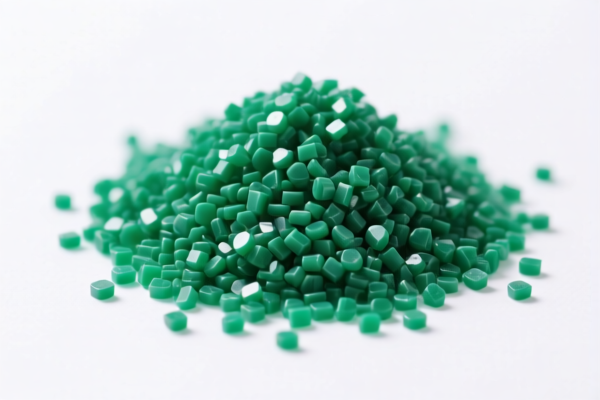
AI Analysis
🧪 Low Melting Point PVC Resin (Polyvinyl Chloride Resin)
🌐 HS Code Reference & Customs Clearance Guide | 2026 Latest Tariff Analysis | Professional Import Strategy
📌 I. Product Definition & Classification: What is "Low Melting Point PVC"?
Low Melting Point PVC Resin belongs to the category of primary forms of polymers. In international trade, it is strictly classified under Chapter 39 of the HS Code system. Unlike finished PVC products (such as pipes or profiles), this material is a raw material (powder or granules) used as the foundation for downstream processing.
⚠️ Key Distinction Point:
- If the product is raw polymer resin (powder/granules, unprocessed) → Classify under 3915.30.00.00
- If it is finished PVC pipes, sheets, or profiles → Classify under different chapters (e.g., 3917, 3925)
- Note: The term "Low Melting Point" refers to physical properties but does not change the HS Code classification for primary polymers.
📦 II. HS Code Classification Details (2026 Latest Tariff Authority)
Based on the provided data, the specific HS Code for Low Melting Point PVC Resin is:
| HS Code | Product Description | Applicability | Classification Logic |
|---|---|---|---|
3915.30.00.00 |
Polyvinyl Chloride (PVC) Resin, Primary Form | Raw material for manufacturing, compounding, or molding | ✅ Correct Matches "Polymer in primary form" |
🔍 Critical Clarification:
- The provided data explicitly lists3915.30.00.00with the summary: "Polyvinyl chloride resin (PVC) belongs to primary form polymers, fitting the 'polyvinyl chloride polymers' classification."
- Do NOT confuse with polyester resins (3907.91.20.00) or polystyrene (3903.19.00.00). PVC has its own dedicated subheading.
💰 III. 2026 Latest Tariff Rate Breakdown (Including Surtaxes)
✅ Applicable Country: United States (US)
✅ Origin: China (CN)
✅ Effective Date: 2025 November 10 onwards (including subsequent imports)
🎯 1. 3915.30.00.00 —— PVC Resin (Primary Form)
| Item | Content |
|---|---|
| Base Tariff Rate | 0.0% |
| Section 301 Surtax | +25.0% |
| Section 122 Surtax | +10.0% |
| Total Effective Rate | 35.0% |
| Tax Calculation | CIF Value × 35% |
| De Minimis Eligibility | ❌ NO (deny_de_minimis) |
| Legal Basis Path | Base: 3915.30.00.00 → Section 301: +25% → Section 122: +10% |
📌 Explanation:
- Base Tariff 0%: Primary forms of polymers generally enjoy low base tariffs.
- Section 301 (+25%): Imposed under US Trade Act Section 301 against Chinese goods.
- Section 122 (+10%): Additional surtax applicable to specific Chinese chemical products.
- Total 35%: This is a high cost factor. Importers must budget accordingly.
- No De Minimis: These goods cannot be shipped under the $800 de minimis exemption (Section 321). They must go through formal customs entry.
🛠️ IV. Customs Clearance Practical Advice (Pitfall Avoidance Guide)
✅ 1. Preparation Checklist (Non-negotiable)
| Document | Required | Description |
|---|---|---|
| ✅ Technical Data Sheet (TDS) | ✔️ | Must specify "PVC Resin," "Primary Form," and melting point characteristics. |
| ✅ Commercial Invoice | ✔️ | Clearly state: "Polyvinyl Chloride Resin, Primary Form, Model XYZ" |
| ✅ Certificate of Origin (CO) | ✔️ | Confirm Chinese origin to trigger accurate tariff calculation. |
| ✅ Packaging List | ✔️ | Show unit weight, bulk packaging, and net/gross weight. |
| ✅ Safety Data Sheet (SDS) | ✔️ | For chemical safety compliance (though often not requested by CBP, it’s best practice). |
✅ 2. Declaration Tips (Key Mnemonic)
🔥 "Primary Form, PVC Code, 35% Tax, No De Minimis!"
| Scenario | Correct Declaration | Common Mistake |
|---|---|---|
| Raw PVC Resin (Powder/Granules) | 3915.30.00.00 |
Misdeclaring as "Finished Pipe" → Wrong Chapter, Penalty |
| PVC Compounds with Additives | Still 3915.30.00.00 if primarily PVC |
Misdeclaring as "Plastic Waste" → Rejection |
| Small Sample Shipments | Formal Entry (Not De Minimis) | Using $800 exemption → Seizure or Penalty |
📌 Warning:
- "Low Melting Point" is a technical descriptor, not an HS Code keyword.
- Always declare the chemical nature (PVC) and form (Primary/Resin).
- Do not attempt to use the de minimis exemption ($800) for PVC resin. The data explicitly statesdeny_de_minimis.
✅ 3. Special Handling
| Situation | Handling Advice |
|---|---|
| Mixtures with Plasticizers | If plasticizers > polymer, classification may change. Pure resin goes to 3915.30.00.00. |
| Recycled PVC Pellets | If not "primary form," it may fall under 3915.90 or 3915.10. Ensure it is virgin primary resin for this code. |
| Duty Drawback | If re-exported, apply for Duty Drawback to recover the 35% tariff. |
🌍 V. Global Market Comparison (2026)
| Country/Region | Recommended HS Code | Tariff Rate | Remarks |
|---|---|---|---|
| 🇺🇸 USA | 3915.30.00.00 |
35% | 0% Base + 25% Sec 301 + 10% Sec 122. High Cost. |
| 🇨🇳 China | 3915.30.00.00 |
~0-5% | Standard import tariff for raw materials. |
| 🇪🇺 EU | 3902.30 (varies) |
~0-5% | Different chapter structure. Check EU TARIC. |
| 🇯🇵 Japan | 3902.30 |
~5% | Free Trade Agreement (JJEPA) may apply if applicable. |
📌 Conclusion:
- The USA imposes the highest tariff on Chinese-origin PVC resin due to trade policies.
- Cost Impact: A $100,000 shipment will incur $35,000 in tariffs.
- Supply Chain: Consider sourcing from non-US-tariffed countries (e.g., Vietnam, India) if feasible, or negotiate cost-sharing with suppliers.
📌 VI. Common Errors & Pitfalls (Lessons Learned)
❌ Error 1: Declaring "PVC Plastic" without specifying "Primary Form"
👉 Consequence: Customs may classify as a different HS Code, leading to delay or additional tax.
👉 Fix: Always use precise language: "PVC Resin, Primary Form, Powder."
❌ Error 2: Attempting de minimis entry for small shipments
👉 Consequence: Seizure of goods or penalties. PVC resin is explicitly denied.
👉 Fix: Use formal entry (Type 06 or 03) for all PVC resin shipments.
❌ Error 3: Confusing PVC with Polystyrene (PS)
👉 Consequence: PS (3903.19.00.00) has a 41.5% total tariff. PVC (3915.30.00.00) has 35%.
👉 Fix: Check the chemical name. PVC ≠ PS. Misclassification leads to underpayment and penalties.
❌ Error 4: Ignoring "Section 122" surtax
👉 Consequence: Paying only 25% (Sec 301) and owing 10% later + interest.
👉 Fix: Always calculate 35% total for US imports from China.
🎯 VII. Conclusion: Precision Saves Money!
🎯 Remember the Formula:
🔹 "PVC Resin = 3915.30.00.00"
🔹 "Total Tariff = 0% Base + 25% Sec 301 + 10% Sec 122 = 35%"
🔹 "No De Minimis – Formal Entry Required"
📌 Pro Tip:
- If you are importing small quantities for R&D, consider shipping from a third country (e.g., Singapore) if the supplier can re-export, though origin rules still apply.
- Apply for a Binding Ruling with CBP if your product is a blend or has unusual properties to avoid future disputes.
- Duty Drawback: If you use this resin to manufacture goods for export, you may recover the 35% tariff. Consult a customs broker for drawback eligibility.
📣 Immediate Action:
📞 Contact a Licensed Customs Broker
📄 Prepare TDS and Invoice
🚀 Budget for 35% TariffEnsure your PVC Resin clears customs smoothly, avoiding delays and costly penalties!
✨ Professional Classification, Predictable Costs, Smooth Clearance!
💼 Every Dollar Counts in International Trade!
Customer Reviews
About HS Code Classification
The Harmonized System (HS) is an internationally standardized nomenclature developed by the World Customs Organization (WCO) to classify traded products. Over 200 countries use the HS system as the basis for customs tariffs, trade statistics, and import/export regulations.
Each HS code follows a hierarchical structure:
- Chapter (2 digits) — Broad category of goods (e.g., Chapter 84: Machinery and Mechanical Appliances)
- Heading (4 digits) — More specific grouping within the chapter
- Subheading (6 digits) — Internationally standardized breakdown, used by all WCO member countries
- National subdivisions (8-10 digits) — Country-specific extensions for further classification, such as US HTSUS 10-digit codes
Correct HS code classification is essential for smooth customs clearance, accurate duty payment, and compliance with trade regulations. Misclassification can lead to customs delays, overpayment of duties, or penalties.
When importing from CN to US, the applicable tariff rates may include:
- Most-Favored-Nation (MFN) rate — The standard duty rate applied to WTO members
- General rate — Applied to countries without trade agreements
- Trade remedy duties — Additional tariffs such as Section 301 (anti-dumping), Section 232 (national security), or countervailing duties
The information provided on this page is for reference purposes only. For official classification, please consult with your local customs authority or a licensed customs broker.