Low Noise Rubber Shock Absorbing Tire
CN → US| HS Code | Tariff Rate | Origin | Destination | Doc |
|---|---|---|---|---|
| 4016995500 | 37.5% | CN | US | Official Doc |
| 4016993000 | 35.0% | CN | US | Official Doc |
| 8487900040 | 38.9% | CN | US | Official Doc |
| 8487900080 | 88.9% | CN | US | Official Doc |
| 4012118000 | 38.4% | CN | US | Official Doc |
Product Images
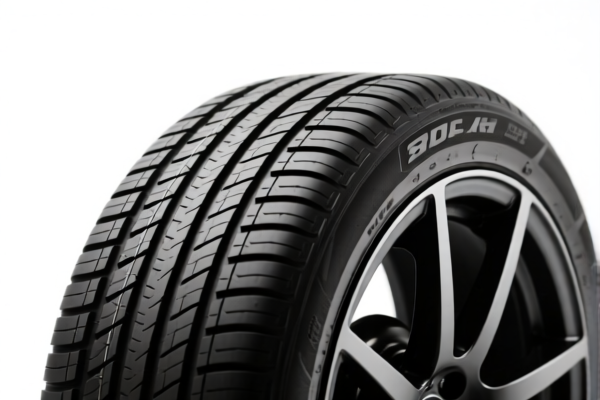
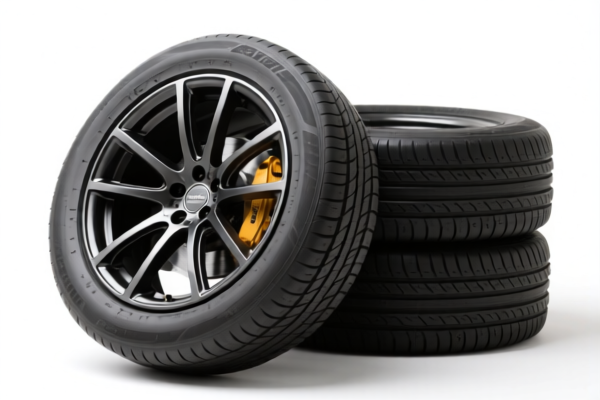
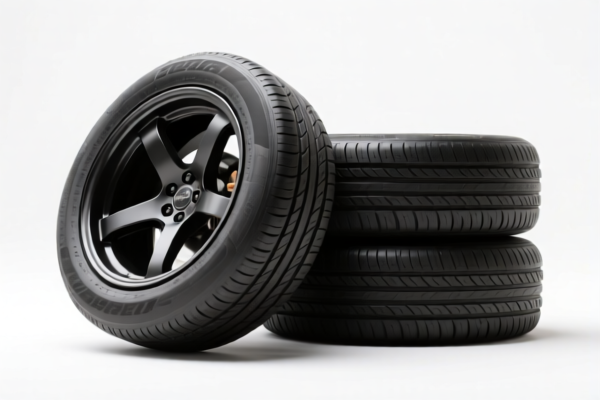
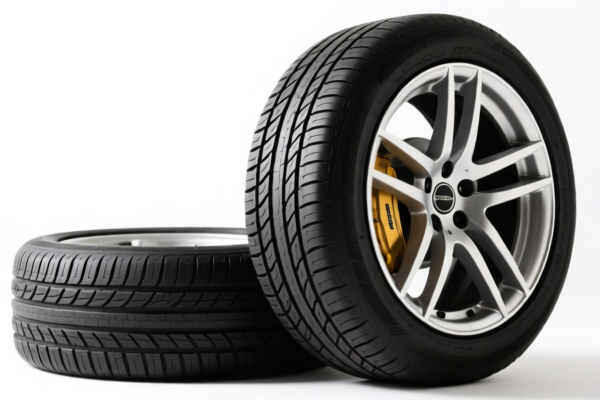
AI Analysis
🛞 Low Noise Rubber Shock Absorbing Tire
🌐 HS Code Reference & Customs Clearance Guide | 2026 Latest Tariff Analysis | Professional Strategy for Rubber Components
📌 1. Product Definition & Classification: What is a "Low Noise Rubber Shock Absorbing Tire"?
In international trade, "Low Noise Rubber Shock Absorbing Tire" is ambiguous. It can refer to two distinct categories depending on its primary function and construction:
- Shock Absorbers (Vibration Dampers): Rubber components used within machinery or vehicles to absorb vibrations. They are mechanical parts, not necessarily wheels that roll.
- Solid/Rubber Tires: Complete wheels made of rubber (often solid or foam-filled) used for carts, pallet jacks, or industrial equipment, designed to reduce noise and absorb shock.
⚠️ Critical Distinction:
- If it is a standalone shock damper (no rim, no tread for rolling) → Classified under Chapter 84 (Machinery Parts).
- If it is a complete wheel/tire (with or without rim, used for rolling) → Classified under Chapter 40 (Rubber Articles).
📦 2. HS Code Classification Details (2026 Latest Tariff Authority)
Based on the provided data, here are the precise classifications for "Low Noise Rubber Shock Absorbing Tire" components and variants:
| HS Code | Product Description | Application Scenario | Key Classification Logic |
|---|---|---|---|
8487.90.00.40 |
Rubber Shock Absorber, Mechanical Vibration Damping Component | Industrial machinery mounts, engine dampers | Mechanical Part: Rubber component for shock absorption, not a wheel. |
4016.99.55.00 |
Rubber Shock Absorber, Categorized as Vulcanized Rubber Product | General industrial rubber parts, vehicle control items | Vulcanized Rubber: Fits under "Other vulcanized rubber goods" for vibration control. |
4016.99.30.00 |
Rubber Shock Absorber, Consistent with Vehicle Shock Control Materials | Vehicle suspension components, heavy-duty dampers | Vehicle Compatibility: Material and purpose align with vehicle shock control products. |
8487.90.00.80 |
Rubber Shock Absorber, Mechanical Part Component | General mechanical assembly parts | Mechanical Assembly: Part of a machine, no electrical conflict. Note: Contains Steel/Aluminum/Copper |
4012.11.80.00 |
Rubber Tire, Rubber Material, Tire Form Factor | Industrial carts, pallet jacks, non-road vehicles | End Product: Complete tire form, falls under "Other" tire category due to specific low-noise/shock-absorbing design. |
🔍 Key Reminder:
-8487.90.00.80has the highest tax rate (88.9%) because it includes steel, aluminum, or copper components (50% additional duty on metals). Avoid this if possible by using all-rubber designs.
-4016.99.30.00offers the lowest base tariff (0.0%), making it cost-effective if the product qualifies as "vehicle shock control material."
-4012.11.80.00is for actual tires (rolling elements), not just dampers.
💰 3. 2026 Latest Tariff Rate Breakdown (Including Additional Duties)
✅ Applicable Country: United States (US)
✅ Origin: China (CN)
✅ Effective Time: From November 10, 2025 (Including subsequent imports)
🎯 1. 8487.90.00.40 —— Rubber Shock Absorber (Mechanical Part)
| Item | Details |
|---|---|
| Base Tariff | 3.9% |
| Section 301 Additional Duty | +25.0% |
| Section 122 Duty | +10.0% |
| Total Tax Rate | 38.9% |
| Tax Calculation | CIF Value × 38.9% |
| De Minimis Exemption | ❌ Not Eligible (High tariff blocks de minimis) |
| Legal Basis | USITC:8487.90.00.40 → FOOTNOTE:Section301 → Section122 |
📌 Explanation:
- This is a mechanical part (Chapter 84).
- Subject to both Section 301 (25%) and Section 122 (10%) duties.
- Total 38.9% is moderate but significant. No metal components mentioned, so no extra 50% metal duty.
🎯 2. 4016.99.55.00 —— Rubber Shock Absorber (Vulcanized Rubber)
| Item | Details |
|---|---|
| Base Tariff | 2.5% |
| Section 301 Additional Duty | +25.0% |
| Section 122 Duty | +10.0% |
| Total Tax Rate | 37.5% |
| Tax Calculation | CIF Value × 37.5% |
| De Minimis Exemption | ❌ Not Eligible |
| Legal Basis | USITC:4016.99.55.00 → Section301 → Section122 |
📌 Note:
- Slightly lower base rate (2.5%) than8487.90.00.40.
- Classified under Chapter 40 (Rubber), which sometimes benefits from lower base rates.
🎯 3. 4016.99.30.00 —— Rubber Shock Absorber (Vehicle Control Material)
| Item | Details |
|---|---|
| Base Tariff | 0.0% |
| Section 301 Additional Duty | +25.0% |
| Section 122 Duty | +10.0% |
| Total Tax Rate | 35.0% |
| Tax Calculation | CIF Value × 35.0% |
| De Minimis Exemption | ❌ Not Eligible |
| Legal Basis | USITC:4016.99.30.00 → Section301 → Section122 |
📌 Advantage:
- Lowest total tariff (35.0%) among shock absorbers.
- 0% base tariff if it can be justified as "consistent with vehicle shock control products."
- Recommendation: Try to classify here if the product is used in vehicle suspension systems.
🎯 4. 8487.90.00.80 —— Rubber Shock Absorber (Mechanical Part with Metal)
| Item | Details |
|---|---|
| Base Tariff | 3.9% |
| Section 301 Additional Duty | +25.0% |
| Section 122 Duty | +10.0% |
| Steel/Aluminum/Copper Additional Duty | +50.0% |
| Total Tax Rate | 88.9% |
| Tax Calculation | CIF Value × 88.9% |
| De Minimis Exemption | ❌ Not Eligible |
| Legal Basis | USITC:8487.90.00.80 → Section301 → Section122 → Metal Surcharge |
🚨 High Risk Alert:
- Highest tariff (88.9%) due to 50% additional duty on steel/aluminum/copper.
- Avoid this HS Code unless the product must contain metal parts.
- If possible, redesign to be all-rubber to drop to8487.90.00.40(38.9%) or4016.99.xx(35-37.5%).
🎯 5. 4012.11.80.00 —— Rubber Tire (Complete Wheel)
| Item | Details |
|---|---|
| Base Tariff | 3.4% |
| Section 301 Additional Duty | +25.0% |
| Section 122 Duty | +10.0% |
| Total Tax Rate | 38.4% |
| Tax Calculation | CIF Value × 38.4% |
| De Minimis Exemption | ❌ Not Eligible |
| Legal Basis | USITC:4012.11.80.00 → Section301 → Section122 |
📌 Note:
- For complete tires (rolling elements), not dampers.
- 38.4% is comparable to shock absorbers.
- Use this if the product is a wheel/tire for carts, pallet jacks, or industrial vehicles.
🛠️ 4. Customs Clearance Practical Advice (Pitfall Avoidance Guide)
✅ 1. Required Documentation Checklist
| Document | Required | Notes |
|---|---|---|
| ✅ Product Specification Sheet | ✔️ | Detail material (rubber type), dimensions, weight, noise level (dB), shock absorption capacity. |
| ✅ Technical Drawings | ✔️ | Show if it’s a damper (no rolling) or tire (with tread). Highlight metal content (if any). |
| ✅ Product Photos | ✔️ | Clear images of label, model number, and structure. |
| ✅ Third-Party Test Report | ✔️ | Noise level test, vibration damping test, material composition report. |
| ✅ Commercial Invoice | ✔️ | Clearly state: "Rubber Shock Absorber" or "Low Noise Rubber Tire" with correct HS Code. |
| ✅ Packing List | ✔️ | Indicate if metal parts are included (to avoid 8487.90.00.80 classification). |
✅ 2. Declaration Tips (Key Mantra)
🔥 "Damper vs. Tire, Metal is the Key, Zero Base is Best, Avoid 88.9%!"
| Scenario | Correct Declaration | Wrong Practice |
|---|---|---|
| Rubber damper, no metal | 4016.99.30.00 (35.0%) |
Declare as 8487.90.00.80 → 88.9% |
| Rubber damper, with metal | 8487.90.00.80 (88.9%) |
Try to hide metal → Fraud Risk |
| Complete rubber tire | 4012.11.80.00 (38.4%) |
Declare as damper → Misclassification |
| Vulcanized rubber part | 4016.99.55.00 (37.5%) |
Use general "rubber part" → Audit Risk |
✅ 3. Special Case Handling
| Situation | Recommendation |
|---|---|
| Product contains steel core | Must declare under 8487.90.00.80 (88.9%). Consider redesigning to all-rubber to save 50%. |
| Product is a tire for industrial cart | Declare under 4012.11.80.00 (38.4%). Ensure it’s not misclassified as a vehicle tire (higher duty). |
| OEM Custom Shock Absorber | Provide design specs showing it’s for vibration control, not rolling. Aim for 4016.99.30.00. |
| Low-Noise Feature | Provide noise test report (dB level) to support classification as specialized shock absorber. |
🌍 5. Global Market Comparison (2026 Latest)
| Country/Region | Recommended HS Code | Tariff (China Origin) | Certification | Notes |
|---|---|---|---|---|
| 🇺🇸 USA | 4016.99.30.00 |
35.0% | N/A (Standard) | Best rate for shock absorbers. Avoid metal parts. |
| 🇨🇳 China | 4016.99.30.00 |
~10-15% | CCC (if applicable) | Lower import duty, no Section 301/122. |
| 🇪🇺 EU | 4016.99.30.00 |
~0-2.5% | CE, REACH | No additional tariffs. Easy clearance. |
| 🇬🇧 UK | 4016.99.30.00 |
~0-2.5% | UKCA, REACH | Post-Brexit, similar to EU. |
| 🇯🇵 Japan | 4016.99.30.00 |
~0-5% | PSE (if electrical) | Low duty, no additional taxes. |
📌 Conclusion:
- USA is the most challenging market due to Section 301 (25%) and Section 122 (10%) tariffs.
- EU/UK/Japan offer significantly lower duties.
- Key Strategy: For US imports, minimize metal content and aim for 0% base tariff (4016.99.30.00) if possible.
📌 6. Common Errors & Pitfall Guide (Blood & Tears Lessons)
❌ Error 1: Declaring a metal-core shock absorber as 8487.90.00.40
👉 Consequence: Customs detects metal → Re-classify to 8487.90.00.80 → Pay 88.9% + Penalties!
❌ Error 2: Declaring a complete tire as a "shock absorber"
👉 Consequence: Misclassification → Delayed clearance, potential fines, or seizure.
❌ Error 3: Ignoring Section 122 (10%) duty
👉 Consequence: Underpayment → Back taxes + Interest upon audit.
❌ Error 4: Not providing noise/vibration test reports
👉 Consequence: Customs doubts "Low Noise" claim → Requests additional documentation → Delay.
✅ Correct Practice:
"Low Noise Rubber Shock Absorber, Vulcanized Rubber, No Metal Core, For Industrial Machinery Vibration Control, Model XYZ, Certified to ISO 16750"
🎯 7. Conclusion: Professional Declaration, Save Cost, Boost Profit!
🎯 Remember the Mantra:
🔹 "Metal = 88.9%, No Metal = 35-39%, Tire vs. Damper = Clear Distinction!"
🔹 "Base Tariff 0% is Gold, Section 301/122 is Fixed, Avoid Metal to Save 50%!"
📌 Pro Tip:
If your product contains significant metal content, consider redesigning to an all-rubber version to drop the tariff from 88.9% to ~35-39%.
For US imports, always apply for a Pre-Ruling to confirm the correct HS Code and avoid surprises.
📣 Immediate Action:
📞 Consult with a licensed customs broker + Provide technical drawings + Apply for HS Code Pre-Ruling
🚀 Ensure smooth clearance, cost efficiency, and profitability for your Low Noise Rubber Shock Absorbing Tire!
✨ Professional Customs Clearance Starts with Accurate Classification!
💼 Every cent counts in global trade!
Customer Reviews
About HS Code Classification
The Harmonized System (HS) is an internationally standardized nomenclature developed by the World Customs Organization (WCO) to classify traded products. Over 200 countries use the HS system as the basis for customs tariffs, trade statistics, and import/export regulations.
Each HS code follows a hierarchical structure:
- Chapter (2 digits) — Broad category of goods (e.g., Chapter 84: Machinery and Mechanical Appliances)
- Heading (4 digits) — More specific grouping within the chapter
- Subheading (6 digits) — Internationally standardized breakdown, used by all WCO member countries
- National subdivisions (8-10 digits) — Country-specific extensions for further classification, such as US HTSUS 10-digit codes
Correct HS code classification is essential for smooth customs clearance, accurate duty payment, and compliance with trade regulations. Misclassification can lead to customs delays, overpayment of duties, or penalties.
When importing from CN to US, the applicable tariff rates may include:
- Most-Favored-Nation (MFN) rate — The standard duty rate applied to WTO members
- General rate — Applied to countries without trade agreements
- Trade remedy duties — Additional tariffs such as Section 301 (anti-dumping), Section 232 (national security), or countervailing duties
The information provided on this page is for reference purposes only. For official classification, please consult with your local customs authority or a licensed customs broker.