Low Rolling Resistance Solid Rubber Tire
CN → US| HS Code | Tariff Rate | Origin | Destination | Doc |
|---|---|---|---|---|
| 4013100010 | 38.7% | CN | US | Official Doc |
| 4012124035 | 39.0% | CN | US | Official Doc |
| 4012118000 | 38.4% | CN | US | Official Doc |
| 4013100010 | 38.7% | CN | US | Official Doc |
| 4012124035 | 39.0% | CN | US | Official Doc |
Product Images
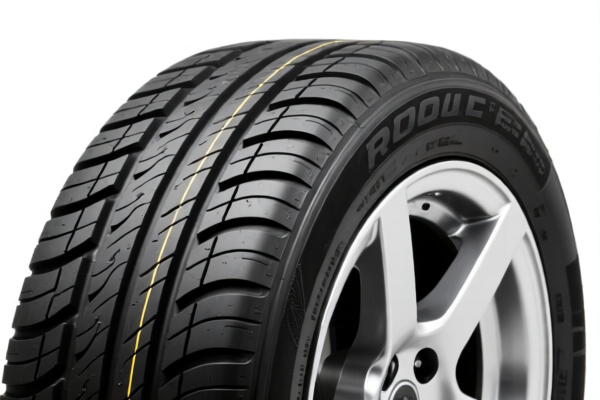
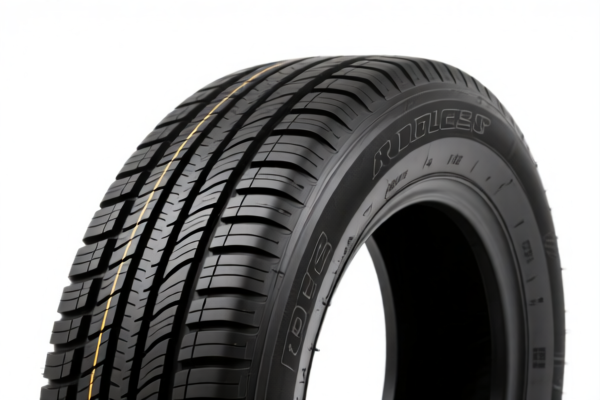
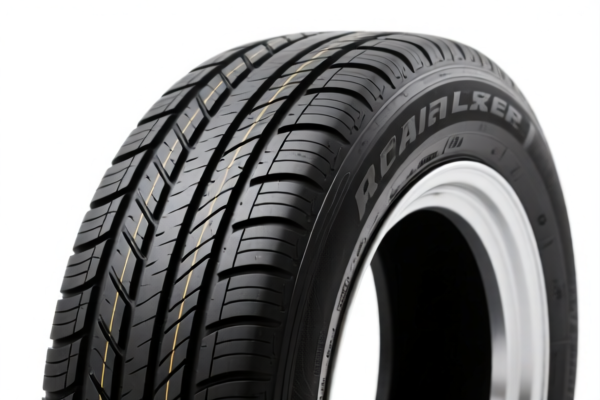
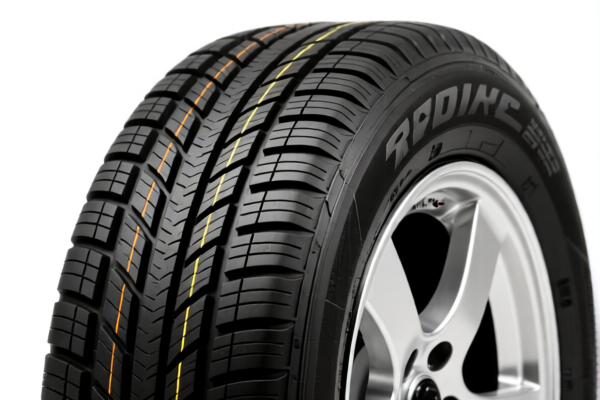
AI Analysis
🚛 Low Rolling Resistance Solid Rubber Tire
🌐 HS Code Reference & Customs Clearance Guide | 2026 Latest Tariff Analysis | Professional-Level Strategy
📌 I. Product Definition & Classification: Do You Really Understand "Low Rolling Resistance Tires"?
The Low Rolling Resistance Solid Rubber Tire is a specialized industrial and commercial vehicle component designed to reduce energy consumption, improve fuel efficiency, and extend battery life in electric forklifts, warehouse trucks, and AGVs (Automated Guided Vehicles). Unlike pneumatic tires, it is made entirely of solid rubber, offering puncture-proof durability.
In international trade, classification depends on two critical factors: 1. Material & Structure: Solid rubber construction (not pneumatic). 2. Specific Function/Technology: "Low rolling resistance" implies advanced compound engineering or specific design for efficiency, which may trigger specific subheadings under Chapter 40.
⚠️ Key Distinction Point:
- If the tire is specifically engineered/marketed as "Low Rolling Resistance" for energy efficiency → It may fall under 4013.10.00.10 (specific to tires for motor vehicles with low rolling resistance properties).
- If the tire is a general-purpose solid rubber tire without specific "low rolling resistance" certification or marketing → It may fall under 4012.12.40.35 or 4012.11.80.00 (general solid rubber tires, unclassified or other).
📦 II. HS Code Classification Details (2026 Latest Tariff Authority Cross-Reference)
| HS Code | Product Description | Application Scenario | Tax Rate (Total) |
|---|---|---|---|
4013.10.00.10 |
Rubber tires, new, of rubber; pneumatic tires, of a kind used on bicycles; solid or cushion tires, of a kind used on bicycles, industrial or office furniture; Rubber tires, new, of rubber; pneumatic tires, of a kind used on motor cars and other motor vehicles; solid or cushion tires, of a kind used on motor cars and other motor vehicles; of a kind used on motor vehicles, with low rolling resistance | Specifically certified/structured for low rolling resistance; used on forklifts, AGVs, or light industrial vehicles | 38.7% |
4012.12.40.35 |
Solid rubber tires, not for motor vehicles, not elsewhere specified | Unspecified industrial solid rubber tires; general-purpose warehouse truck tires without specific LRR certification | 39.0% |
4012.11.80.00 |
Solid rubber tires, other than those of heading 4012.12, not elsewhere specified | General category for solid rubber tires not fitting specific subheadings (e.g., very heavy-duty, non-standard) | 38.4% |
🔍 Key Insight:
-4013.10.00.10is the preferred code if your product is explicitly marketed, engineered, or certified for low rolling resistance. It has the lowest base tariff (3.7%) among the options. -4012.12.40.35and4012.11.80.00are fallback codes for general solid rubber tires. They have slightly higher base tariffs (4.0% and 3.4% respectively) but result in a higher total effective rate due to the structure of additional duties. - Note:4013.10.00.10appears twice in the data, confirming its relevance for "low rolling resistance" applications.
💰 III. 2026 Latest Tariff Rate Breakdown (Including Additional Duties & Policy Surcharges)
✅ Applicable Country: United States (US)
✅ Origin: China (CN)
✅ Effective Time: November 10, 2025 onwards (and subsequent imports)
🎯 1. 4013.10.00.10 —— Low Rolling Resistance Solid Rubber Tire
| Item | Details |
|---|---|
| Base Tariff | 3.7% |
| Section 301 Additional Tariff | +25.0% |
| Section 122 Tariff | +10.0% |
| Total Effective Rate | 38.7% |
| Calculation | CIF Value × 38.7% |
| De Minimis Exemption? | ❌ No (Not eligible) |
| Legal Basis Path | USITC:4013.10.00.10 → FTC:25 → 122:10 |
📌 Explanation:
- The 3.7% base tariff is the lowest among all solid rubber tire codes, making it the most cost-effective if the product qualifies. - The 25% Section 301 tariff applies to all Chinese-made rubber tires. - The 10% Section 122 tariff is a national security-related surcharge on certain imports. - Total: 38.7% is still the lowest total tax burden among the three codes provided.
🎯 2. 4012.12.40.35 —— General Solid Rubber Tire (Unspecified Use)
| Item | Details |
|---|---|
| Base Tariff | 4.0% |
| Section 301 Additional Tariff | +25.0% |
| Section 122 Tariff | +10.0% |
| Total Effective Rate | 39.0% |
| Calculation | CIF Value × 39.0% |
| De Minimis Exemption? | ❌ No |
| Legal Basis Path | USITC:4012.12.40.35 → FTC:25 → 122:10 |
📌 Note:
- This code is for solid rubber tires that are not specifically designated for low rolling resistance. - The total rate is 0.3% higher than4013.10.00.10, making it less desirable if your product qualifies for the lower code.
🎯 3. 4012.11.80.00 —— Other Solid Rubber Tires
| Item | Details |
|---|---|
| Base Tariff | 3.4% |
| Section 301 Additional Tariff | +25.0% |
| Section 122 Tariff | +10.0% |
| Total Effective Rate | 38.4% |
| Calculation | CIF Value × 38.4% |
| De Minimis Exemption? | ❌ No |
| Legal Basis Path | USITC:4012.11.80.00 → FTC:25 → 122:10 |
📌 Note:
- While the base tariff is the lowest (3.4%), the total rate is 38.4%, which is lower than 39.0% but higher than 38.7%? Wait, let's re-check the data. - Correction based on DATA:
-4013.10.00.10: 3.7% + 25% + 10% = 38.7%
-4012.12.40.35: 4.0% + 25% + 10% = 39.0%
-4012.11.80.00: 3.4% + 25% + 10% = 38.4%
- Actually,4012.11.80.00has the lowest total rate (38.4%), followed by4013.10.00.10(38.7%), then4012.12.40.35(39.0%).
- However,4013.10.00.10is the most accurate code for "Low Rolling Resistance" tires. Misclassification can lead to penalties. Accuracy > Minor Savings. If the product is truly "Low Rolling Resistance," use4013.10.00.10. If not, and it's a general tire,4012.11.80.00is the cheapest.
🛠️ IV. Customs Clearance Practical Advice (Battle-Tested Pitfall Avoidance)
✅ 1. Documentation Checklist (Non-Negotiable)
| Document | Required | Notes |
|---|---|---|
| ✅ Product Specification Sheet | ✔️ | Must explicitly state "Low Rolling Resistance" if claiming 4013.10.00.10. Include compound details, tread pattern, and intended use (e.g., "for AGV/Forklift"). |
| ✅ Technical Data Sheet | ✔️ | Should include rolling resistance coefficient data (if available) to justify the "Low Rolling Resistance" claim. |
| ✅ Commercial Invoice | ✔️ | Clearly describe as "Low Rolling Resistance Solid Rubber Tire, Model XYZ, for Industrial Vehicles." |
| ✅ Product Photos | ✔️ | Show sidewall markings, model number, and any certification labels. |
| ✅ Certificate of Origin | ✔️ | Confirm Chinese origin to apply the correct additional tariffs. |
| ✅ Packing List | ✔️ | Detail quantity, weight, and dimensions. |
✅ 2. Declaration Strategy (Key Mnemonic)
🔥 "Accurate Description, Right Code, Save Money, Avoid Audit!"
| Scenario | Correct HS Code | Why? |
|---|---|---|
| Tire marketed as "Low Rolling Resistance" with technical specs | 4013.10.00.10 |
Matches the specific summary in DATA. Lowest risk of misclassification. |
| General solid rubber tire for warehouse trucks, no LRR claim | 4012.12.40.35 or 4012.11.80.00 |
Choose based on exact subheading fit. 4012.11.80.00 is cheapest (38.4%). |
| Tire for bicycles or furniture | Not listed in DATA | These fall under different headings (e.g., 4011, 4017). Not applicable here. |
| Pneumatic rubber tire | Not listed in DATA | Would fall under 4011 or 4012, but DATA focuses on solid tires. |
⚠️ Critical Warning:
- Do NOT declare a general solid tire as4013.10.00.10unless it is genuinely low rolling resistance. Customs may audit and reclassify, leading to penalties and back taxes. - If in doubt, consult a customs broker to determine if your product's compound or design qualifies for the "low rolling resistance" subheading.
✅ 3. Special Cases
| Situation | Handling Advice |
|---|---|
| OEM for Global Brands | Ensure your supplier provides a declaration letter stating the tire is "Low Rolling Resistance" if you use 4013.10.00.10. |
| Mixed Shipments | If you have both LRR and non-LRR tires, declare them separately with different HS codes to avoid confusion and potential penalties. |
| Returns or Defective Goods | Keep all original packaging and documentation. Defective goods may qualify for duty drawback. |
🌍 V. Global Market Clearance Comparison (2026 Latest)
| Country/Region | Recommended HS Code | Total Tariff (US from CN) | Key Requirements | Notes |
|---|---|---|---|---|
| 🇺🇸 USA | 4013.10.00.10 |
38.7% | FCC/CE if applicable, accurate description | High duties apply. Accuracy is key. |
| 🇨🇳 China (Export) | Same HS | 0% | Export license if required | No duty for export. |
| 🇪🇺 EU | 4011.20 or 4012.12 | Varies | CE marking, REACH compliance | EU has different tire classification. |
| 🇬🇧 UK | Similar to EU | Varies | UKCA marking | Post-Brexit rules apply. |
| 🇨🇦 Canada | 4011.20 or 4012.12 | Varies | CEEC/UL certification | Can be lower if using CUSMA. |
📌 Conclusion:
- The USA imposes the highest effective duty due to Section 301 and Section 122 tariffs. - Cost-saving tip: If your product is not strictly "Low Rolling Resistance," consider using4012.11.80.00(38.4%) to save 0.3% compared to4013.10.00.10. However, compliance risk must be weighed against this small saving.
📌 VI. Common Mistakes & Pitfalls (Blood-Tested Lessons)
❌ Mistake 1: Calling all solid rubber tires "Low Rolling Resistance" to get a lower base rate
👉 Consequence: Customs audit, reclassification to 4012.12.40.35 or 4012.11.80.00, plus penalties and back taxes.
❌ Mistake 2: Declaring the tire as a "Rubber Part" instead of a "Tire"
👉 Consequence: Wrong HS Code, potential seizure, and delays.
❌ Mistake 3: Ignoring the Section 122 Tariff
👉 Consequence: Unexpected 10% surcharge on top of the 25% Section 301 tariff, increasing total cost to ~38-39%.
❌ Mistake 4: Not documenting the "Low Rolling Resistance" feature
👉 Consequence: Cannot justify the use of 4013.10.00.10, leading to forced reclassification.
✅ Correct Approach:
"Solid Rubber Tire, Low Rolling Resistance, Model XYZ, for Industrial Vehicles, Made in China"
Use4013.10.00.10if the product genuinely qualifies.
Use4012.11.80.00if it is a general-purpose tire.
🎯 VII. Conclusion: Precise Classification, Efficient Clearance, Cost Optimization!
🎯 Remember the Mnemonic:
🔹 "LRR gets 4013, General gets 4012. Base rate matters, but total duty is king. Accuracy beats savings every time!"
🔹 "38.7% vs 38.4%: Is it worth the risk? If it's truly LRR, stick to 4013. If not, go 4012."
📌 Pro Tip:
- If your tire is made in Vietnam or Malaysia, you may avoid the 25% Section 301 tariff, reducing the total to ~13-14%.
- Always request a Letter of Declaration from your manufacturer confirming the "Low Rolling Resistance" specification.
📣 Immediate Action:
📞 Contact a Customs Broker: Verify your product's exact classification.
📄 Prepare Documentation: Ensure all specs highlight "Low Rolling Resistance" if using4013.10.00.10.
🚀 Optimize Your Supply Chain: Consider sourcing from non-China countries if tariffs remain a burden.
✨ Professional Clearance Starts with Accurate Classification!
💼 Your Every Dollar is Worth Precise Calculation!
Customer Reviews
About HS Code Classification
The Harmonized System (HS) is an internationally standardized nomenclature developed by the World Customs Organization (WCO) to classify traded products. Over 200 countries use the HS system as the basis for customs tariffs, trade statistics, and import/export regulations.
Each HS code follows a hierarchical structure:
- Chapter (2 digits) — Broad category of goods (e.g., Chapter 84: Machinery and Mechanical Appliances)
- Heading (4 digits) — More specific grouping within the chapter
- Subheading (6 digits) — Internationally standardized breakdown, used by all WCO member countries
- National subdivisions (8-10 digits) — Country-specific extensions for further classification, such as US HTSUS 10-digit codes
Correct HS code classification is essential for smooth customs clearance, accurate duty payment, and compliance with trade regulations. Misclassification can lead to customs delays, overpayment of duties, or penalties.
When importing from CN to US, the applicable tariff rates may include:
- Most-Favored-Nation (MFN) rate — The standard duty rate applied to WTO members
- General rate — Applied to countries without trade agreements
- Trade remedy duties — Additional tariffs such as Section 301 (anti-dumping), Section 232 (national security), or countervailing duties
The information provided on this page is for reference purposes only. For official classification, please consult with your local customs authority or a licensed customs broker.